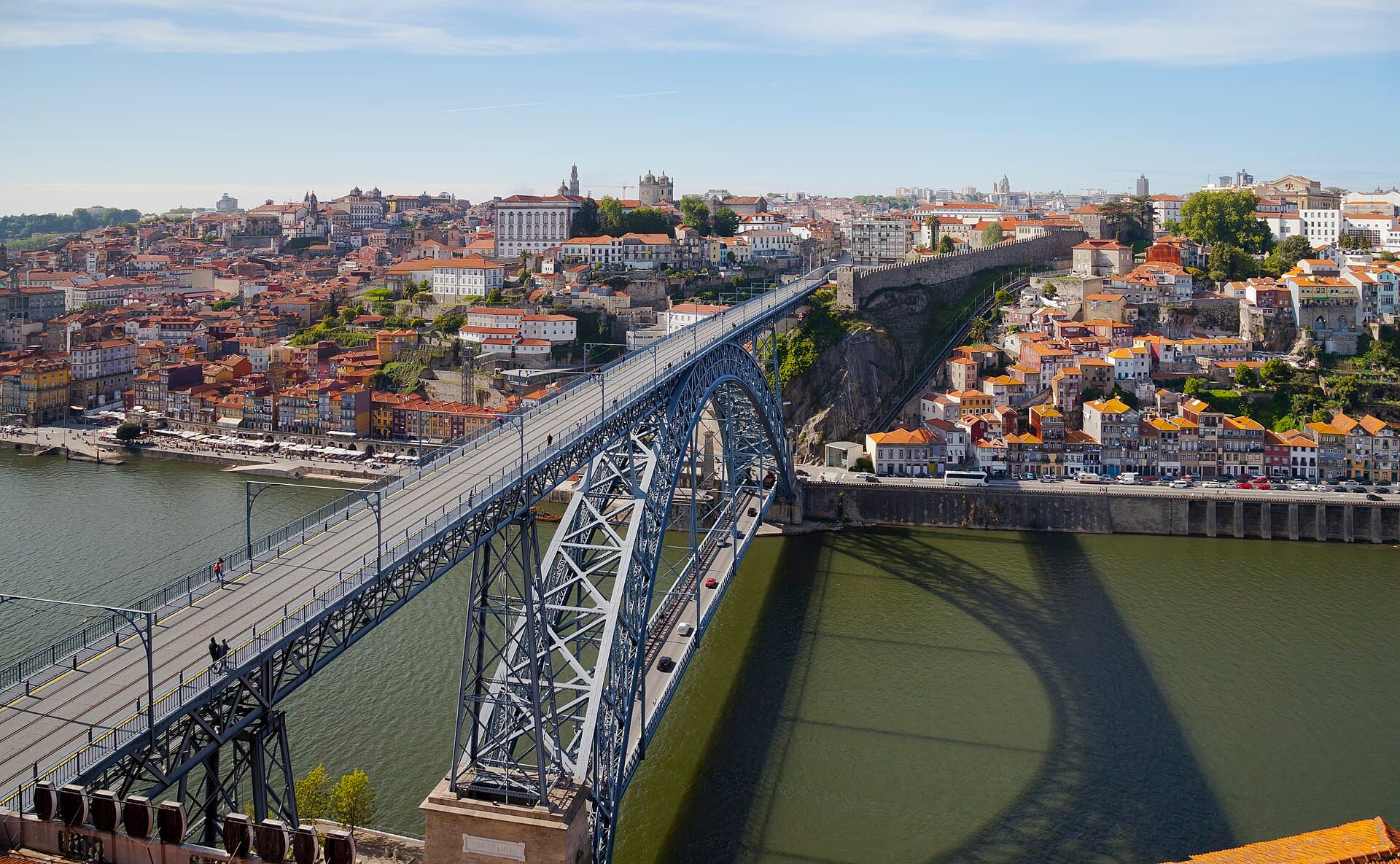
Porto, PortugalDiego Delso / CC BY-SA 3.0, via Wikimedia Commons
PT

Porto

Where ancient granite meets flowing gold, and every corner holds a secret.

The secrets of Porto

Porto, as no one tells it.

Not the postcards. The stories even locals don't know — whispered in your ear, right where they happened.

3 secrets below. Many more wait inside the tour.
São Bento Train Station

You'll marvel at the 20,000 hand-painted tiles depicting Portugal's history, but the station holds a lesser-known, slightly ironic truth about one of Porto's most famous dishes.

Full story unlocks in the tour
Dom Luís I Bridge

This iconic iron bridge, often mistaken for an Eiffel design, has a somber secret from a much older crossing.

Full story unlocks in the tour
Porto's Pastries

The ubiquitous yellow pastries throughout Portugal aren't just a delicious tradition; their lively color tells a story of resourcefulness from an unexpected source.

Full story unlocks in the tour
The full tour

Discover every secret of Porto

Every address, every reveal in full — in your ear, right where it happened.

Get the key to Porto

You pick your stops. You walk. The voice reveals what the others miss.

Choose your time

How long do you have in Porto?

No tours available yet. Check back soon — we're preparing them.

About Porto

The story of Porto

Porto, a city etched into the granite hills overlooking the Douro River estuary, is a place where history breathes through every cobblestone and tiled facade. As Portugal's second-largest city, its character is distinct, a blend of old-world charm and a burgeoning contemporary energy. The city's historic center, recognized as a UNESCO World Heritage site, is a labyrinth of narrow lanes, colorful houses, and unexpected viewpoints that offer sweeping panoramas of terracotta rooftops descending to the river.

Porto has steadily grown in popularity, drawing visitors with its authentic culture, renowned Port wine, and a culinary scene that celebrates traditional Portuguese flavors. From the bustling Ribeira district along the waterfront to the serene gardens and opulent palaces, Porto invites exploration at a leisurely pace, revealing its layers of stories and experiences one captivating vista at a time.

History

From Roman Outpost to Undefeated City

Porto's origins stretch back to the 1st century BC, when it was a Roman settlement known as Portus Cale, a name that eventually evolved into 'Portugal' itself. Its strategic position on the Douro River made it a vital trading hub, connecting Lisbon and Braga. Over centuries, the city witnessed a succession of rulers, from the Visigoths around 540 CE to a brief period under Moorish control in 716. Christian forces recaptured Porto in 997, and it served as the capital for the counts of Portucalense during a period of ongoing conflict with the Moors in the south.

The 14th and 15th centuries were pivotal for Porto, as its deep river waters fostered significant shipbuilding, laying the groundwork for Portugal's Age of Discovery. In 1415, Prince Henry the Navigator, a native of Porto, launched the Conquest of Ceuta from the city, initiating Portugal's maritime explorations. This era also gave rise to the nickname 'tripeiros' (tripe-eaters) for Porto's residents, as the best cuts of meat were sent with the ships, leaving the locals to make do with offal – a culinary tradition still celebrated today with Tripas à Moda do Porto.

The 18th century marked a 'Golden Age' for Porto, driven by the burgeoning Port wine trade. The Methuen Treaty of 1703 solidified trade relations with England, leading to English firms establishing trading posts and dominating the wine trade. In response, the Marquis of Pombal established Europe's first protected wine region in the Douro Valley in 1756. The city also saw significant architectural development during this time, with the construction of neoclassical and baroque buildings.

Porto earned its proud nickname, 'Invicta' (the undefeated), during the 19th-century Portuguese Civil War. The city endured a brutal year-long siege, with its citizens valiantly defending liberal ideals. This unwavering resilience cemented Porto's special place in Portuguese history. More recently, in 1996, the Historic Centre of Porto was designated a UNESCO World Heritage Site, and the city has been recognized multiple times as Europe's Best Destination.

What to see

Porto's charm lies in its diverse offerings, from historic landmarks to contemporary spaces. Begin by exploring the Ribeira district, a UNESCO World Heritage site known for its colorful buildings, narrow streets, and lively riverfront. From here, admire the Dom Luís I Bridge, an iron double-deck bridge designed by a former partner of Gustave Eiffel, offering spectacular views of the city and the Douro River. Walk across its upper deck for an unforgettable perspective.

No visit to Porto is complete without experiencing its famous Port wine heritage. Cross the river to Vila Nova de Gaia, where numerous Port wine cellars offer tours and tastings. The São Bento Train Station is a place to see, adorned with over 20,000 hand-painted azulejo tiles depicting scenes from Portuguese history. Other notable azulejo displays can be found at the Igreja do Carmo and Capela das Almas. Climb the Torre dos Clérigos for wide city views, or wander through the serene Jardins do Palácio de Cristal. For a taste of local life, visit the Mercado do Bolhão, a historic market filled with food stalls.

When to visit

The shoulder seasons of late spring (May to June) and early autumn (September to October) are often considered the best times to visit Porto. During these months, the weather is mild and pleasant, with comfortable temperatures ranging from 18-25°C (64-77°F), ideal for exploring on foot. There are also fewer crowds compared to the peak summer months. June is particularly lively, culminating in the Festas de São João, a major city-wide celebration. September is excellent for wine enthusiasts, as it coincides with the grape harvest in the Douro Valley. While July and August are the warmest and busiest, Porto's Atlantic climate keeps it cooler than other parts of Portugal. Winter offers a quieter, more intimate experience with milder temperatures, though it can be rainier.

Practical

Porto is a highly walkable city, especially its compact historic center, but be prepared for steep, stone streets. Comfortable walking shoes are essential. For longer distances or to navigate the hills, Porto has an efficient public transportation system, including a metro, trams, and buses. The metro connects the airport to the city center in about 25-35 minutes. Taxis and ride-sharing services like Uber and Bolt are also readily available and affordable.

The official currency is the Euro (€), and card payments are widely accepted, though it's advisable to carry some cash for smaller vendors or public transport. English is widely spoken in tourist areas. Porto is considered a very safe city for travelers. Most first-time visitors find 3 to 4 days sufficient to explore Porto and its immediate surroundings, with an extra day or two for a trip to the Douro Valley.

Good to know
What is Porto most famous for?
Porto is most famous for its Port wine, the historic Ribeira district (a UNESCO World Heritage site), the Dom Luís I Bridge, and its distinctive *azulejo* tiles.
Is Porto a walkable city?
Yes, Porto is very walkable, particularly the historic center. However, it is also known for its steep hills and stone streets, so comfortable footwear is highly recommended.
How many days should I spend in Porto?
Most first-time visitors find that 3 to 4 days are ideal for exploring Porto's main attractions and enjoying its local experiences. If you wish to include a day trip to the Douro Valley, consider extending your stay to 4 to 5 days.
What is the best time of year to visit Porto?
The best times to visit Porto are during the shoulder seasons of late spring (May to June) and early autumn (September to October). The weather is mild, and there are fewer crowds than in the peak summer months.
Do I need a car to get around Porto?
No, a car is generally not needed in Porto. The city is well-served by public transport (metro, trams, buses), and many attractions are easily accessible on foot. A car is only useful if you plan to explore areas outside the city.
Is Porto expensive for tourists?
Compared to many other European cities, Porto is considered relatively affordable for accommodation, food, and local experiences. Budget travelers can manage on $50-80 per day, while mid-range travelers might spend $100-200 per day. Prices can vary by season.
Porto
From€9.00
No booking · activate anytime · 12h to walk it
Get the key to Porto