Bar El Mejillón
El sándwich nacional de Uruguay, el 'chivito', tiene una sorprendente historia de origen ligada a un pedido nocturno en Punta del Este.
La historia completa se desbloquea en el tour
 Марсело Кампи / CC BY-SA 3.0, via Wikimedia Commons
Tour de audio autoguiado de Punta del Este — ruta GPS a pie, reproducción offline, narración en 32 idiomas.
“Donde el Atlántico se encuentra con el Río de la Plata, se despliega una península bañada por el sol.”
No las postales. Las historias que ni los locales conocen — al oído, justo donde ocurrieron.
El sándwich nacional de Uruguay, el 'chivito', tiene una sorprendente historia de origen ligada a un pedido nocturno en Punta del Este.
El icónico Faro de Punta del Este, un faro para los marineros desde 1860, fue construido utilizando un material inusual para su época.
Esta casa aparentemente tranquila sirvió una vez como un animado centro intelectual y artístico, albergando una inesperada variedad de figuras globales.
Descubre todos los secretos de Punta del Este
Cada dirección, cada revelación al completo — a tu oído, justo donde ocurrió.
Eliges tus paradas. Caminas. La voz te revela lo que los demás ignoran.


Tu tour de audioguía por Punta del Este te espera — elige tus lugares, tu idioma y empieza al llegar.
ComprarLume incluye una guía de realidad aumentada. Levanta el móvil y su cámara muestra la calle que tienes delante, con una flecha luminosa sobre la imagen real que siempre apunta a tu próxima parada — sin mapas que descifrar, sin giros equivocados. Como todo en Lume, funciona completamente sin conexión.
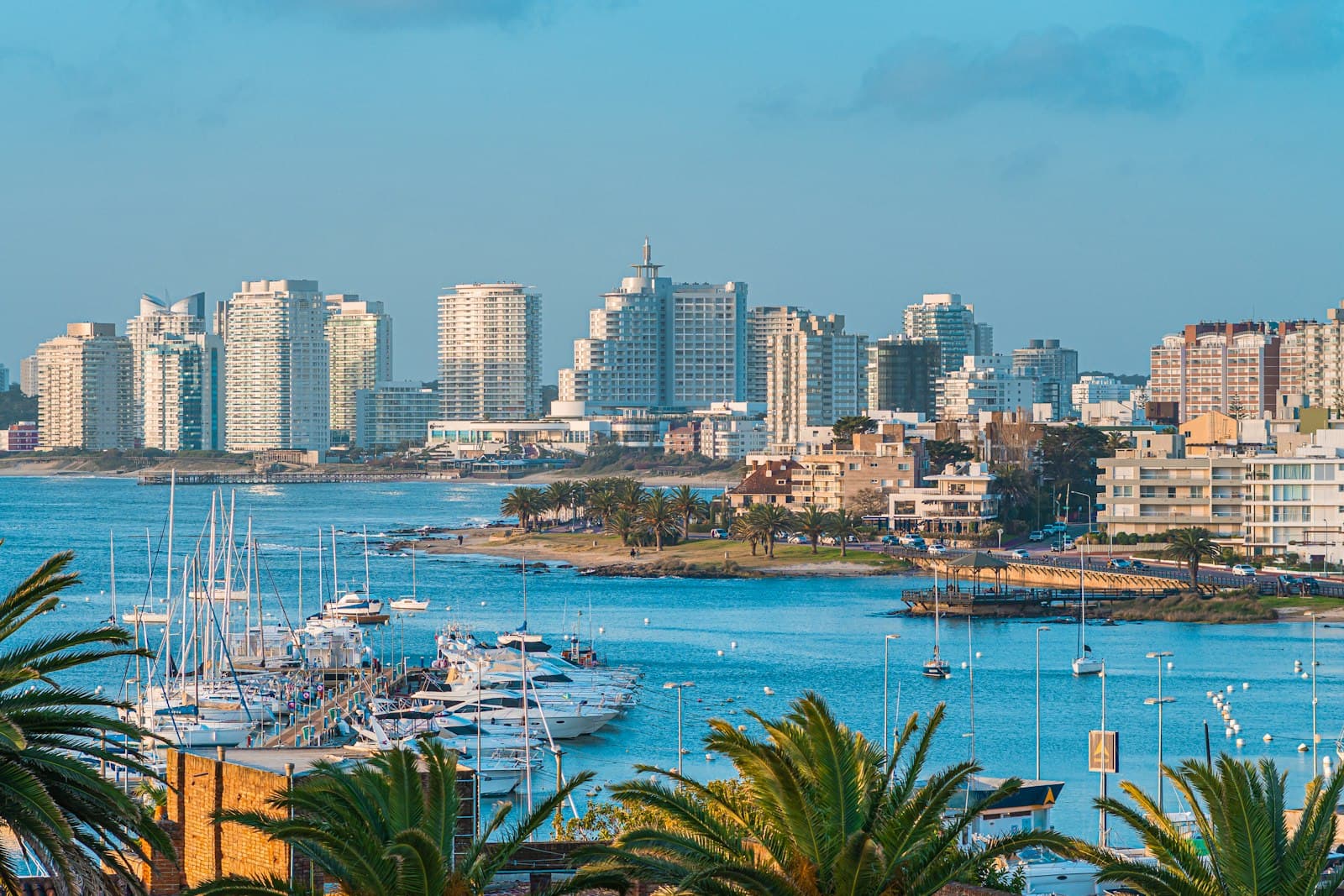
Punta del Este, una ciudad en la costa sureste de Uruguay, ocupa una península donde las aguas dulces del Río de la Plata se encuentran con el Océano Atlántico. Conocida como 'Los Hamptons de Sudamérica' o 'El Mónaco del Sur', atrae a una glamorosa mezcla de visitantes y residentes internacionales. Aunque celebrada por su animada vida nocturna, Punta del Este también ofrece un ambiente relajado con playas vírgenes, tiendas de lujo y una floreciente escena artística.
La geografía única de la ciudad ofrece dos costas distintas: Playa Mansa, con sus aguas tranquilas ideales para familias, y Playa Brava, conocida por sus olas más fuertes que atraen a los surfistas. Más allá de la arena, Punta del Este ofrece una mezcla de arquitectura colonial y desarrollos modernos, creando un paisaje cautivador. Su población permanente de alrededor de 10.000 habitantes aumenta significativamente durante el verano del hemisferio sur, transformándola en un bullicioso centro turístico.
La historia de Punta del Este se remonta a principios del siglo XVI, cuando los españoles llegaron por primera vez a la zona. Sin embargo, los esfuerzos de colonización alrededor de la cercana Maldonado comenzaron a finales del siglo XVIII. La península misma fue inicialmente un puesto militar durante el conflicto de Uruguay con Brasil. No fue hasta 1829 que el asentamiento, entonces llamado Villa Ituzaingó, fue fundado formalmente por el comerciante y político español Francisco Aguilar, quien reconoció su potencial. Aguilar, quien también se desempeñó como alcalde de Maldonado, inició el desarrollo del territorio, incluso estableciendo la primera fábrica de tejas en la región.
La visión de Punta del Este como ciudad balneario comenzó a materializarse a finales del siglo XIX. La construcción de su primer hotel despertó la idea de crear un equivalente sudamericano a destinos costeros europeos como Biarritz o Brighton. En 1907, el asentamiento fue oficialmente rebautizado como Punta del Este, y recibió a sus primeros turistas —familias de Argentina y Montevideo que llegaban en el buque 'Golondrina'. Esto marcó un momento crucial, abriendo las puertas a miles de visitantes en los años venideros.
La década de 1920 vio un mayor desarrollo con la fundación del Yacht Club de Punta del Este en 1924, lo que marcó el inicio del turismo marítimo de élite. La transformación de la ciudad en un balneario de clase mundial se aceleró en la década de 1940, atrayendo a la jet set latinoamericana y norteamericana. Establecimientos notables como el Cantegril Country Club, que abrió en 1948, se convirtieron en el centro de la vida social de la ciudad y atrajeron a la aristocracia. A lo largo de las décadas, Punta del Este también ha desempeñado un papel en el escenario internacional, acogiendo eventos significativos como la Cumbre Americana de 1967, a la que asistió el presidente de Estados Unidos Lyndon Johnson, y la Ronda Uruguay de negociaciones comerciales internacionales de 1986, que finalmente llevó a la creación de la Organización Mundial del Comercio.
Comience su exploración en Playa Brava para maravillarse con La Mano, también conocida como Los Dedos, una escultura de cinco dedos que emerge de la arena. Este icónico monumento del artista chileno Mario Irarrázabal no es solo arte, sino también una advertencia simbólica sobre las fuertes olas del Atlántico.
Pasee por la Avenida Gorlero, la calle principal de Punta del Este, a menudo llamada 'Pequeña París' por sus elegantes tiendas, restaurantes y cafés. La avenida culmina en un mercado artesanal, que ofrece artesanías locales. Cerca de allí, el Faro de Punta del Este, construido en 1860, ofrece un vistazo a la historia marítima de la ciudad.
Para una experiencia arquitectónica única, visite Casapueblo en Punta Ballena, un edificio esculpido, blanco y en el acantilado que fue una vez la casa y estudio del artista Carlos Páez Vilaró. Ahora funciona como museo, hotel y restaurante, ofreciendo espectaculares vistas del atardecer.
Considere un viaje en ferry a la Isla Gorriti, una isla protegida con playas tranquilas como Puerto Jardín y Playa Honda. También puede tomar un paseo en barco a la Isla de Lobos, hogar de una de las colonias de lobos marinos más grandes de Sudamérica, con hasta 250.000 focas.
Cruza el ondulante Puente de La Barra, también conocido como Puente Leonel Viera, que conecta Punta del Este con el elegante suburbio de La Barra. En La Barra, encontrará más playas y un ambiente animado.
Punta del Este experimenta un clima subtropical mediterráneo con veranos cálidos e inviernos suaves. La temporada alta para los visitantes es durante el verano del hemisferio sur, de finales de diciembre a febrero, cuando las temperaturas oscilan entre 25 y 32 °C (77-90 °F). Este período ofrece una animada vida nocturna y playas llenas. Para aquellos que buscan un clima cálido con menos multitudes, las temporadas intermedias de noviembre y marzo son ideales, con temperaturas alrededor de 24 °C (75 °F). Aunque puede llover en cualquier época del año, los aguaceros prolongados son raros. El avistamiento de ballenas es posible de junio a noviembre.
Los pesos uruguayos (UYU) son la moneda local. Si bien Uruguay es generalmente seguro, y Punta del Este es considerada una de las ciudades más seguras de Sudamérica, pueden ocurrir pequeños robos, especialmente en zonas turísticas durante la temporada alta. Es aconsejable estar atento a su entorno, asegurar sus pertenencias y evitar zonas poco iluminadas por la noche.
Punta del Este tiene su propio aeropuerto internacional, el Aeropuerto Internacional Capitán de Corbeta Carlos A. Curbelo (PDP), ubicado a unos 14 km al noroeste de Maldonado. Este aeropuerto maneja principalmente vuelos regionales desde Argentina, Brasil, Chile y Paraguay. Muchos viajeros internacionales vuelan al Aeropuerto Internacional de Carrasco (MVD) en Montevideo, que está a unos 115 kilómetros (71 millas) de distancia, y luego toman un autobús de dos horas a Punta del Este. Alquilar un coche ofrece flexibilidad para explorar más allá del centro de la ciudad. El transporte público dentro de la ciudad está disponible, pero los taxis pueden ser caros. La cena en Punta del Este suele comenzar tarde, con las cocinas abriendo alrededor de las 21:30.
Punta del Este en coreano, en chino o en hebreo — y 29 idiomas más, cada parada narrada por una voz nativa. La mayor variedad de idiomas de cualquier audioguía autoguiada.
Disponible en: