Tsingtao Brouwerij
Het wereldberoemde Tsingtao Bier heeft een unieke lokale serveertraditie die u nergens anders vindt.
Volledig verhaal ontgrendeld in de tour
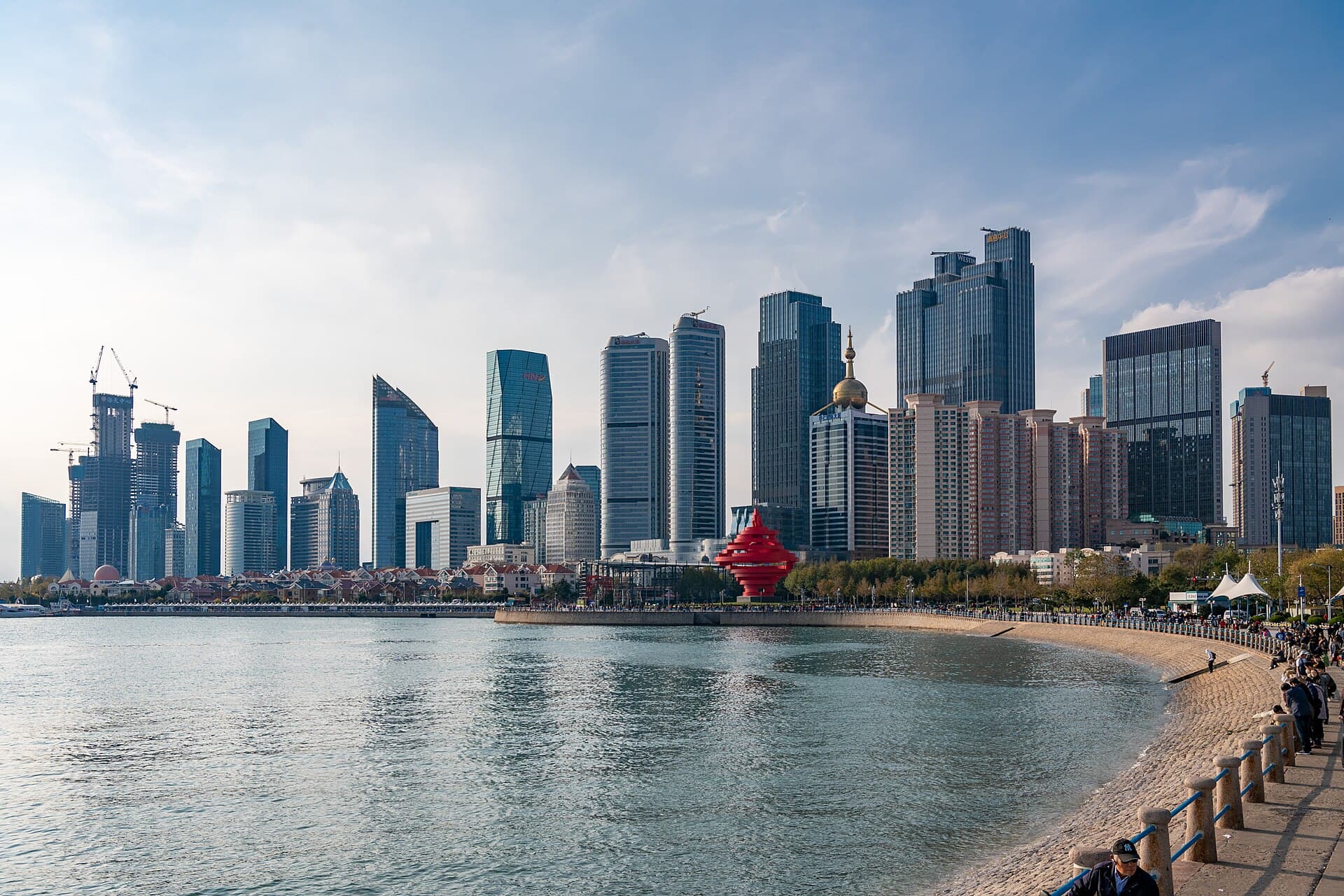 xiquinhosilva / CC BY 2.0, via Wikimedia Commons
Zelfgeleide audiowandeling door Qingdao — GPS-route, offline afspelen, meeslepende vertelling in 32 talen.
“Waar roodgedakte daken de Gele Zee ontmoeten, en Duitse precisie overgaat in Chinese charme.”
Niet de ansichtkaarten. De verhalen die zelfs locals niet kennen — gefluisterd in je oor, precies waar ze gebeurden.
Het wereldberoemde Tsingtao Bier heeft een unieke lokale serveertraditie die u nergens anders vindt.
Deze schilderachtige wijk, erkend voor zijn diverse architectuur, heeft een geheim over zijn boomrijke lanen.
De charmante gebouwen in Europese stijl die veel van de oude stad van Qingdao definiëren, zijn niet allemaal zo oud als ze lijken.
Ontdek elk geheim van Qingdao
Elk adres, elke onthulling volledig — in je oor, precies waar het gebeurde.
Jij kiest je stops. Jij wandelt. De stem onthult wat de anderen missen.


Je zelfgeleide audiotour van Qingdao is klaar — kies je bezienswaardigheden, kies je taal en start zodra je aankomt.
KopenLume heeft een ingebouwde augmented-reality-gids. Houd je telefoon omhoog: de camera toont de straat voor je, met een oplichtende pijl over het echte beeld die altijd naar je volgende stop wijst — geen kaart om uit te puzzelen, geen verkeerde afslagen. Zoals alles in Lume werkt het volledig offline.
Qingdao, een belangrijke havenstad aan de kust van de Gele Zee in de Chinese provincie Shandong, biedt een onderscheidende mix van Chinese en Europese invloeden. Ooit een Duitse concessie, kenmerkt het unieke architectonische landschap van de stad zich door Europese gebouwen met rode dakpannen die contrasteren met de moderne skyline en de kustlandschappen. De stad staat bekend om zijn schone straten, frisse lucht en een ontspannen sfeer die het onderscheidt van vele andere bruisende Chinese metropolen.
Het karakter van de stad wordt prachtig samengevat in de lokale uitdrukking: 'Rode tegels, groene bomen, blauwe lucht en blauwe zee', die perfect de visuele identiteit beschrijft. Naast zijn esthetiek staat Qingdao wereldwijd bekend als de thuisbasis van Tsingtao Bier, een erfenis van zijn Duitse verleden. Bezoekers kunnen historische bezienswaardigheden verkennen, genieten van schilderachtige stranden en zich onderdompelen in een lokale cultuur die zijn diverse erfgoed naadloos verweeft.
Qingdao is niet zomaar een historische curiositeit; het is een dynamische stad die zich sinds het open-door-beleid van China in 1984 snel heeft ontwikkeld tot een ultramoderne havenstad. Het dient als een belangrijk economisch en cultureel centrum, waar grote elektronicamultinationals en instellingen voor mariene wetenschap en technologie zijn gevestigd.
## Van Vissersdorp tot Duitse Modelkolonie Qingdao begon als een klein vissersdorp aan de Baai van Jiaozhou. Het traject veranderde dramatisch in 1897 toen Duitsland het gebied met geweld bezette en een lease van 99 jaar verkreeg. De Duitsers zagen Qingdao als hun 'Duitsland in het Oosten', een strategisch handelscentrum, marinebasis en een modelkolonie. Ze investeerden zwaar in infrastructuur, bouwden een moderne haven, een spoorlijn die verbinding maakte met Jinan, brede straten, robuuste woningen, overheidsgebouwen en geavanceerde nutsvoorzieningen zoals elektrificatie, een rioleringssysteem en een veilige drinkwatervoorziening – destijds een zeldzaamheid in Azië.
## Wisselende handen en blijvende erfenissen De controle van Duitsland over Qingdao duurde slechts 16 jaar. In 1914, bij het uitbreken van de Eerste Wereldoorlog, bezette Japan de stad tijdens het Beleg van Tsingtao. Hoewel Japan economische dominantie behield, kwam Qingdao in 1922 onder Chinees bewind na de Washington Naval Conference, met bemiddeling van de Verenigde Staten. Japan bezette Qingdao echter opnieuw in 1938 tijdens de Tweede Chinees-Japanse Oorlog, en hield het tot 1945. Na de Tweede Wereldoorlog diende Qingdao kortstondig als hoofdkwartier voor de Amerikaanse marinevloot in West-Pacifische Oceaan voordat het in 1949 onder de controle van de Volksrepubliek China kwam.
## Een stad herboren Ondanks de veranderingen in bestuur bleef de Duitse architectonische en stedenbouwkundige erfenis voortbestaan. Veel van de iconische gebouwen in Europese stijl die vandaag de dag te zien zijn, waaronder de Sint-Michielskathedraal en het treinstation, werden gebouwd of sterk beïnvloed door Duitse ontwerpen, zelfs als ze na de koloniale periode werden gebouwd. Sinds China's 'Hervormings- en Openingsbeleid' in de jaren 80 is Qingdao getransformeerd tot een ultramoderne havenstad, een belangrijk economisch centrum en een belangrijke knooppuntstad in het Belt and Road Initiative. Het blijft zijn gelaagde verleden combineren met een toekomstgericht heden, wat het een unieke bestemming maakt.
Begin uw verkenning bij de Zhanqiao Pier, een iconisch symbool van Qingdao dat zich uitstrekt in de baai en op elk Tsingtao Beer-etiket staat. Loop naar het achthoekige Huilan Pavilion aan het einde voor uitzicht op de rode daken van de oude stad en de moderne skyline. In de buurt biedt Little Qingdao Isle (Xiao Qingdao) een rustig uitje, verbonden met het vasteland door een schilderachtige dijk. Dit luitvormige eiland heeft een witte vuurtoren gebouwd door Duitse kolonisten in 1900 en serene tuinen.
Dompel u onder in het Europese erfgoed van Qingdao door te dwalen door het Badaguan Scenic Area, ook wel bekend als de 'Acht Passen'. Deze wijk is een labyrint van meer dan 200 villa's die diverse architectonische invloeden tonen, waaronder Russische, Engelse en Franse ontwerpen. Mis het Prinsessenhuis niet, een zeegroen gebouw in Scandinavische stijl, en Huashi Lou (Het Stenen Huis), een granieten kasteel met gotische en romaanse elementen die uitzicht op zee bieden. De Qingdao Katholieke Kerk (Sint-Michielskathedraal), met zijn dubbele spitsen van 56 meter en rood betegelde dak, is een prominent herkenningspunt en een populaire plek voor trouwfoto's.
Voor een voorproefje van het lokale leven en de geschiedenis, bezoek het Tsingtao Beer Museum, gevestigd in de originele brouwerij uit 1903. Hier kunt u meer leren over het brouwproces en vers, ongepasteuriseerd bier proeven. Verken daarna Pichai Yuan (Firewood Court), een traditionele binnenplaats uit de jaren 1900 die is uitgegroeid tot een levendig streetfoodparadijs, met alles van gegrilde inktvis tot lokale gehaktvisdumplings. Voor panoramisch uitzicht over de stad, beklim Signal Mountain Park, een voormalig signaalstation dat nu uitzicht biedt op de oude stad, de zee en de moderne skyline.
Qingdao biedt het hele jaar door iets, afhankelijk van uw gewenste sfeer. De lente (maart-mei) brengt bloeiende bloemen en aangenaam weer. De zomer (juni-augustus) is ideaal om te genieten van het warme weer en de stranden, hoewel ze erg druk kunnen zijn. Dit is ook wanneer het Qingdao International Beer Festival, het grootste bierfestival van Azië, plaatsvindt. De herfst (september-november) biedt fantastische belichting voor fotografie en comfortabele temperaturen. De winter (december-februari) is kouder, met af en toe sneeuw, en biedt een ander, rustiger perspectief op de stad.
Qingdao Jiaodong International Airport (TAO) is de belangrijkste toegangspoort, met binnenlandse vluchten vanuit grote Chinese steden en internationale routes naar bestemmingen zoals Seoul en Tokio. Vanaf de luchthaven verbindt Metro Lijn 8 rechtstreeks met het stadscentrum, wat 40-50 minuten duurt, of u kunt kiezen voor luchthavenpendelbussen of taxi's. Qingdao heeft een efficiënt openbaarvervoernetwerk, waaronder een uitgebreid metronetwerk (lijnen 1-13) dat belangrijke gebieden bestrijkt, en een uitgebreid busnetwerk. Tarieven zijn goedkoop, meestal CNY 2-6 voor metroritten en CNY 1-2 voor bussen. Mobiele betaalmethoden zoals Alipay en WeChat Pay worden breed geaccepteerd voor transport en aankopen.
Qingdao wordt beschouwd als een van de veiligste steden in China, met zeer lage tarieven voor gewelddadige en kleine criminaliteit. Alleenreizende vrouwen vinden het over het algemeen erg veilig. Hoewel een cashless samenleving wijdverbreid is, is het raadzaam om een kleine hoeveelheid contant geld bij u te hebben. Fooien geven is niet gebruikelijk in China. Voor internettoegang is een VPN nodig om sites zoals Google en Facebook te bezoeken.
Qingdao — Koreaans, Chinees, Hebreeuws en nog 29 talen, elke stop verteld door een moedertaalspreker. Het grootste taalaanbod van alle zelfgeleide audiotours.
Beschikbaar in: