Saint-Corentin Cathedral
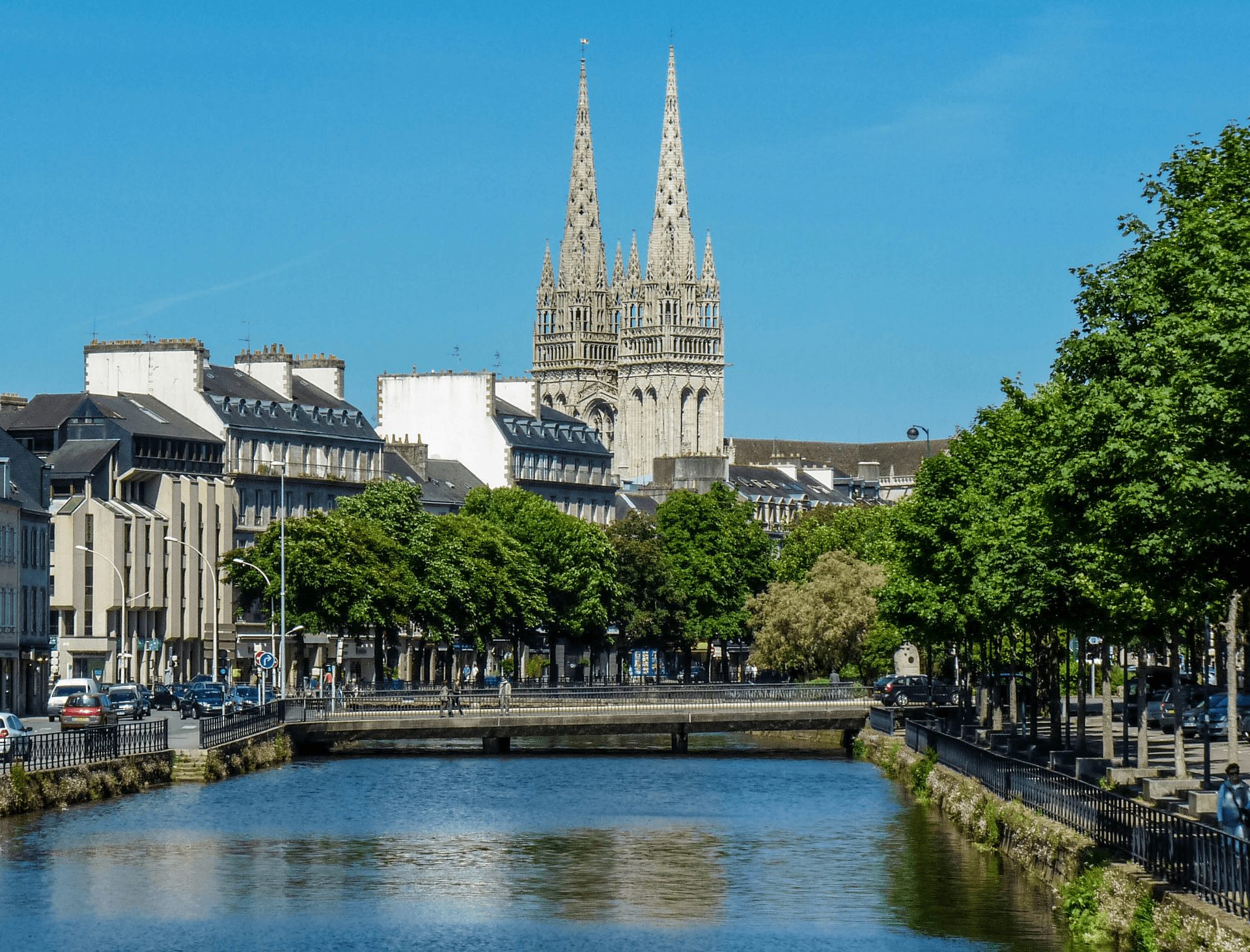
The grand Gothic cathedral in Quimper holds an architectural secret, a subtle inclination interpreted by some as a divine gesture.
Full story unlocks in the tour
 Romain Cormier / CC BY-SA 3.0, via Wikimedia Commons
Self-guided audio walking tour of Quimper — GPS route, offline playback, story-driven narration in 32 languages.
“Where three rivers converge, ancient narratives and Breton ways intertwine.”
Not the postcards. The stories even locals don't know — whispered in your ear, right where they happened.
The grand Gothic cathedral in Quimper holds an architectural secret, a subtle inclination interpreted by some as a divine gesture.
This inviting square, now encircled by crêperies, earned its name from a surprisingly practical—and quite aromatic—past.
Look closely between the twin spires of the cathedral, and you will discern a solitary figure on horseback, forever gazing westward.
Discover every secret of Quimper
Every address, every reveal in full — in your ear, right where it happened.
You pick your stops. You walk. The voice reveals what the others miss.

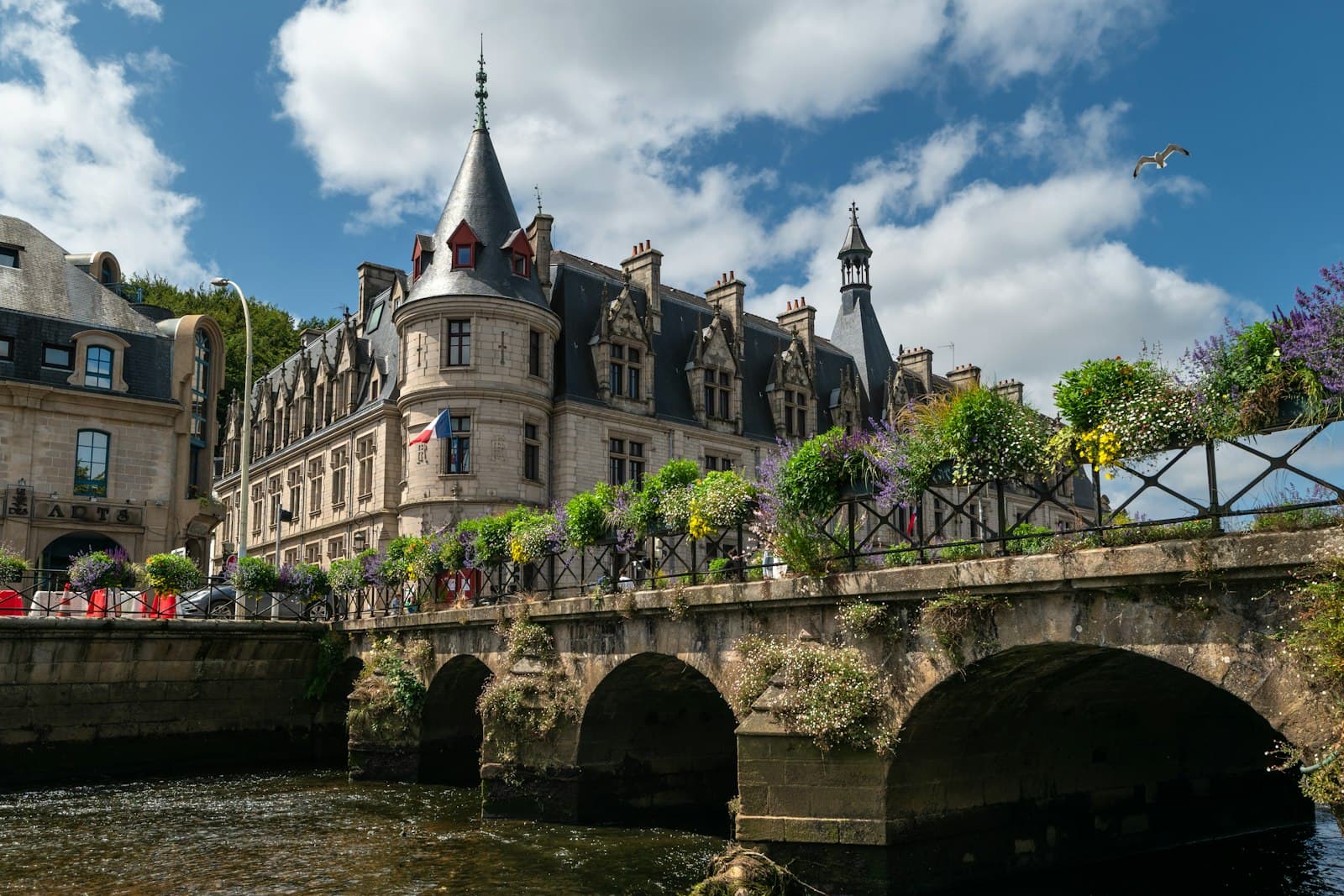
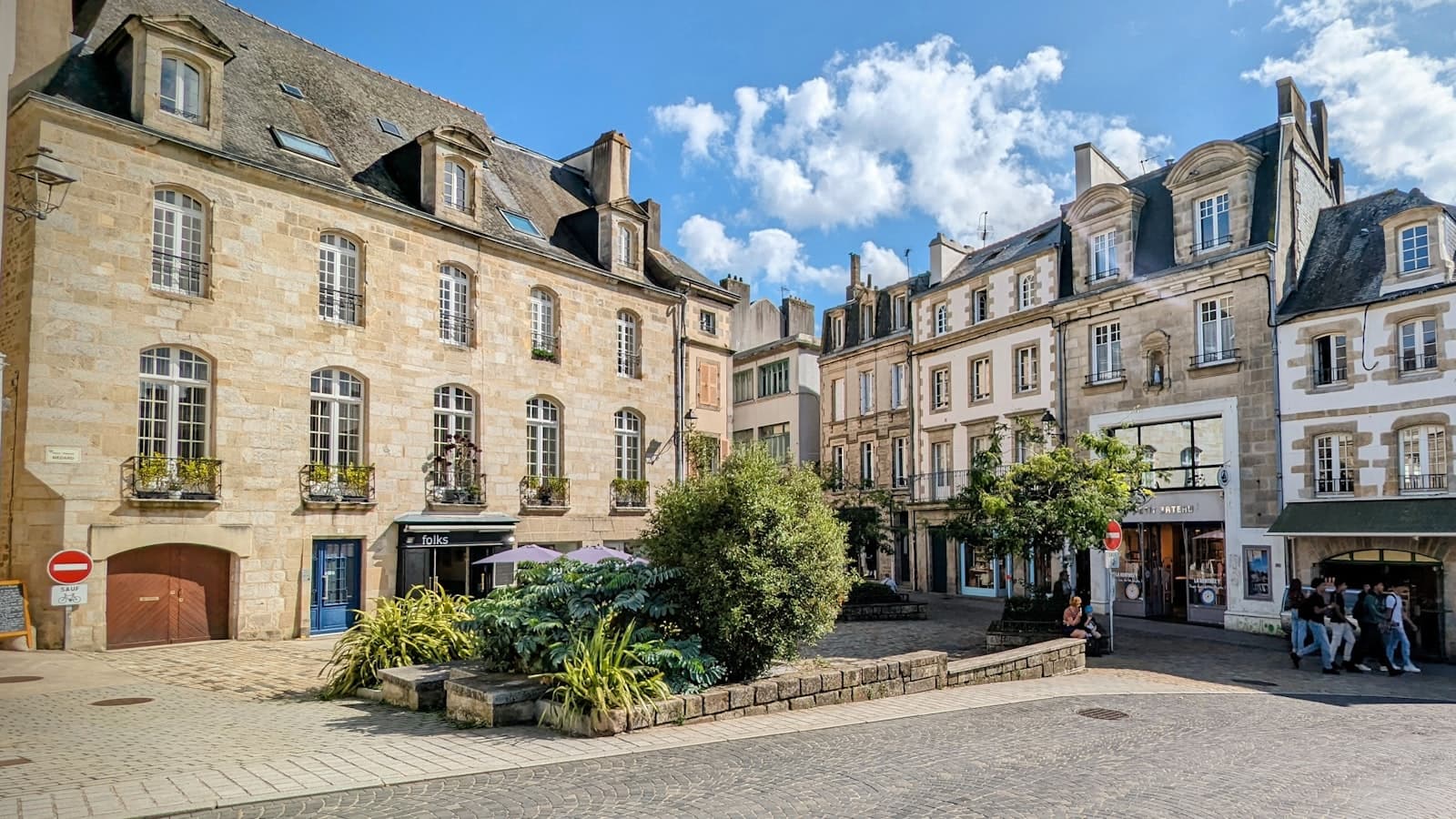
Your self-guided audio tour of Quimper is ready — pick your landmarks, choose your language, and start the moment you arrive.
BuyLume has a built-in augmented-reality guide. Hold your phone up and its camera shows the street ahead of you, with a glowing arrow laid over the real view that always points to your next stop — no map to puzzle over, no wrong turns. Like everything in Lume, it works fully offline.
Quimper, the ancient capital of Cornouaille, is a city where the past is tangible in its winding avenues and half-timbered homes. Situated in Brittany, at the convergence of the Odet, Steïr, and Jet rivers—its very name 'Kemper' signifies 'confluence' in Breton—this city offers a distinct Breton-Celtic identity. It is a place where traditional music and dance traditions flourish, and the local language, Breton, is still honored.
Beyond its architectural allure, Quimper is a living expression of Breton culture, evident in its celebrated faience pottery, delicious crêpes, and lively festivals. The city provides a blend of historical depth, artistic expression, and a relaxed atmosphere, making it an ideal destination for those seeking an authentic experience of France's most distinctive region.
## From Roman Settlement to Breton Capital Quimper's origins trace back to Roman times when the area was part of Gaul. By AD 495, it had become a Bishopric, and later, the capital of the counts of Cornouaille. Local history is intertwined with legends, particularly that of King Gradlon, who, after the mythical city of Ys was submerged, is said to have made Quimper the capital of Cornouaille. Saint Corentin, Quimper's first bishop, is also a central figure in the city's early spiritual foundations.
## Medieval Growth and Architectural Milestones Between the 13th and 15th centuries, Quimper saw significant development, including the construction of the Saint-Corentin Cathedral, a significant work of Gothic architecture. The city's structure was defined by its fortress walls, solidifying its status as a religious and political center. However, Quimper also endured periods of conflict, suffering considerable ruin during the War of the Breton Succession in the 14th century.
## The Rise of Faience and Modern Connections The 17th century marked a period of growth for Quimper with the establishment of its celebrated faience pottery industry, a craft that has been continuously practiced since at least 1690. This tin-glazed pottery, often adorned with bold provincial designs and the iconic 'Petit Breton' character, became a symbol of the city. The 19th century brought further modernization, with the completion of the cathedral's towering spires in 1856 and the arrival of railway connections in 1863, linking Quimper to Paris and Nantes and boosting trade and tourism. Today, Quimper serves as the administrative center of the Finistère department, while proudly preserving its distinct Celtic identity and historical character.
Begin your exploration at the Saint-Corentin Cathedral, a prominent example of Breton Gothic architecture with its distinctive twin spires and a subtly curved nave. Adjacent to the cathedral is the Palais des Évêques de Cornouaille, which now houses the Musée Départemental Breton, offering insights into Celtic civilization and local history.
Walk through Old Quimper (Vieux Quimper), a pedestrianized area characterized by narrow, stone-paved streets and half-timbered houses. Do not overlook Rue Kéréon, known for its shops, and Place au Beurre, an appealing square. The Locmaria district, the city's oldest, is home to the Romanesque Church of Locmaria, the tranquil Jardin du Prieuré, and the historic Henriot-Quimper earthenware factory, where you can observe the creation of traditional faience pottery.
For art enthusiasts, the Musée des Beaux-Arts de Quimper presents European paintings from the 14th century to the present, including works from the Pont-Aven school. The Halles Saint-François, a covered market, provides a lively atmosphere to sample local produce and specialties. Consider a peaceful walk along the banks of the Odet River, which flows through the city, offering scenic views and footbridges.
Quimper experiences an oceanic climate, offering mild temperatures throughout the year. The most pleasant time to visit for warm-weather activities is from late June to early September, with average temperatures around 17-18°C (63-64°F). July and August are generally the warmest months, ideal for exploring on foot. While precipitation is possible year-round, the period from April to August typically sees the least amount of rain. The annual Festival de Cornouaille, a lively celebration of Breton culture with music and dance, takes place in July.
Quimper is well-connected by train, with regular services from Paris taking approximately four hours. The city is also accessible by car, with good road connections. Quimper-Cornouaille Airport offers flights to and from several French destinations.
Within the city, the historic center is highly walkable, allowing easy access to the cathedral, museums, and shops. Public buses serve the city and nearby towns, though services typically stop in the early evening. If staying outside the center or planning late-night outings, booking a taxi in advance is advisable.
Accommodation options range from boutique hotels to charming bed and breakfasts, with many centrally located choices. For dining, Quimper offers a thriving scene focused on traditional Breton cuisine, with numerous crêperies serving savory galettes and sweet crêpes, often paired with local cider.
Quimper in Korean, in Chinese or in Hebrew — and 29 more languages, every stop narrated by a native voice. The widest language range of any self-guided audio tour.
Available in: