Portale di San Giorgio
Entre el esplendor barroco de Ragusa Ibla, un portal gótico-catalán se alza como un centinela solitario. ¿Por qué luce tan diferente?
La historia completa se desbloquea en el tour
 Photo: Letian Zhang / Unsplash
Tour de audio autoguiado de Ragusa — ruta GPS a pie, reproducción offline, narración en 32 idiomas.
“Dos Ragusas, una historia dramática.”
No las postales. Las historias que ni los locales conocen — al oído, justo donde ocurrieron.
Entre el esplendor barroco de Ragusa Ibla, un portal gótico-catalán se alza como un centinela solitario. ¿Por qué luce tan diferente?
Ragusa es conocida como 'la ciudad de los puentes', pero estos no son puentes cualquiera. Uno, en particular, debe su existencia a la súplica de un sacerdote.
Paseando por las estrechas calles de Ragusa Ibla, podrías notar algo encantadoramente inesperado sobre algunos de sus habitantes felinos.
Descubre todos los secretos de Ragusa
Cada dirección, cada revelación al completo — a tu oído, justo donde ocurrió.
Eliges tus paradas. Caminas. La voz te revela lo que los demás ignoran.


Lume incluye una guía de realidad aumentada. Levanta el móvil y su cámara muestra la calle que tienes delante, con una flecha luminosa sobre la imagen real que siempre apunta a tu próxima parada — sin mapas que descifrar, sin giros equivocados. Como todo en Lume, funciona completamente sin conexión.
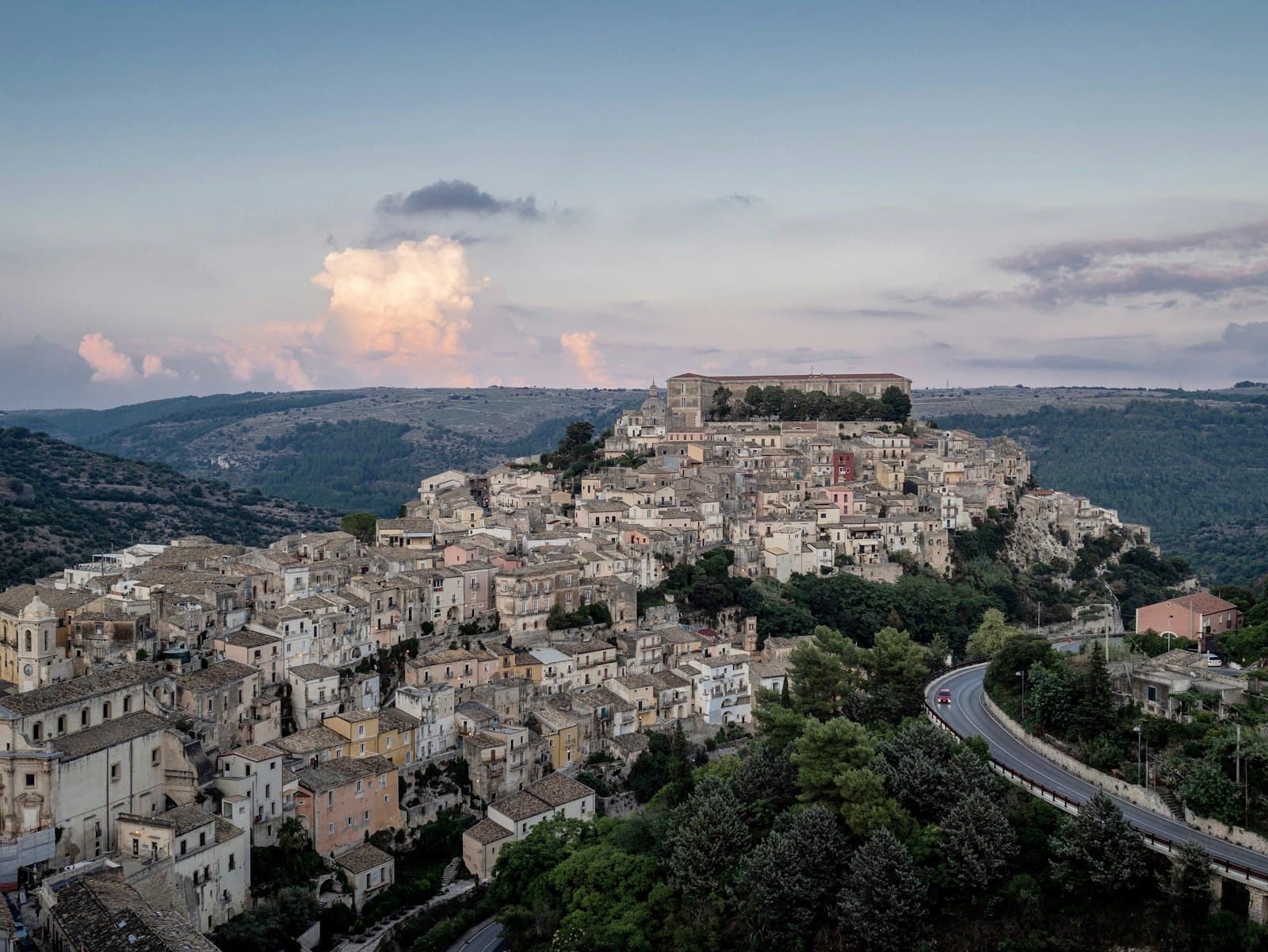
Ragusa, una ciudad en el sureste de Sicilia, presenta una dualidad cautivadora. Es famosa por estar dividida en dos partes distintas: Ragusa Ibla, la ciudad antigua y baja, y Ragusa Superiore, la ciudad más nueva y alta. Esta división única surgió del catastrófico terremoto de 1693, que arrasó gran parte de la región. Mientras la aristocracia eligió reconstruir Ragusa Ibla en su emplazamiento original, conservando su trazado medieval y sinuoso, muchos otros residentes optaron por construir un nuevo asentamiento, Ragusa Superiore, en una meseta más alta con un diseño más moderno y reticular.
Hoy, ambas secciones son celebradas por su carácter distintivo. Ragusa Ibla, Patrimonio de la Humanidad por la UNESCO, es un museo al aire libre del Barroco siciliano, con sus edificios de tonos dorados y sus intrincados detalles arquitectónicos. Ragusa Superiore, aunque más contemporánea, también cuenta con impresionantes estructuras barrocas y ofrece miradores panorámicos con vistas a su contraparte más antigua. Las dos Ragusas están conectadas por una red de carreteras sinuosas, escalinatas escénicas y tres puentes, invitando a los visitantes a explorar sus historias entrelazadas y maravillas arquitectónicas.
La historia de Ragusa se remonta al segundo milenio a.C., con los primeros asentamientos sículos en la zona. El actual distrito de Ragusa Ibla se identifica como la antigua Hybla Heraea. La ubicación estratégica de la ciudad en una colina de 300 metros de altura facilitó el contacto con las colonias griegas cercanas y su puerto. A lo largo de los siglos, Ragusa se convirtió en un cruce de culturas, experimentando períodos de dominación cartaginesa, romana, bizantina, árabe y normanda, todos los cuales dejaron su huella en la ciudad.
Un punto de inflexión dramático llegó el 11 de enero de 1693, cuando un terremoto masivo, conocido como el tirrimotu ranni, devastó el sureste de Sicilia, reduciendo a Ragusa y a todo el Val di Noto a ruinas. Los registros históricos lo describen como una città tota diruta (una ciudad completamente destruida).
Tras el terremoto, surgió un importante debate sobre la reconstrucción de la ciudad. La aristocracia favoreció la reconstrucción en el sitio original, lo que llevó al renacimiento de Ragusa Ibla con sus intrincadas y sinuosas calles. Mientras tanto, una floreciente clase burguesa optó por construir un nuevo asentamiento, Ragusa Superiore, en una colina separada y más alta, caracterizada por un plan urbano más ordenado. Ambas partes fueron reconstruidas en el exuberante estilo Barroco Tardío, utilizando la cálida piedra caliza dorada de las cercanas colinas Ibleas. Esta notable reconstrucción le valió a Ragusa, junto con otras siete ciudades del Val di Noto, un lugar en la lista del Patrimonio Mundial de la UNESCO por su extraordinaria arquitectura barroca.
Los dos municipios distintos, Ragusa Ibla y Ragusa Superiore, permanecieron separados hasta que se fusionaron formalmente en 1926, convirtiéndose Ragusa en capital provincial en 1927. La ciudad también experimentó desarrollos económicos, incluido el descubrimiento de un yacimiento de asfalto en 1838 y la fundación de Banca Popolare Cooperativa di Ragusa en 1889, que se convirtió en una importante institución financiera en la región.
Ragusa ofrece una gran cantidad de lugares de interés en sus dos mitades distintas. En Ragusa Ibla, el corazón histórico, pasea por un laberinto de calles estrechas y admira la arquitectura barroca. No te pierdas el Duomo di San Giorgio, una impresionante catedral con una fachada barroca y una cúpula imponente, a la que se accede por una escalinata de 250 escalones. La Iglesia de Santa Maria delle Scale, situada entre Ragusa Ibla y Ragusa Superiore, ofrece vistas panorámicas y conserva elementos de su estilo gótico-catalán anterior a 1693. El Giardino Ibleo, un jardín público, ofrece un refugio tranquilo con vistas a los valles circundantes.
En Ragusa Superiore, explora la grandiosa Catedral de San Giovanni Battista, una importante iglesia barroca. La zona también cuenta con otros elegantes palacios barrocos del siglo XVIII como el Palazzo Lupis, el Palazzo Bertini y el Palazzo Zacco, conocidos por sus balcones ornamentados y detalles esculpidos. Para los entusiastas de la historia, el Museo Arqueológico Ibleo alberga artefactos desde el Neolítico hasta la Edad Media. Los miradores panorámicos de Ragusa Superiore, como los de Corso Mazzini o cerca del Ospedale Arezzo, ofrecen amplias vistas de Ragusa Ibla.
Las épocas ideales para visitar Ragusa son a finales de primavera (mayo a mediados de junio) y principios de otoño (mediados de septiembre a mediados de octubre). Durante estos períodos, el clima es agradable y las multitudes suelen ser menores que en los meses pico de verano. Si bien el verano (junio a agosto) es caluroso y soleado, con temperaturas que a veces superan los 40 °C (104 °F) durante las olas de calor, también es una época de animados eventos culturales y actividades de playa en la cercana Marina di Ragusa. El invierno (diciembre a febrero) es templado pero puede ser lluvioso, y muchos pueblos pequeños de Sicilia tienden a cerrar, lo que lo hace menos ideal para explorar.
Se puede llegar a Ragusa en autobús desde ciudades como Siracusa, Noto y Módica, con las principales terminales de autobuses y trenes ubicadas en Ragusa Superiore. Si te diriges directamente a Ragusa Ibla, conducir podría ser más fácil, con aparcamiento disponible justo debajo de sus murallas. Si bien un coche no es esencial para explorar los principales puntos de interés dentro de Ragusa Ibla y Superiore (que están conectados por escaleras y un camino sinuoso), es muy recomendable para excursiones de un día a pueblos UNESCO cercanos como Módica, Scicli y Noto. Ten en cuenta que Ragusa Ibla tiene una zona de tráfico limitado, así que organiza el transporte a tu alojamiento con antelación si te alojas allí. La caminata entre Ragusa Superiore y Ragusa Ibla implica subidas y bajadas, pero los autobuses locales y un autobús lanzadera desde Giardino Ibleo pueden ayudar con el trayecto.
Ragusa en coreano, en chino o en hebreo — y 29 idiomas más, cada parada narrada por una voz nativa. La mayor variedad de idiomas de cualquier audioguía autoguiada.
Disponible en: