The Green Light
Hinter einem scheinbar gewöhnlichen Bücherregal in einer Bar in der Innenstadt entfaltet sich eine andere Art von Geschichte.
Die ganze Geschichte wird in der Tour freigeschaltet
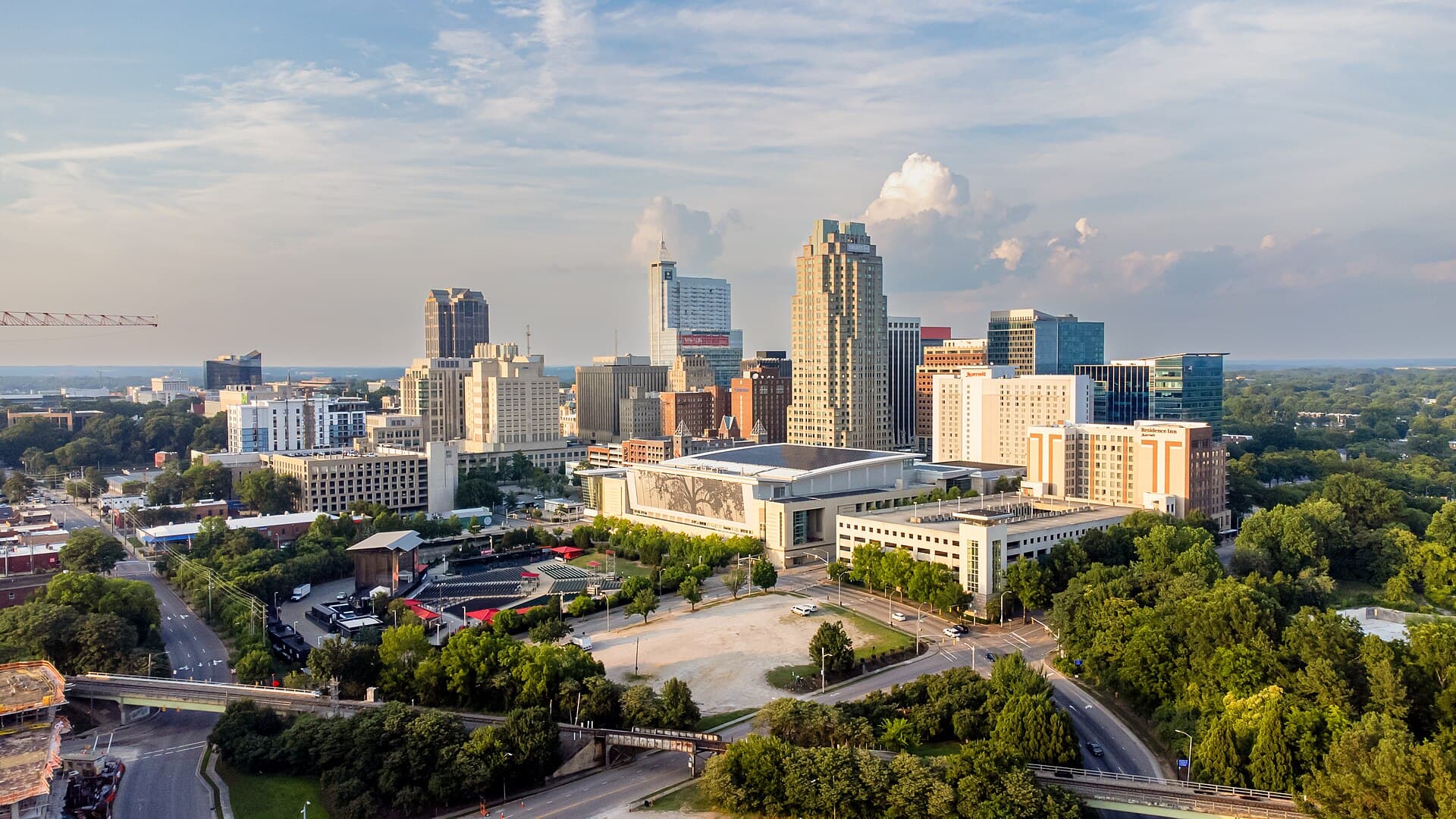 Abhiram Juvvadi / CC BY-SA 4.0, via Wikimedia Commons
Selbstgeführte Audio-Walking-Tour durch Raleigh — GPS-Route, Offline-Wiedergabe, erzählerische Narration in 32 Sprachen.
“In Raleigh entfaltet sich die Geschichte entlang prächtiger, von Bäumen gesäumter Alleen, wo Innovation Wurzeln schlägt und gedeiht.”
Nicht die Postkarten. Die Geschichten, die selbst Einheimische nicht kennen – dir ins Ohr geflüstert, genau dort, wo sie geschahen.
Hinter einem scheinbar gewöhnlichen Bücherregal in einer Bar in der Innenstadt entfaltet sich eine andere Art von Geschichte.
Einige von Raleighs Infrastrukturen sind nicht das, was sie scheinen, und wurden so gestaltet, dass sie sich einfügen, anstatt Aufmerksamkeit zu erregen.
Nur eine kurze Autofahrt von der Stadt entfernt bietet ein einzigartiges Ökosystem ein Paddelerlebnis, wie es in der Gegend kein zweites gibt.
Entdecke jedes Geheimnis von Raleigh
Jede Adresse, jede Enthüllung vollständig – in deinem Ohr, genau dort, wo es geschah.
Du wählst deine Stationen. Du gehst. Die Stimme enthüllt, was andere übersehen.


Deine selbstgeführte Audio-Tour durch Raleigh ist bereit – wähle deine Sehenswürdigkeiten, deine Sprache und starte, sobald du ankommst.
KaufenLume enthält einen integrierten Augmented-Reality-Guide. Halten Sie Ihr Handy hoch: Die Kamera zeigt die Straße vor Ihnen, mit einem leuchtenden Pfeil über dem echten Bild, der immer auf Ihren nächsten Stopp zeigt — keine Karte zum Rätseln, keine falschen Abzweigungen. Wie alles bei Lume funktioniert es komplett offline.
Raleigh, North Carolina, oft als "City of Oaks" wegen seiner zahlreichen Eichen bekannt, bietet eine unverwechselbare Mischung aus südlichem Charme und moderner Innovationskraft. Als Hauptstadt ist es eine der wenigen Städte in den Vereinigten Staaten, die bewusst geplant und gebaut wurden, um als Regierungssitz zu dienen, anstatt organisch zu wachsen. Dieses durchdachte Design zeigt sich noch heute in seinem gut organisierten Straßennetz und dem weitläufigen Stadtzentrum.
Raleigh ist Teil des angesehenen Research Triangle, zusammen mit Durham und Chapel Hill, und fungiert als Zentrum für Technologie, Bildung und Forschung, angetrieben von Institutionen wie der North Carolina State University. Dieser Wirtschaftsmotor hat sein Wachstum beflügelt und es zu einer der am schnellsten wachsenden Städte der USA gemacht. Trotz seiner rasanten Entwicklung behält Raleigh eine einladende, zugängliche Atmosphäre bei, die oft als eine Mischung aus Metropolenflair und Kleinstadtwärme beschrieben wird.
Raleighs Ursprünge liegen in einer bewussten Entscheidung der Legislative von North Carolina. Im Jahr 1788 wurde das Gebiet als Standort für die neue Hauptstadt des Bundesstaates ausgewählt, um einen zentral gelegenen Regierungssitz zu schaffen, der zudem vor Küstenangriffen geschützt war. Die Stadt wurde offiziell 1792 gegründet und nach Sir Walter Raleigh benannt, dem englischen Entdecker, der frühe Kolonisierungsversuche in der Neuen Welt unterstützte. Im Gegensatz zu vielen Städten, die sich willkürlich entwickelten, wurde Raleigh sorgfältig geplant und in einem Gittermuster mit dem North Carolina State Capitol im Zentrum, dem Union Square, angelegt.
Das Land für die Hauptstadt wurde von Joel Lane gekauft, einem wohlhabenden Plantagenbesitzer, der oft als "Vater von Raleigh" bezeichnet wird. Sein Haus, das um 1769 erbaut wurde, beherbergte bereits 1771 die erste Sitzung des Wake County Court. Frühe Stadtführer unternahmen auch bewusste Anstrengungen, Eichen entlang der Straßen zu pflanzen, eine Tradition, die Raleigh seinen bleibenden Spitznamen "City of Oaks" einbrachte.
Raleighs Wachstum war anfangs langsam, aber die Ankunft der Eisenbahn im Jahr 1840 beflügelte einige Entwicklungen. Die Stadt spielte eine Rolle im Amerikanischen Bürgerkrieg, und später, in der Nachkriegszeit nach dem Zweiten Weltkrieg, erlebte sie einen bedeutenden Bauboom. Ein entscheidender Moment in Raleighs moderner Geschichte war die Gründung des Research Triangle Park (RTP) im Jahr 1959. Diese Zusammenarbeit zwischen lokalen Regierungen und Universitäten zielte darauf ab, ein Zentrum für akademische und geschäftliche Innovation zu schaffen. Heute ist RTP, gelegen zwischen Raleigh, Durham und Chapel Hill, ein weltbekanntes Zentrum für Technologie, Medizin und wissenschaftliche Forschung, das große Unternehmen anzieht und die robuste Wirtschaft der Region antreibt.
Raleigh bietet eine Vielzahl von Attraktionen, die Geschichte, Natur und Kultur miteinander verbinden. Beginnen Sie Ihre Erkundungstour in der Innenstadt mit dem North Carolina State Capitol, einem bedeutenden Wahrzeichen, das 1840 erbaut wurde. In der Nähe befindet sich auch die North Carolina Executive Mansion, der Amtssitz des Gouverneurs, die ebenfalls einen Besuch wert ist. Für ein tieferes Eintauchen in die Geschichte des Bundesstaates bietet das North Carolina Museum of History umfangreiche Ausstellungen.
Tauchen Sie ein in die Kunst im North Carolina Museum of Art, das eine breite Sammlung globaler Werke und einen weitläufigen Skulpturenpark mit großformatigen Installationen und Spazierwegen beherbergt. Das North Carolina Museum of Natural Sciences, ein kostenloses Museum, ist bekannt für seine beeindruckende "Dueling Dinosaurs"-Ausstellung. Für Outdoor-Vergnügen bietet der Pullen Park, einer der ältesten Vergnügungsparks der USA, Fahrgeschäfte, Tretboote und ein historisches Karussell. Das Capital Area Greenway System mit über 320 Kilometern Wegen verbindet viele Parks und Naturschutzgebiete der Stadt und bietet zahlreiche Möglichkeiten zum Spazierengehen, Joggen und Erkunden. Verpassen Sie nicht das JC Raulston Arboretum, einen 4 Hektar großen Garten an der NC State University.
Die angenehmsten Zeiten für Outdoor-Aktivitäten und Sightseeing in Raleigh sind im Frühling (April bis Juni) und Herbst (September bis Anfang November). Diese Jahreszeiten bieten milde Temperaturen, blühende Blumen im Frühling und reiche Herbstfarben. Sommer (Juli bis August) können heiß und feucht sein, während die Winter (Dezember bis Februar) im Allgemeinen mild sind mit gelegentlichen kühlen Temperaturen. Frühling und Herbst fallen auch mit verschiedenen Festivals und Veranstaltungen zusammen.
Raleigh ist leicht mit dem Auto, Bus, Zug oder Flugzeug erreichbar, wobei der RDU International Airport die Region bedient. Obwohl die Stadt autofreundlich ist, gibt es öffentliche Verkehrsmittel durch die Busse von GoRaleigh, die Raleigh, Durham und Chapel Hill verbinden. Fahrdienste sind ebenfalls weit verbreitet. Für diejenigen, die mit dem Auto anreisen, ist zu beachten, dass es auf dem Raleigh Beltway zu Verkehrsstaus in der Innenstadt kommen kann.
Die Umsatzsteuer in Raleigh und Wake County beträgt insgesamt 7,25 % (4,75 % staatliche Steuer und 2,5 % county-Steuer). Die Stadt bietet eine Reihe von Unterkünften mit über 18.000 Hotelzimmern in Wake County und mehr als 1.000 in der Innenstadt von Raleigh. Während die Lebenshaltungskosten im Vergleich zu großen Metropolregionen im Allgemeinen moderat sind, sind die Immobilienpreise gestiegen. Raleigh hat vier ausgeprägte Jahreszeiten mit hohem Pollenflug im frühen Frühling, daher sollten Allergiker dies entsprechend planen.
Raleigh — Koreanisch, Chinesisch, Hebräisch und 29 weitere Sprachen, jede Station von einer muttersprachlichen Stimme erzählt. Die größte Sprachauswahl aller selbstgeführten Audiotouren.
Verfügbar auf: