Hertenpark Kasteel Rapperswil
Het kasteelterrein herbergt meer dan alleen oude stenen en weidse uitzichten.
Volledig verhaal ontgrendeld in de tour
 Roland zh / CC BY-SA 3.0, via Wikimedia Commons
Zelfgeleide audiowandeling door Rapperswil — GPS-route, offline afspelen, meeslepende vertelling in 32 talen.
“Waar middeleeuwse torenspitsen de rustige uitgestrektheid van het meer ontmoeten.”
Niet de ansichtkaarten. De verhalen die zelfs locals niet kennen — gefluisterd in je oor, precies waar ze gebeurden.
Het kasteelterrein herbergt meer dan alleen oude stenen en weidse uitzichten.
Een van de gevierde rozentuinen van Rapperswil beslaat land met een verrassende geschiedenis.
Het oversteken van het Meer van Zürich hier betekent het volgen van paden die door eeuwenlange reizigers zijn versleten.
Ontdek elk geheim van Rapperswil
Elk adres, elke onthulling volledig — in je oor, precies waar het gebeurde.
Jij kiest je stops. Jij wandelt. De stem onthult wat de anderen missen.


Je zelfgeleide audiotour van Rapperswil is klaar — kies je bezienswaardigheden, kies je taal en start zodra je aankomt.
KopenLume heeft een ingebouwde augmented-reality-gids. Houd je telefoon omhoog: de camera toont de straat voor je, met een oplichtende pijl over het echte beeld die altijd naar je volgende stop wijst — geen kaart om uit te puzzelen, geen verkeerde afslagen. Zoals alles in Lume werkt het volledig offline.
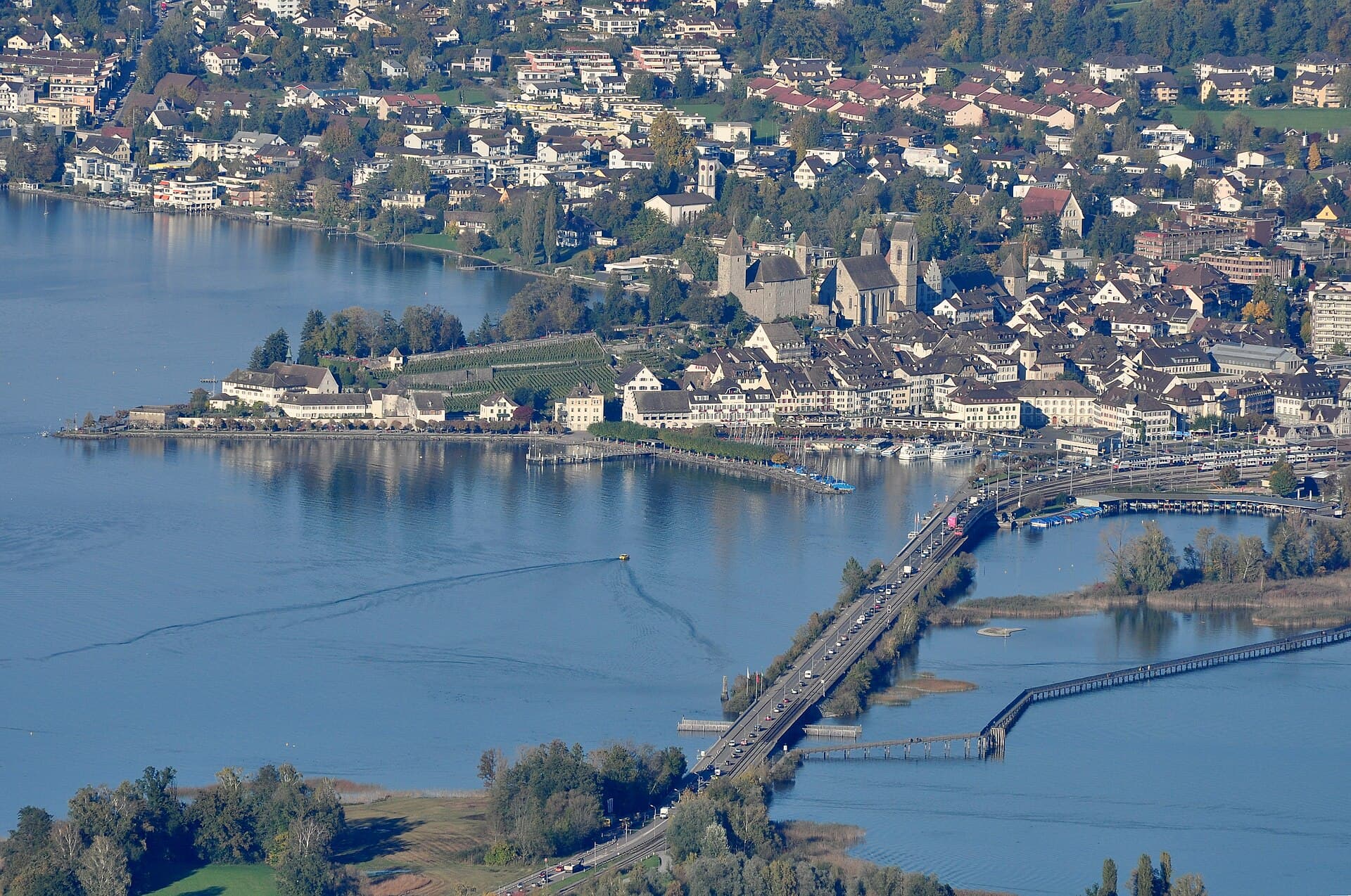
Rapperswil, liefkozend bekend als de "Rozenstad", rust aan de oostelijke oever van het Meer van Zürich, precies waar het water versmalt. Deze charmante Zwitserse bestemming, die in 2007 fuseerde met Jona om Rapperswil-Jona te vormen, biedt een boeiende samensmelting van middeleeuwse architectuur, serene waterkanten en overvloedige bloemendecoraties. Het historische hart, bekroond door een 13e-eeuws kasteel, nodigt bezoekers uit om door de stenen geplaveide straatjes en langs een promenade versierd met palmbomen te dwalen.
De voordelige ligging en natuurlijke pracht van de stad maken het al eeuwenlang een geliefde plek, die zowel dagjesmensen als mensen die een langer verblijf zoeken aantrekt. Van de levendige Oude Stad tot de rustige rozentuinen en weidse uitzichten over het meer, Rapperswil levert een beknopte maar diepgaande Zwitserse ervaring. Het is een plek waar geschiedenis ademt en het ritme van het leven een ongehaaste verkenning aanmoedigt, en een kalmerend contrast biedt met de activiteit van het nabijgelegen Zürich.
Of u nu met de trein arriveert of een schilderachtige boottocht over het Meer van Zürich maakt, Rapperswil ontvouwt zich in lagen en onthult een aantrekkelijke sfeer die de historische fundamenten in evenwicht brengt met een ontspannen, gezinsvriendelijk karakter. Het is een bestemming die meer biedt dan alleen een pittoresk tafereel, en bezoekers aanmoedigt zich onder te dompelen in de onderscheidende cultuur, het blijvende verleden en de natuurlijke omgeving.
Het verhaal van menselijke bewoning in de regio Rapperswil-Jona gaat minstens 5.000 jaar terug, met archeologische ontdekkingen die wijzen op activiteit van de Kelten en Romeinen. Het gebied rond de kasteelheuvel Lindenhof vertoont continue bewoning vanaf het einde van de 10e eeuw. De stad Rapperswil zelf werd rond 1200 gesticht door de welgestelde adellijke familie van Rapperswil, die hun voorouderlijke zetel vanuit Altendorf over het meer verplaatste. Het kasteel en de stad werden voor het eerst officieel vermeld in documenten in 1229.
In de Middeleeuwen groeide Rapperswil uit tot een belangrijk regionaal centrum, met een economie geworteld in markt handel, visserij en wijnbouw. De strategische ligging van de stad langs handelsroutes droeg bij aan haar welvaart, waardoor ze een zekere mate van autonomie genoot binnen de Habsburgse gebieden en later de Zwitserse Confederatie.
In 1350 werden de stadsmuren en het kasteel van Rapperswil afgebroken door Rudolf Brun, de burgemeester van Zürich, vanwege politieke conflicten. De Habsburgers verworven Rapperswil echter al snel, en tussen 1352 en 1354, en opnieuw van 1360 tot 1400, werd het kasteel herbouwd, waarbij de blijvende vorm werd vastgelegd. Deze wederopbouw, inclusief een nieuwe houten brug over het meer, was een bewuste machtsvertoon van de Oostenrijkse hertogen. Het kasteel, met zijn drie torens, werd een symbool van Rapperswil, dat zowel aristocratische autoriteit als stedelijke onafhankelijkheid vertegenwoordigde.
In 1415 kocht de stad haar vrijheid, en tegen 1458 kwam ze onder het bestuur van de Zwitserse Confederatie, bestuurd door de kantons Glarus en Schwyz. Het kasteel fungeerde vervolgens als administratief centrum, militair post en gevangenis.
Rapperswil's associatie met rozen is diep verankerd in haar heraldiek, met het wapen van de graven dat rozen bevat. Deze traditie evolueerde naar uitgebreide bloementeelt, wat leidde tot de omschrijving van Rapperswil als de "Rozenstad". De vroegste gedocumenteerde rozentuinen dateren uit de jaren 1820, met aanzienlijke uitbreidingen in het midden van de 20e eeuw. In 1958 zag een grootschalige verfraaiingsinspanning de aanplant van duizenden rozenstruiken, wat haar onderscheidende toeristische identiteit verstevigde.
Een opmerkelijk hoofdstuk in de kroniek van het kasteel begon in 1870, toen de Poolse graaf Wladyslaw Broel-Plater, een emigrant, het voor 99 jaar huurde. Hij restaureerde het kasteel en stichtte het Pools Nationaal Museum, waardoor het fort een symbool werd van de Poolse strijd voor vrijheid. In 2007 fuseerden de voorheen onafhankelijke gemeenten Rapperswil en Jona, en vormden het hedendaagse Rapperswil-Jona, de op één na grootste stad in het kanton St. Gallen.
Het kasteel van Rapperswil, dat oorspronkelijk uit de vroege 13e eeuw dateert, domineert de horizon en biedt een weids uitzicht over het Meer van Zürich en de Alpen. Binnen de muren toont het Pools Museum de Poolse geschiedenis en cultuur. Beneden het kasteel nodigt de Oude Stad (Altstadt) uit tot verkenning met haar stenen paden, historische gebouwen en arcades. Belangrijke plekken zijn de Hauptplatz, waar markten en feesten plaatsvinden.
Rapperswil maakt haar "Rozenstad"-naam eer aan met meer dan 15.000 rozenstruiken verspreid over verschillende tuinen, die bloeien van mei tot oktober. Bijzonder opmerkelijk zijn de Openbare Rozentuin bij het Kapucijnerklooster en een gespecialiseerde geurtuin ontworpen voor visueel gehandicapten. De promenade langs het meer is ideaal voor een ontspannen wandeling, versierd met palmbomen en bloembedden. Vanaf hier kan men een boottocht maken op het Meer van Zürich.
Een van de meest onderscheidende ervaringen is het oversteken van de 841 meter lange houten voetgangersbrug (Holzbrücke) over het meer naar Hurden, die een panoramisch uitzicht biedt. Voor gezinnen biedt Knie's Kinderboerderij een mogelijkheid tot interactie met dieren.
Rapperswil is het hele jaar door aantrekkelijk, maar elk seizoen presenteert een onderscheidend karakter. De lente (april-mei) brengt de eerste bloei van de rozentuinen en verlevendigt de wandelpaden. De zomer (juni-augustus) is ideaal voor boottochten, zwemmen in het meer en genieten van de volledige bloei van de rozen, met gemiddelde dagelijkse maxima in juli van 24°C. De herfst (september-oktober) schildert het landschap met gouden bladeren en minder bezoekers. De winter (november-december) transformeert de stad met feestelijke verlichting en markten. Voor activiteiten bij warmer weer wordt eind juni tot begin september aanbevolen.
Rapperswil is gemakkelijk bereikbaar vanuit de grote steden van Zwitserland. Vanaf Zürich HB duurt een treinreis ongeveer 35-40 minuten met de S-Bahn lijnen S5 of S7, met frequente verbindingen. Het treinstation ligt op korte loopafstand van de belangrijkste bezienswaardigheden. Schilderachtige boottochten vanuit Zürich verbinden Rapperswil ook tussen april en oktober, wat ongeveer twee uur duurt. Als u met de auto komt, is Rapperswil ongeveer 40 minuten van Zürich via de snelweg A3, met parkeergelegenheid met parkeermeters nabij het treinstation, het kasteel en de promenade aan het meer, hoewel openbaar vervoer vaak handiger is vanwege beperkte ruimte in de Oude Stad.
De Oude Stad kan het beste te voet worden verkend, dus comfortabele schoenen zijn essentieel voor de stenen paden en de klim naar het kasteel. Zelfs in de zomer is een licht jasje aan te raden voor avonden aan het meer, waar de bries koel kan zijn. Het leren van een paar basis Duitse zinnen kan de interactie met de lokale bevolking verrijken.
Rapperswil — Koreaans, Chinees, Hebreeuws en nog 29 talen, elke stop verteld door een moedertaalspreker. Het grootste taalaanbod van alle zelfgeleide audiotours.
Beschikbaar in: