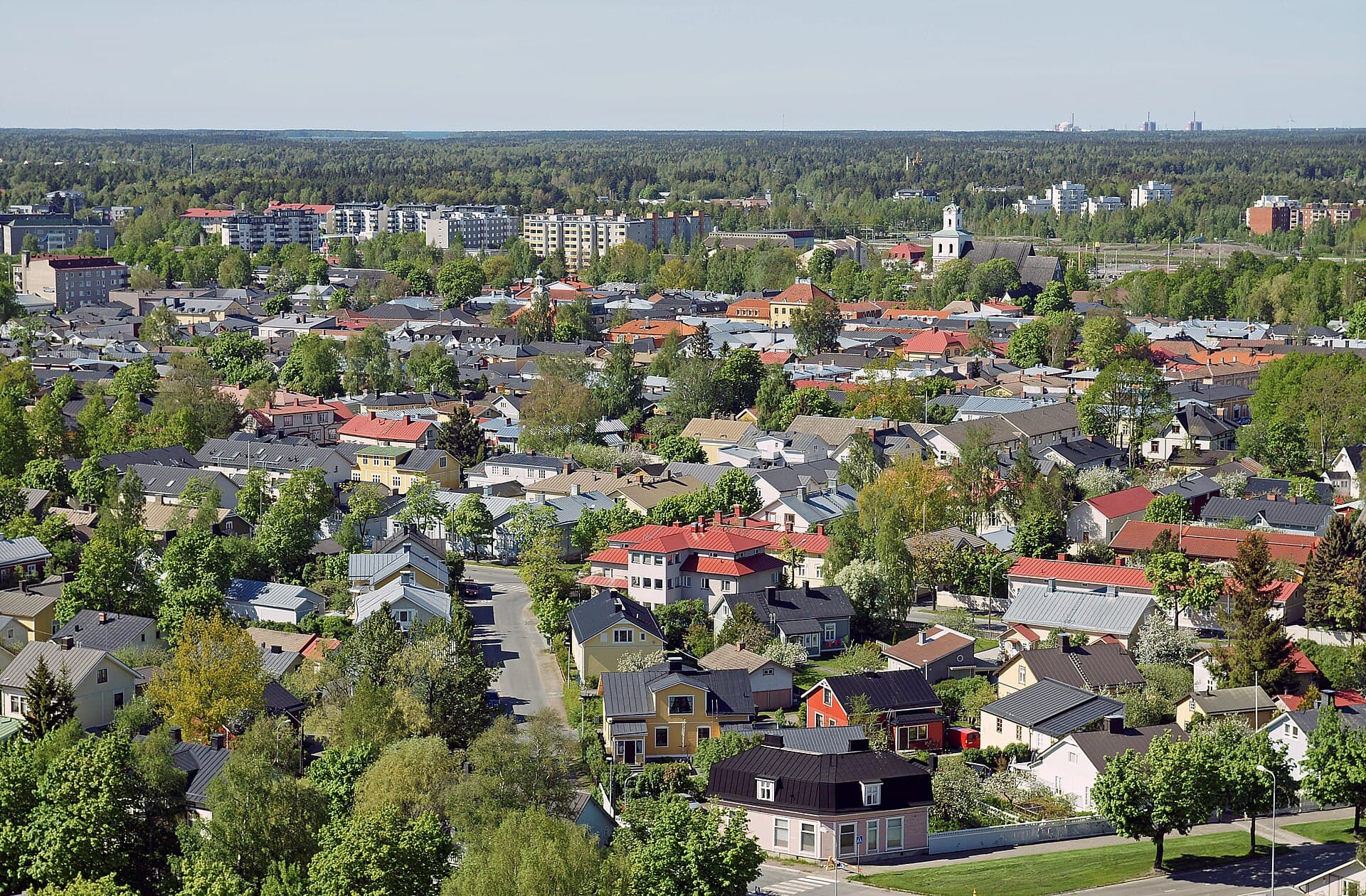
Rauma, Finlandkallerna / CC BY-SA 3.0, via Wikimedia Commons
FI

Rauma

Where painted wooden houses tell centuries of stories and lace whispers through the air.

The secrets of Rauma

Rauma, as no one tells it.

Not the postcards. The stories even locals don't know — whispered in your ear, right where they happened.

3 secrets below. Many more wait inside the tour.
Windows of Old Rauma

Look closely at the windows of the wooden houses, and you might spot small porcelain dogs.

Full story unlocks in the tour
Old Rauma's Alleyways

Some windows in Old Rauma feature an unusual black contraption outside.

Full story unlocks in the tour
Kitukränn

There's a street in Old Rauma so narrow, it feels more like a passageway than a public thoroughfare.

Full story unlocks in the tour
The full tour

Discover every secret of Rauma

Every address, every reveal in full — in your ear, right where it happened.

Get the key to Rauma

You pick your stops. You walk. The voice reveals what the others miss.

Choose your time

How long do you have in Rauma?

No tours available yet. Check back soon — we're preparing them.

About Rauma

The story of Rauma

Rauma, a coastal city on Finland's west coast, offers a unique blend of medieval character and maritime history. Its most captivating feature is Old Rauma (Vanha Rauma), a UNESCO World Heritage site since 1991, celebrated as the largest intact wooden old town in the Nordic countries. Wandering through its 29-hectare expanse, you'll find over 600 pastel-painted wooden buildings lining a network of stone-paved lanes and courtyards. This isn't a preserved museum piece; it's a living, breathing neighborhood where around 800 residents still reside amidst boutiques, cafés, and artisan workshops.

Beyond the picturesque streets, Rauma is deeply intertwined with its seafaring past and a unique lace-making heritage, earning it the designation "Lace Town." The city's distinct identity is also reflected in its local dialect, "Rauman giäl," which incorporates influences from various languages due to centuries of maritime trade. From its bustling summer festivals to the tranquil snow-dusted lanes of winter, Rauma provides a journey through centuries of Finnish resilience and cultural richness.

History

From Monastery to Maritime Powerhouse

Rauma's story begins in the 15th century, officially founded in 1442 under Swedish rule, making it one of Finland's oldest towns. Its early development centered around a Franciscan monastery, whose Church of the Holy Cross, inaugurated in 1512, still stands as a medieval landmark. In its nascent years, Rauma thrived as a seaport, with medieval "salmon men" exporting fish, furs, and seal oil across the Baltic to destinations like Stockholm, Tallinn, and the Hanseatic cities.

The town's wooden architecture, a hallmark of its identity, has faced challenges. Devastating fires in 1640 and 1682 razed much of the medieval settlement. However, Rauma was meticulously rebuilt in the distinctive Nordic wooden style that defines Old Rauma today, with most of the current buildings dating from the 18th and 19th centuries. The town's layout, however, largely retained its medieval structure.

By the 1700s, Rauma became renowned for bobbin lace-making, a tradition that became a significant source of income, particularly for women, children, and even old men. This craft, along with its maritime endeavors, solidified Rauma's economic standing. The late 19th century marked Rauma's zenith as a maritime powerhouse, with Finland's largest sailing fleet in 1897, comprising 57 ships engaged in timber and tar trade across Europe. This prosperity is visibly reflected in the ornate Neo-Renaissance wooden architecture found in many Old Rauma homes.

Rauma's unique dialect, "Rauman giäl," also developed during these centuries of seafaring and trade, absorbing vocabulary and influences from Swedish, German, Dutch, English, and Estonian. This linguistic distinctiveness, coupled with its preserved wooden town and lace-making tradition, contributed to Old Rauma's designation as a UNESCO World Heritage site in 1991, recognizing it as an outstanding example of traditional Nordic wooden urban architecture.

What to see

Begin your exploration in Old Rauma (Vanha Rauma), the UNESCO World Heritage site. Wander the stone-paved streets, admiring the over 600 pastel-painted wooden houses. Many of these are still private residences, but you'll also find small shops, cafés, and artisan workshops. Do not miss Kitukränn, Finland's narrowest street.

Visit the Church of the Holy Cross (Pyhän Ristin kirkko), a 15th-century Franciscan monastery church, notable for its medieval vault paintings. Nearby, the Old Town Hall Museum (Kalatori square), a Baroque building from 1776, houses exhibits on Rauma's maritime history and lace-making heritage.

Delve deeper into local life at the Rauma Museum's network of preserved homes. The Marela Museum (Kauppakatu 24) showcases the affluent life of a 19th-century shipowner's family, complete with period furnishings. In contrast, the Kirsti Museum (Pohjankatu 3) provides a glimpse into the everyday life of 18th-century sailors and craftsmen, including a lace-maker's workshop. The Rauma Art Museum (Kuninkaankatu 37), set in a former merchant's house, hosts rotating exhibitions.

For a different kind of historical experience, take a 20 km drive inland to Sammallahdenmäki, another UNESCO World Heritage site. This Bronze Age burial site features 36 stone burial mounds, dating back over 3,000 years, scattered across heathland and pine woods.

When to visit

The best time to visit Rauma for general outdoor activities is from early July to mid-August. Summers offer comfortable temperatures, averaging 15–20°C (59–68°F), with up to 19 hours of daylight, ideal for exploring the wooden streets and archipelago. July is particularly lively with Lace Week, Rauma's biggest annual event, featuring exhibitions, markets, and festivities. Winter transforms the town into a tranquil, snow-covered landscape, with shorter daylight hours and temperatures often below freezing. While quieter, the Christmas season offers local markets and festive lights.

Practical

Rauma is a compact and walkable city, especially Old Rauma. The main bus station is conveniently located near the old town, with connections to cities like Helsinki, Turku, and Tampere. If arriving by car, parking is available around the periphery of the car-free Old Town. For exploring the archipelago, scheduled boats run daily in summer from Poroholma marina to islands like Kylmäpihlaja. While generally safe, it's always wise to be aware of your surroundings, particularly in quieter alleys after dark. A combined ticket, typically around €8, grants access to several of Rauma's museums.

Good to know
What is Rauma most famous for?
Rauma is most famous for its UNESCO-listed Old Rauma, the largest preserved wooden town in the Nordic countries, and its long-standing tradition of bobbin lace-making.
Is Old Rauma a living town or a museum?
Old Rauma is a living, inhabited town, not a museum. Around 800 residents live in its historic wooden houses, alongside shops, cafés, and artisan workshops.
What is 'Rauman giäl'?
'Rauman giäl' is the unique local dialect of Rauma, belonging to the Southwestern Finnish dialect group. It is characterized by shortened words and influences from various maritime languages.
Are there other UNESCO sites near Rauma?
Yes, approximately 20 km inland from Rauma is Sammallahdenmäki, a UNESCO World Heritage site featuring Bronze Age burial cairns dating back over 3,000 years.
When is Lace Week in Rauma?
Lace Week in Rauma is held annually in July, typically the last week of the month. It is the city's largest event, celebrating the traditional craft of lace-making with exhibitions and festivities.
What local food should I try in Rauma?
You can try *lapskoussi*, a traditional seafarer's dish of slow-cooked meat and vegetables, and *Rauman pipari*, a local gingerbread cookie.
Rauma
From€9.00
No booking · activate anytime · 12h to walk it
Get the key to Rauma