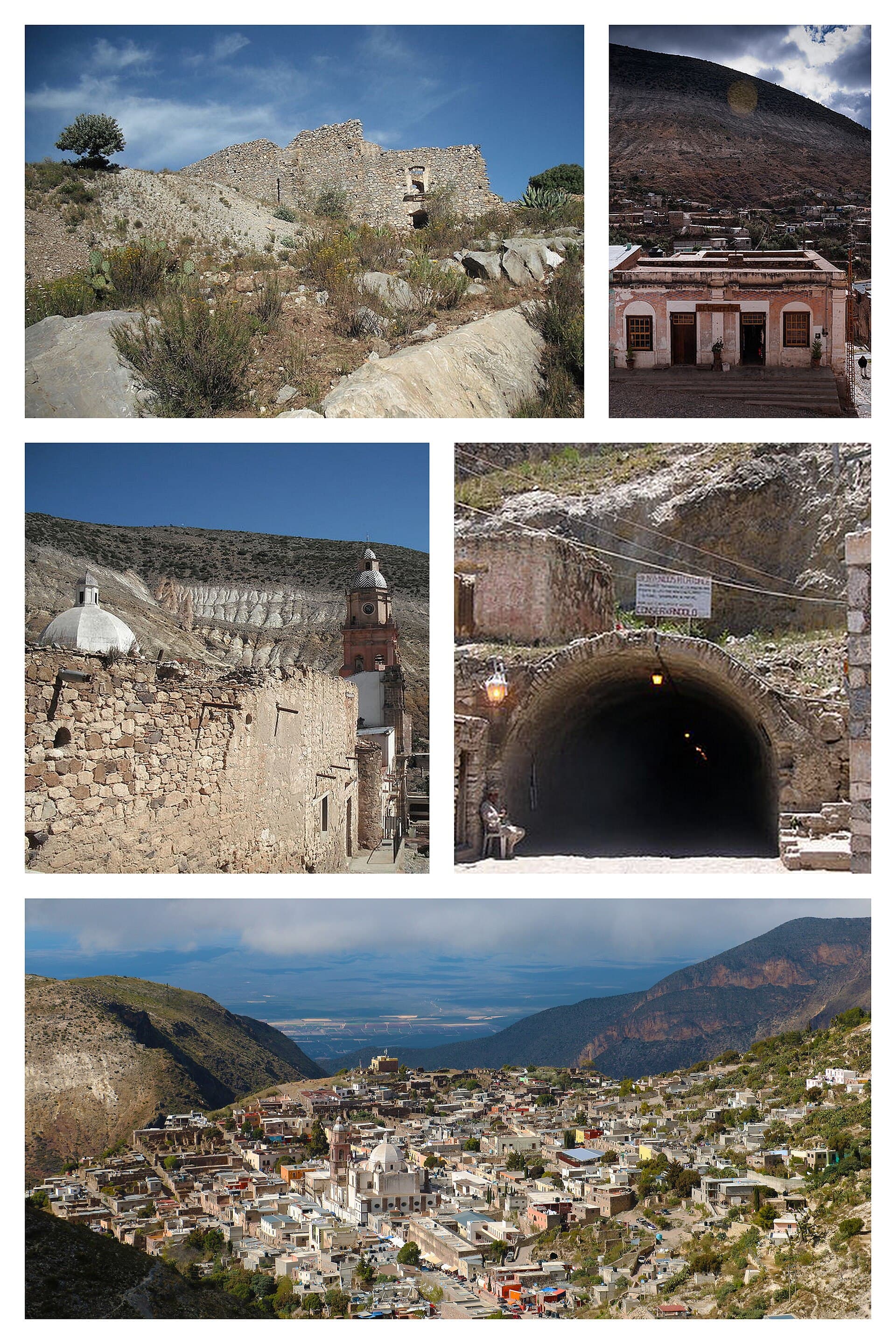
The primary entrance to Real de Catorce is a 1.5-mile tunnel, hand-carved through a mountain. It's a journey into the past, but it also held a secret that kept the town's lifeblood flowing.
El Sombrerero / CC BY-SA 4.0, via Wikimedia CommonsReal de Catorce
“Where silver once gleamed, a ghost town breathes again.”
Real de Catorce, as no one tells it.
Not the postcards. The stories even locals don't know — whispered in your ear, right where they happened.
Beyond the main village, the ruins of Real de Catorce's original mining settlement cling to the hillsides. These decaying structures hold a surprising secret about the town's enduring spirit.
The town's grand parish church, built between 1790 and 1817, is a testament to Real de Catorce's former wealth. Inside, a venerated statue of St. Francis of Assisi is said to bear peculiar marks.
Discover every secret of Real de Catorce
Every address, every reveal in full — in your ear, right where it happened.
You pick your stops. You walk. The voice reveals what the others miss.
How long do you have in Real de Catorce?
No tours available yet. Check back soon — we're preparing them.
The story of Real de Catorce
Real de Catorce, a former silver mining town, rises high in the Sierra de Catorce mountains of San Luis Potosí, Mexico. Once a bustling hub with a population of 15,000 in the late 19th century, it became a near ghost town when silver prices plummeted after 1900. Today, it has been revitalized by tourism and its designation as a "Pueblo Mágico" in 2001, drawing visitors with its preserved colonial architecture, stone pathways, and a palpable sense of history.
Access to Real de Catorce is an experience in itself, primarily through the Ogarrio Tunnel, a 1.5-mile, one-lane passage carved through the mountain. This dramatic entrance sets the stage for a town that feels suspended in time, where the echoes of its prosperous past and the quietude of its abandoned structures create a unique, evocative atmosphere. The town sits at over 9,000 feet (2,743 meters) in elevation, offering crisp desert air and sweeping mountain views.
From Silver Boom to Ghost Town and Revival
Real de Catorce's origins trace back to the late 18th century, with silver discovered in the local mountains around 1772. The village was officially founded in 1779, though a settlement had existed for many years prior. Initially named "Real de Álamos de la Purísima Concepción de los Catorce," or "Real de Nuestra Señora de la Concepción de Guadalupe de Álamos," the 'Catorce' (fourteen) part of its name is debated, possibly referring to 14 Spanish soldiers killed in an ambush by Chichimeca warriors, or 14 prospectors who discovered silver.
The town quickly became a significant mining center, and by the late 19th century, it was a thriving metropolis with a population reaching 15,000 to 40,000 inhabitants. Real de Catorce sustained some of Mexico's richest silver mines, a mint, a bullring, and even shops selling European luxury goods. In 1873, the La Purísima mine saw the first use of dynamite in Mexico, replacing gunpowder, and by 1893, electric power was introduced to the mining operations.
However, this prosperity was short-lived. After 1900, the price of silver plummeted, leading to the near-complete abandonment of the town. Only a few residents remained, sustained by mine tailings and the annual influx of pilgrims. This period of decline earned Real de Catorce its "ghost town" moniker, with many grand buildings falling into disrepair.
In 2001, Real de Catorce was designated a "Pueblo Mágico" (Magical Town) by the Mexican government, a program recognizing towns for their natural beauty, cultural richness, or historical relevance. This designation, coupled with its unique atmosphere, has spurred a significant revival in tourism. The town has also served as a backdrop for several major commercial films, including Bandidas and The Mexican. Today, while still retaining its melancholic charm, Real de Catorce thrives on tourism, with many old haciendas being restored.
Real de Catorce encourages exploration on foot or horseback. The central Plaza Hidalgo is a natural starting point, surrounded by colonial buildings. The Parroquia de la Purísima Concepción, an 18th-century neoclassical church, stands as a prominent landmark, attracting Catholic pilgrims, particularly around the feast day of St. Francis of Assisi on October 4th.
Beyond the main town, the Pueblo Fantasma (Ghost Town) offers a haunting glimpse into the past, with crumbling stone walls and abandoned mining structures scattered across the hillsides. Some old mines, like Mina Española Masónica and Mina del Padre Flores, are open for informal tours, often with local guides. A hike or horseback ride to Cerro del Quemado provides sweeping views and is a sacred site for the Huichol people, who undertake annual pilgrimages to this area.
The Ogarrio Tunnel itself is an attraction, a 1.5-mile, one-lane passage that serves as the primary gateway to the town. Visitors can also explore the Antigua Casa de Moneda (Old Mint), which now houses the Cultural Center of Real de Catorce, offering insights into the town's history and Huichol culture. Willys Jeeps are available for tours to more distant sites or into the desert.
The most comfortable times to visit Real de Catorce are during the shoulder seasons: March to May and September to October. During these months, days are mild, and nights are tolerable. While days can be warm, especially in summer, the high elevation means nights are consistently cool, so packing layers is always advisable. Be aware that late September into early October sees a significant increase in visitors due to the San Francisco pilgrimage. The dry season extends from October to April, offering pleasant weather with less rainfall.
Real de Catorce is located approximately 160 miles (260 km) north of the city of San Luis Potosí. The journey often involves taking a bus to Matehuala, the nearest town with regular bus service, and from there, shared vans or Willys Jeeps travel the stone road to the Ogarrio Tunnel. The tunnel is one-way, with traffic control, so expect potential waits. Large vehicles may need to park outside the tunnel.
Once in Real de Catorce, the historic center is car-free, best explored on foot. Horses, donkeys, or mules are common modes of transport for exploring the surrounding areas, with guides readily available. Cell phone signal can be unreliable in the mountainous and desert regions, so downloading offline maps and lodging details beforehand is recommended. Visitors should also be mindful and respectful of the sacred Huichol/Wixárika culture and their traditions, particularly concerning peyote, which is legally restricted to indigenous use.
- What is Real de Catorce known for?
- Real de Catorce is known as a historic silver mining "ghost town" that has been revitalized by tourism. It's famous for its preserved colonial architecture, stone pathways, and the dramatic Ogarrio Tunnel entrance. It's also a significant pilgrimage site for both Catholics and the indigenous Huichol people.
- How do I get to Real de Catorce?
- The most common way is to travel to Matehuala, then take a shared van or Willys Jeep up a stone road to the Ogarrio Tunnel, the single-lane entrance to the town. You can also drive your own 4x4 vehicle to the tunnel entrance.
- Is Real de Catorce safe for tourists?
- Real de Catorce is generally considered safe for tourists, with a laid-back atmosphere and hospitable locals. However, standard safety precautions are advised, especially when hiking or exploring remote areas, where it's wise to go with a guide.
- What is the best time of year to visit Real de Catorce?
- The best time to visit is during the shoulder seasons, from March to May and September to October, when the weather is mild. The dry season from October to April also offers pleasant conditions.
- Can I buy peyote in Real de Catorce?
- No, it is illegal for anyone other than the indigenous Huichol people to gather or possess peyote in Real de Catorce. Visitors should avoid buying or using peyote products and respect local customs and sacred sites.
- What are the main attractions in Real de Catorce?
- Key attractions include the Ogarrio Tunnel, the Parroquia de la Purísima Concepción, the Pueblo Fantasma (Ghost Town) ruins, and the sacred Cerro del Quemado. Horseback riding tours are popular for exploring the surrounding mountains and old mines.