Catedral de Reims
Além de sua grandiosa fachada, a Catedral de Notre-Dame de Reims guarda um segredo, uma unção sagrada que um dia desceu do céu.
História completa desbloqueada no tour
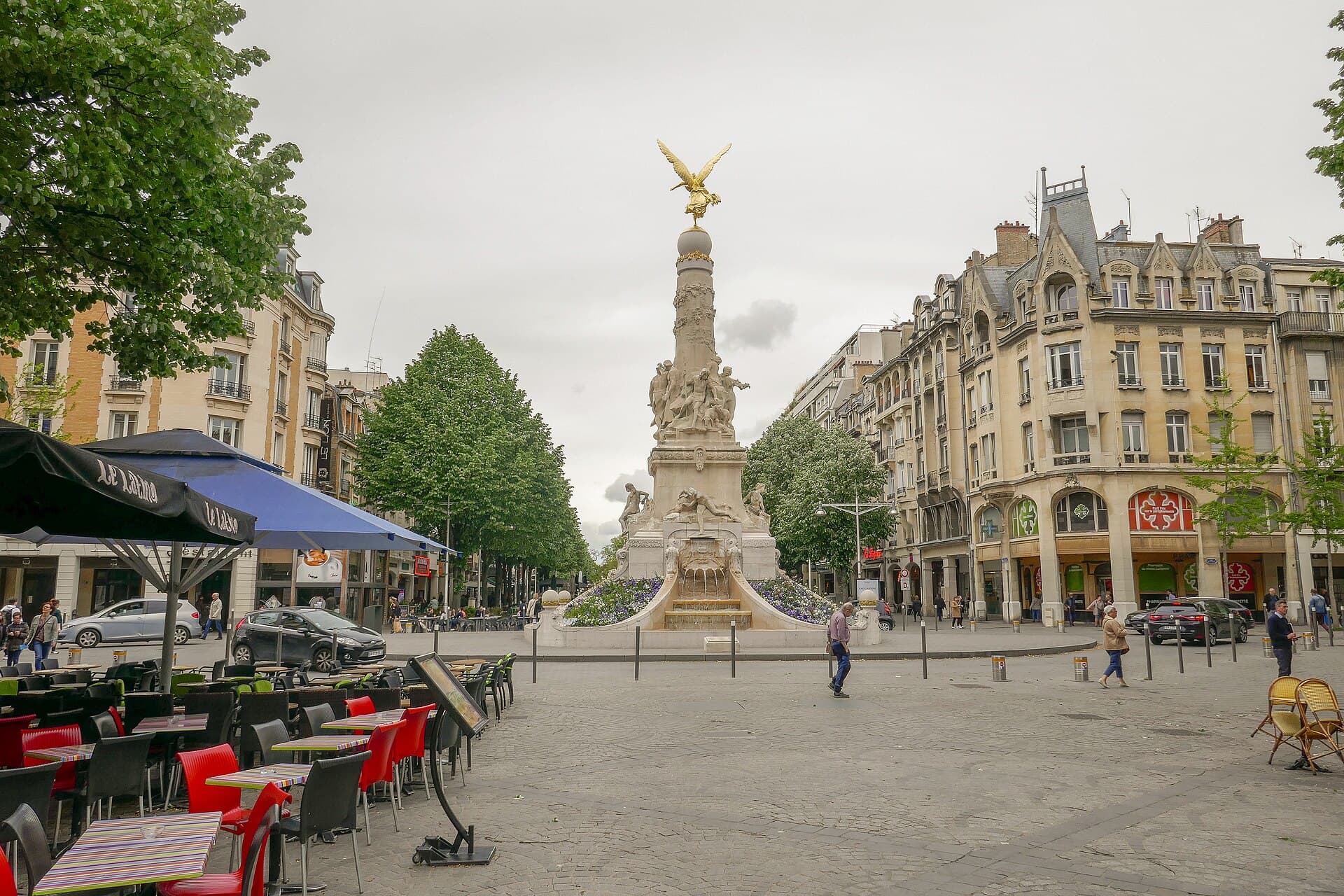 The Crazy Tourist (thecrazytourist.com) / CC BY-SA 4.0, via Wikimedia Commons
Tour de áudio autoguiado por Reims — rota GPS a pé, reprodução offline, narração envolvente em 32 idiomas.
“Onde os monarcas franceses recebiam suas coroas e os sonhos mais efervescentes do mundo são engarrafados.”
Não os postais. As histórias que nem os locais conhecem — sussurradas ao seu ouvido, exatamente onde aconteceram.
Além de sua grandiosa fachada, a Catedral de Notre-Dame de Reims guarda um segredo, uma unção sagrada que um dia desceu do céu.
Sob as ruas movimentadas de Reims jaz um mundo à parte, um labirinto subterrâneo com um passado surpreendente.
O Palácio de Tau, adjacente à Catedral de Reims, foi mais do que apenas uma residência real; desempenhou um papel significativo e cerimonial que pode surpreendê-lo.
Descubra cada segredo de Reims
Cada endereço, cada revelação na íntegra — no seu ouvido, exatamente onde aconteceu.
Você escolhe as suas paragens. Você caminha. A voz revela o que os outros perdem.


A Lume inclui um guia de realidade aumentada. Levante o telemóvel: a câmara mostra a rua à sua frente, com uma seta luminosa sobreposta à imagem real que aponta sempre para a sua próxima paragem — sem mapa para decifrar, sem voltas erradas. Como tudo na Lume, funciona totalmente offline.
Reims, frequentemente chamada de 'Cidade da Coroação', é um lugar onde a história, a realeza e a efervescência do champanhe se entrelaçam. Situada no nordeste da França, a aproximadamente 130 km a nordeste de Paris, esta cidade oferece uma mistura cativante de raízes romanas antigas, grandiosidade arquitetônica gótica e uma atmosfera moderna e vibrante.
Como capital não oficial da região de Champagne, Reims é sinônimo do mundialmente famoso vinho espumante. Suas ruas são ladeadas por distintas casas de Champagne, muitas das quais oferecem passeios por suas expansivas adegas subterrâneas de giz, onde milhões de garrafas envelhecem em perfeitas condições. Mas além do espumante, Reims ocupa um lugar significativo na história francesa, tendo servido como o local tradicional para a coroação dos reis franceses por mais de mil anos.
Apesar de ter sofrido danos extensos durante ambas as Guerras Mundiais, Reims foi meticulosamente reconstruída, exibindo uma notável resiliência e uma mistura única de estilos arquitetônicos, incluindo uma coleção significativa de edifícios Art Déco. Se você é um entusiasta de história, um conhecedor de vinhos ou simplesmente procura uma experiência encantadora em uma cidade francesa, Reims promete uma jornada inesquecível através de sua profunda herança e cultura vibrante.
## Da Capital Gaulesa à Cidade da Coroação A história de Reims começa muito antes dos romanos, como capital da tribo Remi, fundada por volta de 80 a.C. Durante a conquista da Gália por Júlio César, os Remi se aliaram aos romanos, garantindo um favor que levou ao florescimento da cidade como Durocortorum, uma importante cidade do Império Romano. Em seu auge, abrigou uma população de 30.000 a 50.000, possivelmente até 100.000.
## O Berço da Monarquia Francesa Um momento crucial na história francesa ocorreu em Reims por volta de 496 d.C., quando Clóvis I, Rei dos Francos, foi batizado pelo Bispo Remígio. Este evento estabeleceu Reims como o local escolhido para a coroação dos reis franceses, uma tradição que continuou por mais de mil anos, de 816 a 1825. Trinta e três monarcas franceses foram coroados na Catedral de Reims, incluindo Carlos VII em 1429, com Joana d'Arc ao seu lado.
## Guerras e Renascimento A cidade suportou dificuldades significativas ao longo de sua história. Aliou-se à Liga Católica durante as Guerras de Religião francesas e foi afetada pela peste no século XVII. Reims foi danificada durante a Revolução Francesa, um símbolo da monarquia, e novamente nas Guerras Napoleônicas. No entanto, o século XX trouxe a devastação mais profunda. Durante a Primeira Guerra Mundial, Reims esteve na Frente Ocidental e sofreu danos imensos, com mais de 80% da cidade, incluindo sua icônica catedral, sendo destruída por bombardeios. Notavelmente, a cidade foi reconstruída em menos de uma década por mais de 400 arquitetos, resultando em um distinto estilo arquitetônico Art Déco visível hoje. Reims desempenhou outro papel crucial na Segunda Guerra Mundial, pois o Instrumento de Rendição alemão foi assinado lá em 7 de maio de 1945, marcando o fim da guerra na Europa.
## O Coração do Champagne Além de sua história real e de guerra, Reims está intrinsecamente ligada ao Champagne. O clima único da região e o solo calcário, cultivados pela primeira vez pelos antigos romanos, provaram ser ideais para a produção de vinhos espumantes. Hoje, Reims é um importante centro de produção de Champagne, com inúmeras casas distintas oferecendo um vislumbre do meticuloso ofício da vinificação.
Comece sua exploração na Catedral de Notre-Dame de Reims, um Patrimônio Mundial da UNESCO e uma obra-prima da arquitetura gótica. Ela contém mais de 2.300 estátuas, mais do que qualquer outro edifício religioso no mundo, incluindo o famoso Anjo Sorridente. Observe os belos vitrais, alguns dos quais foram criados por Marc Chagall.
Adjacente à catedral fica o Palais du Tau, a antiga residência dos Arcebispos de Reims e um palácio real onde os reis se hospedavam antes de suas coroações. Agora um museu, abriga artefatos da catedral, itens de coroação e tapeçarias.
Aventure-se no mundo do champagne visitando uma das muitas Casas de Champagne. Nomes distintos como Veuve Clicquot, Taittinger, Ruinart, Pommery e Mumm oferecem passeios por suas históricas adegas de giz (crayères), algumas datando da época romana, seguidos de degustações. Ruinart, a casa de Champagne mais antiga estabelecida, é particularmente conhecida por suas crayères galo-romanas.
Explore a herança romana da cidade na Porte de Mars, um arco triunfal bem preservado do século III, um dos maiores arcos romanos sobreviventes no mundo. Para uma experiência histórica comovente, visite o Musée de la Reddition, a sala onde a Alemanha se rendeu oficialmente aos Aliados em 7 de maio de 1945, encerrando a Segunda Guerra Mundial na Europa.
Descubra a Basílica de Saint-Remi, outro Patrimônio Mundial da UNESCO, que abriga o túmulo de São Remígio e apresenta impressionante arquitetura românica e vitrais. Observe a distinta arquitetura Art Déco encontrada em toda a cidade, resultado de sua reconstrução pós-Primeira Guerra Mundial.
Para um deleite local único, procure os Biscuits Roses de Reims, delicados biscoitos cor-de-rosa tradicionalmente mergulhados em champagne.
As melhores épocas para visitar Reims são durante a primavera (abril e maio) ou outono (setembro e outubro). A primavera oferece clima agradável, flores silvestres desabrochando e menos multidões, com preços razoáveis para hotéis e passeios. O outono, especialmente setembro, é ideal, pois o clima permanece confortável, as multidões diminuem e coincide com a temporada de colheita de Champagne, oferecendo uma atmosfera ativa e atividades únicas nos vinhedos.
O verão (junho a início de setembro) traz clima quente, perfeito para atividades ao ar livre e shows de som e luz à noite na catedral, embora também seja a estação turística mais movimentada. O inverno (novembro a fevereiro) é a época mais tranquila e acessível, com temperaturas frias e horas de luz do dia mais curtas. Dezembro é encantador devido às decorações de feriado e mercados de Natal.
Reims é facilmente acessível, especialmente de Paris, com serviços diretos de trem TGV que levam aproximadamente 45 minutos da Gare de l'Est, tornando-a adequada para uma viagem de um dia ou uma estadia mais longa. O centro da cidade é compacto e fácil de percorrer, permitindo acesso fácil à maioria das principais atrações, restaurantes e casas de Champagne. O transporte público, incluindo um sistema de tram, está disponível para alcançar atrações mais distantes, com bilhetes que podem ser comprados nas paradas ou a bordo.
Ao planejar sua visita, é altamente recomendável reservar passeios pelas casas de Champagne e reservas em restaurantes com antecedência, especialmente durante as altas temporadas, pois os locais populares podem lotar rapidamente. Para passeios pelas adegas de Champagne, traga um suéter ou jaqueta, pois as adegas subterrâneas de giz mantêm uma temperatura fria, geralmente em torno de 9–12 graus Celsius, mesmo no verão.
Reims — coreano, chinês, hebraico e mais 29 idiomas, cada parada narrada por uma voz nativa. A maior variedade de idiomas entre os passeios de áudio autoguiados.
Disponível em: