Colina Nels Nelsen
Revelstoke fue una vez un centro mundial para un atrevido deporte de invierno, atrayendo a atletas que redefinieron los límites.
La historia completa se desbloquea en el tour
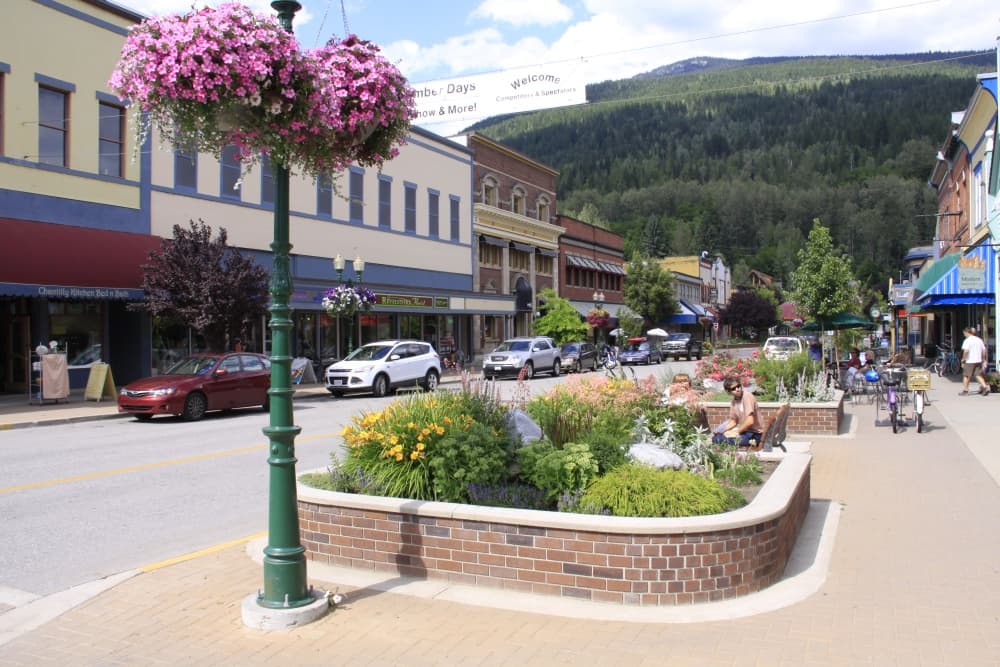 waferboard / CC BY 2.0, via Wikimedia Commons
Tour de audio autoguiado de Revelstoke — ruta GPS a pie, reproducción offline, narración en 32 idiomas.
“Donde los picos ascienden y el eco del ferrocarril perdura.”
No las postales. Las historias que ni los locales conocen — al oído, justo donde ocurrieron.
Revelstoke fue una vez un centro mundial para un atrevido deporte de invierno, atrayendo a atletas que redefinieron los límites.
La presa más formidable del río Columbia guarda un detalle inesperado sobre su construcción.
Antes de ganarse el nombre de Revelstoke, la ciudad tuvo un título diferente y experimentó una disputa territorial que dio forma a su propia huella.
Descubre todos los secretos de Revelstoke
Cada dirección, cada revelación al completo — a tu oído, justo donde ocurrió.
Eliges tus paradas. Caminas. La voz te revela lo que los demás ignoran.


Tu tour de audioguía por Revelstoke te espera — elige tus lugares, tu idioma y empieza al llegar.
ComprarLume incluye una guía de realidad aumentada. Levanta el móvil y su cámara muestra la calle que tienes delante, con una flecha luminosa sobre la imagen real que siempre apunta a tu próxima parada — sin mapas que descifrar, sin giros equivocados. Como todo en Lume, funciona completamente sin conexión.
Revelstoke, una ciudad en el sureste de Columbia Británica, Canadá, es un lugar donde la grandeza de las montañas Selkirk y Monashee converge con una historia moldeada por el Canadian Pacific Railway y el río Columbia. Situada a 641 kilómetros al este de Vancouver y 415 kilómetros al oeste de Calgary, Alberta, Revelstoke sirve como un nexo para los amantes del aire libre y aquellos que aprecian la historia. La ciudad descansa a orillas del río Columbia, justo al sur de la Presa de Revelstoke y cerca de su punto de encuentro con el río Illecillewaet. Su animado centro, sus residentes con mentalidad comunitaria y su patrimonio arquitectónico contribuyen a su carácter distintivo.
A menudo percibida como una breve pausa entre ciudades más grandes, Revelstoke se erige como un destino en sí mismo, ofreciendo una mezcla de actividades emocionantes y exploración tranquila. Desde su ubicación única dentro de una selva tropical templada interior —una de las más inusuales del mundo— hasta su pasado histórico como ciudad ferroviaria y paraíso del salto de esquí, Revelstoke alberga narrativas que se extienden más allá de su reputación de nieve profunda. El orgullo de la comunidad por su historia y cultura es evidente, con oportunidades para aprender y explorar en museos y archivos locales.
## De Farwell a Revelstoke: La Génesis de una Ciudad Ferroviaria Los orígenes de Revelstoke están profundamente entrelazados con la construcción del Canadian Pacific Railway (CPR) en la década de 1880. El asentamiento inicial llevaba el nombre de Farwell, en honor al topógrafo A.S. Farwell, quien había solicitado una concesión de tierras provincial. Sin embargo, el CPR, anticipando el control sobre todas las tierras, impugnó la reclamación de Farwell. Esto llevó al ferrocarril a establecer su estación y patios al este del asentamiento de Farwell, creando un asentamiento competidor. Pronto, los negocios se trasladaron para estar más cerca de la estación, desplazando el corazón comercial de Front Street a Mackenzie Avenue.
En 1886, el CPR solicitó al departamento federal de correos que cambiara el nombre del asentamiento en honor a Lord Revelstoke, cuya firma bancaria británica, Baring Brothers & Co., junto con Glyn, Mills & Co., había proporcionado fondos cruciales para evitar la quiebra del ferrocarril. A pesar del cambio de nombre, un caso judicial entre el CPR y Farwell obstaculizó el desarrollo durante muchos años, y no fue hasta 1899 que la Ciudad de Revelstoke se incorporó oficialmente.
## Una Comunidad en Crecimiento y una Economía Diversificada Para 1910, Revelstoke se había convertido en una de las comunidades más grandes y prominentes del interior de Columbia Británica, debido en gran parte a su importancia como centro ferroviario. El tráfico de vapores en el río Columbia solidificó aún más su papel como un importante centro de transporte. La ciudad ofrecía comodidades típicamente encontradas en centros urbanos más grandes, incluyendo una Casa de la Ópera, un gimnasio YMCA y negocios sustanciales como la tienda por departamentos de C.B. Hume, que fue la más grande del interior provincial a principios del siglo XX. Colonos llegaron de varios países, incluyendo Gran Bretaña, Italia, Suecia, Noruega, Ucrania, China y Japón.
Más allá del ferrocarril, la minería y la silvicultura fueron fundamentales para la economía temprana de Revelstoke. Una fiebre del oro a lo largo del río Columbia en la década de 1860, anterior al asentamiento, produjo un estimado de $3,000,000 en oro en dos años. Los aserraderos han operado en Revelstoke desde la década de 1880, y la tala sigue siendo una industria en curso. En la década de 1990, se estableció la Revelstoke Community Forest Corporation para adquirir una licencia de granja de árboles para la comunidad, demostrando un enfoque inventivo de la silvicultura.
## Esquí, Presas y Desarrollo Moderno El esquí ha sido parte de la identidad de Revelstoke desde 1890, cuando un minero noruego introdujo lo que los lugareños llamaron "raquetas de nieve noruegas". El Club de Esquí de Revelstoke se formó en 1914, y en 1915, se celebró el primer Carnaval de Deportes de Invierno, con saltos de esquí. Se construyó un trampolín de esquí en el Parque Nacional Mount Revelstoke en 1916, evolucionando hacia el Torneo de Campeones reconocido internacionalmente, atrayendo a atletas de 11 países. Nels Nelsen de Revelstoke estableció un récord mundial en 1925 con un salto de 250 pies, y la Colina Nels Nelsen se convirtió en la única colina canadiense en albergar récords oficiales de longitud mundial.
La construcción de la Carretera Trans-Canadá en 1962 mejoró el acceso a la región, y el turismo se ha convertido desde entonces en una parte significativa de la economía local, siendo el esquí un atractivo principal. La Presa de Revelstoke, una presa hidroeléctrica en el río Columbia, se construyó entre 1978 y 1983, con su central eléctrica completada en 1984. Esta presa se encuentra entre las más potentes de Columbia Británica. En 2007, se inauguró el Revelstoke Mountain Resort, que ofrece las carreras verticales más largas de América del Norte.
Comience su exploración en el centro de Revelstoke, donde las calles históricas están bordeadas de tiendas locales, cafés artesanales, cervecerías artesanales y galerías. El Museo y Archivos de Revelstoke ofrece una inmersión profunda en el pasado de la ciudad, mientras que el Museo del Ferrocarril de Revelstoke celebra su conexión duradera con el Canadian Pacific Railway.
Para actividades al aire libre, el Parque Nacional Mount Revelstoke está a solo cinco minutos en coche del centro. Conduzca por la Meadows in the Sky Parkway, una ruta pavimentada de 26 kilómetros que asciende a través de diversos bosques hasta prados subalpinos de flores silvestres, ofreciendo vistas expansivas y oportunidades para hacer senderismo. En la cima, puede encontrar una histórica torre de incendios. Más allá del parque, Revelstoke Mountain Resort ofrece el descenso vertical más largo de América del Norte para esquiar y hacer snowboard en invierno, y en verano, ofrece paseos en góndola, senderismo y la emocionante Pipe Mountain Coaster. Descubra cascadas como Sutherland Falls y Begbie Falls, accesibles a través de cortos senderos forestales. El Centro de Visitantes de la Presa de Revelstoke, ubicado a 5 km al norte de la ciudad, ofrece exhibiciones interactivas sobre hidroelectricidad y una galería de las Primeras Naciones.
Revelstoke ofrece experiencias distintas a lo largo de sus cuatro estaciones. El verano, desde principios de julio hasta mediados de agosto, es ideal para actividades de clima cálido como senderismo, turismo, actividades en el lago y paseos panorámicos, con más horas de luz y una amplia gama de atracciones accesibles. El otoño trae estancias más tranquilas, follaje vívido y temperaturas más frescas, perfectas para la contemplación y las visitas a aguas termales. El invierno, desde principios de noviembre hasta finales de abril, es sinónimo de aventuras en la nieve, ofreciendo nieve en polvo icónica para esquiar, hacer snowboard y motos de nieve, con los meses pico de nieve en enero y febrero. La primavera presenta un ritmo más lento, menos multitudes y oportunidades para esquiar y hacer ciclismo de montaña el mismo día a medida que cambian las condiciones.
Se puede acceder a Revelstoke en coche o en autobús; los aeropuertos principales más cercanos están en Kelowna (YLW) y Calgary (YYC). El viaje en coche a Revelstoke es pintoresco, pasando por parques nacionales si viene del este, o por el Valle de Okanagan desde el oeste. Si conduce en invierno, asegúrese de que su vehículo tenga neumáticos de invierno. Una vez en Revelstoke, un autobús lanzadera puede llevarle al Revelstoke Mountain Resort. Para explorar la ciudad, caminar es una opción agradable, especialmente en el centro compacto.
El clima de montaña puede cambiar rápidamente, así que empaque capas, equipo impermeable y calzado adecuado sin importar la estación. Es aconsejable reservar alojamiento, actividades y restaurantes populares con antelación, especialmente durante las temporadas altas. Respete la naturaleza manteniéndose en los senderos marcados, llevando consigo toda la basura y siguiendo las pautas de seguridad de la vida silvestre. Verifique las prohibiciones de fogatas durante los meses de verano. Los lugareños son conocidos por su amabilidad y a menudo comparten información; el mercado de agricultores de verano es un excelente lugar para conectar con ellos.
Revelstoke en coreano, en chino o en hebreo — y 29 idiomas más, cada parada narrada por una voz nativa. La mayor variedad de idiomas de cualquier audioguía autoguiada.
Disponible en: