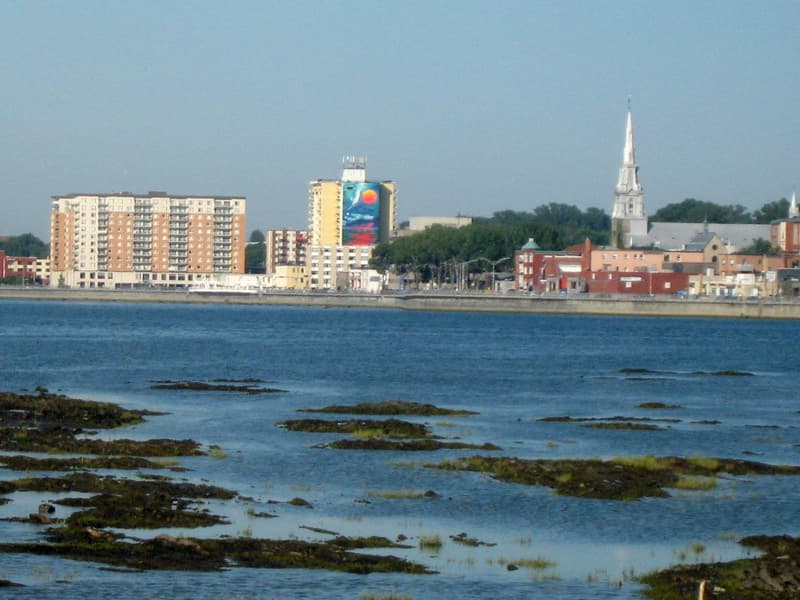
Rimouski, CanadaAlcide55 Par moi G.Bouchard de Rimouski. / CC BY-SA 4.0, via Wikimedia Commons
CA

Rimouski

Where the St. Lawrence River broadens, and stories run deep.

The secrets of Rimouski

Rimouski, as no one tells it.

Not the postcards. The stories even locals don't know — whispered in your ear, right where they happened.

3 secrets below. Many more wait inside the tour.
Pointe-au-Père Maritime Historic Site

The Pointe-au-Père Lighthouse, Canada's second tallest, stands as a vigilant guardian over the St. Lawrence. Its quiet presence once bore witness to a maritime tragedy, a sorrowful event often overshadowed by another, more widely known sinking.

Full story unlocks in the tour
Cathédrale Saint-Germain de Rimouski

This neo-Gothic cathedral, a prominent feature of Rimouski's skyline, endured a destructive fire that consumed a significant portion of the city in 1950. Local accounts offer a remarkable explanation for its survival.

Full story unlocks in the tour
Parc National du Bic

This coastal national park is celebrated for its dramatic landforms and abundant wildlife, particularly its colonies of seals. However, the park's dynamic tides unveil more than just marine creatures.

Full story unlocks in the tour
The full tour

Discover every secret of Rimouski

Every address, every reveal in full — in your ear, right where it happened.

Get the key to Rimouski

You pick your stops. You walk. The voice reveals what the others miss.

Choose your time

How long do you have in Rimouski?

No tours available yet. Check back soon — we're preparing them.

About Rimouski

The story of Rimouski

Rimouski, a city on the south shore of the St. Lawrence River in eastern Quebec, offers a distinct combination of maritime narratives, academic energy, and natural splendor. Positioned where the river begins its expansion into the Gulf of St. Lawrence, it functions as a vital urban center for the Bas-Saint-Laurent region. The city's character is profoundly interwoven with the St. Lawrence, influencing its economy, cultural expressions, and daily rhythms.

With a population of approximately 48,935, Rimouski retains the appeal of a smaller community despite its role as an administrative and educational hub. It is home to the Université du Québec à Rimouski (UQAR) and various ocean science research centers, contributing to its reputation as a center for oceanography and marine culture. The city's motto, Legi patrum fidelis ("Faithful to the law of our fathers"), alludes to its enduring legacy.

Travelers often consider Rimouski a waypoint on journeys to the Gaspé Peninsula, but the city itself provides a fulfilling experience for those seeking a relaxed base with coastal strolls, marine exploration, and a youthful spirit. From exploring a genuine submarine to ascending a historic lighthouse, Rimouski invites visitors to immerse themselves in its unique identity.

History

Early Settlement and Seigneury

The land that would become Rimouski was first granted as a seigneury to Augustin Rouer de la Cardonnière in 1688. However, it was Sir René Lepage de Ste-Claire who truly established the first European settlement in 1696. Lepage, originally from Burgundy, France, acquired the Seigneurie of Rimouski through a land exchange and moved his family to the mouth of the Rimouski River. The name "Rimouski" itself is thought to be derived from a Mi'kmaq word, possibly meaning "land of the moose," though more recent research suggests a Wolastoqey origin meaning "Land of Dogs" or "Land of Poplar Blossoms."

Growth and Maritime Importance

For much of the 18th century, agriculture and seasonal fishing were the primary occupations. The area began to see significant growth with the development of forest resources by Quebec City merchants, including William Price, who built several sawmills. The parish of St-Germain was established in 1829, followed by a courthouse in 1857 and a bishop's seat in 1867, solidifying Rimouski's role as a regional center. The arrival of the railway further boosted its importance, making it a hub for expansion into the Gaspé and Matapédia regions. The port of Rimouski, dating back to 1900, became crucial for cargo, fishing, and even served as a hub for mail tenders for transatlantic liners in the early 20th century.

The Red Night and Modern Development

A pivotal moment in Rimouski's history occurred on May 6, 1950, when a massive fire, known as "La nuit rouge" (Red Night), destroyed 319 houses—about half of the city. The fire started in a lumber yard and, driven by strong winds, quickly spread across the Rimouski River. Remarkably, no one died in the blaze. The extensive reconstruction that followed transformed the city's architectural landscape, replacing narrow streets and wooden structures with wider boulevards and buildings of brick, concrete, and glass.

In 1969, the founding of the Université du Québec à Rimouski (UQAR) marked a new era, establishing the city as a key center for higher education and oceanographic research. In 2002, Rimouski merged with neighboring communities, including Pointe-au-Père, further expanding its modern boundaries. Today, Rimouski thrives as a center for education, health, social services, and oceanographic research, while embracing its rich maritime heritage.

What to see

Begin at the Pointe-au-Père Maritime Historic Site, where you can explore the Pointe-au-Père Lighthouse, Canada's second tallest, offering sweeping views after ascending its 128 steps. The site also presents the Onondaga Submarine, a genuine 90-meter Royal Canadian Navy vessel that visitors can tour, providing a glimpse into life beneath the waves. Adjacent to this is the Empress of Ireland Museum, which recounts Canada's most severe maritime disaster.

For nature enthusiasts, Parc National du Bic is a short drive away, recognized for its dramatic coastal landforms, rocky capes, and abundant wildlife, including harbor and gray seals visible along its shores. The park offers numerous paths for walking and cycling, with viewpoints like Pic Champlain providing expansive vistas of the St. Lawrence. Within Rimouski, Parc Beauséjour offers a green sanctuary along the Rimouski River, ideal for leisurely walks and family activities.

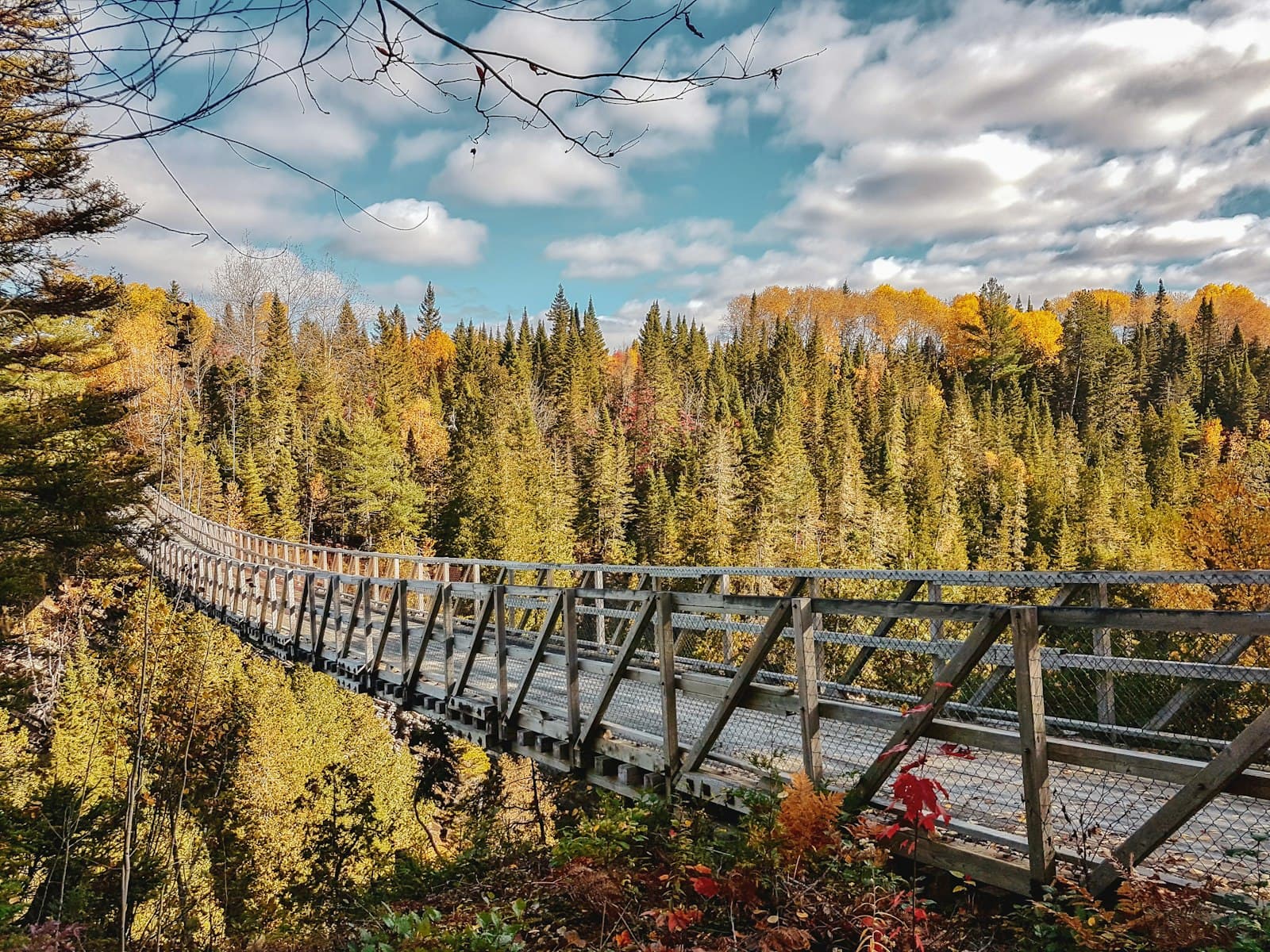
In the city center, the Cathédrale Saint-Germain de Rimouski, a neo-Gothic structure constructed between 1854 and 1862, stands as an architectural landmark. Its grand vault and intricate details reflect the city's historical and spiritual importance. Do not miss the Maison Lamontagne, one of Quebec's oldest remaining half-timbered houses, built in 1750. For a more adventurous outing, the Canyon des Portes de l'Enfer (Gates of Hell Canyon) features Quebec's highest suspended footbridge and a descent of 300 stairs to the Rimouski River.

When to visit

Rimouski experiences distinct seasons, with the most pleasant period for warm-weather activities typically extending from early July to mid-August. During these months, average daily temperatures are comfortable, ranging from 17°C to 20°C, ideal for outdoor exploration and enjoying the refreshing river breezes. The clearest skies are often found in August.

Spring and autumn offer picturesque transitions. Autumn, in particular, brings lively fall colors to the surrounding forests and mountains, making it an excellent time for scenic drives and walking paths. Winters are cold and snowy, with temperatures consistently below freezing from December to March. This season transforms Rimouski into a center for winter sports like snowmobiling, skating, and ice fishing, with events such as the RikiFest ice canoe races.

Practical

Rimouski is accessible by car, with major routes connecting it to Quebec City (approximately a 4.25-4.75 hour drive) and other regions. While Rimouski does not have its own airport, the Mont-Joli (YYY) airport is located 18 miles away. Buses also serve the city, offering connections from Montreal, Quebec City, and the Gaspé Peninsula.

Once in Rimouski, the downtown area is suitable for walking, with many attractions easily reached on foot. For exploring further afield, renting a car is a convenient option, with an average daily cost of around $53. Accommodation options range from hotels and motels, many providing views of the St. Lawrence, to local guesthouses (gîtes). Dressing in layers is advisable due to changeable weather, and warm, windproof clothing is essential for winter visits.

Good to know
What is Rimouski's population?
As of 2021, Rimouski has a population of approximately 48,935 people.
What is the significance of the Pointe-au-Père Lighthouse?
The Pointe-au-Père Lighthouse is Canada's second tallest and played a crucial role in St. Lawrence River navigation. It also received the SOS from the RMS Empress of Ireland, which sank nearby in 1914.
What kind of wildlife can be seen at Parc National du Bic?
Parc National du Bic is recognized for its populations of harbor and gray seals, as well as white-tailed deer, various seabirds, and occasionally whales in the St. Lawrence Estuary.
Is Rimouski a good destination for outdoor activities?
Yes, Rimouski and its surrounding areas offer extensive opportunities for outdoor activities, including walking, cycling, sea kayaking, whale watching, and winter sports like snowmobiling and skating.
What is the "Red Night" in Rimouski's history?
The "Red Night" refers to a major fire on May 6, 1950, that destroyed 319 houses, about half of the city, though no lives were lost.
Are there any unique cultural events in Rimouski?
Rimouski hosts various cultural events and festivals throughout the year, including Festi Jazz and Grandes Fêtes Telus, which feature prominent artists. The city also has a lively arts scene with theaters and museums.
Rimouski
From€9.00
No booking · activate anytime · 12h to walk it
Get the key to Rimouski