Monument National au Drapeau
Ce complexe monumental, dédié au drapeau argentin, recèle un secret au-delà de sa conception symbolique.
L'histoire complète se débloque dans le tour
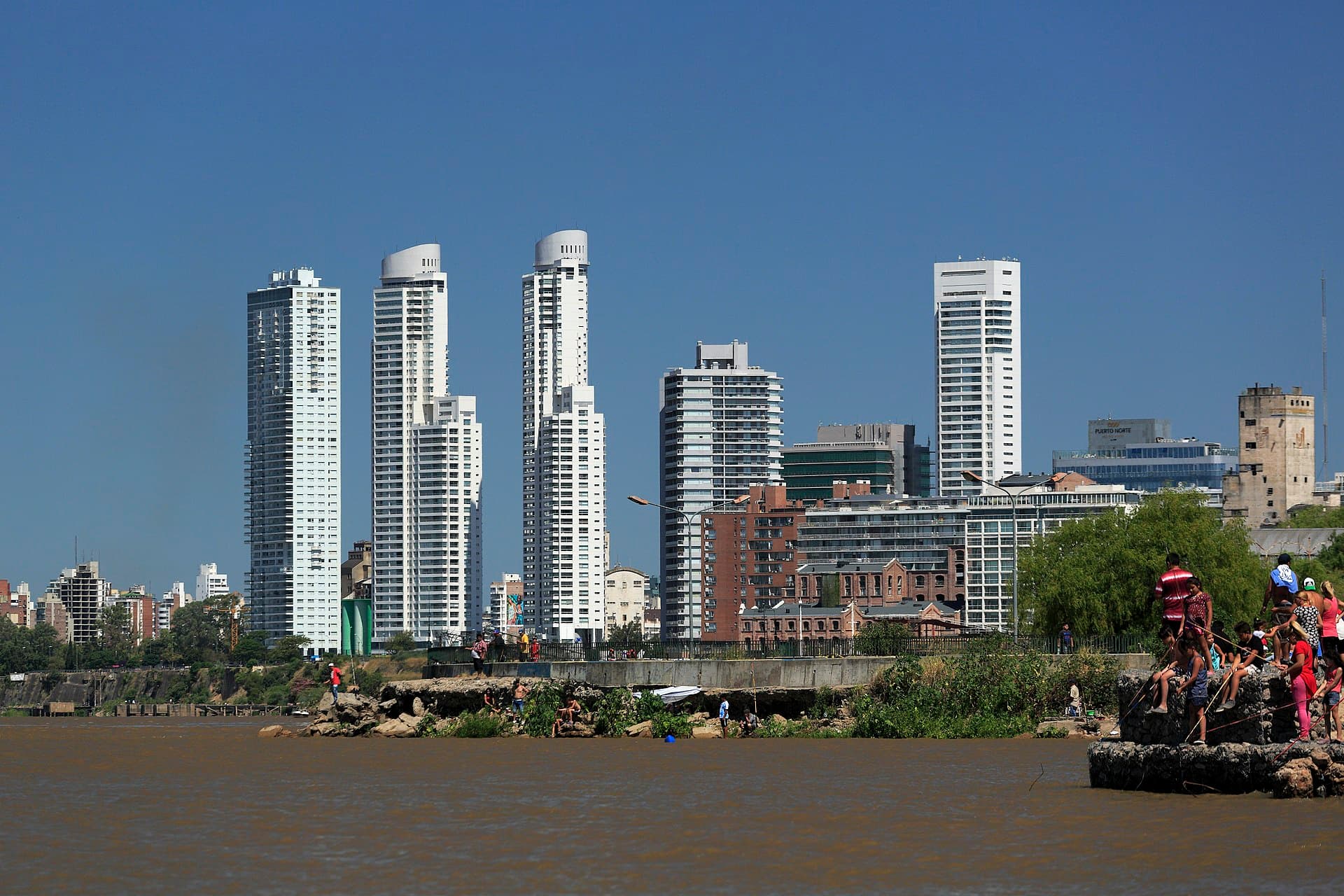 Falk2 / CC BY-SA 4.0, via Wikimedia Commons
Visite audio autoguidée de Rosario — parcours GPS à pied, lecture hors ligne, narration en 32 langues.
“Là où le fleuve Paraná rencontre l'identité argentine.”
Pas les cartes postales. Les histoires que même les habitants ignorent — soufflées à l'oreille, là où elles se sont passées.
Ce complexe monumental, dédié au drapeau argentin, recèle un secret au-delà de sa conception symbolique.
Le long du front de mer de Rosario, des structures industrielles ont pris une nouvelle vie surprenante.
Rosario est connue pour produire un nombre extraordinaire de personnes talentueuses, surtout dans un domaine particulier.
Découvrez tous les secrets de Rosario
Chaque adresse, chaque révélation en entier — dans ton oreille, là où elle s'est passée.
Tu choisis tes lieux. Tu marches. La voix te révèle ce que les autres ignorent.


Votre visite audioguidée de Rosario vous attend — choisissez vos lieux, votre langue, et lancez-vous dès votre arrivée.
AcheterLume intègre un guide en réalité augmentée. Levez votre téléphone : sa caméra montre la rue devant vous, avec une flèche lumineuse posée sur l'image réelle qui pointe toujours vers votre prochain arrêt — aucune carte à déchiffrer, aucun mauvais virage. Comme tout dans Lume, ça fonctionne entièrement hors-ligne.
Rosario, la troisième plus grande ville d'Argentine, est située sur la rive ouest du fleuve Paraná, dans la province de Santa Fe. C'est une ville où l'architecture du XIXe siècle rencontre le développement moderne, offrant un rythme plus détendu que Buenos Aires tout en maintenant une présence significative dans les arts, l'éducation et l'activisme politique. Connue comme le « Berceau du drapeau argentin », Rosario occupe une place spéciale dans l'histoire et la fierté de la nation.
L'identité de la ville est profondément liée au fleuve Paraná, qui offre un cadre naturel pour les parcs, les promenades et les plages. Au-delà de son front de mer pittoresque, Rosario offre un vaste paysage culturel, de ses nombreux musées et galeries à sa vie nocturne animée et sa scène culinaire diversifiée. C'est une destination qui offre une expérience multifacette, mettant en valeur le patrimoine et l'esprit contemporain de l'Argentine.
Rosario a la réputation d'être une ville progressiste et tolérante, avec une quantité notable d'espaces verts par habitant. Que vous soyez intéressé par l'histoire, l'art, les activités de plein air ou simplement par l'ambiance locale, Rosario présente une aventure urbaine captivante.
L'histoire de Rosario est distincte de celle de nombreuses autres villes argentines, car elle n'a pas de date de fondation précise ni de fondateur officiel. Au lieu de cela, elle a émergé organiquement d'une zone rurale peu peuplée connue sous le nom de Pago de los Arroyos (Terre des Ruisseaux) au XVIIe siècle. Les premiers établissements permanents sont apparus à cette époque, avec un colon notable, Santiago de Montenegro, qui a construit une chapelle en 1724 où une image de la Vierge du Rosaire a été placée, donnant finalement son nom à la ville.
L'emplacement stratégique de Rosario sur la rive haute du fleuve Paraná navigable a été un facteur clé de sa croissance, en faisant un port naturel et un centre commercial reliant l'intérieur du pays à l'océan Atlantique. Malgré son développement précoce, Rosario a été officiellement déclarée ville beaucoup plus tard, le 5 août 1852. Cette reconnaissance officielle, associée à l'ouverture de son port au commerce international en 1854, a propulsé Rosario à devenir le principal centre d'exportation de l'Argentine en 1880, spécialisée dans les produits agricoles comme les céréales.
La fin du XIXe siècle a marqué une période d'expansion économique et démographique rapide pour Rosario. Des lois d'immigration simplifiées ont attiré un afflux important de colons européens, principalement d'Italie et d'Espagne. Cela a entraîné une augmentation spectaculaire de la population, passant d'environ 50 000 habitants en 1887 à plus de 400 000 en 1926, près de la moitié de la population étant immigrée. Ces nouveaux arrivants ont apporté de nouvelles idées d'Europe, contribuant à la réputation de Rosario en tant que ville politiquement progressiste, contrastant avec la plus conservatrice Santa Fe.
L'économie précoce de la ville s'est diversifiée au-delà du commerce pour inclure la transformation de la viande, la minoterie, les industries du cuir et la transformation du maté. La construction de chemins de fer a encore consolidé le rôle de Rosario en tant que plaque tournante vitale du transport, reliant le port aux régions agraires. Tout au long de la lutte pour l'indépendance de l'Argentine et des guerres civiles ultérieures, Rosario a fait face à des difficultés en raison de son emplacement, étant même détruite et reconstruite à plusieurs reprises. Cependant, l'achèvement du chemin de fer central en 1863 et les améliorations continues de ses installations portuaires à la fin du XIXe et au début du XXe siècle ont assuré le statut durable de Rosario comme l'un des principaux ports céréaliers du monde.
Commencez votre exploration au Monument National au Drapeau (Monumento Nacional a la Bandera), un grand complexe honorant la création du drapeau argentin par le général Manuel Belgrano en 1812. Vous pouvez monter à sa tour de 70 mètres pour des vues imprenables sur la ville et le fleuve Paraná.
Promenez-vous le long de la Costanera, une promenade piétonne qui s'étend le long du fleuve Paraná, idéale pour la marche, le vélo ou simplement pour profiter des vues sur le fleuve. Le front de mer comprend également Rambla Catalunya et la plage de La Florida, des lieux de détente populaires, avec divers bars et restaurants. Envisagez une excursion en bateau depuis la gare fluviale pour explorer les îles voisines du delta du Paraná.
Plongez dans l'art au Musée d'Art Contemporain de Rosario (MACRo), installé dans d'anciens silos à grains colorés le long du fleuve, présentant des œuvres d'avant-garde d'artistes argentins et latino-américains. Pour une collection plus vaste, visitez le Musée des Beaux-Arts Juan B. Castagnino (Museo Municipal de Bellas Artes), l'une des institutions artistiques les plus importantes d'Argentine, présentant des chefs-d'œuvre européens et argentins.
Trouvez la tranquillité au Parc de l'Indépendance (Parque Independencia), le plus grand parc de la ville, offrant des jardins, un lac avec des locations de bateaux et plusieurs musées, dont le Musée de la Ville et le Musée d'Histoire Provinciale Marc. Explorez la rue Córdoba, une artère centrale avec une architecture historique, des places et des boutiques. Le soir, le quartier de Pichincha est connu pour sa vie nocturne animée, avec de nombreux bars et restaurants.
Les meilleurs moments pour visiter Rosario sont pendant les intersaisons du printemps (septembre à novembre) et de l'automne (mars à mai). Pendant ces mois, le temps est doux et agréable, avec des températures moyennes entre 18 et 26 °C (65 et 80 °F), ce qui est idéal pour explorer la ville à pied. L'humidité est plus faible et il y a moins de monde par rapport aux mois d'été. Mars est souvent considéré comme optimal.
Les étés (décembre à février) sont chauds et humides, avec des températures atteignant 30 à 38 °C (86 à 100 °F), et sont la saison pour profiter des plages fluviales. Les hivers (juin à août) sont doux et plus secs, avec des températures minimales moyennes d'environ 5 à 15 °C (41 à 59 °F), bien que les nuits puissent être plus froides. Bien que les plages fluviales ferment en hiver, la scène culturelle intérieure de la ville fleurit.
Rosario est à environ 300 kilomètres (185 miles) au nord-ouest de Buenos Aires. Vous pouvez vous rendre à Rosario depuis Buenos Aires en bus, un trajet qui prend généralement environ 4 heures. Les bus sont généralement abordables et confortables. Il y a aussi des vols quotidiens (50 min) depuis l'aéroport Aeroparque de Buenos Aires et l'aéroport d'Ezeiza vers l'aéroport international de Rosario – Islas Malvinas.
Une fois à Rosario, le centre-ville est facilement accessible à pied. Les transports en commun comprennent un système de bus et une ligne de trolleybus, qui fonctionnent avec une carte prépayée rechargeable. Les taxis sont facilement disponibles et peu coûteux, et les services de covoiturage comme Uber sont également une option. Rosario est également une ville favorable aux vélos avec un vaste réseau de pistes cyclables.
Les habitants ont tendance à dîner tard, généralement après 21h30, les bars devenant bondés vers minuit. Bien que Rosario soit généralement sûre pour les touristes, il est conseillé de rester dans des zones bien éclairées et peuplées comme Pichincha, Pellegrini et la Costanera, surtout la nuit. Il est également judicieux d'être conscient de votre environnement et d'envisager de prendre un taxi après la tombée de la nuit.
Rosario en coréen, en chinois ou en hébreu — et dans 29 autres langues, chaque étape narrée par une voix native. La plus large gamme de langues de tous les audioguides autoguidés.
Disponible en :