Roscoff's Old Port Lighthouse
The lighthouse that stands guard over Roscoff's old port tells a tale of wartime delays and unexpected transformations.
Full story unlocks in the tour
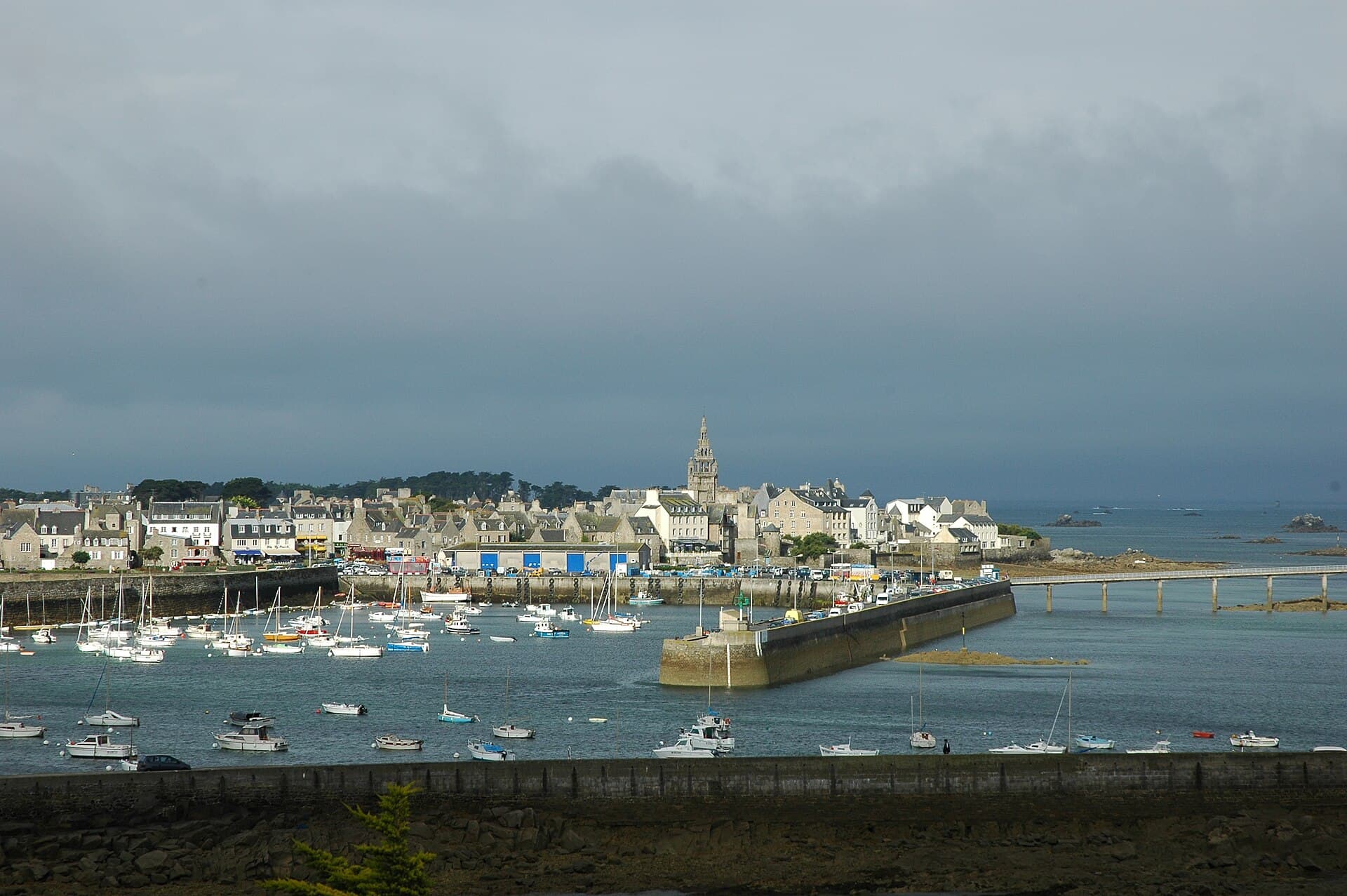 Rolf Krahl (Rotkraut) / CC BY 4.0, via Wikimedia Commons
Self-guided audio walking tour of Roscoff — GPS route, offline playback, story-driven narration in 32 languages.
“Where granite meets the sea, and history lingers in salty air.”
Not the postcards. The stories even locals don't know — whispered in your ear, right where they happened.
The lighthouse that stands guard over Roscoff's old port tells a tale of wartime delays and unexpected transformations.
The iconic image of the 'Onion Johnny' cycling through British streets, laden with braided onions, has a surprising origin story.
Roscoff is known as the birthplace of thalassotherapy, but the concept's true potential was dramatically highlighted by a famous athlete.
Discover every secret of Roscoff
Every address, every reveal in full — in your ear, right where it happened.
You pick your stops. You walk. The voice reveals what the others miss.

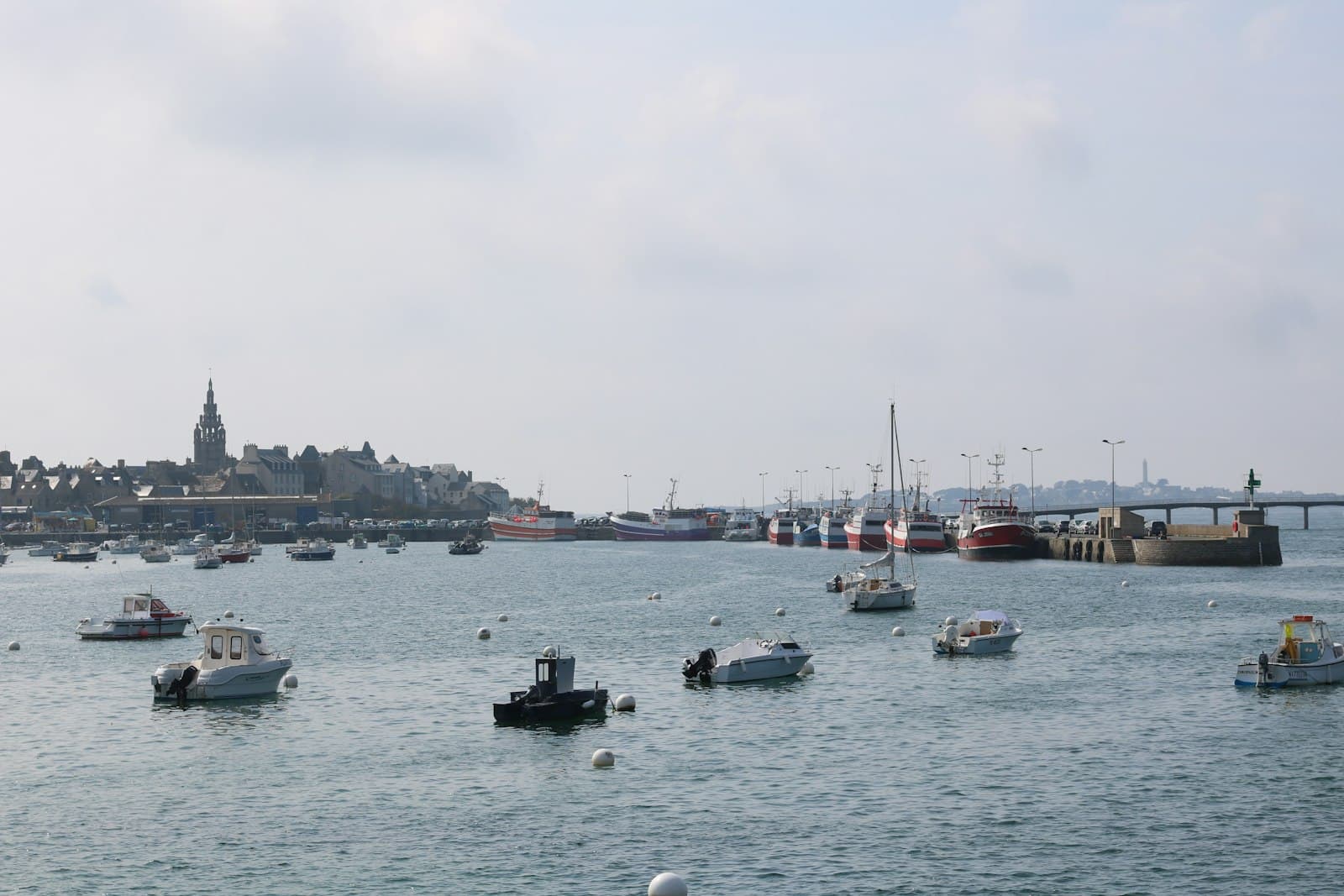
Your self-guided audio tour of Roscoff is ready — pick your landmarks, choose your language, and start the moment you arrive.
BuyLume has a built-in augmented-reality guide. Hold your phone up and its camera shows the street ahead of you, with a glowing arrow laid over the real view that always points to your next stop — no map to puzzle over, no wrong turns. Like everything in Lume, it works fully offline.
Roscoff, a captivating port town in Brittany, France, offers a compelling blend of maritime history, distinctive granite architecture, and a refreshing coastal atmosphere. Recognized as a "petite cité de caractère de Bretagne" since 2009, Roscoff's appeal lies in its authentic spirit and profound connection to the sea. Visitors can wander through well-worn streets, admire 16th-century shipowners' houses, and absorb the views of the turquoise waters that frame its shores.
Beyond its visual appeal, Roscoff is a place where traditions endure, from its historical role in maritime trade with England to its pioneering status in thalassotherapy. The town's mild climate, influenced by a consistent sea current, contributes to its unique character and supports a diverse botanical life. Whether exploring its active port, delving into its past, or simply enjoying the invigorating sea air, Roscoff provides a tranquil yet engaging escape on France's northwestern coast.
## From Medieval Outpost to Merchant Hub Roscoff's origins trace back to the Roskogoz quarter in the Middle Ages, serving as an outer harbor for Saint-Pol-de-Léon. However, challenges like silting and repeated English incursions prompted the inhabitants to relocate further north, establishing the present-day old harbor. The town began to flourish in the 16th century, largely due to prosperous maritime trade, particularly with England. This era saw the construction of many of Roscoff's distinctive granite houses, built by successful merchants and shipowners, some adorned with nautical motifs and ship engravings.
## The Rise of the Onion Johnnies A unique chapter in Roscoff's history is the story of the "Onion Johnnies." Beginning in the early 19th century, these Breton traders would cross the English Channel to sell their distinctive pink onions door-to-door in Great Britain. This trade became so significant that at its peak in 1929, some 1,500 Onion Johnnies, all from the Roscoff area, were involved, becoming a familiar sight and a stereotypical image of a Frenchman in the UK. The Roscoff pink onion, introduced by a Capuchin monk in 1647, was initially valued for its anti-scurvy properties, making it a staple for sailors. Today, a museum in Roscoff, the Maison des Johnnies et de l'Oignon Rosé, preserves the memory of these intrepid sellers.
## The Birthplace of Thalassotherapy Roscoff also holds the distinction of being the birthplace of thalassotherapy in Europe. In 1899, French doctor Louis-Eugène Bagot opened the Institut Marin, the continent's first center dedicated to treatments utilizing the therapeutic benefits of seawater and seaweed. The mild climate and iodine-infused waters of Roscoff created an ideal environment for these post-cure treatments. This pioneering spirit continues today, with Roscoff remaining a significant center for thalassotherapy and marine biology research.
Begin your exploration in Roscoff's old town, where 16th-century granite shipowners' houses line the streets, many featuring intricate carvings and ground-level cellar entrances. The Church of Notre-Dame-de-Croaz-Batz, a striking Gothic-style building, is a focal point, notable for its surrounding enclosure and two distinct ossuary chapels. Nearby, the Old Port Lighthouse, a 24-meter tall square pyramidal tower, offers views and is open for visits on Thursdays in July and August.
Take a short ferry ride from the old harbor to Île de Batz, a small, car-free island. Here, you can visit the Georges Delaselle Exotic Garden, home to over 1,700 species of plants from around the world, and explore its beaches and a lighthouse. Back on the mainland, the Jardin Exotique de Roscoff also presents an impressive collection of subtropical plants and offers wide views of the Bay of Morlaix from an 18-meter high rock. For a deeper dive into local history, the Maison des Johnnies et de l'Oignon Rosé museum tells the story of the famous Roscoff onions and the traders who sold them.
The most favorable time to visit Roscoff for pleasant weather and outdoor activities stretches from late June to early September. During these summer months, average daily high temperatures typically exceed 18°C (64°F), with August being the warmest month, averaging 19°C (66°F). July offers the clearest skies and the most sunshine, with an average of 7.6 hours daily. Spring and early autumn also provide mild weather and fewer crowds.
Roscoff is accessible by ferry, with regular services connecting to Plymouth in England and Cork and Rosslare in Ireland. The ferry terminal at Port du Bloscon is a few kilometers east of the town center. Taxis are generally available at the terminal, with a fare of approximately 8 euros to the town center. While there is no direct bus service from the terminal to the town center, a regular bus, Ligne 29, connects Roscoff and Morlaix. During July and August, a free seasonal shuttle, "Rosko Bus," operates every 15 minutes to the town center.
Roscoff does not have its own train station; the nearest TGV stations are in Morlaix and Brest, with bus connections to Roscoff. Car rentals can be arranged for delivery at the ferry terminal, with several agencies located in Morlaix offering this service. Within Roscoff, local bus services, part of the BreizhGo network, connect key points of interest.
Roscoff in Korean, in Chinese or in Hebrew — and 29 more languages, every stop narrated by a native voice. The widest language range of any self-guided audio tour.
Available in: