Église Sainte-Marie (Marienkirche)
Dans la plus grande église de Rostock, une merveille médiévale tourne silencieusement depuis des siècles, surpassant de loin la durée de vie de tout appareil moderne.
L'histoire complète se débloque dans le tour
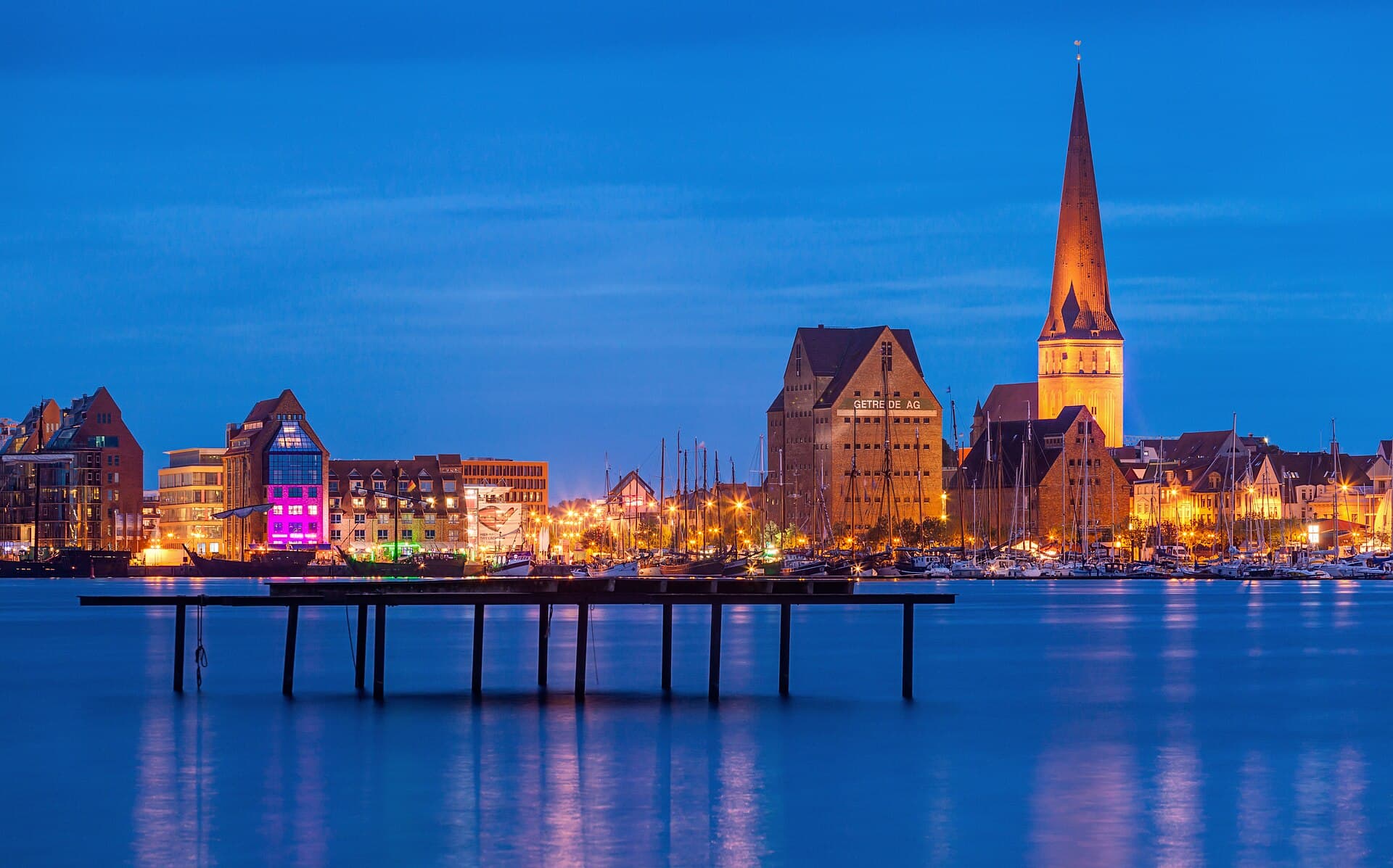 Moahim / CC BY-SA 4.0, via Wikimedia Commons
Visite audio autoguidée de Rostock — parcours GPS à pied, lecture hors ligne, narration en 32 langues.
“Là où la grandeur hanséatique rencontre les brises de la Baltique.”
Pas les cartes postales. Les histoires que même les habitants ignorent — soufflées à l'oreille, là où elles se sont passées.
Dans la plus grande église de Rostock, une merveille médiévale tourne silencieusement depuis des siècles, surpassant de loin la durée de vie de tout appareil moderne.
Ce musée abrite une relique de guerre médiévale si formidable qu'elle était considérée comme la plus grande de son genre en Europe du Nord – et pourtant, elle n'a jamais vu le champ de bataille.
Le phare historique de Rostock offre des vues panoramiques, mais il sert également un double usage inattendu.
Découvrez tous les secrets de Rostock
Chaque adresse, chaque révélation en entier — dans ton oreille, là où elle s'est passée.
Tu choisis tes lieux. Tu marches. La voix te révèle ce que les autres ignorent.

Votre visite audioguidée de Rostock vous attend — choisissez vos lieux, votre langue, et lancez-vous dès votre arrivée.
AcheterLume intègre un guide en réalité augmentée. Levez votre téléphone : sa caméra montre la rue devant vous, avec une flèche lumineuse posée sur l'image réelle qui pointe toujours vers votre prochain arrêt — aucune carte à déchiffrer, aucun mauvais virage. Comme tout dans Lume, ça fonctionne entièrement hors-ligne.
Rostock, ville hanséatique et universitaire, est située à l'estuaire de la rivière Warnow dans la mer Baltique, dans l'État allemand du Mecklembourg-Poméranie-Occidentale. Avec une population d'environ 210 000 habitants, c'est la plus grande ville de son État et la troisième plus grande de la côte allemande de la Baltique. La ville s'étend sur environ 16 kilomètres le long de la rivière, avec son centre urbain principal situé en amont et la populaire station balnéaire de Warnemünde à l'embouchure de la rivière.
Rostock mélange avec élégance son héritage commercial médiéval avec l'énergie d'une ville universitaire moderne. Le centre historique de la ville, bien que considérablement reconstruit après la Seconde Guerre mondiale, conserve un caractère architectural distinctif de gothique de brique, avec des églises imposantes et des maisons de marchands à pignons bordant ses artères. Au-delà de son cœur historique, Rostock reste un port actif, servant de quatrième plus grand port d'Allemagne et le plus grand de la côte allemande de la Baltique, avec des liaisons de ferry animées vers la Scandinavie.
L'histoire de Rostock remonte au XIe siècle avec une colonie fondée par des Slaves polabes appelée Roztoc, signifiant « fourche d'une rivière ». Le roi danois Valdemar Ier incendia la colonie en 1161, après quoi des commerçants allemands commencèrent à s'installer dans la région. La ville fut officiellement fondée en 1218 par le roi danois Waldemar II. Initialement, Rostock se développa en trois colonies distinctes : Altstadt (Vieille Ville) autour de l'église Saint-Pierre, Mittelstadt (Ville du Milieu) autour de l'église Sainte-Marie, et Neustadt (Nouvelle Ville) autour du Neuer Markt. Ces trois parties fusionnèrent officiellement en une seule entité en 1265, s'entourant d'un mur défensif commun.
En 1251, Rostock devint membre de la puissante Ligue hanséatique, un groupe de villes commerçantes autour de la mer Baltique, inaugurant son « âge d'or ». Au XIVe siècle, c'était un port maritime proéminent avec 12 000 habitants, la plus grande ville du Mecklembourg. Sa richesse était bâtie sur le commerce du hareng, un monopole sur le commerce norvégien, et l'exportation de bière et de produits de la pêche de Rostock. Pendant cette période, de grandes églises gothiques de brique furent construites, des murs de ville fortifiés furent érigés, et l'Université de Rostock, la plus ancienne université de la région baltique et l'une des plus anciennes du monde, fut fondée en 1419.
La domination de Rostock commença à décliner au XVIe siècle en raison de nouvelles routes commerciales et de changements politiques qui réduisirent l'influence de la Ligue hanséatique. La ville subit des changements dévastateurs pendant la Seconde Guerre mondiale, avec des raids de bombardement britanniques en 1942 détruisant environ 30 % de la ville, en particulier le centre historique. Après la guerre, Rostock fit partie de la République démocratique allemande (Allemagne de l'Est) et fut largement développée comme le plus grand et le plus important port maritime d'Allemagne de l'Est. L'État développa les chantiers navals nationaux, et la population de la ville augmenta, atteignant un pic historique d'environ 254 000 habitants en 1988. La réunification de l'Allemagne en 1990 apporta d'autres transformations, l'importance relative du port déclinant à mesure que d'autres ports récupéraient leurs zones commerciales historiques. Depuis 2003, cependant, la population de Rostock a recommencé à croître.
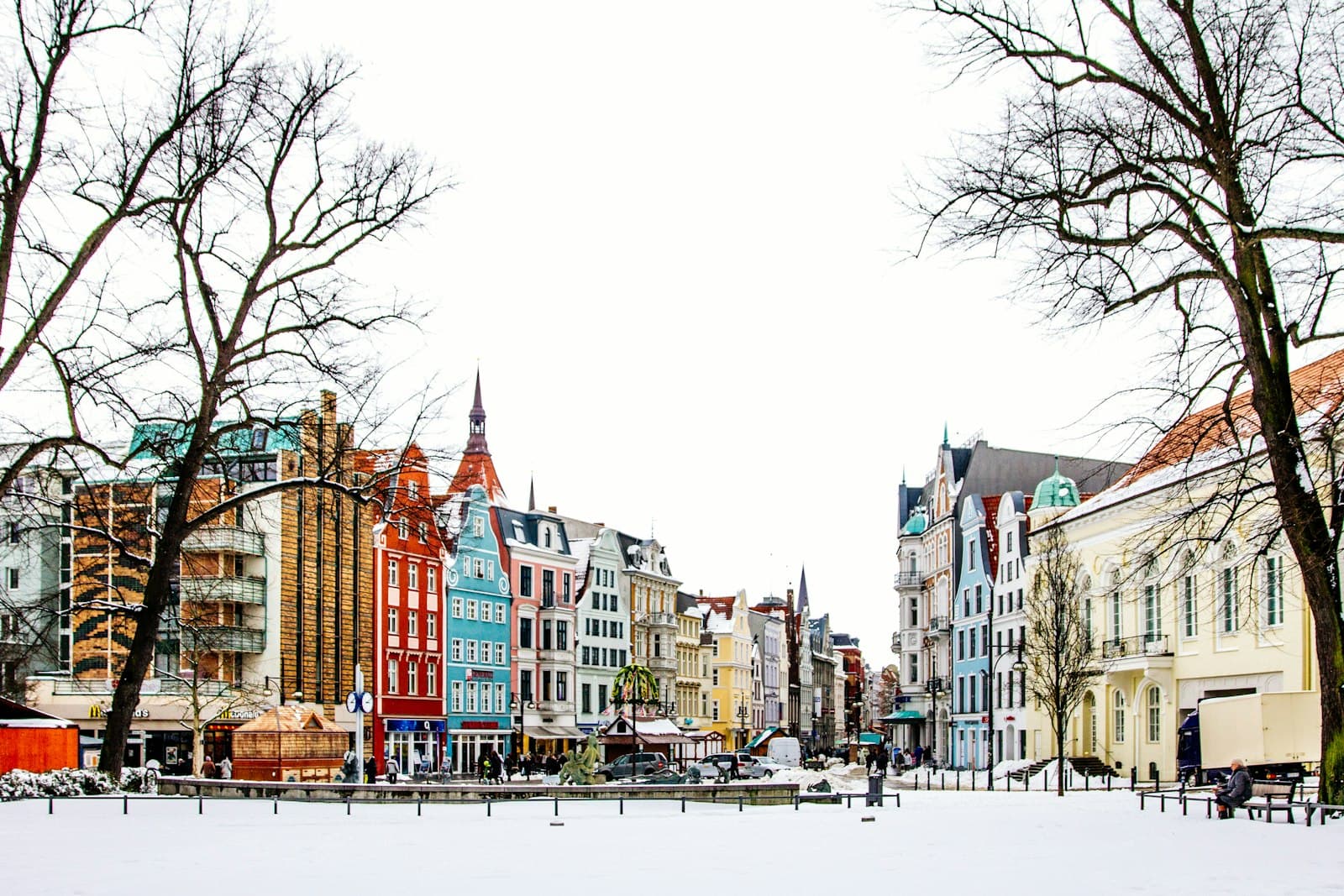
Commencez votre exploration au Neuer Markt (Nouvelle Place du Marché), le cœur de la vieille ville de Rostock, flanqué de maisons de marchands Renaissance aux couleurs pastel et de l'hôtel de ville distinctif avec ses sept tours gothiques et sa façade baroque. À quelques pas de là, l'Église Sainte-Marie (Marienkirche), une grande basilique gothique de brique, offre son horloge astronomique du XVe siècle et son intérieur orné. Montez à la tour de l'Église Saint-Pierre (Petrikirche) pour des vues imprenables sur la ville et la mer Baltique.
Promenez-vous le long de la Kröpeliner Straße, la principale artère commerçante, qui relie la Kröpeliner Tor, l'une des dernières portes médiévales de la ville, à la Place de l'Université. Explorez le Kulturhistorisches Museum, abrité dans un couvent cistercien historique, pour plonger dans le patrimoine local et admirer des artefacts du passé de Rostock. Pour un moment de calme, visitez le Klostergarten, un espace vert paisible derrière le musée. Une visite à Rostock est incomplète sans découvrir Warnemünde, une charmante station balnéaire à l'embouchure de la rivière Warnow. Ici, vous trouverez de larges plages de sable, l'emblématique Phare de Warnemünde, et le pittoresque canal Alter Strom, bordé de bateaux de pêche, de cafés et de restaurants de fruits de mer.
La meilleure période pour visiter Rostock s'étend de la fin du printemps au début de l'automne, plus précisément de mai à septembre, lorsque les températures sont douces et les journées plus longues. Juillet et août sont les mois les plus chauds, avec des maximales diurnes moyennes d'environ 20 à 23 °C (68 à 73 °F), idéales pour explorer la ville et profiter des plages de Warnemünde. La température de la mer atteint son maximum en août, atteignant environ 18 °C (64 °F). Pour ceux qui s'intéressent aux événements maritimes, planifiez votre visite pour le deuxième week-end d'août afin de vivre le festival Hanse Sail, un rassemblement spectaculaire de voiliers traditionnels.
La monnaie officielle à Rostock, et dans toute l'Allemagne, est l'Euro (€). Bien que les principales cartes de crédit soient acceptées dans de nombreux hôtels et supermarchés, il est conseillé d'avoir de l'argent liquide, car les petits établissements le préfèrent souvent. Le pourboire est d'usage, arrondir l'addition ou laisser 5 à 10 % étant une pratique courante.
Rostock est généralement considérée comme une ville sûre pour les touristes, en particulier dans le centre-ville médiéval et la zone de la station balnéaire de Warnemünde. Les transports en commun à Rostock sont efficaces, avec un système complet de tramways, de bus, bien desservis par le S-Bahn (train) exploité par Verkehrsverbund Warnow (VVW). Les billets sont valables sur tous les modes de transport dans la zone tarifaire de Rostock, qui comprend Warnemünde. Les billets peuvent être achetés aux distributeurs automatiques, à l'intérieur des tramways et des bus, ou via l'application VVW.
L'aéroport de Rostock–Laage (RLG) est situé à environ 20 km au sud de la ville, bien qu'il ait un service commercial de passagers limité. L'aéroport de Hambourg et l'aéroport de Berlin Brandenburg sont de plus grandes options internationales, tous deux offrant d'excellentes liaisons ferroviaires vers Rostock, généralement en 2 à 4 heures. Rostock est également un port de ferry important avec des liaisons vers le Danemark et la Suède.
Rostock en coréen, en chinois ou en hébreu — et dans 29 autres langues, chaque étape narrée par une voix native. La plus large gamme de langues de tous les audioguides autoguidés.
Disponible en :