Sulphur Bay, Lago Rotorua
O cheiro distinto de Rotorua é frequentemente a primeira coisa que os visitantes notam, um aroma penetrante de 'ovo podre'.
História completa desbloqueada no tour
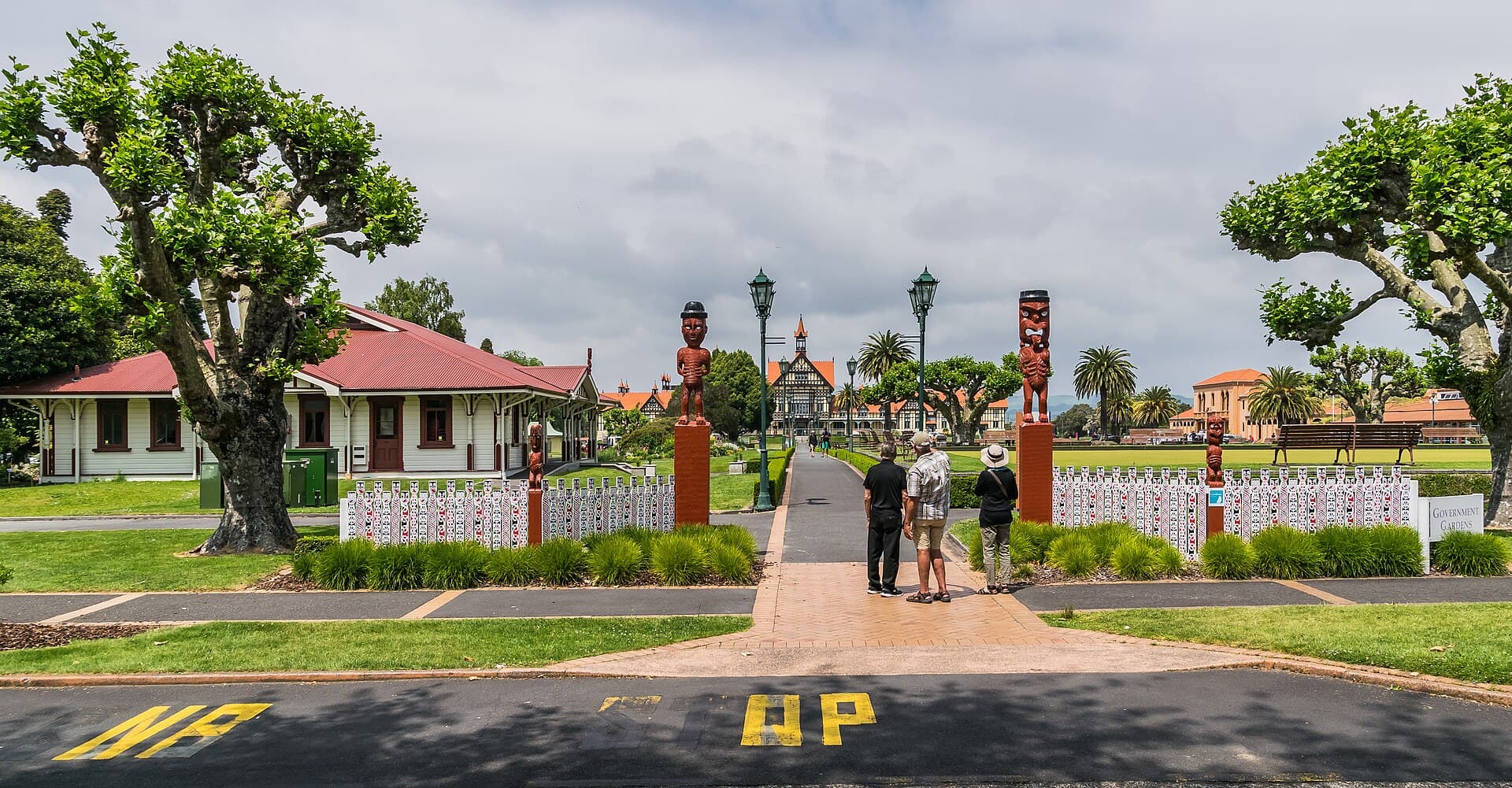 Krzysztof Golik / CC BY-SA 4.0, via Wikimedia Commons
Tour de áudio autoguiado por Rotorua — rota GPS a pé, reprodução offline, narração envolvente em 32 idiomas.
“Onde a Terra Respira: Uma Sinfonia Geotérmica de Cultura e Vapor.”
Não os postais. As histórias que nem os locais conhecem — sussurradas ao seu ouvido, exatamente onde aconteceram.
O cheiro distinto de Rotorua é frequentemente a primeira coisa que os visitantes notam, um aroma penetrante de 'ovo podre'.
No meio do Lago Rotorua fica uma ilha sagrada, central para uma das mais duradouras histórias de amor Māori.
O grandioso Tudor-style Bath House de Rotorua, um símbolo do turismo inicial, já serviu a um propósito muito diferente durante um conflito global.
Descubra cada segredo de Rotorua
Cada endereço, cada revelação na íntegra — no seu ouvido, exatamente onde aconteceu.
Você escolhe as suas paragens. Você caminha. A voz revela o que os outros perdem.


O seu tour áudio autoguiado de Rotorua está pronto — escolha os seus pontos de interesse, selecione o seu idioma e comece no momento em que chegar.
ComprarA Lume inclui um guia de realidade aumentada. Levante o telemóvel: a câmara mostra a rua à sua frente, com uma seta luminosa sobreposta à imagem real que aponta sempre para a sua próxima paragem — sem mapa para decifrar, sem voltas erradas. Como tudo na Lume, funciona totalmente offline.
Rotorua, uma cidade no coração da Ilha Norte da Nova Zelândia, é esculpida por poderosas forças geotérmicas e uma profunda cultura Māori. Ela repousa nas margens sul do Lago Rotorua, dentro de uma vasta caldeira formada por uma erupção vulcânica há aproximadamente 240.000 anos. Esta base geológica é a fonte de sua renomada atividade geotérmica, manifestando-se como gêiseres jorrando, piscinas de lama borbulhantes e fontes termais fumegantes que pontuam a paisagem.
O caráter distintivo da cidade é ainda mais definido pelo cheiro penetrante de enxofre, frequentemente comparado a ovos podres, um lembrete constante da intensa atividade vulcânica sob a superfície. Além de seus fenômenos naturais dramáticos, Rotorua é um centro de herança Māori, com mais de um terço de sua população se identificando como Māori. Essa profunda conexão cultural oferece aos visitantes oportunidades únicas de se envolver com tradições, lendas, música e artes Māori.
Conhecida como uma cidade termal desde o século XIX, Rotorua atrai visitantes em busca dos benefícios terapêuticos de suas fontes minerais quentes e banhos de lama. Hoje, continua sendo um destino importante para turistas nacionais e internacionais, oferecendo uma mistura de maravilhas naturais, imersão cultural e atividades de aventura, incluindo mountain bike e rafting no Rio Kaituna, nas proximidades.
A história humana de Rotorua começou por volta de meados do século XIV com a chegada da canoa Te Arawa em Maketu. A área foi descoberta pelo chefe Māori Ihenga, que, enquanto caçava para sua esposa grávida, seguiu um cachorro que voltou com o pelo molhado e peixe meio digerido, levando-o à descoberta do Lago Rotorua. Ele o chamou de 'Rotorua', que significa 'Segundo Lago', dedicando-o ao seu tio Kahumatamomoe. As tribos Māori locais rapidamente reconheceram o valor das águas termais para fins medicinais, culinária e para amolecer linho. As características geotérmicas também estão ligadas à mitologia Māori, com lendas atribuindo sua criação ao tohunga (sacerdote) Ngatoroirangi, que pediu fogo a Hawaiki, trazido por suas irmãs que emergiram em vários locais geotérmicos.
Colonizadores europeus, ou Pākehā, começaram a chegar à região de Rotorua por volta da década de 1830. Os primeiros missionários e comerciantes ficaram cativados pelas maravilhas geotérmicas, e a notícia das paisagens misteriosas e fenômenos termais se espalhou. A comunidade Māori local, particularmente o iwi Ngāti Whakaue, reconheceu o potencial turístico e começou a exibir o ambiente geotérmico. Os Terraços Rosa e Branco em Rotomohana se tornaram uma grande atração, considerados uma das 'Oito Maravilhas Naturais do Mundo', atraindo turistas intrépidos de lugares tão distantes quanto a Europa. Guias como Sophia Hinerangi e Maggie Papakura se tornaram renomadas por liderar passeios e compartilhar a cultura Māori.
Na década de 1870, a ideia de desenvolver Rotorua como uma cidade termal ganhou força. Em 1880, o povo Ngāti Whakaue arrendou 50 acres de terra à Coroa sob o Acordo Fenton, com a intenção de desenvolver um Spa Polinésio e um resort de saúde. Isso marcou um passo significativo para o envolvimento do governo no turismo. No entanto, um evento trágico remodelou a paisagem da região e sua crescente indústria turística. Em 10 de junho de 1886, o Monte Tarawera entrou em erupção catastroficamente, destruindo os Terraços Rosa e Branco e soterrando várias aldeias Māori, incluindo Te Wairoa. Apesar da devastação, a erupção também criou o Vale Vulcânico de Waimangu, agora reconhecido como o ecossistema geotérmico mais jovem do mundo.
Após a erupção, o turismo de Rotorua continuou a evoluir. A cidade foi conectada a Auckland por ferrovia em 1894, impulsionando ainda mais seu crescimento. O governo da Nova Zelândia fez seu primeiro grande investimento na indústria do turismo com a construção do Bath House em estilo Tudor nos Jardins do Governo, que foi inaugurado em 1908. Na década de 1930, os Blue Baths em estilo Art Déco foram inaugurados, notáveis por serem um dos primeiros banhos no mundo a permitir banhos mistos. Hoje, Rotorua continua a abraçar sua dupla identidade como uma maravilha geotérmica e um centro de turismo cultural Māori, com esforços para preservar e compartilhar seu patrimônio único.
Rotorua oferece uma gama diversificada de atrações, frequentemente centradas em sua atividade geotérmica e cultura Māori. Para um encontro direto com o coração geotérmico da cidade, o Kuirau Park oferece acesso gratuito a piscinas de lama borbulhantes e banhos quentes para os pés. O icônico Pohutu Geyser, localizado em Whakarewarewa, entra em erupção regularmente, oferecendo uma demonstração poderosa das forças da natureza.
Os Jardins do Governo, originalmente presenteados pelos Māori para o benefício de todas as pessoas, são um contraponto sereno à paisagem geotérmica bruta. Aqui, você pode passear por jardins formais, admirar o histórico Tudor-style Bath House (agora o Museu de Rotorua, atualmente fechado para reforço) e ver os Blue Baths em estilo Art Déco. Os jardins também apresentam piscinas geotérmicas borbulhantes antigas, arte inspirada em Māori e os Klamath Falls Rose Gardens, que florescem de meados de novembro a junho.
Para um mergulho mais profundo na cultura Māori, considere visitar uma comunidade Māori como a Whakarewarewa Village, onde você pode aprender como os Māori se adaptaram e utilizaram o ambiente geotérmico por gerações. A região também inclui 17 lagos, coletivamente conhecidos como os Lagos de Rotorua, oferecendo oportunidades para pesca, natação, caiaque e outras atividades aquáticas. O próprio Lago Rotorua é uma característica significativa, com sua exclusiva Sulphur Bay.
Rotorua experimenta um clima temperado ameno com quatro estações distintas, tornando-a um destino durante todo o ano. Os verões (dezembro a fevereiro) são quentes, com temperaturas médias diurnas variando de 21°C a 29°C, ideais para atividades ao ar livre como nadar no lago e mountain bike. Esta é também a alta temporada turística, então espere multidões maiores e preços de acomodação mais altos.
O outono (março a maio) é frequentemente considerado a melhor estação geral, oferecendo clima ameno e estável com temperaturas entre 15°C e 26°C. As multidões começam a diminuir, e as paisagens são adornadas com belas cores de outono, especialmente nos parques. O inverno (junho a agosto) é mais frio, com temperaturas diurnas médias de 9°C a 16°C. Embora as manhãs possam ser geladas, as áreas geotérmicas são especialmente dramáticas com vapor mais visível, e as piscinas quentes são particularmente convidativas. O inverno também traz menos multidões e potenciais melhores ofertas. A primavera (setembro a novembro) vê as temperaturas subindo de 13°C a 21°C, com paisagens verdejantes exuberantes e flores desabrochando, incluindo o Festival Anual de Tulipas em outubro.
Rotorua está localizada a aproximadamente 230 quilômetros a sudeste de Auckland e é facilmente acessível de carro, com estradas pavimentadas bem sinalizadas. Os ônibus InterCity oferecem múltiplos serviços diários para Rotorua de vários locais da Ilha Norte, com a parada principal no i-SITE na Fenton Street. O Aeroporto de Rotorua (ROT) fica a convenientes 10 minutos de carro do centro da cidade, servido por voos domésticos das principais cidades da Nova Zelândia. Transferências do aeroporto estão disponíveis via táxi, shuttle ou a rota 10 do Bay Bus, que se conecta ao centro da cidade.
Dentro da cidade, Rotorua é relativamente plana e compacta, tornando-a adequada para caminhadas e ciclismo. O serviço de ônibus Cityride, operado pela BayBus, cobre 11 rotas a partir do intercâmbio central da Arawa Street. As tarifas podem ser pagas em dinheiro (tarifa adulta $2,80) ou com um Bee Card (tarifa adulta $2,24), e um passe de viagem de 24 horas Day Saver está disponível por $7,00.
O estacionamento no centro da cidade inclui vagas com parquímetro ($2 por hora) e algumas vagas gratuitas por períodos definidos. Um estacionamento de vários andares está disponível na Pukuatua Street, 1222, com a primeira hora gratuita. Para motorhomes, um estacionamento diurno gratuito está localizado na Hinemoa Street, nos Jardins do Governo.
Rotorua — coreano, chinês, hebraico e mais 29 idiomas, cada parada narrada por uma voz nativa. A maior variedade de idiomas entre os passeios de áudio autoguiados.
Disponível em: