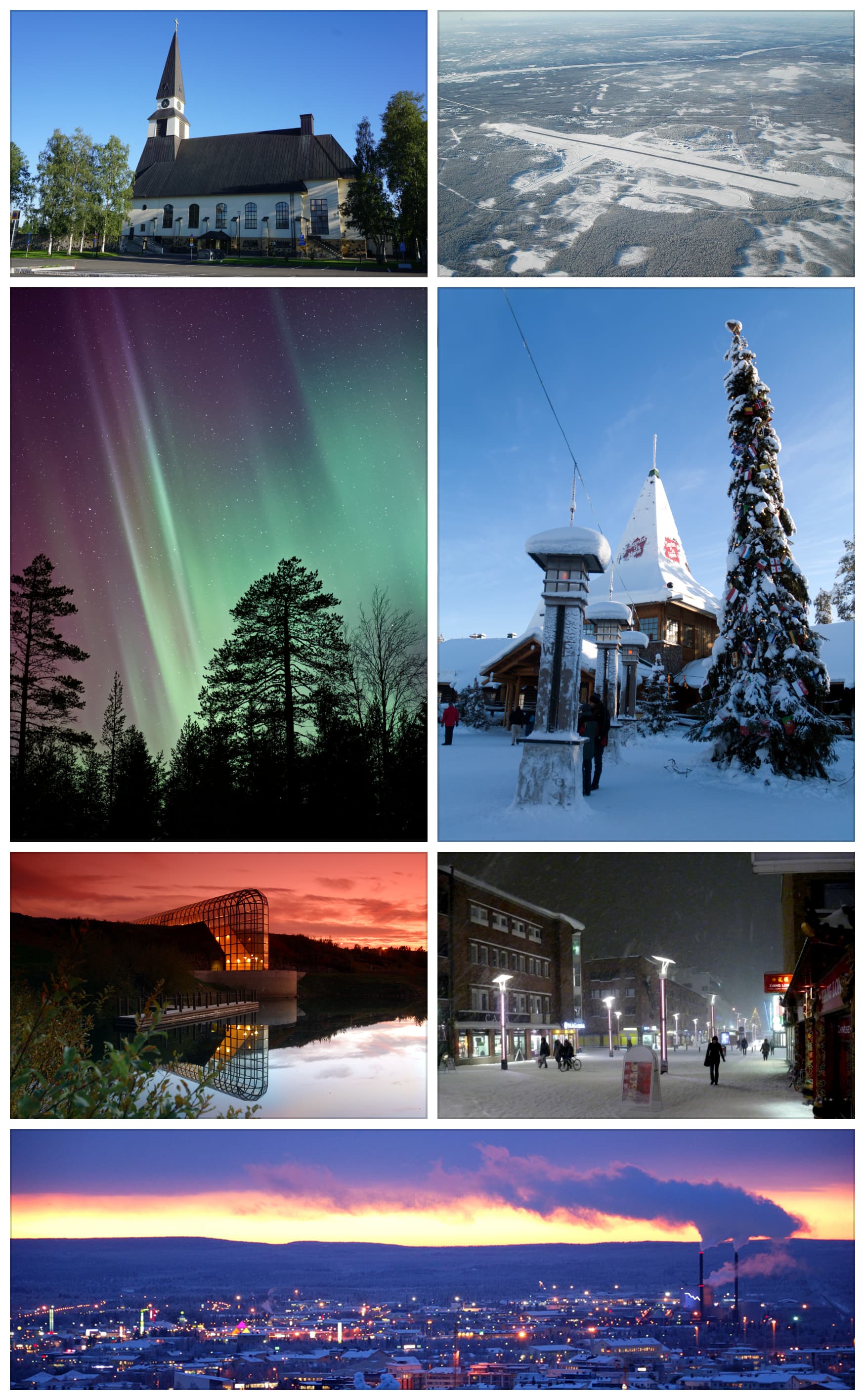
Rovaniemi, FinlandJari Kolehmainen, Flickr user lindstormORG, Idobi, Andriychenko, Biergerry, Arktikum, and Vincent Guth vingtcent / CC BY-SA 3.0, via Wikimedia Commons
FI

Rovaniemi

Where the Arctic Circle reveals resilience and wonder.

The secrets of Rovaniemi

Rovaniemi, as no one tells it.

Not the postcards. The stories even locals don't know — whispered in your ear, right where they happened.

3 secrets below. Many more wait inside the tour.
Santa Claus Village

The bustling heart of Christmas magic holds a secret about its foundational building.

Full story unlocks in the tour
Rovaniemi's City Plan

Observe a map of Rovaniemi closely, and a familiar shape emerges from its thoroughfares.

Full story unlocks in the tour
Rovaniemi Airport

Even before you set foot in the city, you will have already traversed a significant global landmark.

Full story unlocks in the tour
The full tour

Discover every secret of Rovaniemi

Every address, every reveal in full — in your ear, right where it happened.

Get the key to Rovaniemi

You pick your stops. You walk. The voice reveals what the others miss.

Choose your time

How long do you have in Rovaniemi?

No tours available yet. Check back soon — we're preparing them.

About Rovaniemi

The story of Rovaniemi

Rovaniemi, the official hometown of Santa Claus, functions as the capital of Finnish Lapland, uniquely blending urban life with the raw grandeur of the Arctic wilderness. Situated directly on the Arctic Circle, this city of approximately 66,000 residents offers a gateway to experiencing phenomena like the Northern Lights and the Midnight Sun. It is a place where the enchantment of folklore meets the stark realities of the subarctic, drawing over 700,000 visitors annually to Santa Claus Village alone.

Beyond its festive appeal, Rovaniemi is a city of remarkable endurance. Its modern appearance belies a dramatic past, having been almost entirely razed during World War II. The subsequent rebuilding, guided by the vision of renowned Finnish architect Alvar Aalto, transformed it into a distinctive example of post-war functionalism and organic architecture. Today, Rovaniemi operates as a commercial, educational, administrative, cultural, and sports center for Lapland, offering a diverse range of activities and a welcoming atmosphere for travelers seeking both adventure and tranquility.

The city's primary language is Finnish, spoken by about 94.8% of the population, with a small number of people speaking Sámi, Finland's third official language. English is also widely spoken, particularly in tourist areas.

History

From Ancient Settlement to Arctic Capital

The history of human presence in the Rovaniemi area extends back to the Stone Age, approximately 8,000 years ago, with evidence of farming and animal husbandry dating to 750–530 BC. The Sámi people are indigenous to this region, known as Sápmi. Rovaniemi was first documented in 1453 as a collection of small villages, where inhabitants primarily relied on agriculture, animal husbandry, fishing, and hunting.

The 19th century brought significant expansion to Rovaniemi, fueled by the exploitation of Lapland's natural resources. Extensive logging and the allure of gold fever attracted thousands to the region. By the late 19th century, Rovaniemi had become an important center for log floating, and its location at the confluence of the Kemijoki and Ounasjoki rivers solidified its role as a hub for traffic and trade, known for its large markets. A railway connection opened in 1909, further enhancing its connectivity, and the first runways of Rovaniemi Airport were completed in 1940.

The Scars of War and a Reindeer's Rebirth

Rovaniemi's trajectory was dramatically altered during World War II. In the 1930s, it was a quiet trading town of about 6,000 people. During the Continuation War (1941-1944), Finland allied with Germany against the Soviet Union, and Rovaniemi became the German operational headquarters and a base for the Luftwaffe. However, when Finland signed a separate peace with the Soviet Union in 1944, the Soviets demanded the expulsion of German troops, leading to the Lapland War.

As German forces retreated northward towards Norway in October 1944, they employed a scorched-earth policy. Although initial orders were to destroy only public buildings, an ammunition train exploded at Rovaniemi station on October 13, 1944, igniting the predominantly wooden town. Approximately 90% of Rovaniemi's buildings were destroyed, leaving behind a landscape of chimneys and ruins. The residents had been evacuated, but hundreds died during the arduous process and upon returning due to mines laid by the retreating Germans.

Aalto's Vision: The Reindeer Antler Plan

The post-war reconstruction began swiftly, with the renowned Finnish architect Alvar Aalto commissioned to lead the rebuilding efforts in 1945. Aalto's visionary "Reindeer Antler" city plan imposed the outline of a reindeer's head and antlers onto the existing topography, with the Keskuskenttä sports stadium forming the eye and roads creating the antlers. This distinctive design became a defining feature of Rovaniemi's architectural style, a testament to endurance and a tribute to Lapland's iconic animal. By 1953, the number of new houses exceeded the pre-war count.

Beyond the city plan, Aalto designed key public buildings that form the Rovaniemi Aalto Centre, including the City Hall, City Library (1965), and Lappia Hall (1975), a congress venue and home to the Rovaniemi Theatre. Lappia Hall was the last building Aalto saw completed before his death, with the City Hall finished posthumously in 1986, finalized by his architect wife, Elissa Aalto. Other notable architects like Ferdinand Salokangas also contributed to the city's reconstruction, designing administrative buildings and housing. One of the few buildings to survive the war was the post bus depot from 1933, which was later converted into the Korundi House of Culture, housing the Rovaniemi Art Museum and Lapland Chamber Orchestra. The Jätkänkynttilä ("Lumberjack's Candle") Bridge, opened in 1989, is another modern icon, connecting Ounasvaara to the city center.

What to see

Rovaniemi offers a compelling mix of Arctic experiences and cultural insights. A visit to Santa Claus Village is a year-round highlight, where you can meet Santa, send postcards from the official post office, and cross the Arctic Circle, even receiving a certificate to commemorate the occasion. Nearby, SantaPark Arctic World provides an underground amusement experience with elves and festive activities.

For a deeper understanding of the Arctic, the Arktikum Museum is a significant destination. This distinctive building houses the Regional Museum of Lapland and the Arctic Science Centre, with its iconic glass tube pointing north. The Korundi House of Culture, a former post bus depot that survived the war, now hosts the Rovaniemi Art Museum and the Lapland Chamber Orchestra. Architecture enthusiasts will appreciate the Rovaniemi Aalto Centre, a complex designed by Alvar Aalto, comprising the City Hall, City Library, and Lappia Hall.

Beyond the city's structures, the natural world calls. Seek the Northern Lights from late August to early April, with various tours offering snowmobile safaris, husky sledding, or even ice floating for optimal viewing. Experience the thrill of husky sledding or a more serene reindeer sleigh ride through snow-covered forests. For a truly unique adventure, try ice floating in a special thermal suit, even under the aurora. In summer, the Midnight Sun offers 24-hour daylight, perfect for hiking and exploring the green landscapes.

When to visit

Rovaniemi offers distinct experiences across its seasons. For a quintessential winter wonderland, with reliable snow, festive Christmas enchantment, and optimal Northern Lights viewing, December to March is ideal. December is the most popular, and therefore most crowded and expensive, month. For fewer crowds and milder temperatures while still enjoying aurora displays and winter activities, late September to November or January to March are recommended. March is particularly favored by locals for its longer sunny days, deep snow, and excellent aurora conditions.

If the Midnight Sun is your draw, visit from June to August, when the sun never fully sets, offering endless daylight for outdoor activities like hiking and lake swimming. Temperatures during July can reach up to 25°C (77°F). Shoulder seasons in September and April provide a balance of fewer tourists, good aurora conditions (September), and lingering snow (April), though weather transitions can be swift.

Practical

Rovaniemi is easily accessible by various modes of transportation. Rovaniemi Airport (RVN) offers daily flights to and from Helsinki, with numerous direct flight connections from various European countries during winter. The airport is approximately 8 kilometers from the city center and 3 kilometers from Santa Claus Village. Taxis and a shared airport shuttle bus (Airport Express and Santa's Express, depending on the season) provide convenient transfers to the city center and Santa Claus Village, typically taking around 10-15 minutes. A taxi to the city center costs approximately €28-€35, while the shuttle bus is around €7-€8 per person.

Within Rovaniemi, public transport, known as LINKKARI, operates using the Waltti ticketing system, covering zones A and B. You can purchase single tickets, day tickets, or use a Waltti travel card. Local bus number 8 runs year-round between the city center and Santa Claus Village. Long-distance buses connect Rovaniemi to other parts of Finland, and the Santa Claus Express night train offers an eco-friendly way to travel from Helsinki. While English is widely spoken, particularly in tourist areas, Finnish is the primary language. The local currency is the Euro (€).

Good to know
What is the best way to get from Rovaniemi Airport to the city center?
The most convenient options are a taxi or a shared airport shuttle bus. Taxis cost around €28-€35 and take about 10-15 minutes. The Airport Express or Santa's Express shuttle bus costs €7-€8 per person and also takes about 10 minutes, making stops along the way.
Can I see the Northern Lights in Rovaniemi?
Yes, Rovaniemi is an excellent place to see the Northern Lights. They are typically visible about 150 nights a year, from late August through early April, on clear nights away from city lights.
Is Rovaniemi only a winter destination?
While Rovaniemi is famous for its winter activities and Christmas enchantment, it also offers unique summer experiences, including the Midnight Sun, where the sun never fully sets from late May.
What is the Arctic Circle, and can I cross it in Rovaniemi?
The Arctic Circle is a line of latitude (66°33′45.9″ north of the Equator) marking the southernmost point where the sun can remain continuously above or below the horizon for 24 hours. You can easily cross it in Santa Claus Village, where it is clearly marked.
What language is spoken in Rovaniemi?
Finnish is the primary language, but English is widely spoken, especially in tourist areas. A small number of people also speak Sámi.
What is Rovaniemi's connection to Santa Claus?
Rovaniemi is the official hometown of Santa Claus. You can visit Santa Claus Village year-round to meet Santa, send postcards from his official post office, and experience the festive atmosphere.
Rovaniemi
From€9.00
No booking · activate anytime · 12h to walk it
Get the key to Rovaniemi