Sønderborg Castle, Blue Tower
King Christian II spent nearly two decades imprisoned here, and legend says his restless pacing left a permanent mark.
Full story unlocks in the tour
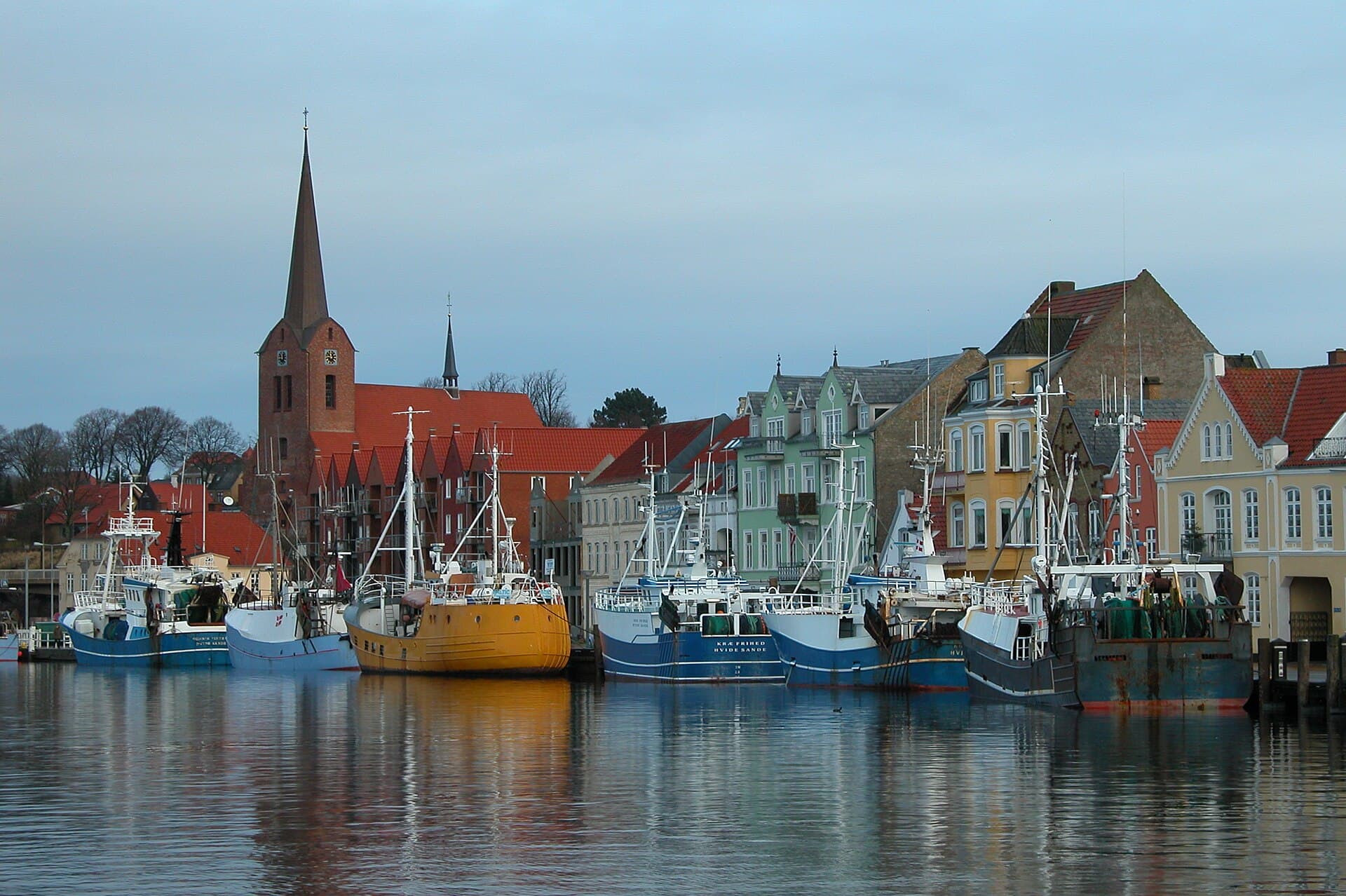 Unknown author / CC BY-SA 3.0, via Wikimedia Commons
“Where history's currents meet the modern tide.”
Not the postcards. The stories even locals don't know — whispered in your ear, right where they happened.
King Christian II spent nearly two decades imprisoned here, and legend says his restless pacing left a permanent mark.
This ancient spring was once believed to be the source of Sønderborg's newest residents, not storks.
Before this iconic bridge connected the two halves of Sønderborg, crossing the Als Sound on Sundays came with a peculiar perk.
Discover every secret of Sønderborg
Every address, every reveal in full — in your ear, right where it happened.
You pick your stops. You walk. The voice reveals what the others miss.
No tours available yet. Check back soon — we're preparing them.
Sønderborg, a captivating city in Southern Denmark, gracefully straddles both the island of Als and the Jutland mainland, bisected by the picturesque Als Sound. This unique geographical embrace creates a waterfront atmosphere that defines its character. As a prominent hub in the Region of Southern Denmark, it balances a significant role in commerce, education, and tourism with a welcoming, cozy charm for its approximately 28,000 inhabitants.
The city's strategic location has shaped a profound legacy, evident in its blend of historical landmarks and contemporary architecture. From medieval fortifications to modern designs, Sønderborg offers a visual chronicle of its evolution. It's a place where Danish and German influences intertwine, creating a singular cultural fabric, even reflected in the common greeting 'Mojn' used throughout Southern Denmark and Northern Germany.
Beyond its historical depth, Sønderborg presents a delightful array of experiences. Visitors can explore a compact city center with cafes and shops, stroll along the waterfront promenade, or venture to nearby beaches and coastal paths. The city serves as an excellent base for exploring the surrounding region, offering a blend of cultural heritage and scenic beauty.
The origins of Sønderborg are deeply rooted in its defensive structures. Around 1158, King Valdemar I the Great ordered the construction of Sønderborg Castle to protect against attacks from the Wends. The city itself grew around this fortress, with its first written mention appearing in 1256. The name 'Sønderborg' translates to 'Southern Castle,' distinguishing it from Nordborg, the 'Northern Castle,' on another part of Als island.
Sønderborg Castle quickly became a significant royal residence and fortress. A notable period in its history was the imprisonment of the deposed King Christian II for 17 years, from 1532 to 1549. In 1461, King Christian I officially granted Sønderborg market town privileges, solidifying its economic importance. The 16th century, under Duke Hans the Younger, saw a period of prosperity, with Sønderborg becoming a center for maritime trade and shipping in the Schleswig region.
The 19th century brought significant upheaval. Sønderborg's strategic importance was underscored during the Second Schleswig War of 1864. The city was razed during a Prussian assault near Dybbøl, a site that became a symbol of heroic Danish resistance. Following the war, Sønderborg, as part of Northern Schleswig, passed to German administration. This period of German rule lasted until 1920 when, after a plebiscite, Northern Schleswig was reunited with Denmark.
The reunification spurred a need for improved infrastructure. The King Christian X's Bridge, a 331-meter-long bascule bridge connecting Jutland with Als, was inaugurated in 1930, significantly enhancing regional transport. Later, the 682-meter-long Als Strait Bridge was built between 1978 and 1981, further improving accessibility. Today, Sønderborg continues to embrace its dual heritage, with German schools, libraries, and kindergartens reflecting the enduring cultural mix.
Begin your exploration at Sønderborg Castle, a medieval fortress transformed into a Renaissance palace. It now houses the Museum of Southern Jutland, offering insights into the region's art, history, and the dramatic events that shaped it, including the Schleswig Wars. You can explore princely chambers, the Banqueting Hall, and Queen Dorothea's Chapel, the oldest remaining Renaissance room in the Nordic region.
Just outside the city, Dybbøl Mølle (Dybbøl Mill) stands as a national symbol and a poignant historical site from the 1864 war. The mill and surrounding buildings now form a museum, providing educational insights into this pivotal conflict.
Stroll along the waterfront promenade, where you can observe boats in the harbor and admire the bronze sculpture 'Flounder in Control' by Nobel Prize recipient Günter Grass. The King Christian X's Bridge itself is an architectural landmark, offering views over the Als Sound. For expansive vistas, head to the Point of View observation deck on the 16th floor of the Alsik Hotel, which offers 360-degree views stretching from Dybbøl Mill to Sønderborg Castle.
Nature enthusiasts can explore Nørreskoven, a large forest on Als with hiking trails and diverse wildlife, or walk a section of the Gendarmstien, one of Denmark's most scenic coastal hiking routes. For a unique and free experience, visit Jørgen Riecks Arkæologiske Samling, a collection of thousands of flint artifacts.
The most comfortable time to visit Sønderborg is during the summer months, particularly July and August, when average temperatures range from 17-18°C, with highs around 21°C. These months are ideal for outdoor activities and waterfront enjoyment. Spring (April-May) and autumn (September-October) offer milder temperatures and fewer tourists, with pleasant averages around 12°C in May. Winters are cool, with January being the coldest month at an average of 3.3°C. Precipitation is fairly consistent year-round, so an umbrella or raincoat is always a wise addition to your packing.
Sønderborg is a very walkable city, especially the compact city center and the area between the harbor and Perlegade. The dress code is generally casual to smart-casual. For longer distances or day trips, public transport is efficient, with a well-developed network of buses, trains, and ferries connecting Sønderborg to other cities in the region and major hubs like Copenhagen, Aarhus, and Hamburg. Sønderborg Airport (SGD) offers several daily flights to Copenhagen. Billund Airport (BLL) and Hamburg Airport (HAM) are larger international alternatives, approximately 1.5 and 2 hours away by car, respectively. If driving, the Sønderborg motorway connects directly to the E45. Car rental companies are available for exploring the region at your own pace. The city also promotes environmentally friendly transport, with numerous bike paths.