Les murs bleus de la Vieille Ville
Pourquoi tant de portes et de cadres de fenêtres à Safed sont-ils peints en bleu ?
L'histoire complète se débloque dans le tour
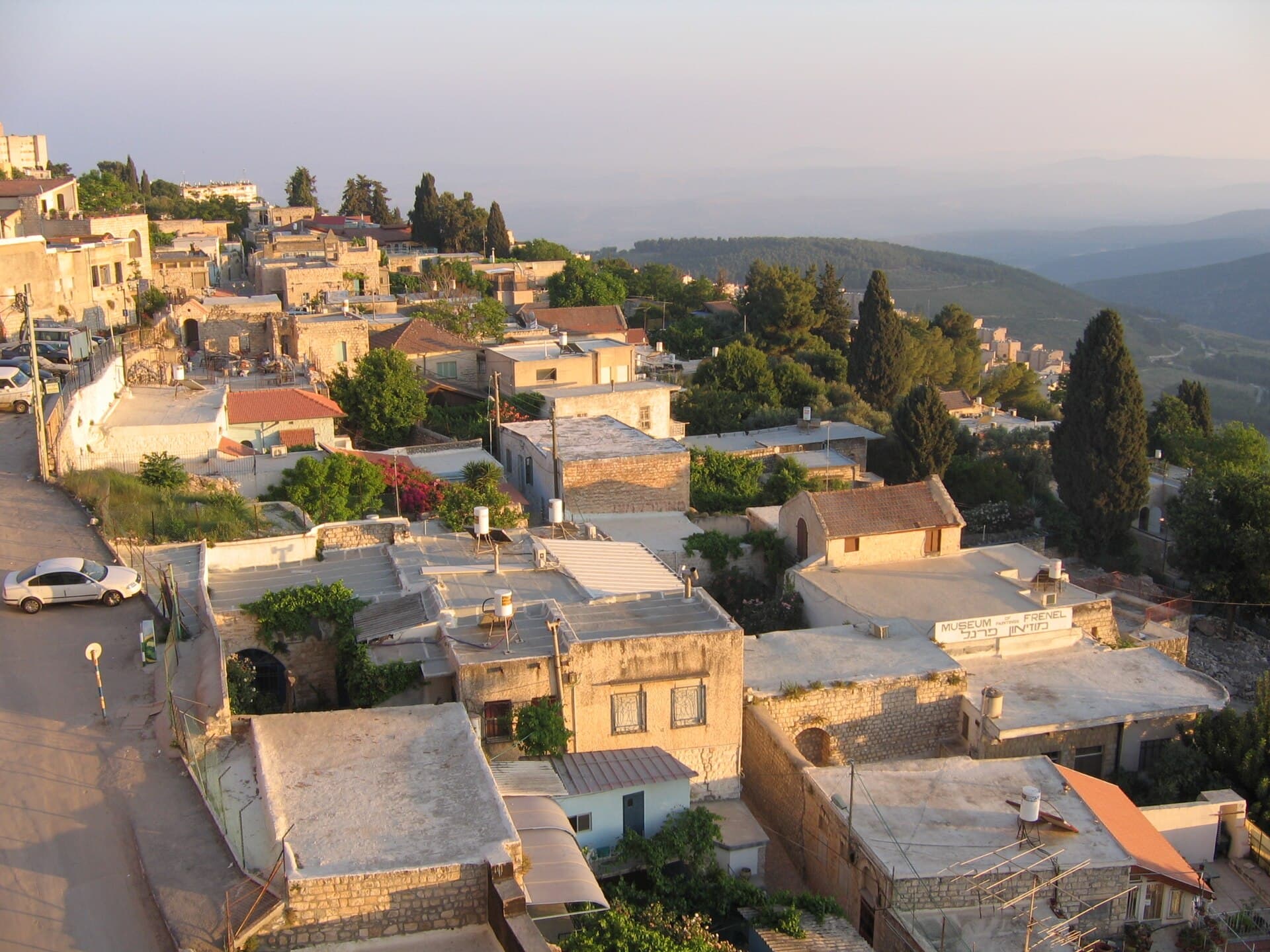 No machine-readable author provided. Beny Shlevich assumed (based on copyright claims). / CC BY-SA 3.0, via Wikimedia Commons
Visite audio autoguidée de Safed — parcours GPS à pied, lecture hors ligne, narration en 32 langues.
“Là où le mysticisme ancien respire à travers des ruelles peintes en bleu.”
Pas les cartes postales. Les histoires que même les habitants ignorent — soufflées à l'oreille, là où elles se sont passées.
Pourquoi tant de portes et de cadres de fenêtres à Safed sont-ils peints en bleu ?
Un célèbre kabbaliste du XVIe siècle, le rabbin Isaac Luria, connu sous le nom de Arizal, dirigeait ses disciples dans une tradition unique de Shabbat.
Safed a été le foyer d'une innovation révolutionnaire au XVIe siècle qui a changé la façon dont les textes juifs étaient diffusés.
Découvrez tous les secrets de Safed
Chaque adresse, chaque révélation en entier — dans ton oreille, là où elle s'est passée.
Tu choisis tes lieux. Tu marches. La voix te révèle ce que les autres ignorent.


Votre visite audioguidée de Safed vous attend — choisissez vos lieux, votre langue, et lancez-vous dès votre arrivée.
AcheterLume intègre un guide en réalité augmentée. Levez votre téléphone : sa caméra montre la rue devant vous, avec une flèche lumineuse posée sur l'image réelle qui pointe toujours vers votre prochain arrêt — aucune carte à déchiffrer, aucun mauvais virage. Comme tout dans Lume, ça fonctionne entièrement hors-ligne.
Safed, ou Tzfat comme on l'appelle en hébreu, s'élève haut dans les montagnes de la Haute Galilée, se dressant comme l'une des villes les plus hautes d'Israël à environ 900 mètres (3 000 pieds) au-dessus du niveau de la mer. Cette altitude offre un répit rafraîchissant de la chaleur des régions inférieures et offre des vues imprenables sur les paysages environnants, y compris la mer de Galilée et le plateau du Golan par temps clair. La ville est vénérée comme l'une des quatre villes saintes du judaïsme, aux côtés de Jérusalem, Hébron et Tibériade, et est particulièrement reconnue comme un centre mondial de la Kabbale, la tradition mystique du judaïsme, qui y a prospéré au XVIe siècle.
Se promener dans la Vieille Ville de Safed est une expérience imprégnée de spiritualité et d'expression artistique. Ses rues étroites et sinueuses passent devant d'anciens bâtiments en pierre, beaucoup ornés de nuances de bleu saisissantes, une couleur censée éloigner le mal. L'atmosphère unique de la ville a longtemps attiré les artistes, favorisant un Quartier des Artistes où les galeries et les ateliers exposent une gamme variée d'œuvres, souvent inspirées par la Kabbale et les thèmes juifs. Safed offre un mélange de profondeur historique, de contemplation spirituelle et d'énergie créative, invitant les visiteurs à explorer ses couches de tradition et de vie contemporaine.
La population de Safed, d'environ 34 000 habitants, crée un cadre intime, où les visiteurs peuvent se sentir comme des participants à une vie harmonieuse plutôt que de simples touristes. Le paysage culturel de la ville est un mélange d'influences éclectiques et ultra-orthodoxes, avec une communauté principalement composée de familles juives, y compris de nombreux résidents religieux, ainsi que d'habitants arabes. Cette démographie diverse contribue à un environnement multiculturel où l'hébreu et l'arabe sont parlés, et où histoires et traditions sont partagées.
Les origines de Safed remontent à l'Antiquité, avec des preuves d'établissement humain depuis les périodes préhistoriques. Elle est identifiée à Sepph, une ville fortifiée de la Haute Galilée mentionnée par l'historien juif romain Josèphe, et le Talmud de Jérusalem fait référence à Safed comme l'un des cinq lieux élevés où des feux étaient allumés pour annoncer la Nouvelle Lune et les fêtes pendant l'ère du Second Temple.
La ville a gagné en importance sous les Croisés, qui y ont construit une grande forteresse en 1168. Cependant, Saladin l'a conquise 20 ans plus tard, et elle a finalement été démolie en 1219. Au cours des siècles suivants, un centre civique pour les Juifs et les Musulmans s'est développé autour des ruines de la citadelle.
Le XVIe siècle a marqué l'âge d'or de Safed, en particulier pour sa communauté juive. Après l'expulsion des Juifs d'Espagne en 1492, de nombreux rabbins et mystiques éminents se sont installés à Safed, la transformant en le principal centre de la Kabbale. Au cours de cette période, d'importants kabbalistes comme Isaac ben Solomon Luria (l'Arizal) et Joseph Karo, auteur du code de loi juive fondamental Shulchan Aruch, ont vécu et enseigné dans la ville. Le service Kabbalat Shabbat, un recueil de prières et d'hymnes récités dans le monde entier avant le Shabbat, a également été composé à Safed dans les années 1500. La ville a également vu l'établissement de la première imprimerie hébraïque en Asie en 1577.
La fortune de Safed a décliné au cours des siècles suivants en raison de facteurs tels que la concurrence dans l'industrie textile, les épidémies et les tremblements de terre dévastateurs de 1759 et 1837. Le tremblement de terre de 1837 à lui seul a coûté la vie à environ 4 000 Juifs et détruit les 14 synagogues de la ville. Malgré ces revers, une présence juive a toujours perduré.
Au XXe siècle, Safed est devenue connue comme la capitale artistique d'Israël dans les années 1950 et 1960. Les artistes ont été encouragés par la municipalité à restaurer des bâtiments abandonnés dans l'ancien quartier mamelouk (Harat al-Wata), aujourd'hui le Quartier des Artistes, pour y établir des galeries et des expositions. La ville a également joué un rôle dans la guerre israélo-arabe de 1948, où les forces de défense juives (Haganah) ont pris le contrôle de la ville. Au cours des dernières décennies, Safed a connu un renouveau, avec des dizaines de milliers de Juifs qui y vivent et de nombreuses institutions juives et galeries d'art qui prospèrent.
La Vieille Ville de Safed est un labyrinthe de rues en pierre et d'anciennes synagogues, dont beaucoup ont été reconstruites après les tremblements de terre dévastateurs des XVIIIe et XIXe siècles. Parmi les synagogues clés à visiter, on trouve la Synagogue Ari Ashkenazi, associée au rabbin Isaac Luria, et la Synagogue Yosef Caro, qui aurait été construite au-dessus de la grotte où un messager céleste a inspiré le rabbin Karo à composer le Shulchan Aruch. La Synagogue Abuhav est un autre site important, avec une légende selon laquelle son mur sud est resté miraculeusement intact après les tremblements de terre.
Le Quartier des Artistes, qui borde le quartier juif historique, est un espace d'exposition central où l'histoire, le mysticisme et la créativité contemporaine convergent. Ici, vous pouvez explorer de nombreuses galeries d'art, ateliers et studios présentant des peintures, des sculptures, des bijoux, des œuvres en verre et des Judaica, souvent imprégnés de thèmes kabbalistiques. L'Exposition Générale de la Colonie des Artistes abrite une collection d'œuvres d'artistes de Safed.
Pour des vues imprenables sur Safed, la mer de Galilée et le plateau du Golan, visitez la Citadelle de Safed, située au point le plus élevé de la ville. Bien qu'il ne reste pas grand-chose de la forteresse croisée originale, elle offre un point de vue fascinant et abrite un énorme trou d'eau sombre, un secret qui mérite d'être exploré avec une lampe de poche. Le Musée Beit HaMeiri, installé dans un bâtiment historique du XVIe siècle dans la Vieille Ville, offre un aperçu de l'histoire de la communauté juive de Safed du XIXe siècle jusqu'en 1948.
Les périodes idéales pour visiter Safed sont le printemps (avril-mai) et l'automne (octobre-novembre), lorsque le temps est doux et agréable, et que les foules sont généralement moins nombreuses. Les températures pendant ces saisons de transition créent d'excellentes conditions pour explorer les rues et les sites de la ville. Les étés (juin-septembre) sont chauds et secs, avec des températures diurnes moyennes dépassant souvent les 30°C (86°F), bien qu'une brise fraîche puisse le rendre supportable. Les hivers (décembre-mars) sont plus frais et plus humides, avec des températures moyennes d'environ 11-14°C (52-57°F), et des chutes de neige occasionnelles. Janvier est généralement le mois le plus humide.
Safed est généralement considérée comme une ville sûre pour les visiteurs. Lors de la visite de synagogues et de sites religieux, une tenue modeste est requise en signe de respect pour la communauté locale. La monnaie locale est le nouveau shekel israélien (ILS).
Les transports en commun vers Safed sont disponibles en bus. Des bus directs circulent depuis Jérusalem (ligne 982) plusieurs fois par jour. Depuis Tel Aviv ou Haïfa, il est recommandé de prendre un train jusqu'à Acco ou Karmiel, puis de prendre le bus 361 jusqu'à Safed, qui circule toutes les demi-heures jusqu'à environ 21h00. À Safed, une compagnie de bus locale, Nateeve Express, exploite plusieurs lignes, et des taxis sont également disponibles. Si vous conduisez, Safed est accessible via la Route 89 ou la Route 90.
Si vous prévoyez de visiter pendant le Shabbat (du coucher du soleil le vendredi au coucher du soleil le samedi) ou les fêtes juives, sachez que les transports en commun cesseront et que la plupart des magasins, restaurants et supermarchés seront fermés. De nombreux hôtels et maisons d'hôtes fonctionnent, et les visiteurs peuvent organiser des repas de Shabbat à l'avance ou se renseigner sur les expériences communautaires de Shabbat.
Safed en coréen, en chinois ou en hébreu — et dans 29 autres langues, chaque étape narrée par une voix native. La plus large gamme de langues de tous les audioguides autoguidés.
Disponible en :