Fiordo de Saguenay
El Fiordo de Saguenay esconde un secreto en sus profundidades: una estratificación única de agua que sustenta dos ecosistemas distintos.
La historia completa se desbloquea en el tour
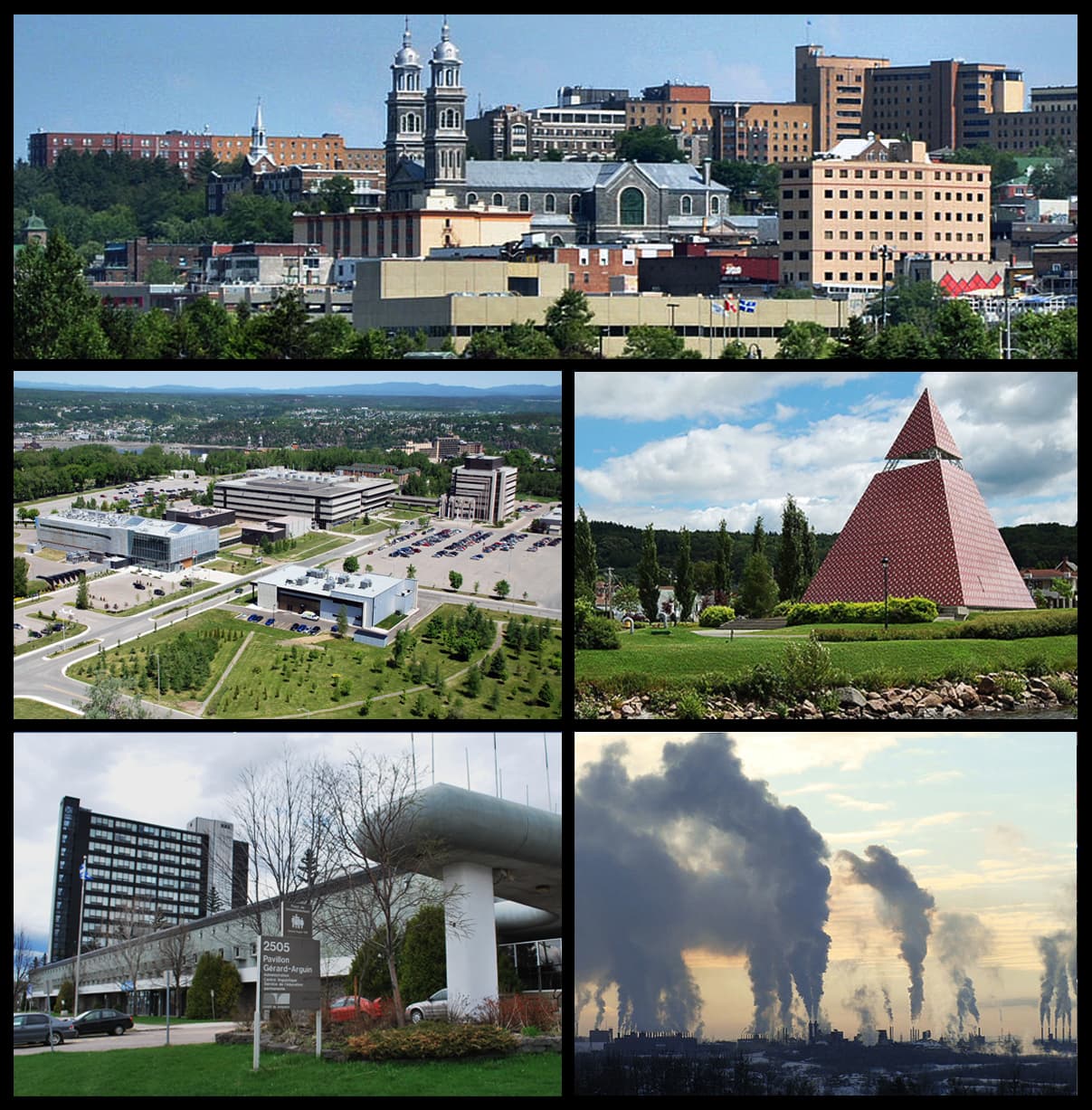 Chicoutimi_-_Centre-ville_Est.jpg: Chicoutimi CampusUQAC07_282.JPG: service des communications de l'UQAC Pyramide_des_Ha!_Ha!.jpg: Adqproductions Entrée_du_pavillon_Gérard-Arguin_du_Cégep_de_Jonquière02.JPG: Khayman 20090111_Alcan_secteur_Arvida.JPG: Khayman derivative work: Chicoutimi (talk) / CC BY-SA 3.0, via Wikimedia Commons
Tour de audio autoguiado de Saguenay — ruta GPS a pie, reproducción offline, narración en 32 idiomas.
“Donde un río de agua dulce se encuentra con un fiordo de agua salada, creando un mundo propio.”
No las postales. Las historias que ni los locales conocen — al oído, justo donde ocurrieron.
El Fiordo de Saguenay esconde un secreto en sus profundidades: una estratificación única de agua que sustenta dos ecosistemas distintos.
Este museo, ubicado en una antigua fábrica de pulpa, lleva las cicatrices de un desastre natural que remodeló la región.
El nombre de esta bahía, una característica prominente del Fiordo de Saguenay, no es una expresión de risa.
Descubre todos los secretos de Saguenay
Cada dirección, cada revelación al completo — a tu oído, justo donde ocurrió.
Eliges tus paradas. Caminas. La voz te revela lo que los demás ignoran.


Tu tour de audioguía por Saguenay te espera — elige tus lugares, tu idioma y empieza al llegar.
ComprarLume incluye una guía de realidad aumentada. Levanta el móvil y su cámara muestra la calle que tienes delante, con una flecha luminosa sobre la imagen real que siempre apunta a tu próxima parada — sin mapas que descifrar, sin giros equivocados. Como todo en Lume, funciona completamente sin conexión.
Saguenay, Quebec, es una ciudad forjada por los dramáticos paisajes que la rodean, destacando el Fiordo de Saguenay. Esta singular maravilla geológica, que se extiende 105 kilómetros desde Saint-Fulgence hasta Tadoussac, es uno de los fiordos más largos y meridionales del mundo. Tallado por glaciares durante la última edad de hielo, el fiordo presenta acantilados que alcanzan hasta 350 metros y profundidades de 270 metros, creando un sorprendente límite natural donde un río de agua dulce se encuentra con el abrazo salado del estuario del San Lorenzo.
Más que una maravilla geológica, Saguenay es una región donde la naturaleza y la industria se han entrelazado durante mucho tiempo. La ciudad misma se formó en 2002 mediante la fusión de varias comunidades más pequeñas, incluyendo Chicoutimi, Jonquière y La Baie, cada una con su propio carácter e historia distintivos. Desde sus primeros días como puesto de comercio de pieles hasta su posterior desarrollo como centro de explotación forestal, pulpa y papel, y producción de aluminio, la identidad de Saguenay ha sido moldeada por sus abundantes recursos naturales y el ingenio de su gente.
La historia de la región de Saguenay se remonta a miles de años, con el pueblo indígena Innu habitando las tierras a lo largo del fiordo, utilizando el río como una ruta de transporte vital. La presencia europea comenzó en 1676 con el establecimiento de un puesto de comercio de pieles en Chicoutimi, que sirvió como un centro crucial para el comercio. Durante casi dos siglos, de 1652 a 1842, el territorio fue designado exclusivamente para el comercio de pieles, con solo comerciantes y misioneros permitidos.
La colonización a gran escala comenzó en 1838 cuando la "Sociedad de los Veintiuno" (Société des Vingt-et-un), un grupo de inversores y colonos, llegó al área de Grande-Baie (ahora La Baie) para iniciar operaciones de tala. La apertura oficial de Saguenay a la explotación forestal y la agricultura ocurrió en 1842. William Price, un empresario de origen inglés, jugó un papel fundamental en el desarrollo de la región, fundando un imperio maderero que sentó las bases económicas para futuras ciudades. A principios del siglo XX, se produjo una rápida industrialización, impulsada por el potencial hidroeléctrico de la región y los vastos bosques boreales. Entre 1925 y 1928, se construyó la planta de aluminio más grande del mundo, junto con la ciudad de Arvida. En 1942, Alcan construyó la estación hidroeléctrica de Shipshaw, que era la más grande del mundo en ese momento, para alimentar la planta.
La ciudad moderna de Saguenay se formó oficialmente el 18 de febrero de 2002, mediante la fusión de Chicoutimi, Jonquière, La Baie, Laterrière y partes de otros municipios. Esta consolidación reunió a comunidades moldeadas por distintas historias industriales, desde los orígenes de Chicoutimi como puesto comercial y ciudad maderera hasta el crecimiento de Jonquière alrededor de fábricas de pulpa y papel y el desarrollo de Arvida como centro de producción de aluminio. El fiordo de aguas profundas de la región proporcionó acceso directo al mar, facilitando la exportación de recursos y la importación de materias primas, lo cual fue crucial para su crecimiento industrial.
El Parque Nacional del Fiordo de Saguenay es un atractivo principal, ofreciendo paisajes dramáticos de imponentes acantilados y aguas profundas. Los visitantes pueden explorar más de 100 kilómetros de rutas de senderismo, hacer kayak de mar o tomar un paseo en barco para apreciar plenamente la escala del fiordo. El sector de Baie-Sainte-Marguerite es particularmente conocido por la observación de ballenas beluga en verano. Para aquellos que buscan aventura, Parc Aventures Cap Jaseux ofrece cursos aéreos, vía ferrata y alojamientos singulares como casas en los árboles.
En la ciudad, La Pulperie de Chicoutimi / Museo Regional ofrece una visión del pasado industrial de la zona, ubicado en una antigua fábrica de pulpa. El Parque Nacional Monts-Valin, a poca distancia en coche de Chicoutimi, es un destino durante todo el año para practicar senderismo, pesca y paddleboard, transformándose en un paraíso invernal para raquetas de nieve y esquí. El pintoresco pueblo de Sainte-Rose-du-Nord ofrece amplias vistas del fiordo y oportunidades para hacer kayak de mar y cruceros.
Saguenay es un destino para todo el año, con actividades para cada estación. Para actividades de clima cálido como senderismo, kayak y observación de ballenas, la mejor época para visitar es desde principios de julio hasta finales de agosto. La temporada de observación de ballenas suele ir de mayo a octubre. Los inviernos son largos y fríos, siendo enero el mes más frío, pero ofrecen un paisaje mágico para el motonieve, la pesca en hielo, las raquetas de nieve y el esquí. Espere precipitaciones constantes durante todo el año, así que prepárese para algo de clima húmedo independientemente de su visita.
La moneda utilizada en Saguenay, y en todo Canadá, es el dólar canadiense (CAD). Las tarjetas de crédito y débito son ampliamente aceptadas, pero es aconsejable llevar algo de efectivo para compras más pequeñas o en áreas remotas. La propina entre el 15% y el 20% es estándar para servicios de restaurantes y taxis. El francés es el idioma predominante en la región. Saguenay se considera una ciudad muy segura con bajas tasas de criminalidad.
El Aeropuerto de Saguenay-Bagotville (YBG) es la opción más conveniente para los viajeros aéreos, ubicado aproximadamente a 12 kilómetros del centro de la ciudad en el distrito de La Baie. Hay taxis y autobuses disponibles desde el aeropuerto. Dentro de la ciudad, hay transporte público disponible, y Saguenay es cada vez más amigable para las bicicletas durante los meses de verano, con una red de carriles para bicicletas y un servicio de Vélobus.
Saguenay en coreano, en chino o en hebreo — y 29 idiomas más, cada parada narrada por una voz nativa. La mayor variedad de idiomas de cualquier audioguía autoguiada.
Disponible en: