L'Abbaye de Gellone
Une grande partie du cloître exquis de l'Abbaye, un chef-d'œuvre de sculpture romane, ne se trouve plus à Saint-Guilhem-le-Désert.
L'histoire complète se débloque dans le tour
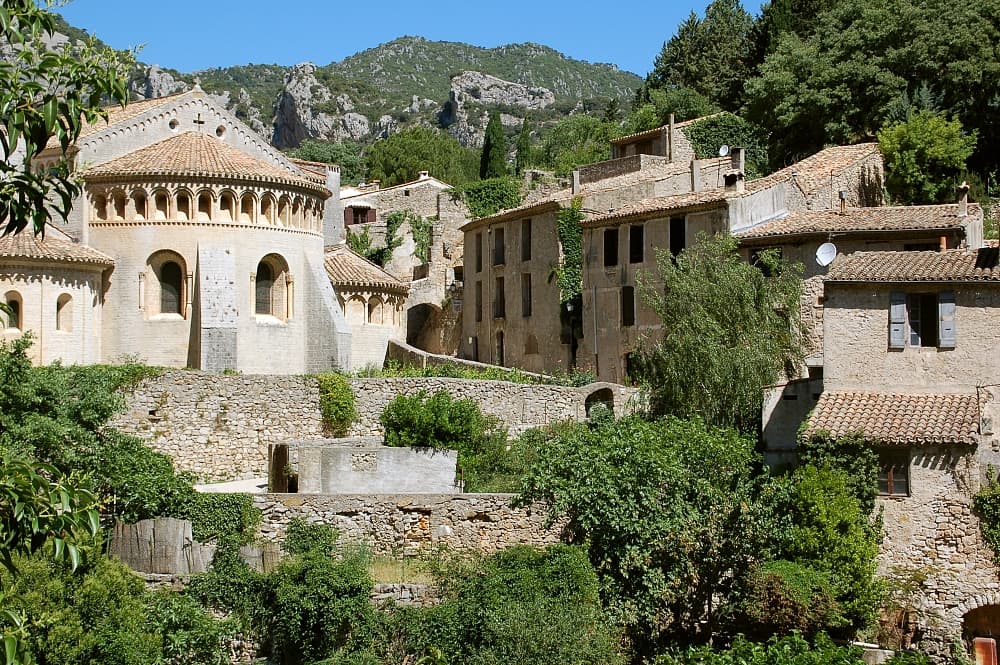 Fritz Geller-Grimm / CC BY-SA 2.5, via Wikimedia Commons
Visite audio autoguidée de Saint-Guilhem-le-Désert — parcours GPS à pied, lecture hors ligne, narration en 32 langues.
“Là où les pierres ancestrales content des sagas de dévotion, de ruse et de voyages épiques.”
Pas les cartes postales. Les histoires que même les habitants ignorent — soufflées à l'oreille, là où elles se sont passées.
Une grande partie du cloître exquis de l'Abbaye, un chef-d'œuvre de sculpture romane, ne se trouve plus à Saint-Guilhem-le-Désert.
Malgré son nom, Saint-Guilhem-le-Désert n'est pas un paysage aride.
Le Diable lui-même aurait mis la main à la pâte pour la construction de cet ancien pont, mais il a finalement été déjoué.
Découvrez tous les secrets de Saint-Guilhem-le-Désert
Chaque adresse, chaque révélation en entier — dans ton oreille, là où elle s'est passée.
Tu choisis tes lieux. Tu marches. La voix te révèle ce que les autres ignorent.


Votre visite audioguidée de Saint-Guilhem-le-Désert vous attend — choisissez vos lieux, votre langue, et lancez-vous dès votre arrivée.
AcheterLume intègre un guide en réalité augmentée. Levez votre téléphone : sa caméra montre la rue devant vous, avec une flèche lumineuse posée sur l'image réelle qui pointe toujours vers votre prochain arrêt — aucune carte à déchiffrer, aucun mauvais virage. Comme tout dans Lume, ça fonctionne entièrement hors-ligne.
Niché au cœur des gorges de l'Hérault, à environ 30 kilomètres au nord-ouest de Montpellier, Saint-Guilhem-le-Désert est un village qui semble suspendu entre ciel et pierre. Cette commune médiévale, abritant environ 237 habitants en 2023, est reconnue comme l'un des « Plus Beaux Villages de France » et un site du patrimoine mondial de l'UNESCO. Ses maisons de pierre serrées, ses rues étroites et sinueuses, et ses falaises calcaires spectaculaires créent une atmosphère accueillante, attirant plus de 800 000 visiteurs chaque année.
L'attrait durable du village réside dans son passé persistant et son importance spirituelle. Il constitue une étape significative sur la Via Tolosana (route d'Arles) du Chemin de Saint-Jacques-de-Compostelle, attirant pèlerins et voyageurs en quête d'un lien avec ses origines médiévales. Au-delà de ses merveilles architecturales, Saint-Guilhem-le-Désert est entouré d'un grand paysage naturel, incluant les montagnes du Haut-Languedoc et les gorges de l'Hérault, offrant des opportunités d'activités de plein air au milieu d'un environnement verdoyant.
L'histoire de Saint-Guilhem-le-Désert commence en 804 avec Guilhem, également connu sous le nom de Guillaume de Gellone. Noble carolingien, duc d'Aquitaine, comte de Toulouse et cousin de l'empereur Charlemagne, Guilhem était un guerrier célébré. Après une carrière militaire distinguée, incluant la prise de Barcelone en 803, il choisit de déposer les armes et de se retirer dans la solitude de la vallée de Gellone. Inspiré par Saint Benoît d'Aniane, Guilhem y établit une communauté monastique bénédictine en 804, initialement dépendante de l'Abbaye d'Aniane voisine.
L'Abbaye de Gellone gagna rapidement en importance, notamment après que Guilhem l'eut dotée d'une relique de la Vraie Croix, un don de Charlemagne, qui l'avait reçue du Patriarche de Jérusalem. Cet artefact sacré transforma l'abbaye en un site de pèlerinage majeur sur la route de Saint-Jacques-de-Compostelle. Guilhem lui-même se retira à l'abbaye en 806, vivant comme un simple moine jusqu'à sa mort en 812. Il fut canonisé en 1066, et l'abbaye fut ensuite nommée en son honneur.
Au fil des siècles, Saint-Guilhem-le-Désert a prospéré comme centre spirituel et, pendant un temps, commercial, connu pour sa production de soie. Cependant, il a également connu des périodes de déclin. Un incendie dans les archives de l'abbaye a entraîné des différends juridictionnels avec Aniane, bien que Saint-Guilhem ait finalement acquis son indépendance vers 1090 sous le Pape Urbain II. L'abbaye fut saccagée par les Huguenots en 1569, entraînant la destruction d'une grande partie de son mobilier. Pendant la Révolution française, le monastère fut supprimé et ses propriétés vendues.
Malgré ces défis, le village et son abbaye ont conservé leur intégrité historique. L'église abbatiale, exemple d'architecture romane primitive avec des structures principalement des 11e et 12e siècles, a été classée Monument Historique en 1840. Aujourd'hui, l'ensemble du site, y compris l'abbaye, est reconnu par l'UNESCO comme faisant partie des « Chemins de Saint-Jacques-de-Compostelle en France », reconnaissant son rôle profond dans le pèlerinage médiéval et les échanges culturels.
Commencez votre exploration par l'Abbaye de Gellone, site classé au patrimoine mondial de l'UNESCO et cœur spirituel du village. Admirez son architecture romane, l'impressionnante nef du début du 11e siècle et l'abside du 12e siècle. À l'intérieur, vous pouvez encore observer un fragment de la Vraie Croix, une relique offerte par Charlemagne. L'abbaye abrite également un petit musée dans la Salle du Réfectoire des Moines.
Flânez dans les passages étroits et pavés du village, bordés de maisons en pierre et de fontaines anciennes, certaines ornées de coquilles Saint-Jacques, emblème des pèlerins. Ne manquez pas la Place de la Liberté, la place principale, dominée par un platane de plus de 150 ans avec une circonférence de 6,7 mètres. Ici, vous pouvez prendre un verre dans l'un des cafés. Recherchez la Tour des Prisons, une tour du 12e siècle, vestige du village médiéval.
À une courte distance du village, enjambant l'Hérault, se trouve le Pont du Diable, un autre site classé au patrimoine mondial de l'UNESCO et l'un des plus anciens ponts médiévaux de France. Ce pont roman, construit au 11e siècle, offre des perspectives sur les gorges de l'Hérault et une plage de galets pour la baignade. À proximité, la Grotte de Clamouse, connue sous le nom de « Cathédrale de Cristal », présente des formations géologiques remarquables, notamment des stalactites, des stalagmites et des bassins de cristal.
Pour ceux qui recherchent de l'activité, Saint-Guilhem-le-Désert est un point de départ pour des sentiers de randonnée, y compris le Cirque de l'Infernet, avec ses imposantes parois calcaires. Vous pouvez également pratiquer le canyoning, la nage en eaux vives et le canoë sur l'Hérault.
Les périodes les plus agréables pour visiter Saint-Guilhem-le-Désert sont le printemps (avril à juin) et l'automne (septembre à octobre). Pendant ces saisons, le temps est agréable et les foules sont généralement moins nombreuses, permettant une expérience plus tranquille du village et de sa splendeur naturelle environnante. L'été peut être très fréquenté, donc si vous visitez à cette période, visez à arriver avant 9h du matin pour éviter les heures de pointe. Bien que les hivers soient plus calmes, moins de magasins et de restaurants peuvent être ouverts.
Saint-Guilhem-le-Désert est situé à environ 30 kilomètres au nord-ouest de Montpellier. Il est accessible en voiture, et un service de bus relie Montpellier. Un parking est disponible au village (Pré de la Ville) ou près du Pont du Diable, avec des tarifs journaliers d'environ 9 €. Le stationnement au Pont du Diable est souvent plus simple, avec des navettes gratuites reliant le village. Des toilettes publiques sont situées à l'entrée du village, près de la mairie, et au Pont du Diable.
Pour apprécier pleinement la sérénité du village, envisagez de le visiter tôt le matin ou en fin d'après-midi. Des visites guidées du village sont disponibles auprès de l'office de tourisme. Les habitants sont connus sous le nom de 'Saute-Rocs' ou 'Saute-Rochers'. Le village est une zone classée Natura 2000, soulignant la protection de sa flore et de sa faune fragiles.
Saint-Guilhem-le-Désert en coréen, en chinois ou en hébreu — et dans 29 autres langues, chaque étape narrée par une voix native. La plus large gamme de langues de tous les audioguides autoguidés.
Disponible en :