Pont Faidherbe
A icônica Pont Faidherbe, uma maravilha da engenharia do século XIX, tem uma conexão surpreendente com um arquiteto francês mundialmente famoso.
História completa desbloqueada no tour
 Jim Williams / CC BY-SA 3.0 igo, via Wikimedia Commons
Tour de áudio autoguiado por Saint-Louis — rota GPS a pé, reprodução offline, narração envolvente em 32 idiomas.
“Onde ecos coloniais encontram o ritmo do rio.”
Não os postais. As histórias que nem os locais conhecem — sussurradas ao seu ouvido, exatamente onde aconteceram.
A icônica Pont Faidherbe, uma maravilha da engenharia do século XIX, tem uma conexão surpreendente com um arquiteto francês mundialmente famoso.
Esta estreita faixa de terra, vital para a vida selvagem e a proteção da cidade, passou por uma transformação dramática e não planejada.
O maior festival de jazz da África tem raízes que remontam a antes de sua fundação oficial.
Descubra cada segredo de Saint-Louis
Cada endereço, cada revelação na íntegra — no seu ouvido, exatamente onde aconteceu.
Você escolhe as suas paragens. Você caminha. A voz revela o que os outros perdem.

O seu tour áudio autoguiado de Saint-Louis está pronto — escolha os seus pontos de interesse, selecione o seu idioma e comece no momento em que chegar.
ComprarA Lume inclui um guia de realidade aumentada. Levante o telemóvel: a câmara mostra a rua à sua frente, com uma seta luminosa sobreposta à imagem real que aponta sempre para a sua próxima paragem — sem mapa para decifrar, sem voltas erradas. Como tudo na Lume, funciona totalmente offline.
Saint-Louis, conhecida localmente como Ndar em Wolof, é uma cidade no noroeste do Senegal, a aproximadamente 320 quilômetros ao norte de Dakar. Ocupa uma ilha esguia, com pouco mais de 2 quilômetros de comprimento e cerca de 400 metros de largura, dentro do Rio Senegal, a cerca de 25 quilômetros de sua foz. A geografia singular da cidade é ainda definida pela Langue de Barbarie, um cordão de areia que separa a ilha do Oceano Atlântico, e pela paisagem saheliana circundante de acácias ocasionais e pântanos de maré. Saint-Louis foi inscrita como Patrimônio Mundial da UNESCO em 2000, reconhecida por sua arquitetura colonial distinta, plano urbanístico regular e sua localização na foz do Rio Senegal.
Esta antiga capital colonial oferece uma mistura cativante de história, cultura e esplendor natural. Seus edifícios em tons pastel com varandas de ferro forjado e persianas de madeira evocam uma sensação de uma era passada, enquanto a vibrante vida local, especialmente na vila de pescadores de Guet Ndar, proporciona uma experiência contemporânea dinâmica. Desde a exploração de marcos históricos até a imersão na animada cena musical, Saint-Louis apresenta uma jornada multifacetada para aqueles que buscam um encontro autêntico senegalês.
## Do Posto de Comércio à Capital Colonial Saint-Louis tem a distinção de ser a cidade colonial mais antiga da costa oeste africana, fundada por colonos franceses em 1659. Inicialmente estabelecida como um posto de comércio, foi nomeada em homenagem a Luís IX, um rei canonizado da França do século XIII, e também prestou uma homenagem sutil a Luís XIV, o monarca reinante na época de seu assentamento. Por mais de um século, de 1659 a 1779, Saint-Louis serviu principalmente como um centro comercial, facilitando a troca de mercadorias europeias como têxteis, vidro e ferro por commodities africanas como marfim, ouro, óleo de palma e goma. O comércio de escravos também desempenhou um papel significativo durante este período.
Em 1827, Saint-Louis havia evoluído para a capital política do Senegal. Sua localização estratégica na foz do Rio Senegal a tornou um ponto crucial para expedições ao interior da África. A importância da cidade cresceu ainda mais com a chegada do Governador Louis Faidherbe em 1854, que iniciou projetos de modernização em larga escala, incluindo a construção de pontes, melhoria do abastecimento de água e uma linha telegráfica para Dakar. Em 1895, Saint-Louis tornou-se a capital da federação das colônias da África Ocidental Francesa, abrangendo Senegal, Sudão (Mali), Guiné e Costa do Marfim. Este período marcou uma era de ouro para Saint-Louis como centro de instrução e cultura francesas.
No entanto, a proeminência de Saint-Louis começou a diminuir quando Dakar foi designada capital da África Ocidental Francesa em 1902. O desenvolvimento de um porto melhor em Dakar e a construção de uma ferrovia ligando as duas cidades contribuíram ainda mais para seu declínio. Apesar de perder seu status de capital do Senegal para Dakar em 1957, Saint-Louis continuou a servir como capital da Mauritânia de 1920 a 1957. O isolamento econômico e de infraestrutura da cidade levou a um período de degradação de seu patrimônio arquitetônico. No entanto, sua profunda história e arquitetura colonial distinta levaram à sua designação como Patrimônio Mundial da UNESCO em 2000, impulsionando esforços renovados para sua conservação e revitalização.
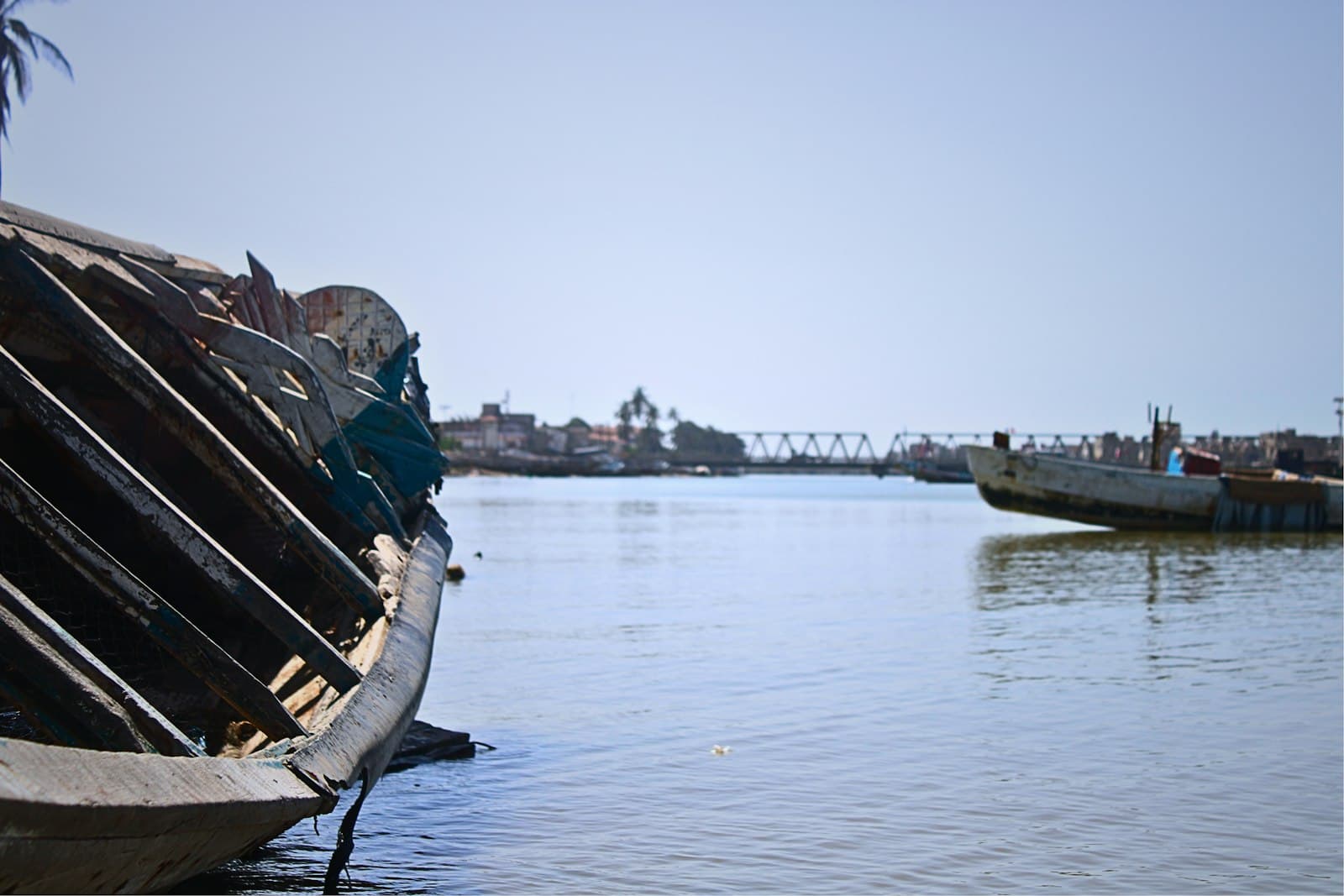
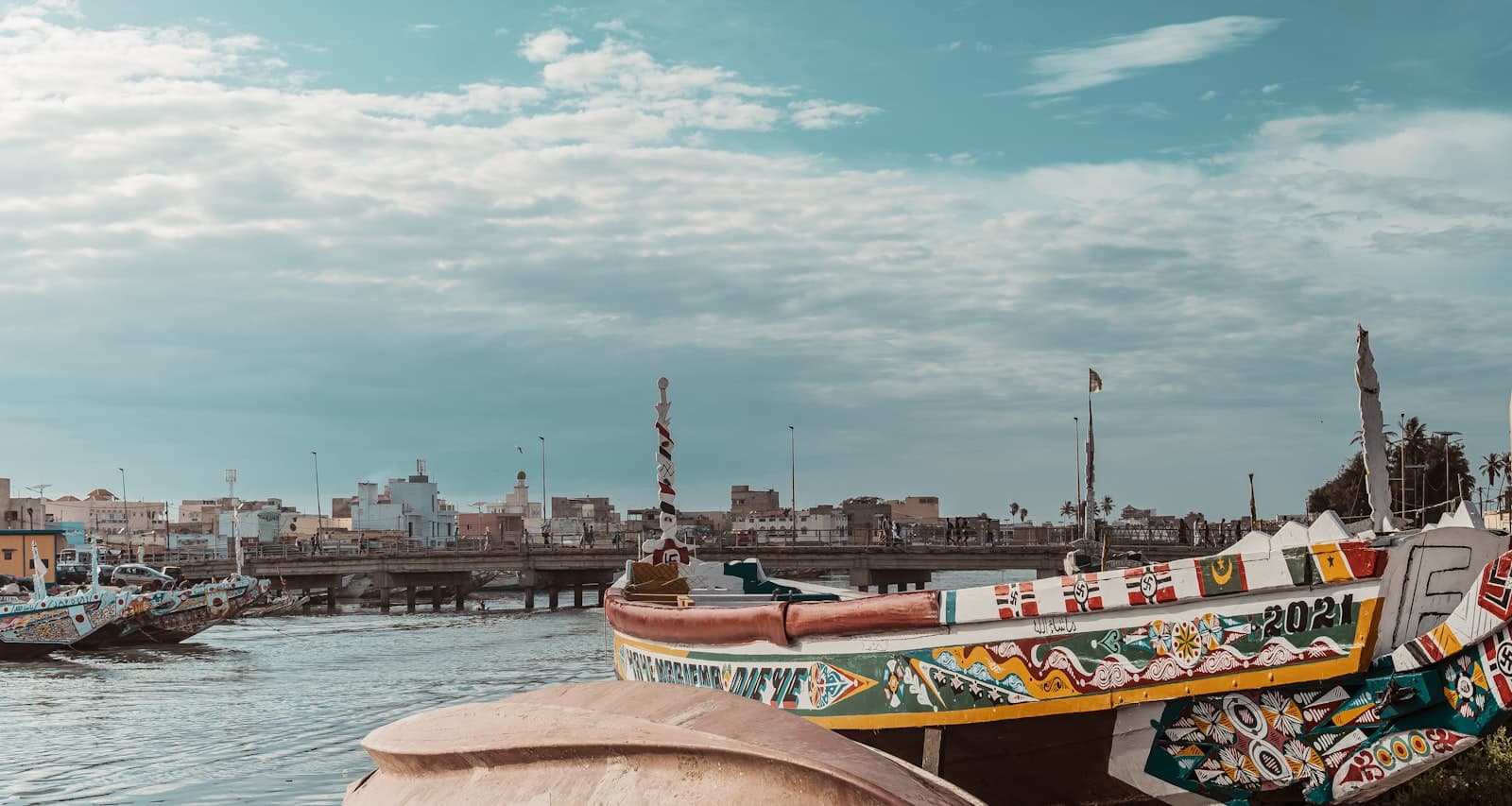
Comece sua exploração de Saint-Louis atravessando a Pont Faidherbe, o marco mais reconhecível da cidade, uma ponte metálica que se estende por 507 metros sobre o Rio Senegal. Uma vez na ilha, vagueie pelo histórico Centro Histórico, Patrimônio Mundial da UNESCO, onde edifícios coloniais em tons pastel com varandas de ferro forjado ladeiam ruas estreitas e provincianas. Visite a Place Faidherbe, a praça central, e admire o Palácio do Governador.
Para um mergulho mais profundo na cultura local, explore a movimentada vila de pescadores de Guet Ndar na Langue de Barbarie, onde pirogas coloridas alinham a praia. Um passeio de barco pelo Rio Senegal oferece uma perspectiva diferente, permitindo observar manguezais e vilas tradicionais. Entusiastas de arte podem visitar o Mupho Saint Louis, uma galeria de fotografia que exibe fotógrafos senegaleses, ou testemunhar o trabalho do escultor Meissa Fall, que transforma sucata de ferro e peças de bicicleta em arte. O Village Artisanal oferece uma oportunidade de ver artesãos locais em ação, especializados em escultura em madeira, joalheria e tecelagem.
Amantes da natureza têm várias opções nas proximidades. O Parque Nacional de Aves de Djoudj, localizado a cerca de 60 quilômetros ao norte de Saint-Louis, é uma das áreas úmidas mais importantes do mundo e Patrimônio Mundial da UNESCO, abrigando milhões de aves migratórias, incluindo pelicanos e flamingos. O Parque Nacional Langue de Barbarie, ao sul da cidade, é outro santuário vital de aves e local de nidificação de tartarugas marinhas.
A melhor época para visitar Saint-Louis é durante a estação seca, de novembro a março. Durante esses meses, as temperaturas são mais amenas, em torno de 26°C (79°F) no norte, e a umidade é menor, proporcionando uma experiência mais confortável. Este período também coincide com a chegada de aves migratórias nos parques nacionais próximos. Para entusiastas da música, o Festival de Jazz de Saint-Louis, o maior evento de jazz da África, acontece anualmente em maio, transformando a cidade com música ao vivo e vibração cultural.
Saint-Louis fica a aproximadamente 320 quilômetros ao norte de Dakar. Você pode chegar à cidade de ônibus ou táxi compartilhado da Gare Routière des Beaux Maraîchers de Dakar, uma viagem que geralmente leva de 4 a 5 horas. Aluguel de carros particulares também está disponível para uma viagem mais confortável.
Uma vez em Saint-Louis, a cidade é bastante caminhável, especialmente a parte da ilha. Você também pode alugar bicicletas ou pegar uma tradicional carruagem puxada por cavalos (calèche) para um passeio tranquilo. A moeda local é o Franco CFA da África Ocidental (XOF), e é aconselhável carregar dinheiro, pois cartões de crédito não são amplamente aceitos. O francês é a língua oficial, mas o Wolof é amplamente falado, então aprender algumas frases básicas em francês pode ser útil.
Saint-Louis — coreano, chinês, hebraico e mais 29 idiomas, cada parada narrada por uma voz nativa. A maior variedade de idiomas entre os passeios de áudio autoguiados.
Disponível em: