La Colombe d'Or
Esta pousada histórica guarda uma coleção de arte que rivaliza com muitas galerias públicas.
História completa desbloqueada no tour
 Dennis G. Jarvis / CC BY-SA 2.0, via Wikimedia Commons
Tour de áudio autoguiado por Saint-Paul-de-Vence — rota GPS a pé, reprodução offline, narração envolvente em 32 idiomas.
“Onde a pedra medieval abraça mestres modernos.”
Não os postais. As histórias que nem os locais conhecem — sussurradas ao seu ouvido, exatamente onde aconteceram.
Esta pousada histórica guarda uma coleção de arte que rivaliza com muitas galerias públicas.
O próprio chão sob seus pés em Saint-Paul-de-Vence carrega uma origem surpreendente.
Um canhão uma vez guardou Saint-Paul-de-Vence, mas uma história local relata uma defesa bastante doce.
Descubra cada segredo de Saint-Paul-de-Vence
Cada endereço, cada revelação na íntegra — no seu ouvido, exatamente onde aconteceu.
Você escolhe as suas paragens. Você caminha. A voz revela o que os outros perdem.
A Lume inclui um guia de realidade aumentada. Levante o telemóvel: a câmara mostra a rua à sua frente, com uma seta luminosa sobreposta à imagem real que aponta sempre para a sua próxima paragem — sem mapa para decifrar, sem voltas erradas. Como tudo na Lume, funciona totalmente offline.
Saint-Paul-de-Vence, um dos assentamentos medievais mais antigos da Riviera Francesa, oferece uma jornada no tempo onde arte e história se entrelaçam. Esta vila fortificada no topo de uma colina, a uma curta distância de Nice, apresenta uma atmosfera distinta em comparação com seus vizinhos costeiros. Suas muralhas de pedra, datadas do século XVI, circundam um labirinto de ruas estreitas e exclusivas para pedestres, revelando pátios inesperados, boutiques de artesãos e vistas panorâmicas da paisagem provençal até o Mar Mediterrâneo.
Por mais de um século, Saint-Paul-de-Vence tem atraído artistas, escritores e cineastas, cativados por sua iluminação única, ambiente tranquilo e cenário inspirador. Figuras como Marc Chagall, Henri Matisse, Pablo Picasso e James Baldwin passaram tempo aqui, deixando uma marca indelével na identidade cultural da vila. Hoje, esse legado é evidente nas inúmeras galerias de arte e estúdios que ladeiam suas antigas artérias, fazendo com que um passeio por Saint-Paul-de-Vence pareça uma caminhada por um museu a céu aberto.
As origens de Saint-Paul-de-Vence remontam ao século X, quando existia como um grande burgo conhecido como "Sancto Paulo". Sua localização estratégica levou à construção de suas primeiras fortificações em 1117, transformando-a em um assentamento fortificado sob o Conde da Provença. Em 1388, quando o Condado de Nice se tornou Saboiano, Saint-Paul-de-Vence se encontrou em uma posição de fronteira crucial, levando à construção de muralhas na segunda metade do século XIV. Duas dessas torres originais, a Porte de Vence e a Tour de l'Esperon, com suas ameias intactas, podem ser vistas até hoje.
O século XVI marcou um período significativo para Saint-Paul-de-Vence. Após as invasões de Saboia em 1524 e 1536, o Rei Francisco I ordenou a modernização das defesas da vila a partir de 1537. Essa iniciativa transformou Saint-Paul em uma cidade bastionada, criando fortificações avançadas para proteger a fronteira ao longo do rio Var. Essas muralhas do século XVI, bem preservadas, permanecem uma característica definidora da vila.
O século XX trouxe uma nova identidade para Saint-Paul-de-Vence, pois ela se tornou um centro cultural. Artistas começaram a frequentar a vila no início dos anos 1920, atraídos pelas ricas cores e pela intensa luz da Provença. Paul Signac, Raoul Dufy e Chaïm Soutine foram alguns dos primeiros a montar seus cavaletes aqui, uma tendência ainda mais incentivada pela inauguração de uma linha de bonde em 1911 que conectava a vila ao mundo exterior. As décadas de 1950 e 1960 foram consideradas a "Era de Ouro" da vila, com estrelas de cinema francesas e internacionais atraídas pelos estúdios de cinema próximos e pelo Festival de Cannes. Figuras icônicas como Marc Chagall, que viveu aqui por 19 anos e está enterrado no cemitério da vila, e o escritor americano James Baldwin, que passou seus últimos 17 anos em uma casa provençal no campo, fizeram de Saint-Paul-de-Vence seu lar. O legado artístico da vila também é famoso em La Colombe d'Or, onde os artistas frequentemente trocavam suas obras por hospedagem e refeições.
Comece sua exploração na Place du Général de Gaulle, também conhecida como o campo de bocha, onde os locais se reúnem para jogar pétanque. De lá, passe pelo portão de entrada e caminhe ao longo das muralhas, que oferecem vistas panorâmicas da cidade antiga, do campo francês e do Mar Mediterrâneo que se estende até Cap d'Antibes. O circuito completo leva aproximadamente 30 minutos.
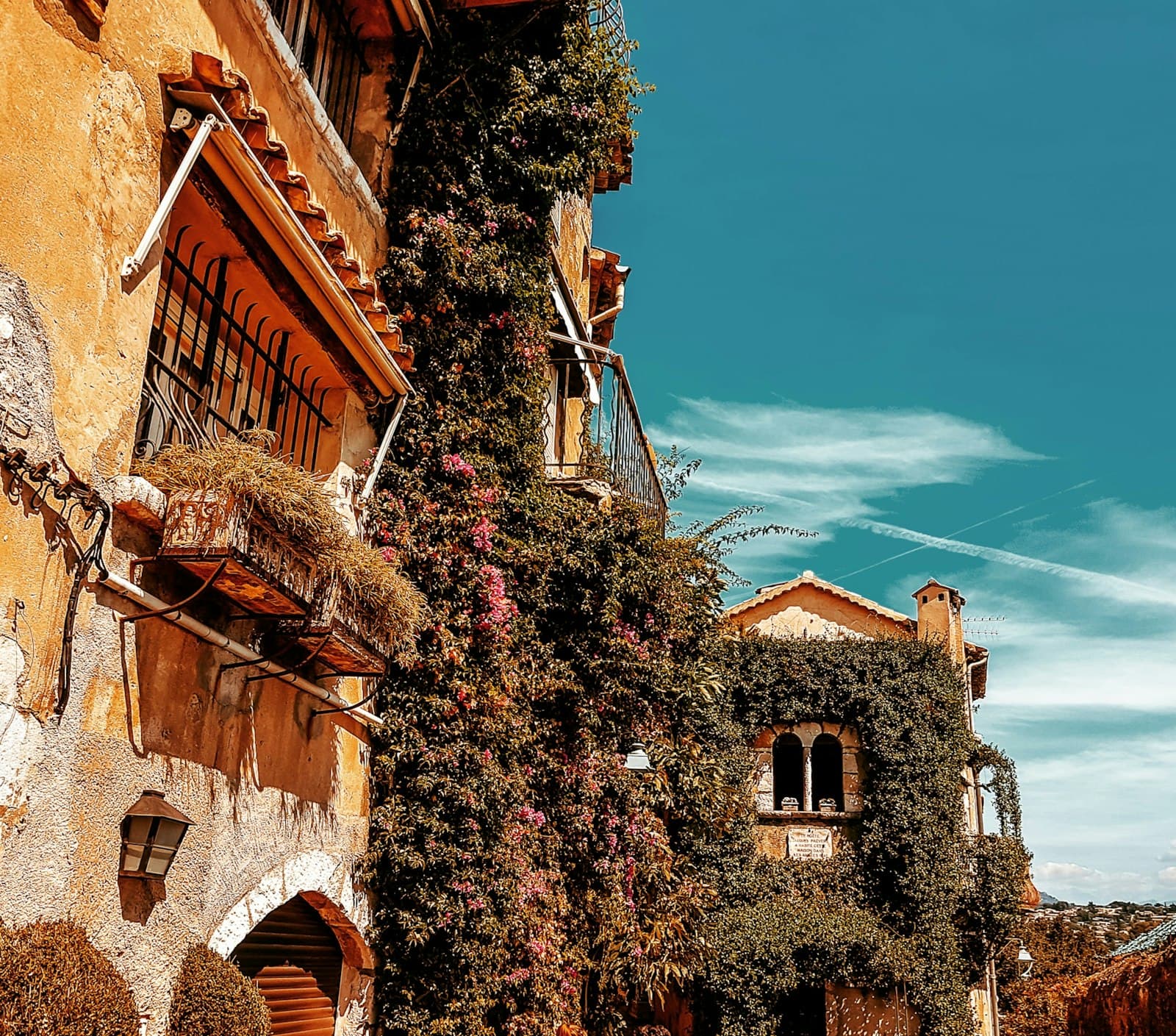
Passeie pela Rue Grande, a artéria principal da vila, que vai da Porte de Vence à Porte de Nice. Esta movimentada rua pedonal é ladeada por galerias de arte, boutiques e casas históricas de pedra adornadas com flores. Explore as estreitas ruas secundárias e becos para descobrir cantos mais tranquilos, detalhes esculturais e pontos de vista inesperados.
Não deixe de visitar a Place de la Grande Fontaine, uma fonte medieval que fornece água potável desde 1615 e serve como um ponto de encontro central. Na elevação mais alta da vila, você encontrará a Igreja Colegiada de Saint-Paul de Vence, datada do século XIII. Logo fora das muralhas da vila, visite o Cemitério de Saint-Paul-de-Vence, o local de descanso de figuras notáveis, incluindo o pintor Marc Chagall.
Para entusiastas de arte moderna, a Fondation Maeght, localizada nos arredores da vila, é um destino cativante. Projetado pelo arquiteto espanhol Josep Lluís Sert, o museu abriga uma coleção significativa de arte do século XX, com obras de artistas como Alberto Giacometti, Georges Braque, Marc Chagall, Joan Miró, Fernand Léger, Alexander Calder e Pablo Picasso, exibidas tanto em ambientes internos quanto externos.
As épocas mais agradáveis para visitar Saint-Paul-de-Vence são durante a primavera (abril-maio) ou o outono (setembro-outubro). Durante essas temporadas intermediárias, o clima é agradável e as multidões são notavelmente menores do que nos meses de pico do verão, julho e agosto. A Riviera Francesa geralmente desfruta de quase 300 dias de sol por ano com temperaturas amenas. Visitar em maio ou junho oferece temperaturas mais frescas e menos multidões, enquanto setembro proporciona temperaturas mais quentes sem o grande afluxo de turistas europeus. Se você planeja visitar durante julho ou agosto, chegar cedo pela manhã é recomendado para evitar o calor e os horários de pico, que geralmente ocorrem entre 11h e 16h.
Saint-Paul-de-Vence é primariamente uma vila pedonal, sem carros permitidos no centro da cidade. Sapatos confortáveis são altamente recomendados devido às ruas de pedra irregulares e ao terreno montanhoso. Se chegar de carro, estacionamentos pagos estão disponíveis em locais como Route des Serres, Montée des Trious, Route de Vence ou Chemin des Gardettes. Durante a alta temporada, o estacionamento pode lotar rapidamente, portanto, uma chegada antecipada é aconselhável.
Opções de transporte público incluem pegar um trem de 15 minutos da estação Nice-Ville para Cagnes-sur-Mer, e depois pegar o ônibus linha 400, que leva aproximadamente 20-30 minutos para chegar a Saint-Paul-de-Vence. A maioria das lojas, galerias de arte e estúdios estão abertos sete dias por semana, incluindo domingos e feriados. Na alta temporada (15 de abril a 15 de outubro), as lojas geralmente funcionam das 9h às 19h, com horários reduzidos na baixa temporada. Cartões de crédito são geralmente aceitos em todos os estabelecimentos, mas ter algum dinheiro à mão para pequenas compras é sempre útil. Banheiros públicos estão disponíveis em seis locais, incluindo perto do ponto de ônibus e na entrada da vila.
Saint-Paul-de-Vence — coreano, chinês, hebraico e mais 29 idiomas, cada parada narrada por uma voz nativa. A maior variedade de idiomas entre os passeios de áudio autoguiados.
Disponível em: