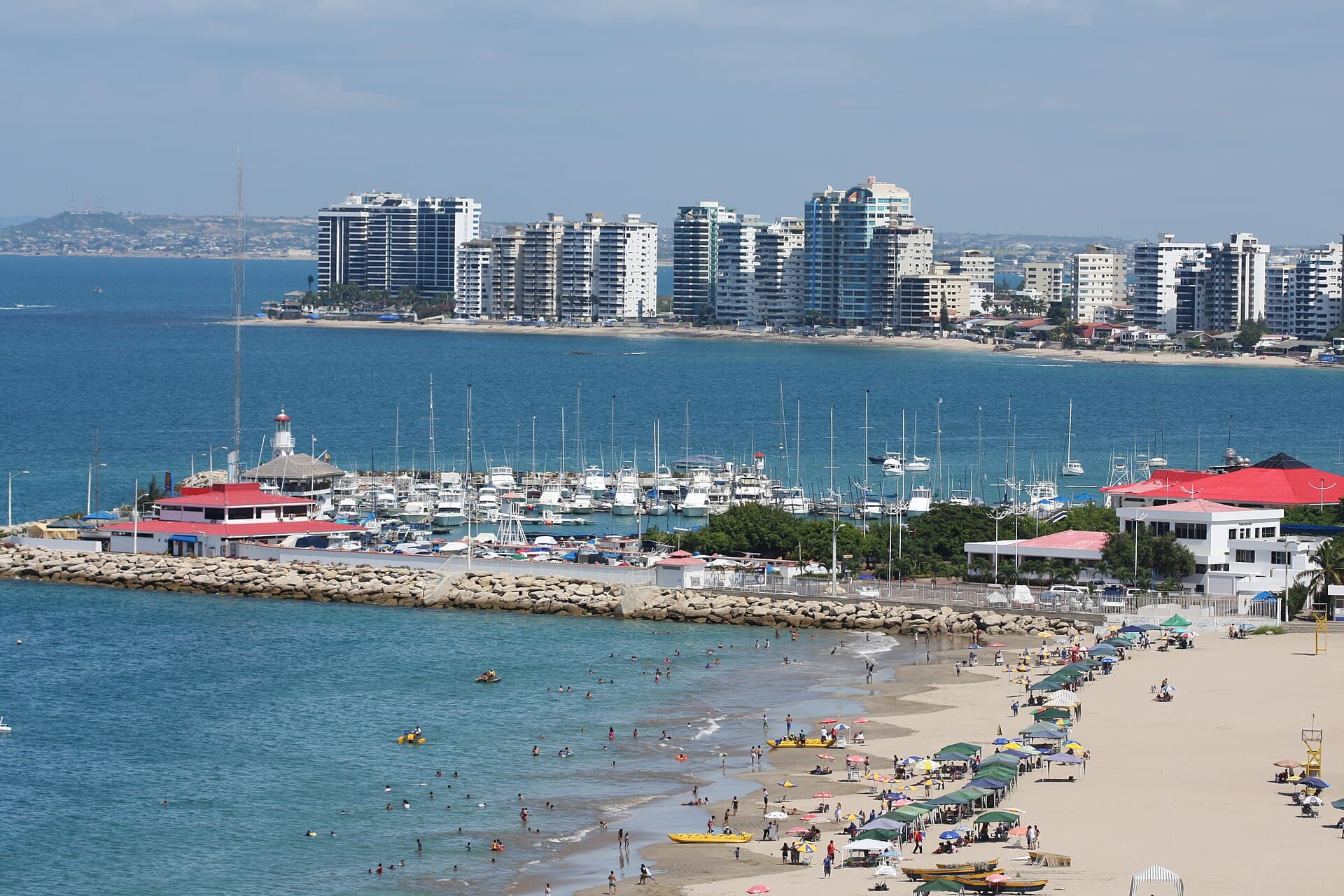
Salinas, EcuadorBonsairolex / CC BY-SA 3.0, via Wikimedia Commons
EC

Salinas

Where the Pacific embraces the unexpected.

The secrets of Salinas

Salinas, as no one tells it.

Not the postcards. The stories even locals don't know — whispered in your ear, right where they happened.

3 secrets below. Many more wait inside the tour.
Ecuasal salt evaporation ponds

The city's name, Salinas, directly references 'salt mines.' Beyond this historical link, a visual marvel tied to this ancient industry often remains unseen by visitors.

Full story unlocks in the tour
General Ulpiano Paez Airport (SNC)

Salinas has an airport, yet flying directly into it for a vacation is surprisingly rare.

Full story unlocks in the tour
La Chocolatera

This dramatic point on the Ecuadorian coast is known for its powerful waves and sea lion colonies, yet its name hints at a sweet secret it does not possess.

Full story unlocks in the tour
The full tour

Discover every secret of Salinas

Every address, every reveal in full — in your ear, right where it happened.

Get the key to Salinas

You pick your stops. You walk. The voice reveals what the others miss.

Choose your time

How long do you have in Salinas?

No tours available yet. Check back soon — we're preparing them.

About Salinas

The story of Salinas

Salinas, positioned on the westernmost tip of Ecuador's Santa Elena Peninsula, is a dynamic coastal city frequently compared to Miami for its skyline of high-rise condominiums and lively atmosphere. What began as a modest fishing village has matured into a prominent beach resort, drawing both Ecuadorian holidaymakers and international travelers. The city's allure lies in its varied offerings, from active beaches perfect for water sports to serene natural reserves.

Beyond its contemporary resort appearance, Salinas maintains a profound cultural heritage rooted in ancient coastal civilizations. Its consistently warm, dry climate makes it an ideal destination for enjoying expansive sandy shores and exploring the distinctive fusion of urban energy and natural splendor that defines this segment of the Ecuadorian coast.

History

From Salt Extraction to Seaside Resort

The story of Salinas reaches back to ancient Pre-Columbian civilizations, with artifacts from the Valdivia, Machalilla, and Chorrera cultures discovered in the area. These early inhabitants engaged in fishing and shell gathering, with the land serving as a hub for processing and trading valuable Spondylus shells millennia ago.

The city's very name, 'Salinas,' directly references its historical importance as a significant center for salt extraction over centuries. These extensive salt sources were a vital resource for the region, shaping the early economy and way of life.

Salinas evolved from an informal settlement to a formally recognized rural parish within the Santa Elena Canton on June 30, 1929. A crucial moment in its development occurred in 1936 with the completion of a railway connecting Salinas to Guayaquil. This railway was a significant economic catalyst, transforming the once-isolated fishing village into an accessible holiday destination and initiating an era of widespread tourism and the growth of the hospitality sector. On December 22, 1937, Salinas was officially elevated to the status of a separate canton by decree of Supreme Chief Alberto Enríquez Gallo.

The mid-20th century witnessed Salinas continue its transformation into a notable resort town. The Salinas Yacht Club was established in 1940, further solidifying its appeal for water sports enthusiasts. Today, Salinas is recognized as Ecuador's largest coastal resort, celebrated for its beaches, energetic nightlife, and fresh seafood.

What to see

Salinas presents a variety of attractions, from animated beaches to natural wonders. San Lorenzo Beach is a popular location in the heart of the modern resort area, recognized for its energetic ambiance and high-rise condominiums. For a more tranquil experience, Chipipe Beach offers a calmer environment.

A visit to La Chocolatera, situated within a naval reserve, is highly recommended. It marks the westernmost point of mainland Ecuador, where powerful waves collide with the cliffs, creating a dramatic natural spectacle. Nearby, La Lobería is home to colonies of sea lions, seagulls, and other native birds, providing chances for observing wildlife. For those interested in marine creatures, the Salinas Whale Museum houses a private collection of marine mammal specimens.

Surfing enthusiasts can journey to Punta Carnero Beach, located about ten minutes south of Salinas. This beach is known for its consistent waves and has hosted national and international surf competitions. Along the Malecón, you can find artisans offering handmade crafts and coral jewelry.

When to visit

Salinas enjoys a consistently warm, dry climate throughout the year, making it an inviting destination across all seasons. The dry season, from June to December, brings warm temperatures and minimal rainfall, ideal for beach activities and outdoor exploration. The busiest tourist season extends from December to April, when the city buzzes with vacationers and lively events. If you prefer a quieter visit with fewer people, consider the transitional months of May and November. Humpback whale watching season typically spans from June to October, with peak sightings in July and August, as these magnificent creatures migrate to Ecuador's warm waters to mate and calve.

Practical

Ecuador uses the US Dollar (USD) as its official currency. While larger hotels and restaurants accept credit cards, cash, especially smaller denominations, is preferred for taxis, local vendors, and beach kiosks. ATMs are readily available in the city center and near the Malecón. Spanish is the official language. While some hotel and tourist restaurant staff may speak English, it is not widely spoken by taxi drivers or shopkeepers, so learning a few basic Spanish phrases is advantageous. Prepaid SIM cards are available from providers like Claro or Movistar.

Salinas is generally considered safe for visitors, but it is always wise to exercise common sense: avoid leaving valuables unattended on the beach and be cautious in dimly lit areas late at night. Bottled water is recommended for drinking and brushing teeth. For transportation, walking along the Malecón is pleasant. Buses and taxis are available, and ride-hailing apps may be less dependable than in larger cities. The General Ulpiano Paez Airport (SNC) serves Salinas, though direct flights are not common, and many travelers fly into Guayaquil and take ground transport.

Good to know
What currency is used in Salinas, Ecuador?
The official currency in Salinas, and throughout Ecuador, is the United States Dollar (USD).
What is the best time of year for whale watching in Salinas?
Humpback whale watching season in Salinas typically extends from June to October, with July and August being the busiest months for sightings.
Is English widely spoken in Salinas?
While some staff at major hotels and tourist restaurants may speak English, Spanish is the official language of Ecuador and is not widely spoken by taxi drivers or shopkeepers.
How do I travel to Salinas?
Many travelers fly into Guayaquil (Aeropuerto Internacional José Joaquín De Olmedo, GYE) and then travel to Salinas by car, bus, or taxi, which is approximately a 2.5-hour journey. Salinas also has a local airport (General Ulpiano Paez Airport, SNC), but direct commercial flights are not common.
What are some popular activities in Salinas beyond relaxing on the beach?
Beyond the beaches, popular activities include visiting La Chocolatera and La Lobería for natural scenery and wildlife, surfing at Punta Carnero Beach, exploring the Salinas Whale Museum, and enjoying the nightlife along the Malecón.
Are there any safety considerations for visitors in Salinas?
Salinas is generally safe for visitors, but it is advisable to use common sense: avoid leaving valuables unattended and be aware of your surroundings in dimly lit areas at night. Minor offenses like pickpocketing can occur in tourist areas.
Salinas
From€9.00
No booking · activate anytime · 12h to walk it
Get the key to Salinas