St. Peter Stiftskeller
You could dine in Europe's oldest restaurant, but what makes its history truly remarkable?
Full story unlocks in the tour
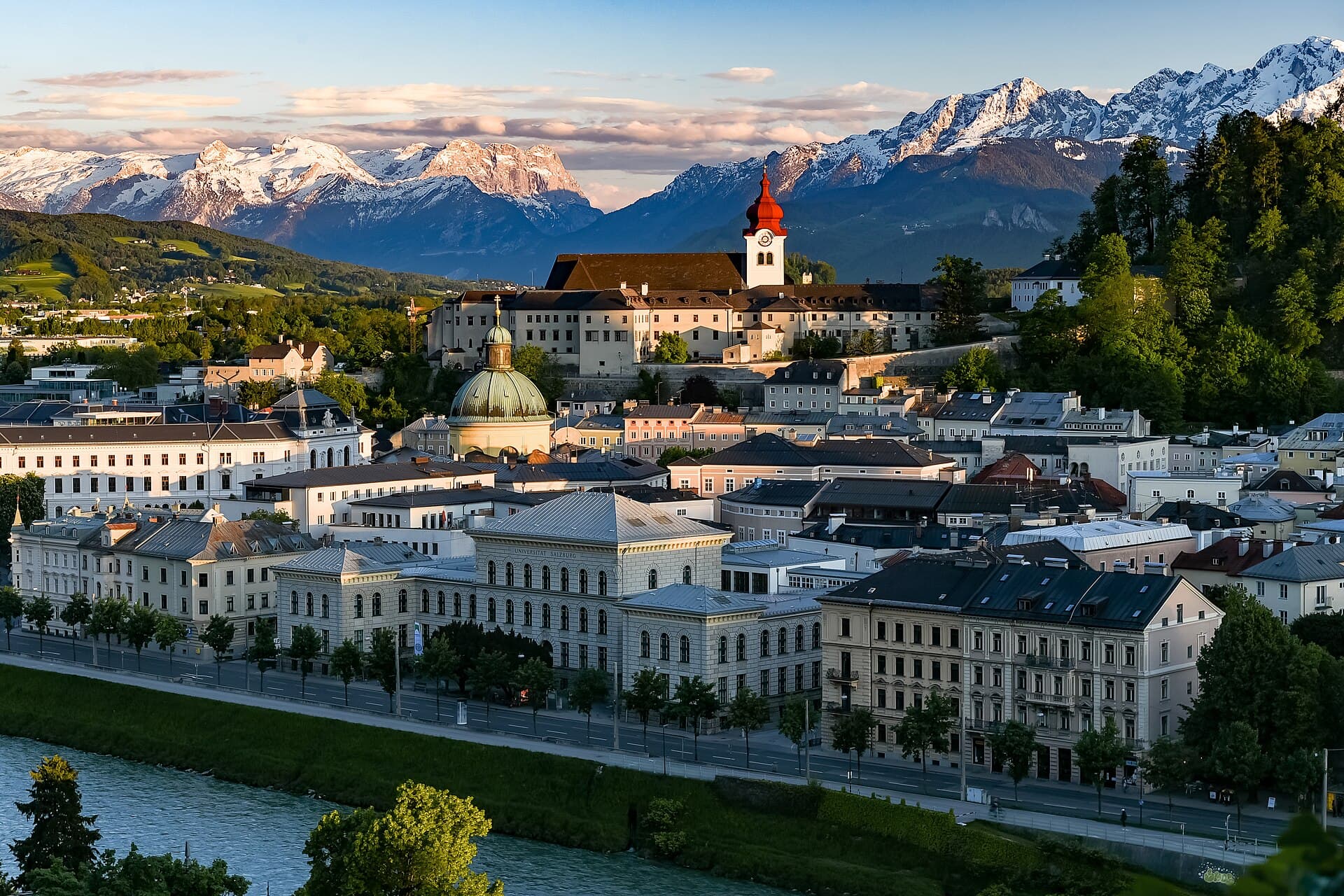 Jorge Franganillo / CC BY 2.0, via Wikimedia Commons
“Where Baroque grandeur meets Alpine charm and music fills the air.”
Not the postcards. The stories even locals don't know — whispered in your ear, right where they happened.
You could dine in Europe's oldest restaurant, but what makes its history truly remarkable?
Everyone knows Salzburg as Mozart's birthplace, but there's a specific small structure with a surprising story about his creative process.
The city's dramatic cliffs aren't just for scenery; they're maintained by a unique, centuries-old profession.
Discover every secret of Salzburg
Every address, every reveal in full — in your ear, right where it happened.
You pick your stops. You walk. The voice reveals what the others miss.
No tours available yet. Check back soon — we're preparing them.
Salzburg, a city on the Salzach River at the northern edge of the Alps, presents a captivating blend of natural beauty and architectural splendor. It is known globally as the birthplace of Wolfgang Amadeus Mozart and the backdrop for the film The Sound of Music. The city's historic center, a UNESCO World Heritage Site since 1996, is celebrated for its well-preserved Baroque architecture, earning it the moniker "Rome of the North."
Divided by the Salzach River, Salzburg's medieval Baroque Old Town lies on the left bank, contrasting with the 19th-century Neustadt on the right. The city's dramatic landscape, with mountains to the south and rolling plains to the north, offers a picturesque setting. From the imposing Hohensalzburg Fortress to the intricate streets of the Altstadt, Salzburg invites exploration into its layered past and evolving present.
Beyond its famous musical associations, Salzburg is a city where every stone and grand facade tells a story, reflecting centuries of cultural and political evolution. It's a destination that appeals to lovers of music, history, and those simply seeking a charming European experience amidst Alpine scenery.
Salzburg's origins trace back to the Roman settlement of Iuvavum, established around 15 BC. This site was strategically important, serving as a critical trade route connecting Europe with the Mediterranean. The city's name, "Salzburg," literally translates to "Salt Fortress," a testament to the significant role of salt extraction and trade in its early economy. The Celts, particularly the Noric tribe, had already been mining salt on the Dürrnberg since around 750 BC, laying the groundwork for Salzburg's later prominence.
As the Western Roman Empire declined, Salzburg began to evolve. It was founded as an episcopal see in 696 CE and became the seat of an archbishop in 798 CE. The archbishops gained considerable power, becoming princes of the Holy Roman Empire by 1278, transforming Salzburg into a powerful ecclesiastical principality. Independence from Bavaria was secured in the late 14th century.
The 17th century marked Salzburg as a key center of the Counter-Reformation. During this period, numerous monasteries and Baroque churches were constructed, shaping the city's distinctive architectural character. This era of artistic and architectural flourishing led to Salzburg being dubbed the "German Rome" due to its Italian Renaissance and Baroque influences. The Hohensalzburg Fortress, one of Europe's largest medieval fortresses, dates from the 11th century and was significantly expanded over subsequent centuries.
The 18th century brought a cultural high point, particularly under Archbishop Hieronymus von Colloredo, who supported Wolfgang Amadeus Mozart, born in Salzburg in 1756. Mozart's legacy is deeply embedded in the city's identity, with numerous sites dedicated to his life and works. However, with secularization at the beginning of the 19th century, Salzburg lost its status as a prince-bishopric and became part of the Habsburg Empire, changing hands multiple times during the Napoleonic Wars before finally being awarded to Austria in 1816.
In the 20th century, Salzburg endured the World Wars, with the old town largely spared destruction during World War II. The city quickly re-established itself as an important center for international tourism and culture. The founding of the Salzburg Festival in 1920 significantly contributed to its reputation as a world city of music. Today, Salzburg, with its UNESCO-listed historic center, continues to draw visitors with its unique blend of history, music, and Alpine scenery.
Salzburg's Altstadt, a UNESCO World Heritage site, is best explored on foot, with its narrow lanes and grand squares. Begin with the Hohensalzburg Fortress, an imposing medieval structure accessible by funicular, offering panoramic city and Alpine views. Explore its museums and historic chambers. Wander down Getreidegasse, a famous shopping street known for its ornate wrought-iron guild signs and boutique shops, where you'll also find Mozart's Birthplace, now a museum detailing his life.
The Salzburg Cathedral (Dom zu Salzburg) is a Baroque masterpiece, notable for its twin towers and the baptismal font where Mozart was baptized. Nearby, the Residenzplatz features the archbishop's residence and a Baroque fountain. Cross the Salzach River to discover Mirabell Palace and Gardens, a beautiful Baroque complex famous for its meticulously manicured gardens and its role as a Sound of Music filming location. Do not miss the whimsical Dwarf Garden within Mirabell Gardens.
For a different perspective, hike up Kapuzinerberg for city views and a peaceful natural escape. Consider a visit to Hellbrunn Palace and its Trick Fountains, an early 17th-century villa known for its playful water features designed to surprise guests.
Salzburg is a year-round destination, with each season offering a distinct experience. The shoulder seasons, particularly September and October, are often considered ideal. During these months, summer crowds have thinned, the weather is comfortably cool, and the autumn foliage adds to the city's appeal.
May and June also offer pleasant weather, blooming gardens, and manageable crowds before the peak summer season. July and August are the warmest and busiest months, coinciding with the renowned Salzburg Festival, which draws large crowds and higher prices. For those interested in winter sports or festive Christmas markets, December to February transforms Salzburg into a snowy, magical landscape.
Salzburg is a compact city, with many of its main attractions within walking distance, especially in the Old Town. Public transportation, including buses and trolleybuses, is efficient for longer distances. The Salzburg Card is highly recommended for visitors planning to see multiple sights, as it offers free admission to most museums and attractions, plus free public transport. It's available for 24, 48, or 72 hours and can be purchased online or at various points in the city.
Salzburg Airport (SZG) is conveniently close to the city center, with bus routes offering a quick and affordable transfer. If arriving by train, Salzburg Hauptbahnhof (Central Station) is about a 20-minute walk from the Old Town, or a short bus ride away. While Austria has a low crime rate, general travel precautions are always advisable. The currency used is the Euro.