Teatro Nacional de Costa Rica
El opulento Teatro Nacional, símbolo del orgullo costarricense, guarda un secreto bajo su gran escenario.
La historia completa se desbloquea en el tour
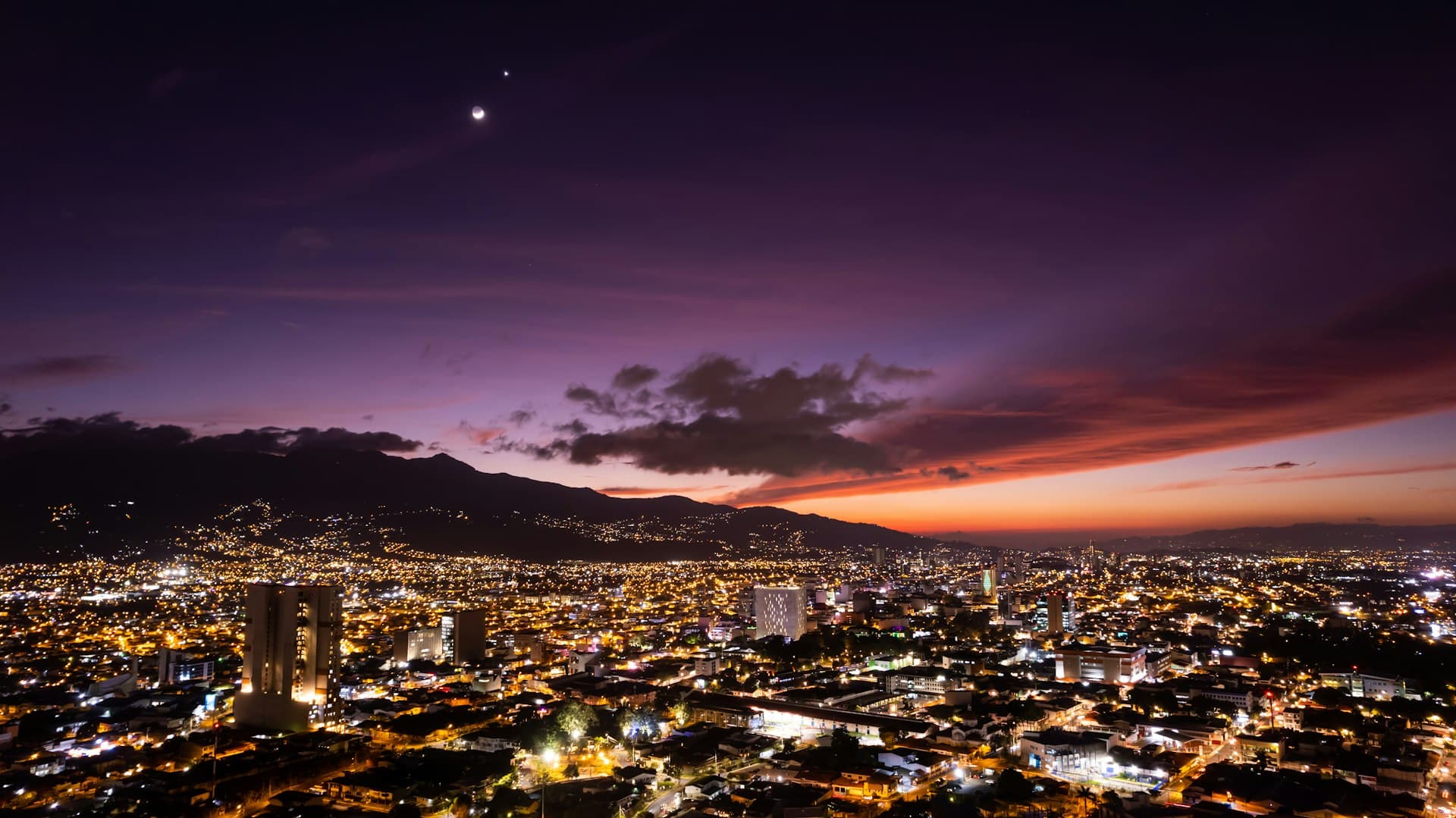 Photo: César Badilla Miranda / Unsplash
Tour de audio autoguiado de San José — ruta GPS a pie, reproducción offline, narración en 32 idiomas.
“Más allá de las verdes selvas tropicales, San José revela un corazón urbano.”
No las postales. Las historias que ni los locales conocen — al oído, justo donde ocurrieron.
El opulento Teatro Nacional, símbolo del orgullo costarricense, guarda un secreto bajo su gran escenario.
Entre los bulliciosos puestos del Mercado Central de San José, un sabor único de helado ha sido perfeccionado durante más de un siglo.
En lo profundo de la Plaza de la Cultura, el Museo del Oro salvaguarda más que solo artefactos brillantes.
Descubre todos los secretos de San José
Cada dirección, cada revelación al completo — a tu oído, justo donde ocurrió.
Eliges tus paradas. Caminas. La voz te revela lo que los demás ignoran.


Lume incluye una guía de realidad aumentada. Levanta el móvil y su cámara muestra la calle que tienes delante, con una flecha luminosa sobre la imagen real que siempre apunta a tu próxima parada — sin mapas que descifrar, sin giros equivocados. Como todo en Lume, funciona completamente sin conexión.
San José, la capital y ciudad más grande de Costa Rica, se asienta en el Valle Central del país, abrazada por volcanes al norte y montañas al sur. Más de un millón de personas transitan por su centro diariamente, convirtiéndola en un punto focal de actividad política y económica. Aunque muchos viajeros utilizan San José como un punto de tránsito rápido hacia las renombradas playas y selvas tropicales de Costa Rica, la ciudad misma ofrece una animada variedad de historia, cultura y vida urbana que recompensa una mirada más cercana.
A menudo llamada "Chepe" por los lugareños, San José es una ciudad de contrastes, donde la arquitectura neoclásica convive con el arte callejero expresivo y los bulliciosos mercados. Es un lugar donde el estilo de vida "Pura Vida", un lema nacional que significa "vida pura", impregna las interacciones diarias, incluso en medio del movimiento urbano. Desde sus impresionantes museos y teatros históricos hasta su vibrante escena culinaria, San José ofrece una visión auténtica del corazón de la identidad costarricense.
Los orígenes de San José se remontan a 1736, cuando fue fundada por orden del Cabildo de León, con el objetivo de concentrar a los habitantes dispersos del Valle de Aserrí. Una capilla dedicada a San José, patrono de la ciudad, se completó un año después, dándole su nombre al asentamiento. A diferencia de muchas otras ciudades coloniales españolas en Centroamérica, el crecimiento de San José en el siglo XVIII fue moldeado por la planificación colonial en lugar de los planes de fundación tradicionales.
El desarrollo económico de la ciudad fue impulsado significativamente por mejoras en el acceso al agua y el establecimiento de una fábrica de tabaco en 1782. Esta acumulación de capital de las plantaciones de tabaco permitió a San José superar económicamente a las provincias vecinas. No fue hasta la Constitución de Cádiz en 1812 que San José obtuvo su primer gobierno municipal, y en 1813, fue formalmente definida como ciudad. Sin embargo, este título se perdió brevemente en 1814 antes de ser restaurado en 1820.
En 1823, San José se convirtió en la capital de Costa Rica, reemplazando a Cartago, lo que la convirtió en una de las ciudades capitales más jóvenes de América Latina en el momento de su concepción. La ciudad continuó creciendo en el siglo XIX, particularmente con el auge de la producción de café, que se convirtió en la principal fuente de ingresos de Costa Rica. Este período vio la construcción de muchos edificios significativos por parte de los florecientes barones del café. La rápida expansión en la década de 1960, impulsada por la migración en busca de prosperidad, llevó a la construcción de muchos edificios de gran altura y la expansión de la ciudad hacia el campo circundante. San José también ocupa un lugar notable en la historia tecnológica, siendo una de las primeras ciudades del mundo en tener electricidad pública y teléfonos públicos. Hoy en día, sigue siendo el núcleo político, social y económico de Costa Rica.
Comience su exploración en el corazón de San José en la Plaza de la Cultura, un animado centro social. Debajo de ella se encuentra el Museo del Oro Precolombino, que exhibe una impresionante colección de artefactos de oro que datan del año 500 d.C.
Adyacente a la Plaza está el Teatro Nacional de Costa Rica, una obra maestra neoclásica construida en la década de 1890, reconocida por sus lujosos interiores. Un corto paseo le llevará a la Avenida Central, una calle peatonal perfecta para observar a la gente y experimentar la vida diaria tica.
Sumérjase en la experiencia sensorial del Mercado Central, un extenso mercado cubierto establecido en 1880. Aquí encontrará de todo, desde frutas exóticas y remedios locales hasta recuerdos y puestos de comida tradicional conocidos como sodas. No deje de probar el helado único de La Sorbetera de Lolo Mora.
Para una dosis de historia, visite el Museo Nacional de Costa Rica, ubicado en el histórico Cuartel Bellavista, que ofrece información sobre el pasado del país, incluyendo artefactos precolombinos y exposiciones sobre la abolición del ejército. Después, relájese en el Parque Metropolitano La Sabana, un gran espacio verde urbano.
Los entusiastas del arte deberían considerar el Museo de Arte Costarricense, un museo gratuito que presenta pinturas, esculturas y piezas de técnica mixta de artistas nacionales. Para una inmersión más profunda en el arte local, explore los barrios de Barrio Otoya y Barrio Amón, conocidos por su arte callejero y tiendas creativas.
San José disfruta de un clima primaveral durante todo el año debido a su elevación en el Valle Central, con temperaturas promedio que oscilan entre 18 y 27 °C (64 y 81 °F). La estación seca, de diciembre a abril, ofrece cielos azules claros y mínimas precipitaciones, lo que la hace ideal para actividades al aire libre y explorar la ciudad. Esta es también la temporada alta de turismo.
La estación verde, de mayo a noviembre, trae paisajes exuberantes y lluvias por la tarde, con mañanas que a menudo permanecen soleadas. Este período ve menos multitudes y generalmente mejores tarifas de hotel. Octubre es típicamente el mes más lluvioso, y septiembre también experimenta precipitaciones significativas. Para actividades de clima cálido, de mediados de diciembre a finales de marzo se considera el mejor momento para visitar.
El Aeropuerto Internacional Juan Santamaría (SJO) es el principal aeropuerto internacional que sirve a San José, ubicado en la provincia de Alajuela, a unos 20-30 minutos al noroeste del centro. Aunque se aceptan dólares, se recomienda usar la moneda local, el Colón. Los cajeros automáticos están fácilmente disponibles, pero es más seguro usar los que están dentro de los bancos.
El sistema de autobuses públicos de San José es extenso y asequible, conectando el centro de la ciudad con varios destinos en todo el país. Sin embargo, no hay una terminal de autobuses centralizada; diferentes compañías operan desde varios centros. Los shuttles compartidos son otra opción cómoda para viajar entre ciudades. Para moverse por la ciudad, Uber es una opción conveniente, y los taxis oficiales (rojos con triángulos amarillos) también están disponibles; asegúrese de que el conductor use la María (taxímetro).
Aunque generalmente se considera seguro, especialmente en las zonas turísticas durante el día, el hurto menor es el delito más común. Es aconsejable estar atento a su entorno, evitar grandes multitudes y abstenerse de caminar solo por la noche en zonas poco iluminadas. Deje las joyas llamativas en casa y use tarjetas en lugar de grandes cantidades de efectivo.
San José en coreano, en chino o en hebreo — y 29 idiomas más, cada parada narrada por una voz nativa. La mayor variedad de idiomas de cualquier audioguía autoguiada.
Disponible en: