Catedral de Sandomierz
A fachada simples da Catedral de Sandomierz revela pouco do interior dramático e historicamente complexo que ela guarda.
História completa desbloqueada no tour
 SchiDD / CC BY-SA 4.0, via Wikimedia Commons
Tour de áudio autoguiado por Sandomierz — rota GPS a pé, reprodução offline, narração envolvente em 32 idiomas.
“Onde caminhos antigos ecoam histórias e passagens subterrâneas guardam histórias esquecidas.”
Não os postais. As histórias que nem os locais conhecem — sussurradas ao seu ouvido, exatamente onde aconteceram.
A fachada simples da Catedral de Sandomierz revela pouco do interior dramático e historicamente complexo que ela guarda.
Abaixo da agradável praça do mercado de Sandomierz, encontra-se um mundo muito mais profundo e extenso do que muitos poderiam imaginar.
A uma curta distância de Sandomierz, pode-se caminhar por colinas nomeadas em homenagem a uma especiaria comum, mas sua verdadeira origem é muito mais antiga e geológica.
Descubra cada segredo de Sandomierz
Cada endereço, cada revelação na íntegra — no seu ouvido, exatamente onde aconteceu.
Você escolhe as suas paragens. Você caminha. A voz revela o que os outros perdem.

O seu tour áudio autoguiado de Sandomierz está pronto — escolha os seus pontos de interesse, selecione o seu idioma e comece no momento em que chegar.
ComprarA Lume inclui um guia de realidade aumentada. Levante o telemóvel: a câmara mostra a rua à sua frente, com uma seta luminosa sobreposta à imagem real que aponta sempre para a sua próxima paragem — sem mapa para decifrar, sem voltas erradas. Como tudo na Lume, funciona totalmente offline.
Sandomierz, às vezes chamada de "Pequena Roma" por sua localização em sete colinas, é uma cidade cênica no sudeste da Polônia, graciosamente posicionada ao longo do rio Vístula. Este antigo assentamento, com achados arqueológicos que datam do Neolítico, ocupa um lugar significativo na história polonesa. Sua Cidade Velha bem preservada, designada Monumento Nacional da Polônia, convida os visitantes a viajar no tempo, oferecendo um vislumbre autêntico de um passado medieval e renascentista que em grande parte resistiu às devastações das Guerras Mundiais.
O layout compacto e caminhável da cidade a torna ideal para exploração, com cafés agradáveis, restaurantes locais e inúmeros monumentos históricos em cada esquina. De sua Praça do Mercado inclinada a seus desfiladeiros impressionantes e ao calmo rio Vístula, Sandomierz apresenta uma mistura singular de beleza arquitetônica, paisagens naturais e séculos de histórias aguardando descoberta.
As origens de Sandomierz remontam ao início da Idade Média, com sua localização estratégica na confluência dos rios Vístula e San, e ao longo de importantes rotas comerciais, contribuindo para sua proeminência inicial. Mencionada pela primeira vez no início do século XII pelo cronista Gallus Anonymus, foi considerada, juntamente com Cracóvia e Wrocław, uma das principais cidades da Polônia. No testamento de Bolesław III Wrymouth (por volta de 1115–1118), Sandomierz foi designada capital de um dos ducados resultantes, o Ducado de Sandomierz.
O século XIII trouxe severos danos de incursões mongóis em 1241, 1260 e 1287, que destruíram os edifícios de madeira da cidade. Consequentemente, em 1286, o Grão-Duque Leszek II, o Negro, refundou a cidade sob a Lei de Magdeburgo, concedendo-lhe direitos de estapagem. Os séculos XV e XVI marcaram uma era de ouro para Sandomierz, com significativo desenvolvimento econômico e cultural. A população cresceu para cerca de 3.500 habitantes, e muitos edifícios históricos e sacrais importantes foram construídos, refletindo a prosperidade de seus cidadãos.
Essa prosperidade foi interrompida em 1655, quando forças suecas capturaram a cidade durante o Dilúvio, explodindo o castelo e danificando outras estruturas em sua retirada. O século seguinte viu um declínio na economia da Polônia, impactando Sandomierz, que foi ainda mais reduzida em status por um grande incêndio em 1757 e pela Terceira Partição da Polônia em 1795, colocando-a sob domínio austríaco. Apesar desses contratempos, Sandomierz em grande parte escapou da destruição durante as duas Guerras Mundiais, permitindo que seu núcleo medieval e renascentista permanecesse notavelmente preservado. Em 2017, o Presidente da Polônia declarou a Cidade Velha de Sandomierz Monumento Nacional, reconhecendo seu valor histórico e cultural duradouro.
A vida judaica foi parte integrante de Sandomierz por sete séculos, com a primeira sinagoga construída em 1255. No século XVI, abrigava uma das maiores comunidades judaicas da Polônia, que constituía cerca de 40% da população da cidade antes da Segunda Guerra Mundial. A sinagoga, construída em 1758, é considerada um dos monumentos judaicos mais bem preservados da região, com remanescentes de decoração pintada em seu interior. Tragicamente, a comunidade foi deportada para Belzec em 1942.
Comece sua exploração em Sandomierz na Praça do Mercado, o coração da Cidade Velha, cercada por casas de aluguel góticas e renascentistas e pela distinta Prefeitura Gótica do século XIV. Suba o Portão Opatowska para vistas panorâmicas que se estendem por até 50 km em um dia claro, oferecendo uma perspectiva única da Cidade Velha, do vale do Vístula e das paisagens circundantes.
Desça para a Rota Turística Subterrânea, uma rede de 470 metros de adegas e armazéns de mercadores dos séculos XIV e XV, atingindo profundidades de até 12 metros sob a praça do mercado. Este labirinto intrigante oferece um vislumbre do passado comercial da cidade e seu papel como refúgio em tempos turbulentos.
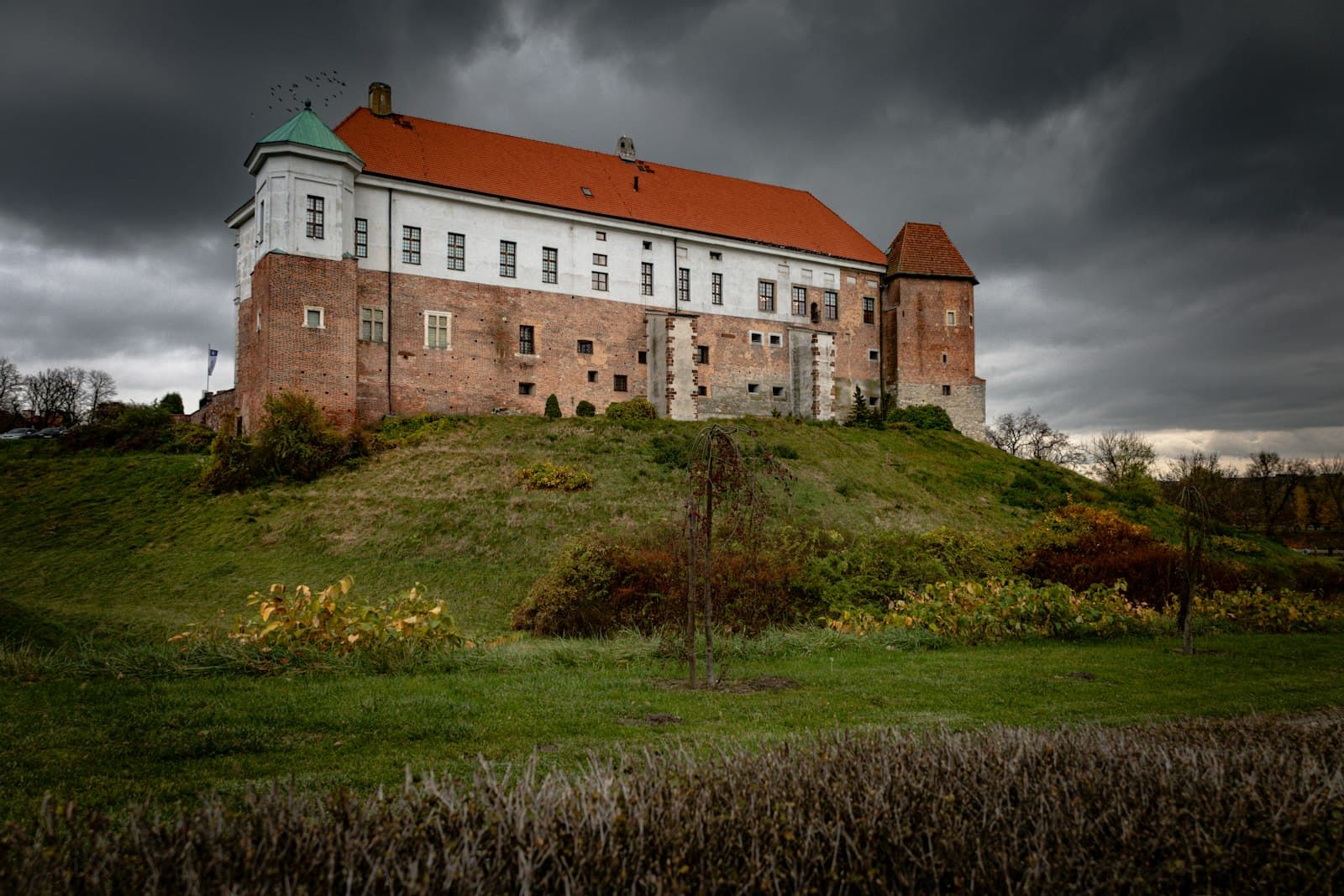
Visite o Castelo Real de Sandomierz, originalmente uma estrutura gótica do século XIV construída por Casimiro III, o Grande. Embora amplamente destruído no século XVII, uma ala foi restaurada e agora abriga um museu. Para um refúgio natural, explore o Desfiladeiro da Rainha Jadwiga (Wąwóz Królowej Jadwigi), uma ravina de loess com paredes íngremes de dez metros de altura e raízes de árvores expostas formando esculturas naturais impressionantes. Nas proximidades, as Montanhas de Pimenta (Góry Pieprzowe), colinas antigas conhecidas por suas formações geológicas únicas e espécies de roseiras bravas, oferecem vistas panorâmicas do rio Vístula e da Cidade Velha.
Não perca a Basílica Catedral da Natividade da Bem-Aventurada Virgem Maria, uma catedral gótica do século XIV adornada com notáveis murais bizantinos dos anos 1420.
A melhor época para visitar Sandomierz para atividades ao ar livre e temperaturas agradáveis é de meados de junho a final de agosto. Durante esses meses de verão, as temperaturas médias diárias máximas ficam acima de 20°C, com julho sendo o mês mais quente, com média de 24°C. O final da primavera, especialmente maio, oferece temperaturas agradáveis e a beleza das macieiras em flor e das roseiras bravas nas Montanhas de Pimenta. O outono, de setembro a outubro, também oferece bom tempo com temperaturas mais frias e folhagem colorida de outono, e menos multidões. Para evitar as multidões, considere visitar na baixa temporada ou durante a semana no verão.
Sandomierz está localizada no sudeste da Polônia, a aproximadamente 200 km de Varsóvia, 170 km de Cracóvia e 120 km de Lublin. Se viajar de carro, o acesso é direto. As opções de transporte público incluem conexões diretas de trem para Varsóvia e Przemyśl, embora a estação de trem fique a cerca de 3 km da Cidade Velha, exigindo uma caminhada ou transporte local. Conexões diretas de ônibus estão disponíveis de cidades como Cracóvia, Lublin, Varsóvia e Kielce. A cidade é compacta e facilmente explorada a pé. As acomodações são geralmente modestas, mas confortáveis, com albergues oferecendo camas em dormitórios por cerca de €10-€15 por noite. Jantar em bares de leite locais (bar mleczny) oferece refeições polonesas tradicionais satisfatórias e acessíveis.
Sandomierz — coreano, chinês, hebraico e mais 29 idiomas, cada parada narrada por uma voz nativa. A maior variedade de idiomas entre os passeios de áudio autoguiados.
Disponível em: