Sankt Pölten, AustriaRalf Roletschek / CC BY 3.0, via Wikimedia Commons
AT

Sankt Pölten

Where Baroque grandeur meets contemporary aspiration.

The secrets of Sankt Pölten

Sankt Pölten, as no one tells it.

Not the postcards. The stories even locals don't know — whispered in your ear, right where they happened.

3 secrets below. Many more wait inside the tour.
The Name's Origin

Sankt Pölten's name carries a lineage more winding than it first appears.

Full story unlocks in the tour
Austria's Earliest City Rights

Though a youthful capital, Sankt Pölten guards an ancient municipal privilege.

Full story unlocks in the tour
The Landhausviertel

Sankt Pölten's government quarter unfolds a narrative of architectural contrasts.

Full story unlocks in the tour
The full tour

Discover every secret of Sankt Pölten

Every address, every reveal in full — in your ear, right where it happened.

Get the key to Sankt Pölten

You pick your stops. You walk. The voice reveals what the others miss.

Choose your time

How long do you have in Sankt Pölten?

No tours available yet. Check back soon — we're preparing them.

About Sankt Pölten

The story of Sankt Pölten

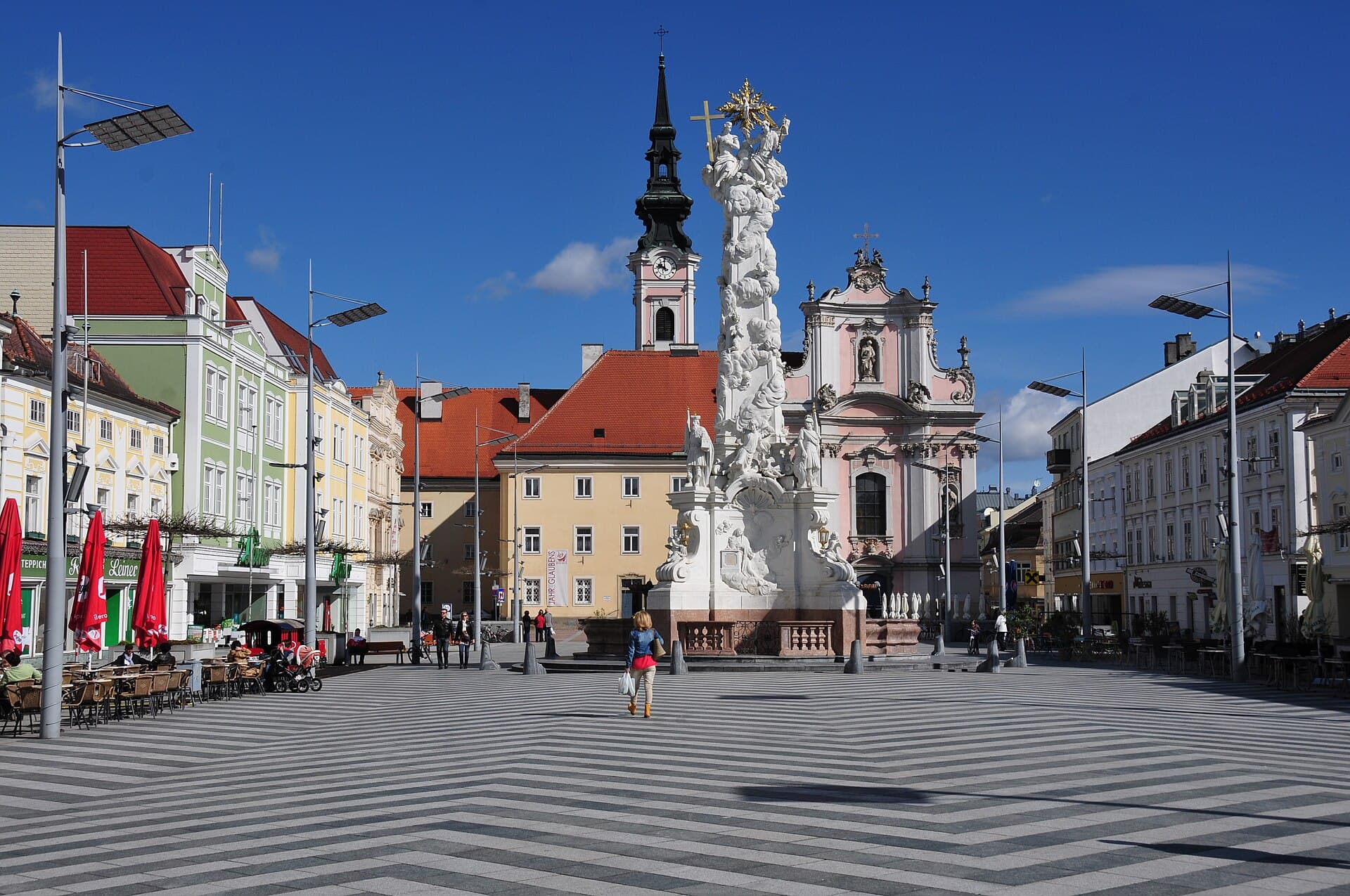
Sankt Pölten, the capital of Lower Austria, presents an engaging fusion of historical depth and contemporary vigor. Situated along the Traisen River, cradled between the Alpine foothills and the Danube, the city functions as a nexus of culture and administration. Travelers frequently find themselves drawn into its distinctive atmosphere, where the majesty of Baroque architecture shares the landscape with striking contemporary forms.

While it is Austria's most recently designated state capital, a role it took on in 1986, Sankt Pölten possesses a remarkably long past, its origins tracing back to a Roman settlement. Today, with a population of approximately 59,767 as of January 1, 2025, it offers a measured pace of life while remaining readily accessible. The city’s location also provides a convenient departure point for exploring the picturesque Wachau valley and the broader expanse of Lower Austria.

History

From Roman Settlement to State Capital

The story of Sankt Pölten reaches back to antiquity, establishing it as one of Austria's older cities. The area was initially home to Aelium Cetium, a Roman settlement founded in the 2nd century AD. This served as a significant administrative and commercial center within the province of Noricum, though its influence waned with the dissolution of the Roman Empire.

The city's reawakening commenced in the 8th century with the establishment of a Benedictine monastery dedicated to Saint Hippolytus. The city's current name, Sankt Pölten, is a Germanized form derived from this saint's name. In 1159, Sankt Pölten received municipal rights from the Bishop of Passau, a document considered the oldest existing charter of its kind in Austria. For centuries, until the close of the 18th century, the city remained under the governance of the Bishopric of Passau, which provided stability and resources for the construction of religious and administrative edifices.

Throughout the Middle Ages, Sankt Pölten developed as a monastic town alongside a flourishing artisan community. Its early economy revolved around the exchange of grain, livestock, and agricultural goods, as well as serving the requirements of the clergy. The 17th and 18th centuries marked a notable Baroque era for the city, particularly after local architect Jakob Prandtauer relocated there in 1689, initiating a period of intense construction. Many monasteries, churches, and townhouses from this period continue to define the cityscape.

A pivotal moment in recent memory arrived in 1986 when Sankt Pölten was selected to succeed Vienna as the capital of the federal state of Lower Austria. This decision spurred extensive infrastructure projects and the relocation of administrative bodies, leading to the creation of the contemporary Landhausviertel, which provides a counterpoint to the venerable old town.

What to see

Begin your exploration within the historic old town, where Baroque facades and Art Nouveau flourishes adorn the pathways. The Kremser Gasse, a pedestrian thoroughfare, displays grand Baroque residences, while the Olbrich House distinguishes itself with its Art Nouveau architecture. A brief stroll leads to the Former Synagogue, an example of Jewish Art Nouveau now serving as an exhibition space.

Domplatz, or Cathedral Square, hosts a weekly market and is home to the Cathedral of the Assumption of the Blessed Virgin Mary, a 13th-century Rococo church with a striking pink exterior. From there, wander to Rathausplatz, where the Baroque town hall, reimagined in the 18th century, stands as a civic landmark, alongside the 18th-century Holy Trinity Column.

For a transition to contemporary Sankt Pölten, explore the cultural district within the Landhausviertel. Here, you will find the Museum Niederösterreich, presenting exhibitions on nature and history, and the Festspielhaus Sankt Pölten, a prominent venue for dance, music, and performance art. The 77-meter-tall Klangturm, or Sound Tower, offers expansive vistas over the city and the surrounding landscape from its observation deck. Consider the Sankt Pölten Museum Card for single admission to the city's five museums, including the Stadtmuseum Sankt Pölten and KinderKunstLabor.

When to visit

Sankt Pölten reveals its own particular allure throughout the year. Spring is ideal for leisurely walks and cycling beside the Traisen River, while summer invites visitors to the Viehofner lakes. Autumn bathes the Baroque architecture in golden light and brings a calendar of cultural events, and winter creates an atmospheric setting with Advent celebrations on Rathausplatz and various concerts. For the most pleasant temperatures, plan your visit between May and September, when daytime highs generally range from 20°C to 26°C (68°F to 79°F), perfect for outdoor pursuits and sightseeing. July typically offers the most sunshine.

Practical

The official language in Sankt Pölten is German. While English is commonly spoken by younger generations and those in the tourism sector, an effort to use a few basic German phrases like "Grüß Gott" (Hello) and "Danke" (Thank you) is always appreciated. The local currency is the Euro.

Sankt Pölten benefits from excellent public transport connections. The city's primary train station, St. Pölten Hauptbahnhof, serves as a significant intersection on the West railway line, with frequent Railjet trains connecting to Vienna in approximately 25-30 minutes. Local travel within the city is facilitated by eleven bus lines, known as LUP buses. A bike-sharing system, Nextbike, provides the first 15 minutes of each ride free of charge, often sufficient for entire journeys within the city's compact core. For those traveling by car, Sankt Pölten is readily accessible via the A1 motorway, roughly a 50-minute drive from Vienna.

Good to know
What is Sankt Pölten recognized for?
Sankt Pölten is recognized for its role as the capital of Lower Austria, its interplay of Baroque and modern architecture, and for possessing Austria's earliest documented city rights from 1159.
How does one travel to Sankt Pölten?
Sankt Pölten is easily reached by train, bus, or car. The main train station, St. Pölten Hauptbahnhof, is a significant hub on the West railway line, with high-speed trains connecting to Vienna in about 25-30 minutes. Buses also link the city to regional destinations, and it is a direct drive via the A1 motorway.
What are the primary points of interest in Sankt Pölten?
Key points of interest include Rathausplatz with its Baroque town hall and Holy Trinity Column, the Sankt Pölten Cathedral, the contemporary Klangturm (Sound Tower) for sweeping views, and the Museum Niederösterreich.
What time of year is best for a visit to Sankt Pölten?
The most comfortable weather for visiting Sankt Pölten is from May to September, with average daytime temperatures between 20°C and 26°C (68°F and 79°F). However, the city offers cultural events and atmosphere throughout the year.
Is Sankt Pölten a city that can be explored on foot?
Sankt Pölten is a compact city, making many of its attractions in the historic center easily traversable on foot. A complimentary tourist train also operates in the city center during summer, linking the old town with the contemporary government district.
What language is spoken in Sankt Pölten?
The official language spoken in Sankt Pölten is German. While English is understood in areas frequented by travelers, familiarity with some basic German phrases is always appreciated.
Sankt Pölten
From€9.00
No booking · activate anytime · 12h to walk it
Get the key to Sankt Pölten