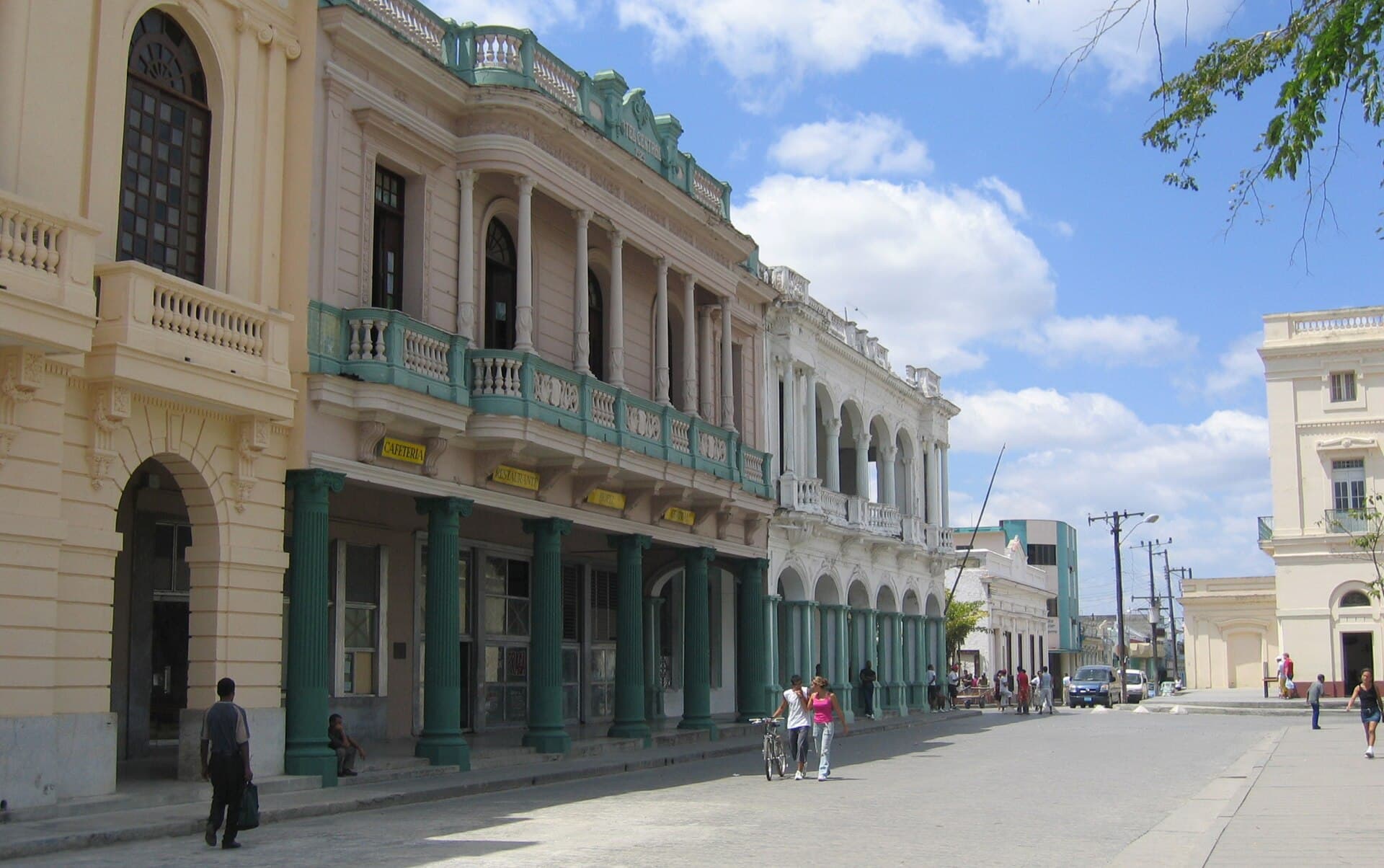
Parque Vidal
Dieser zentrale Platz pulsiert mit täglicher Aktivität, doch seine Ursprünge enthüllen ein überraschendes Geheimnis über die Expansion Santa Claras.
Die ganze Geschichte wird in der Tour freigeschaltet
 Lezumbalaberenjena at English Wikipedia / Public domain, via Wikimedia Commons
Selbstgeführte Audio-Walking-Tour durch Santa Clara — GPS-Route, Offline-Wiedergabe, erzählerische Narration in 32 Sprachen.
“Revolutionäre Echos hallen durch eine Stadt, die vom Studentenleben belebt wird.”
Nicht die Postkarten. Die Geschichten, die selbst Einheimische nicht kennen – dir ins Ohr geflüstert, genau dort, wo sie geschahen.
Dieser zentrale Platz pulsiert mit täglicher Aktivität, doch seine Ursprünge enthüllen ein überraschendes Geheimnis über die Expansion Santa Claras.
Die Ruhestätte von Che Guevara ist ein feierliches Denkmal, doch die Reise seiner sterblichen Überreste zu diesem Ort erstreckt sich über Jahrzehnte und beinhaltet internationale Entdeckungen.
Der entgleiste Panzerzug dient als starkes Sinnbild der Kubanischen Revolution, doch die Genialität hinter seiner Einnahme wird oft übersehen.
Entdecke jedes Geheimnis von Santa Clara
Jede Adresse, jede Enthüllung vollständig – in deinem Ohr, genau dort, wo es geschah.
Du wählst deine Stationen. Du gehst. Die Stimme enthüllt, was andere übersehen.


Deine selbstgeführte Audio-Tour durch Santa Clara ist bereit – wähle deine Sehenswürdigkeiten, deine Sprache und starte, sobald du ankommst.
KaufenLume enthält einen integrierten Augmented-Reality-Guide. Halten Sie Ihr Handy hoch: Die Kamera zeigt die Straße vor Ihnen, mit einem leuchtenden Pfeil über dem echten Bild, der immer auf Ihren nächsten Stopp zeigt — keine Karte zum Rätseln, keine falschen Abzweigungen. Wie alles bei Lume funktioniert es komplett offline.
Santa Clara, die Hauptstadt der kubanischen Provinz Villa Clara, ist eine Stadt, die tief in der Erzählung der Kubanischen Revolution verwurzelt ist. Sie ist nicht nur ein bedeutender Pilgerort für alle, die sich für das Erbe von Che Guevara interessieren, sondern auch eine lebendige Universitätsstadt mit fast 246.000 Einwohnern, die einen authentischeren Einblick in das kubanische Alltagsleben bietet als einige der stärker touristisch frequentierten Orte. Ihre zentrale Lage macht sie zu einem wichtigen Verkehrsknotenpunkt, der verschiedene Teile der Insel verbindet.
Der Charakter der Stadt ist eine Mischung aus historischem Gewicht und jugendlicher Energie. Neben seinen revolutionären Denkmälern bietet Santa Clara Kolonialarchitektur, einen lebhaften zentralen Platz und eine aufstrebende Kulturszene. Besucher empfinden Santa Clara oft als erfrischenden Kontrast zu anderen kubanischen Städten, mit einer bemerkenswerten Abwesenheit von offensichtlichen touristischen Darbietungen und einem spürbaren Gefühl des lokalen Lebens, das sich entfaltet.
## Gründung und frühes Wachstum Santa Clara wurde am 15. Juli 1689 von 175 Personen gegründet, darunter Familien, die bereits in der Gegend lebten, und andere, die aus der Küstenstadt San Juan de los Remedios migrierten, um Zuflucht vor anhaltenden Piratenangriffen zu suchen. Die anfängliche Entwicklung der Stadt folgte der spanischen Stadtplanung mit einer zentralen Plaza, dem heutigen Parque Vidal, im Herzen. Einen bedeutenden Schub für seine Bevölkerung und sein Wachstum gab es 1692, als ein Großbrand in Remedios viele Einwohner dazu veranlasste, sich in Santa Clara niederzulassen.
## Revolutionärer Knotenpunkt Die historische Bedeutung Santa Claras eskalierte Ende 1958 während der Kubanischen Revolution dramatisch. Sie wurde zum Schauplatz der letzten und entscheidenden Schlacht, bei der zwei Guerillakolonnen, eine angeführt von Ernesto 'Che' Guevara und die andere von Camilo Cienfuegos, die Stadt angriffen. Guevaras Truppen errangen einen entscheidenden Sieg, indem sie einen gepanzerten Zug mit Regierungstruppen und Nachschub entgleisen ließen und so die Verstärkung des Batista-Regimes effektiv abschnitten. Wenige Stunden nach dem Fall der Stadt floh General Fulgencio Batista aus Kuba, was das Ende seiner Diktatur markierte. Diese Schlacht zementierte Santa Claras Platz in der kubanischen Geschichte und brachte ihr den Spitznamen 'Ciudad Liberal' (Freie Stadt) ein.
## Nachrevolutionäre Ära Nach der Revolution entwickelte sich Santa Clara weiter zu einem bedeutenden urbanen Zentrum. 1997 wurden die sterblichen Überreste von Che Guevara und 16 seiner Mitkämpfer, die in einem Massengrab in Bolivien entdeckt wurden, nach Kuba überführt und in einem Mausoleum in Santa Clara beigesetzt. Die Stadt beherbergt auch eine der größten Universitäten Kubas, was zu ihrer jungen Demografie und ihrer fortschrittlichen kulturellen Atmosphäre beiträgt. Heute ist Santa Clara eine lebendige Stadt, die ihre revolutionäre Vergangenheit ehrt und gleichzeitig ihre Rolle als zeitgenössischer kubanischer Knotenpunkt annimmt.
Beginnen Sie Ihre Erkundung am Parque Vidal, dem zentralen Platz und sozialen Zentrum der Stadt. Dieser lebhafte Park ist von kolonialen und neokolonialen Gebäuden umgeben, darunter das Teatro La Caridad, ein prunkvolles Theater aus dem Jahr 1885, das zum Nationaldenkmal erklärt wurde.
Ein kurzer Spaziergang vom Park führt zum Museo de Artes Decorativas, das in einer Residenz aus dem 18. Jahrhundert untergebracht ist und einen Einblick in das aristokratische Kolonialleben bietet.
Santa Claras ikonischste Sehenswürdigkeiten sind mit der Kubanischen Revolution verbunden. Das Monumento a la Toma del Tren Blindado (Denkmal zur Einnahme des gepanzerten Zuges) bewahrt die tatsächlichen entgleisten Waggons der entscheidenden Schlacht von 1958 und ermöglicht es den Besuchern, hineinzugehen und ein greifbares Stück Geschichte zu erleben. Weiter westlich befindet sich der Complejo Monumental Ernesto Che Guevara, ein weitläufiger Komplex mit einer hoch aufragenden Bronzestatue von Che, einem Museum, das sein Leben dokumentiert, und einem Mausoleum, in dem seine sterblichen Überreste und die seiner Kameraden beigesetzt sind. Für den Eintritt in das Mausoleum ist respektvolle Kleidung erforderlich, einschließlich langer Hosen und Ärmel.
Für einen Panoramablick über die Stadt steigen Sie auf den Loma del Capiro, eine Gruppe von drei kleinen Gipfeln, wo die erste Scharmützel der Schlacht von Santa Clara stattfand.
Die beste Zeit für einen Besuch in Santa Clara und Zentral-Kuba im Allgemeinen ist während der Trockenzeit von Dezember bis März. In diesen Monaten sind die Temperaturen angenehm, durchschnittlich etwa 22-26°C, und der Niederschlag ist minimal, was ideal ist, um die historischen Stätten der Stadt zu erkunden und ihre lebhafte Atmosphäre zu genießen. Die Zeit von November bis April bietet ebenfalls warmes, angenehmes Wetter mit geringerer Luftfeuchtigkeit. Während die Universität von September bis Juni geöffnet ist und zur Energie der Stadt beiträgt, fällt die Hauptreisezeit mit den trockenen, kühleren Monaten zusammen.
Santa Clara ist gut angebunden per Flugzeug, Bahn und Bus. Der internationale Flughafen Abel Santamaría (SNU) liegt nur wenige Kilometer vom Stadtzentrum entfernt und wird von verschiedenen internationalen Zielen angeflogen. Der aktive Bahnhof der Stadt ist ein wichtiger Verkehrsknotenpunkt an der Hauptbahnlinie Kubas und bietet Direktzüge von Havanna nach Santiago de Cuba. Überlandbusse, insbesondere Viazul, verbinden Santa Clara mit anderen wichtigen kubanischen Städten wie Havanna, Cienfuegos und Varadero, obwohl die Reisezeiten variieren können. Taxis und Colectivos (Sammeltaxis) sind ebenfalls für Transfers und Fahrten in der Stadt verfügbar.
Die offizielle Währung in Kuba ist der Kubanische Peso (CUP). Während Kredit- und Debitkarten (nicht-US-Ausgabe) in einigen Resorts und Geldautomaten akzeptiert werden, wird Bargeld für die meisten Ausgaben, einschließlich lokaler Transportmittel, Verpflegung und Unterhaltung, überwiegend verwendet. Es ist ratsam, kleine Scheine mitzuführen. Santa Clara gilt für unabhängige Reisende als eine der erschwinglicheren Städte Kubas.
Santa Clara — Koreanisch, Chinesisch, Hebräisch und 29 weitere Sprachen, jede Station von einer muttersprachlichen Stimme erzählt. Die größte Sprachauswahl aller selbstgeführten Audiotouren.
Verfügbar auf: