Muong Hoa Valley's Ancient Rock Field
Beyond the famed rice terraces, the Muong Hoa Valley holds a secret written in stone.
Full story unlocks in the tour
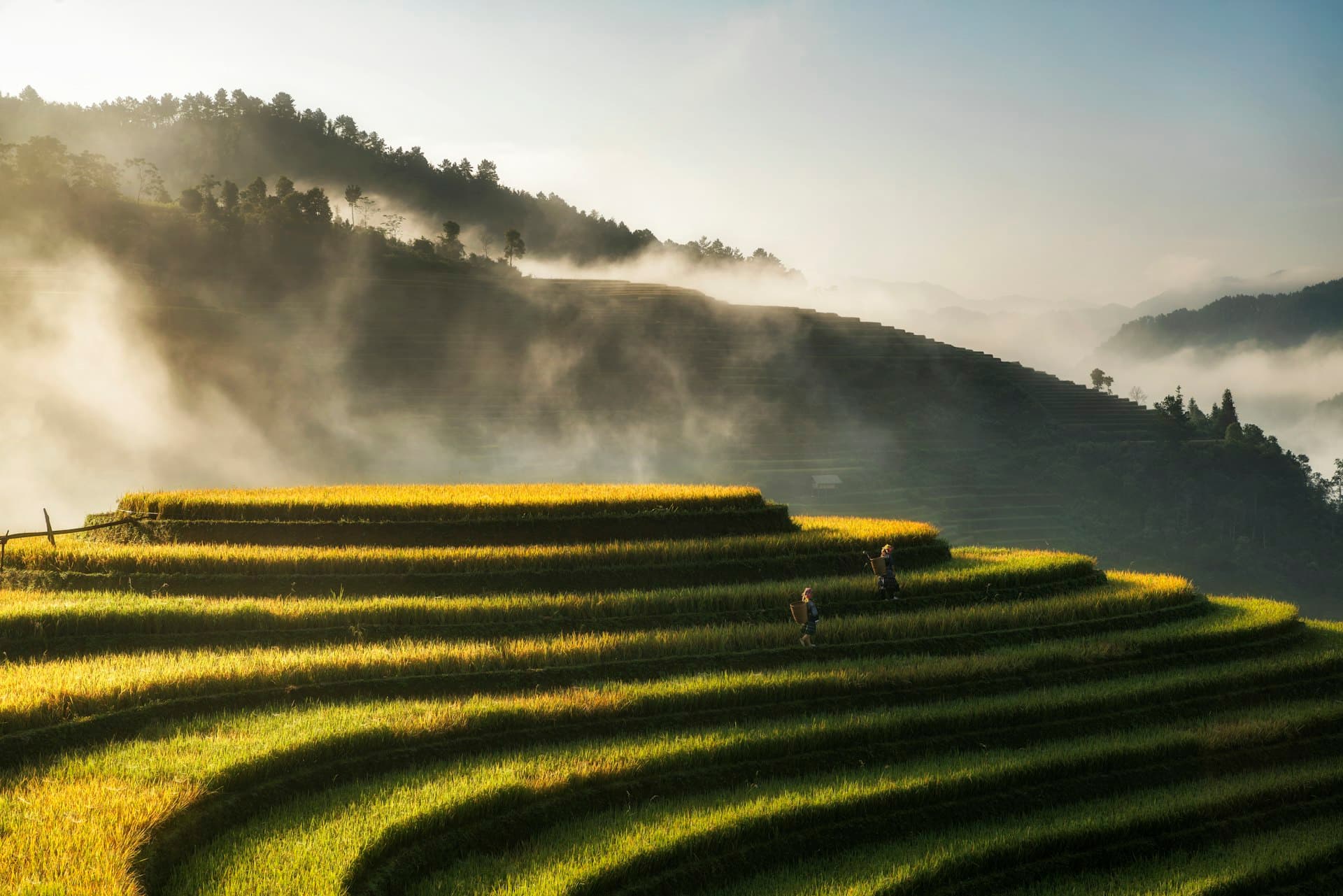 Photo: Hoach Le Dinh / Unsplash
“Where mist-shrouded peaks meet ancient terraces, and cultures weave through mountain air.”
Not the postcards. The stories even locals don't know — whispered in your ear, right where they happened.
Beyond the famed rice terraces, the Muong Hoa Valley holds a secret written in stone.
Cat Cat Village is a popular stop, but many visitors overlook its quieter, more authentic corners.
The Red Dao people of Ta Phin village maintain a centuries-old remedy for mountain chill and weary muscles.
Discover every secret of Sapa
Every address, every reveal in full — in your ear, right where it happened.
You pick your stops. You walk. The voice reveals what the others miss.
No tours available yet. Check back soon — we're preparing them.
Sapa, a mountain town in Vietnam's northern highlands, presents a captivating blend of dramatic landscapes and enduring cultural legacies. Elevated over 1,500 meters (4,921 feet) in Lao Cai Province, it offers a refreshing departure from the tropical lowlands, with cooler temperatures and an alpine atmosphere. The town serves as a threshold to the Hoàng Liên Son mountain range, home to Fansipan, Indochina's tallest peak at 3,143 meters (10,312 feet). Sapa is celebrated for its expansive terraced rice fields, which cascade down steep hillsides, forming an intricate mosaic that shifts in color with the seasons. Beyond its natural grandeur, Sapa is a convergence of cultures, inhabited by diverse ethnic minority groups, each with distinct customs, languages, and traditional attire.
Originally a Black Hmong settlement, Sapa first drew French attention in 1901 and was developed as a hill station in the early 20th century, offering a cool respite from Hanoi's heat. While the town itself has seen considerable development and can be busy, the surrounding valleys and villages offer a more serene experience, allowing visitors to immerse themselves in the rhythm of daily life and connect with local communities. Sapa's enduring appeal lies in this harmonious interplay of human endeavor and natural majesty, making it a unique destination for those seeking both adventure and cultural insight.
Sapa's history spans centuries, with the region first inhabited by various ethnic groups, including the Hmong, Dao, Tay, Giay, and Xa Pho. These communities forged a life in the challenging mountainous terrain, notably by developing the intricate terraced rice fields that define the landscape today.
French colonial interest in the area began in the late 19th century. In 1901, the region was mapped, and by 1903, a French military garrison was established, initially named "Cha Pa" (later adapted to Sapa) after a nearby market village. The French recognized Sapa's potential as a climatic health resort, a cool mountain escape from the heat and diseases of Hanoi. A sanatorium opened in 1913, and by the 1920s, with the completion of the Hanoi–Lào Cai railway, Sapa became a favored summer retreat, with numerous villas and hotels constructed for colonial elites.
The mid-20th century brought significant disruption. During the First Indochina War (1946–1954), Sapa suffered heavy damage from fighting between the Viet Minh and the French, leading to the destruction of many colonial buildings and the temporary displacement of the Kinh (Viet) population. The town remained largely deserted until the 1960s.
Sapa's resurgence began in the early 1990s with Vietnam's policy of economic reform and international integration. Tourism was identified as a key economic sector by Lào Cai Province, leading to significant investment in infrastructure, including electricity, water systems, and improved roads connecting Lào Cai and Sapa. In 1993, the Vietnamese government officially opened Sapa to international tourism. Since then, Sapa has transformed into a bustling mountain destination, drawing visitors eager to explore its natural beauty and diverse cultures.
Sapa offers a range of experiences, from expansive mountain views to immersive cultural encounters. A journey to Fansipan, Indochina's tallest peak, is a highlight. You can reach the summit via a cable car, which provides broad views of terraced fields and valleys. At the top, you will find restaurants, shops, and a complex of temples and pagodas.
For a deeper cultural experience, explore the ethnic minority villages. Cat Cat Village, a traditional Hmong settlement a short walk from Sapa town, offers insights into local life, with traditional wooden houses, cultural performances, and paths winding past rice terraces and small waterfalls. Other villages like Ta Van, Lao Chai, and Ta Phin provide opportunities to observe the daily routines of the Giay, Black Hmong, and Red Dao communities, respectively. Engaging with a local guide for trekking through these villages is highly recommended for cultural context and navigating unmarked trails.
The Muong Hoa Valley is celebrated for its rice terraces and an ancient rock field with mysterious carvings. Waterfalls like Silver Waterfall (Thac Bac) and the more secluded Love Waterfall (Thac Tinh Yeu) are also worth visiting, especially during the rainy season when they are most impressive. In Sapa town, the Sapa Market is a lively hub where ethnic minority traders gather to sell produce, handicrafts, and textiles.
Sapa's weather varies significantly by season, offering distinct experiences throughout the year. The most pleasant times to visit are Spring (March to May) and Autumn (September to November).
In spring, temperatures are mild (15-22°C), and the landscape is adorned with blooming flowers and verdant greenery, making it ideal for trekking. Autumn, particularly from mid-September to early October, is when the rice terraces turn a radiant golden hue for harvest, creating striking vistas. The weather is cool and dry (15-20°C) during this period. Summer (June to August) brings verdant green rice terraces and cooler temperatures than the lowlands, though it can be warm and humid with occasional heavy rains. Winter (December to February) is cold, often foggy, and temperatures can drop to 0-10°C, with rare snowfall, particularly on Fansipan.
Traveling to Sapa typically begins from Hanoi. Many visitors choose an overnight sleeper train to Lao Cai City (approximately 8 hours), followed by a one-hour bus or van transfer to Sapa. Direct highway buses from Hanoi are also available and take about 5-8 hours.
Once in Sapa, the town itself is walkable, but exploring the surrounding villages and attractions often requires transport. Motorbikes can be rented, though caution is advised due to winding mountain roads. Local guides are highly recommended for trekking, providing cultural insights and navigating unmarked trails. Be aware that some trekking to villages requires a permit, which can be obtained at the tourist information center or is often included in guided tour packages. Sapa's weather can change rapidly; carrying a warm jacket and raincoat, and dressing in layers, is advisable. Cash is essential for many local markets and smaller vendors.