Merry Cemetery
The crosses here are not just colorful; they sometimes include a rather direct critique of the deceased's spouse.
Full story unlocks in the tour
 DimiTalen / CC0, via Wikimedia Commons
Self-guided audio walking tour of Săpânța — GPS route, offline playback, story-driven narration in 32 languages.
“Where the departed tell their own stories, in vivid blue and verse.”
Not the postcards. The stories even locals don't know — whispered in your ear, right where they happened.
The crosses here are not just colorful; they sometimes include a rather direct critique of the deceased's spouse.
One particular epitaph describes a man who met his end in a rather unexpected, and perhaps unglamorous, way.
The creator of the Merry Cemetery had his own epitaph ready long before his passing, and it reveals a lot about his life's work.
Discover every secret of Săpânța
Every address, every reveal in full — in your ear, right where it happened.
You pick your stops. You walk. The voice reveals what the others miss.


Your self-guided audio tour of Săpânța is ready — pick your landmarks, choose your language, and start the moment you arrive.
BuyLume has a built-in augmented-reality guide. Hold your phone up and its camera shows the street ahead of you, with a glowing arrow laid over the real view that always points to your next stop — no map to puzzle over, no wrong turns. Like everything in Lume, it works fully offline.
Săpânța, a village in northern Romania's Maramureș region, offers a singular perspective on life and death. It is a place where the veil between worlds feels thin, not in a somber way, but with a playful transparency. The village is recognized for its Cimitirul Vesel, or Merry Cemetery, a unique burial ground where death is met with colorful artistry and often humorous, poetic epitaphs. This tradition transforms grief into a celebration of individual lives, offering a profound and often surprising encounter with Romanian folk culture.
The Maramureș region itself is known for its well-preserved rural traditions, wooden churches, and a way of life deeply connected to the land and its heritage. Săpânța, while embracing its distinct funerary art, remains a living village where daily life unfolds with traditional rhythms. Visitors will find not only the famous cemetery but also a glimpse into the enduring customs and warm hospitality characteristic of this corner of Transylvania.
The story of the Merry Cemetery begins in 1935 with Ioan Pătraș Stan, a local artist and woodcarver. Pătraș began carving oak crosses for the village cemetery, adorning them with vivid, often indigo-blue paint. What truly set his work apart, however, were the poetic epitaphs he inscribed on each cross, written in the first person from the perspective of the deceased. These verses, often humorous, sometimes poignant, and occasionally critical, offered candid summaries of the lives they commemorated.
Pătraș dedicated his life to this unique art form, creating over 800 crosses before his death in 1977. His work was not merely decorative; it was a deeply personal and culturally resonant expression. He believed that death should not be feared but acknowledged as a natural part of life, and his epitaphs reflected this philosophy by capturing the essence of each individual, their quirks, their professions, and even their flaws. He trained his apprentice, Dumitru Pop Tincu, who continued the tradition after Pătraș's passing, ensuring the cemetery's legacy would endure.
The Merry Cemetery is more than just a burial ground; it's an open-air museum of folk art and a testament to a distinct cultural approach to mortality. The epitaphs, written in a colloquial style, often provide valuable insights into the social history of Săpânța, documenting everything from local gossip to historical events and everyday struggles. The lively colors, particularly the distinctive Săpânța blue, are said to symbolize hope and the sky, further reinforcing the cemetery's unique character. The tradition continues today, with new crosses added as villagers pass away, each one a fresh narrative in this ongoing story of life and death.
The primary draw in Săpânța is undoubtedly the Merry Cemetery (Cimitirul Vesel). Spend time wandering among the hundreds of brightly painted wooden crosses, each a unique work of art. Take time to read the epitaphs (many are translated into English, or guides can assist), which offer candid, often humorous, and sometimes critical insights into the lives of the deceased. Look for the distinct Săpânța blue, a lively hue that dominates the cemetery's palette.
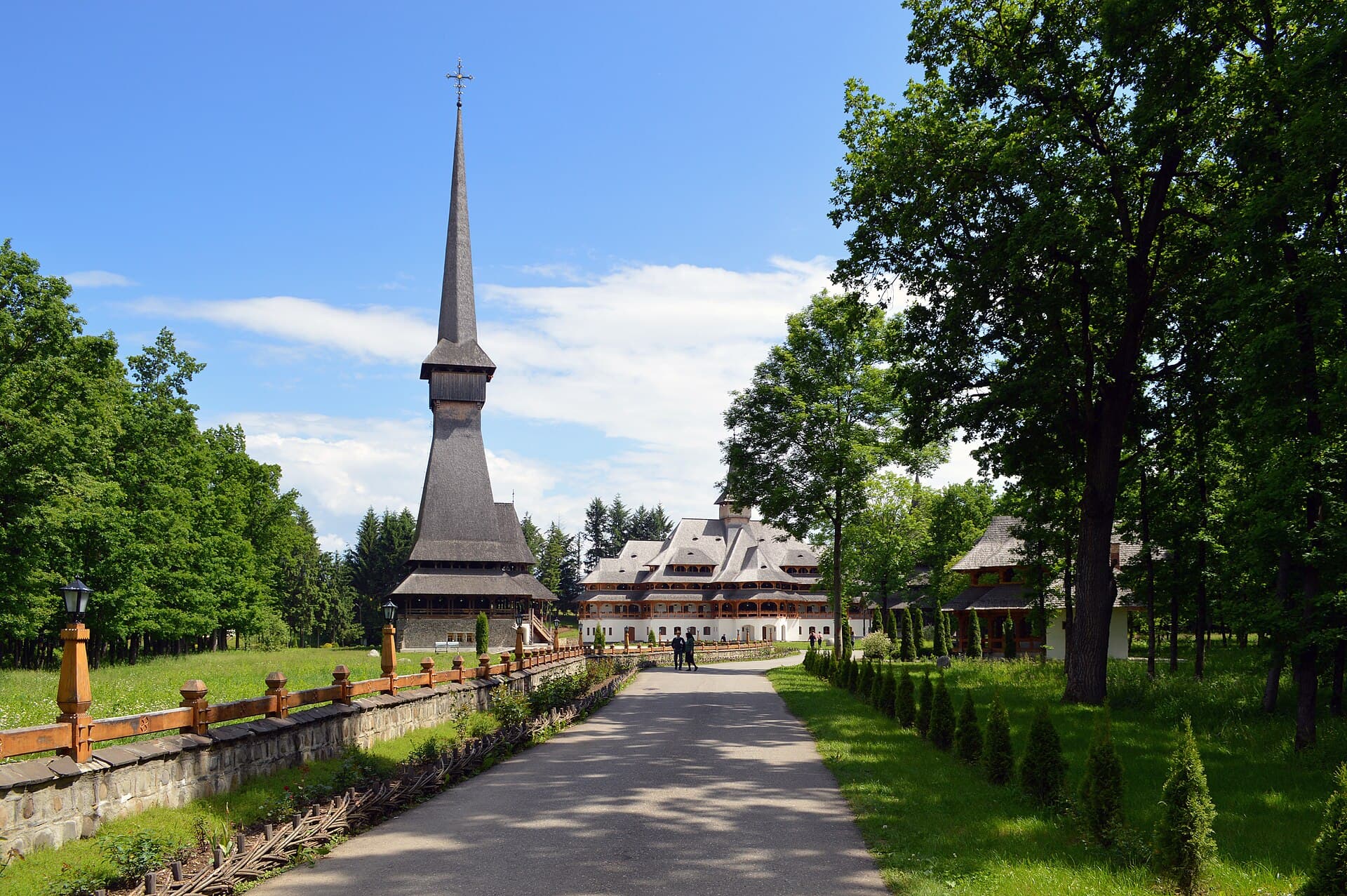
Beyond the cemetery, visit the Săpânța-Peri Monastery, a wooden monastery with the tallest wooden church in the world. Its spire reaches 78 meters (256 feet) and offers panoramic views of the surrounding Maramureș landscape. The intricate woodcarvings and peaceful atmosphere make it a worthwhile stop. You might also encounter local artisans selling traditional Maramureș crafts, particularly woodcarvings and textiles, in and around the village.
The best time to visit Săpânța is during the warmer months, from late spring to early autumn (May to September). The weather is pleasant for exploring the outdoor cemetery and monastery. Summer offers longer daylight hours and more lively village activity, though it can also be the busiest. Spring and autumn provide milder temperatures and fewer crowds, with the added beauty of blooming flowers or changing foliage.
Săpânța is accessible by car, with parking available near the Merry Cemetery. Public transport options are limited, so consider renting a car or arranging a private transfer from larger nearby towns like Sighetu Marmației. There is an entrance fee for the Merry Cemetery. While many epitaphs have English translations, a local guide can offer deeper insights into the nuances of the Romanian verses and local culture. Accommodations in Săpânța are primarily guesthouses and traditional pensions, offering an authentic experience. Book in advance, especially during peak season.
Săpânța in Korean, in Chinese or in Hebrew — and 29 more languages, every stop narrated by a native voice. The widest language range of any self-guided audio tour.
Available in: