Fontana di Rosello
Dieser Brunnen aus dem 17. Jahrhundert bietet mehr als nur fließendes Wasser; er ist ein in Stein gemeißelter Kalender.
Die ganze Geschichte wird in der Tour freigeschaltet
 9XIX6 / CC0, via Wikimedia Commons
Selbstgeführte Audio-Walking-Tour durch Sassari — GPS-Route, Offline-Wiedergabe, erzählerische Narration in 32 Sprachen.
“Sassari: Wo sardische Antike durch prächtige Fassaden und dauerhaften Stein atmet.”
Nicht die Postkarten. Die Geschichten, die selbst Einheimische nicht kennen – dir ins Ohr geflüstert, genau dort, wo sie geschahen.
Dieser Brunnen aus dem 17. Jahrhundert bietet mehr als nur fließendes Wasser; er ist ein in Stein gemeißelter Kalender.
Etwas außerhalb von Sassari steht eine einzigartige prähistorische Struktur, die in der Mittelmeerwelt ihresgleichen sucht.
Unter der zeitgenössischen Energie der Piazza Tola verweilt ein düsteres Echo der Vergangenheit.
Entdecke jedes Geheimnis von Sassari
Jede Adresse, jede Enthüllung vollständig – in deinem Ohr, genau dort, wo es geschah.
Du wählst deine Stationen. Du gehst. Die Stimme enthüllt, was andere übersehen.

Deine selbstgeführte Audio-Tour durch Sassari ist bereit – wähle deine Sehenswürdigkeiten, deine Sprache und starte, sobald du ankommst.
KaufenLume enthält einen integrierten Augmented-Reality-Guide. Halten Sie Ihr Handy hoch: Die Kamera zeigt die Straße vor Ihnen, mit einem leuchtenden Pfeil über dem echten Bild, der immer auf Ihren nächsten Stopp zeigt — keine Karte zum Rätseln, keine falschen Abzweigungen. Wie alles bei Lume funktioniert es komplett offline.
Sassari, die zweitgrößte Stadt Sardiniens, Italien, bietet eine faszinierende Mischung aus Geschichte, Kultur und natürlicher Schönheit. Auf einem breiten Karstplateau im Nordwesten der Insel gelegen, ist es eine Stadt, die durch jahrhundertelange unterschiedliche Herrschaften geprägt wurde, vom Giudicato von Torres bis zu den Aragoniern und Spaniern, die jeweils unauslöschliche Spuren in seiner Architektur und seinen Traditionen hinterließen. Obwohl Sassari oft von den bekannteren Küstenorten Sardiniens überschattet wird, bietet es einen authentischen Einblick in das Inselleben Italiens mit seinen eleganten neoklassizistischen Bauten, Barockkirchen und einem lebhaften historischen Zentrum.
Die Stadt fungiert als kulturelles, politisches und juristisches Zentrum für Nord-Sardinien, umgeben von einer üppigen Landschaft aus Olivenhainen und in der Nähe bemerkenswerter Naturschutzgebiete und Strände. Besucher können antike archäologische Stätten erkunden, durch einladende Gassen schlendern und in eine lebendige Atmosphäre eintauchen, die lokale Kultur mit modernem Komfort verbindet.
## Vom mittelalterlichen Hafen zum modernen Zentrum Die Ursprünge von Sassari reichen bis ins frühe Mittelalter zurück, als sich Küstenbevölkerungen aus dem römischen Hafen Turris Libisonis (dem heutigen Porto Torres) ins Landesinnere zurückzogen. Diese Migration, auf der Suche nach Zuflucht vor sarazenischen Einfällen und Malaria, führte 1131 zur ersten dokumentierten Erwähnung einer Siedlung namens Jathari.
Im 13. Jahrhundert war Sassari zur bevölkerungsreichsten Stadt des Giudicato von Torres herangewachsen. Nach der Ermordung von Michele Zanche im Jahr 1275 erlangte die Stadt ein gewisses Maß an Unabhängigkeit und entwickelte sich unter pisanischem Einfluss zu einer freien Kommune. Nach der Seeschlacht Pisas im Jahr 1284 wurde Sassari an Genua abgetreten, und bis 1316 etablierte es sich als Republik Sassari, die einzige unabhängige Stadtstaat Sardiniens in der frühen Renaissance mit einem eigenen fortschrittlichen Rechtssystem.
Die spanische Herrschaft begann 1323, als Sassari sich mit dem König von Aragon verbündete. Diese Periode brachte eine beträchtliche spanische kulturelle Assimilation und architektonische Stile wie Plateresk und Manierismus hervor. Das Erzbistum von Porto Torres wurde 1441 nach Sassari verlegt, und die Universität von Sassari wurde 1562 von Jesuiten gegründet, was die Stellung der Stadt als intellektuelles Zentrum festigte. 1718 ging Sassari zusammen mit dem Rest Sardiniens an das Haus Savoyen über.
Das 19. Jahrhundert brachte eine bedeutende städtische Umgestaltung. Mittelalterliche Mauern wurden 1836 teilweise abgerissen, um Platz für eine „neue Stadt“ mit breiten Alleen und großen Plätzen zu schaffen, die im Stil Turins gestaltet wurde. Sassari wurde auch ein wichtiges Industriezentrum, insbesondere für die Lederproduktion, und 1872 wurde die erste Eisenbahn eröffnet. Das Aragonesische Schloss wurde 1877 abgerissen, um Platz für die Caserma La Marmora zu schaffen, die noch heute die Brigata Sassari beherbergt, eine Militäreinheit, die hauptsächlich aus sardischen Soldaten besteht. Die Stadt erlitt während des Zweiten Weltkriegs alliierte Bombenangriffe. Heute bleibt Sassari ein wichtiges Zentrum für Kultur, Tourismus und Handel auf der Insel.
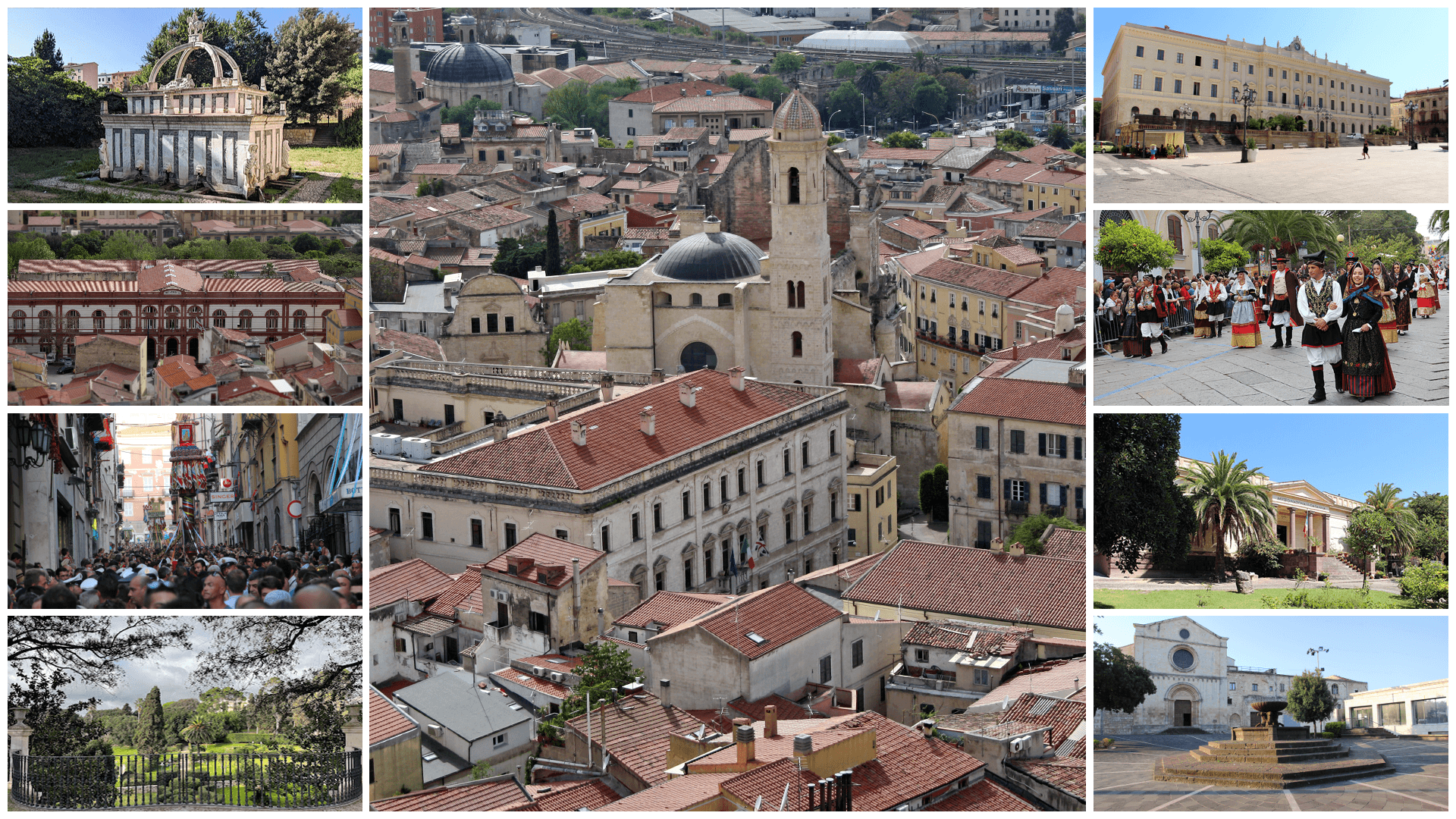
Beginnen Sie Ihre Erkundung im Herzen der Stadt auf der Piazza d'Italia, einem großen öffentlichen Platz, der von eleganten Gebäuden wie dem neoklassizistischen Palazzo della Provincia und dem neugotischen Palazzo Giordano gesäumt wird. Von hier aus schlendern Sie durch die engen, mittelalterlichen Gassen des historischen Zentrums, um architektonische Wunder zu entdecken. Die Kathedrale San Nicola, ein barockes Meisterwerk mit einer fantasievollen Fassade und einem mittelalterlichen gotischen Inneren, ist einen Besuch wert. Ein weiteres Wahrzeichen ist der Fontana di Rosello aus dem 17. Jahrhundert, ein Meisterwerk der Spätrenaissance mit zwölf Ausläufen, die die Monate und vier Statuen, die die Jahreszeiten symbolisieren, darstellen.
Für ein tieferes Verständnis der sardischen Vergangenheit besuchen Sie das Nationalmuseum G.A. Sanna, das archäologische Funde aus der gesamten Insel aus prähistorischen Zeiten beherbergt. Kunstliebhaber werden die Nationale Kunstgalerie von Sassari zu schätzen wissen. Etwas außerhalb der Stadt bietet der prähistorische Altar von Monte d'Accoddi einen einzigartigen Einblick in die antike Nuraghenkultur. Für eine erholsame Auszeit erkunden Sie den Parco di Monserrato. Die Stadt ist auch ein idealer Ausgangspunkt für Tagesausflüge zu schönen Stränden wie Platamona, Stintino und La Pelosa oder zu den Wanderwegen des Monte Limbara.
Sassari hat ein mediterranes Klima mit milden, feuchten Wintern und heißen, trockenen Sommern. Das angenehmste Wetter für Erkundungen bietet der Frühling (Mitte April bis Mitte Mai) und der Herbst (Mitte September bis Mitte Oktober), wenn die Temperaturen angenehm sind und die Menschenmassen kleiner sind. Mai und Oktober haben Durchschnittstemperaturen um 17–19°C.
Der Sommer von Juni bis August ist heiß und sonnig, mit Durchschnittstemperaturen von 25°C im Juli und August, die oft 29°C erreichen. Dies ist die trockenste Zeit, ideal für Strandurlaube, obwohl Hitzewellen die Temperaturen über 40°C treiben können. Die Winter (Dezember bis Februar) sind mild, mit Temperaturen, die selten unter 7–8°C fallen, obwohl die Niederschläge zunehmen.
Sassari gilt im Allgemeinen als sichere Stadt für Reisende mit einer geringen Kriminalitätsrate. Standardmäßige Vorsichtsmaßnahmen, wie das Vermeiden weniger frequentierter Gebiete bei Nacht und das Achten auf Ihre Umgebung, sind immer ratsam.
Anreise: Der nächstgelegene Flughafen ist der Flughafen Alghero-Fertilia (AHO) mit einer günstigen Busverbindung nach Sassari in etwa 30 Minuten. Sassaris Hauptbahnhof, gemeinsam betrieben von Ferrovie dello Stato (FS) und Ferrovie della Sardegna (FdS), bietet regionale Zugverbindungen nach Porto Torres, Olbia, Oristano und Cagliari. Der Bahnhof befindet sich an der Piazza Stazione.
Stadtverkehr: Die öffentlichen Verkehrsmittel in Sassari sind zuverlässig und basieren hauptsächlich auf Bussen, die von ATP Sassari betrieben werden. Das Stadtzentrum ist leicht zu Fuß zu erkunden, und eine Straßenbahnlinie bietet ebenfalls Transportmöglichkeiten. Taxis sind verfügbar, und Busse verbinden größere Städte und einige kleinere Ziele in der weiteren Provinz.
Sassari — Koreanisch, Chinesisch, Hebräisch und 29 weitere Sprachen, jede Station von einer muttersprachlichen Stimme erzählt. Die größte Sprachauswahl aller selbstgeführten Audiotouren.
Verfügbar auf: