Temple de Trinetra Ganesh
Imaginez un sanctuaire qui reçoit quotidiennement des milliers de faire-part de mariage et de lettres, non pas de personne à personne, mais de dévots à une présence divine.
L'histoire complète se débloque dans le tour
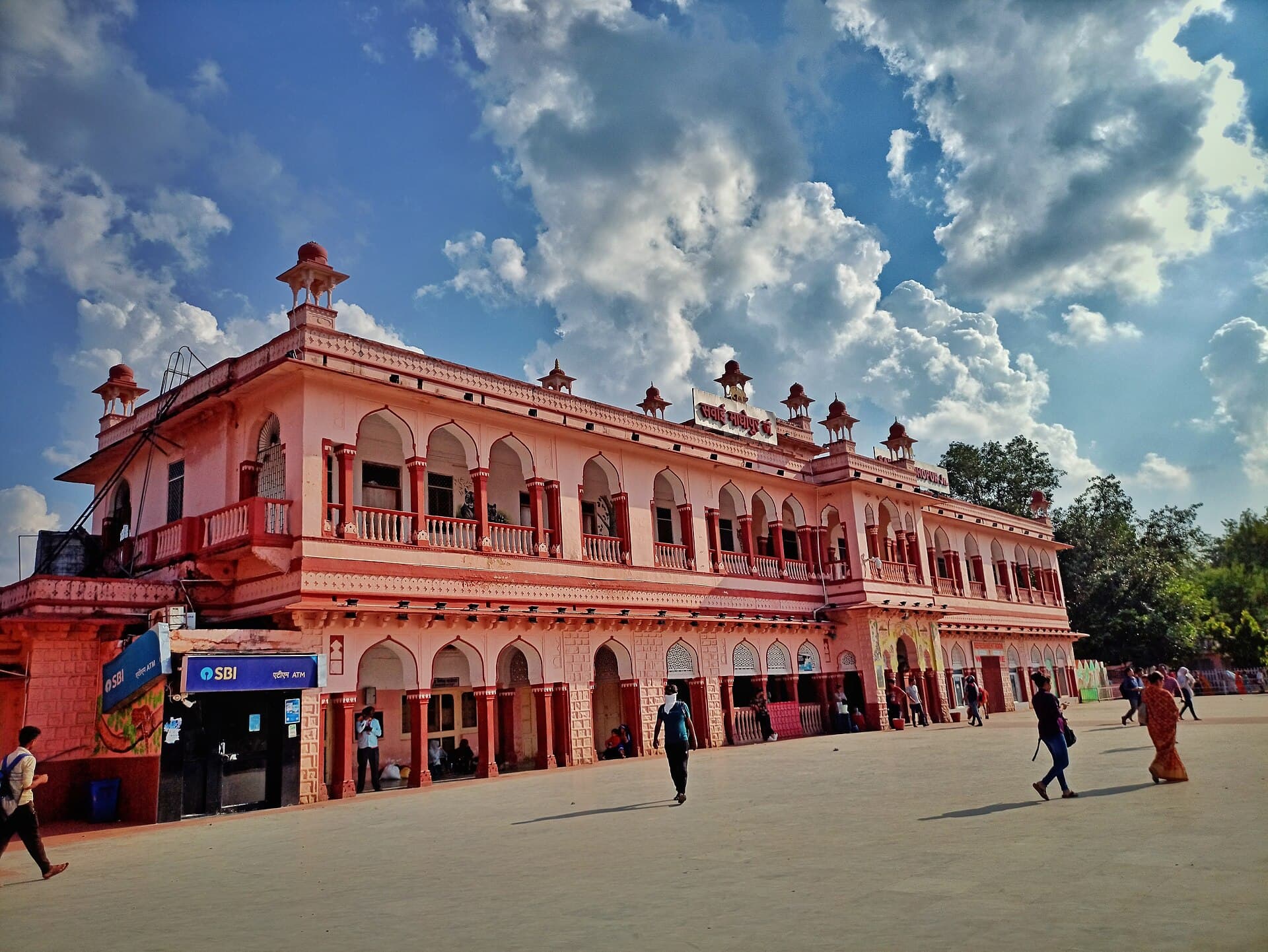 Harshvardhanrai0905 / CC0, via Wikimedia Commons
Visite audio autoguidée de Sawai Madhopur — parcours GPS à pied, lecture hors ligne, narration en 32 langues.
“Là où les forteresses ancestrales résonnent d'histoire et les tigres sauvages évoluent en toute liberté.”
Pas les cartes postales. Les histoires que même les habitants ignorent — soufflées à l'oreille, là où elles se sont passées.
Imaginez un sanctuaire qui reçoit quotidiennement des milliers de faire-part de mariage et de lettres, non pas de personne à personne, mais de dévots à une présence divine.
Plus qu'un simple point de transit, c'est une galerie vivante, célébrée pour son dévouement unique à la préservation de la faune.
Au cœur des vastes étendues d'un célèbre sanctuaire de tigres se dresse une ancienne fortification, détentrice d'une chronique de défi royal et de sacrifice poignant.
Découvrez tous les secrets de Sawai Madhopur
Chaque adresse, chaque révélation en entier — dans ton oreille, là où elle s'est passée.
Tu choisis tes lieux. Tu marches. La voix te révèle ce que les autres ignorent.


Votre visite audioguidée de Sawai Madhopur vous attend — choisissez vos lieux, votre langue, et lancez-vous dès votre arrivée.
AcheterLume intègre un guide en réalité augmentée. Levez votre téléphone : sa caméra montre la rue devant vous, avec une flèche lumineuse posée sur l'image réelle qui pointe toujours vers votre prochain arrêt — aucune carte à déchiffrer, aucun mauvais virage. Comme tout dans Lume, ça fonctionne entièrement hors-ligne.
Sawai Madhopur, souvent surnommée la 'Porte du Ranthambore', est une ville du sud-est du Rajasthan, en Inde. Elle se situe à la convergence des chaînes de collines Aravalli et Vindhya, offrant un paysage qui marie des collines ondulantes à des étendues de plaines ouvertes. La ville fonctionne comme le centre administratif du district de Sawai Madhopur et est principalement reconnue pour sa proximité avec le parc national de Ranthambore, un célèbre sanctuaire de tigres.
Au-delà de son importance écologique, Sawai Madhopur possède un poids historique et culturel, reflétant l'héritage royal du Rajasthan. La région attire à la fois ceux qui recherchent l'aventure et les personnes captivées par l'histoire, offrant d'anciennes fortifications, des temples et une culture locale vivante. La ville est également réputée pour ses goyaves, affectueusement appelées 'goyaves de Madhopur'.
Le récit initial de Sawai Madhopur est profondément lié au fort de Ranthambore, une structure imposante située sur une élévation rocheuse à environ 13 kilomètres de la ville contemporaine. Bien que les origines précises du fort soient débattues, la construction aurait généralement commencé au milieu du Xe siècle de notre ère sous les souverains Chauhan. Le positionnement stratégique du fort, contrôlant les routes commerciales entre le nord et le centre de l'Inde, en a fait une forteresse très recherchée.
Au fil des siècles, le fort de Ranthambore a changé de mains à de nombreuses reprises, observant l'ascension et le déclin de divers empires. Il fut pris par le Sultanat de Delhi sous Iltutmish en 1226, pour être ensuite repris par les Chauhans après sa mort. Un événement marquant de sa chronologie fut le siège par Alauddin Khilji en 1301, qui culmina avec la capture du fort et le douloureux 'jauhar' des femmes royales. Le fort passa ensuite sous la domination du royaume de Mewar, des Moghols, et finalement de l'État de Jaipur.
La ville de Sawai Madhopur elle-même fut établie bien plus tard, le 19 janvier 1763, par le Maharaja Sawai Madho Singh I de Jaipur. Il fortifia le village existant de Sherpur et nomma la nouvelle colonie d'après lui-même, l'établissant comme un avant-poste stratégique pour contrer l'influence grandissante des Marathes. Pendant le Raj britannique, le Maharaja Sawai Man Singh II améliora encore l'accessibilité de la région en construisant une ligne de chemin de fer entre Jaipur et Sawai Madhopur, transformant la ville en un important carrefour ferroviaire. Le Sawai Madhopur Lodge, aujourd'hui un hôtel patrimonial, fut construit en 1936 comme un pavillon de chasse royal.
L'attraction principale de Sawai Madhopur est le parc national de Ranthambore, l'une des réserves de tigres les plus distinguées d'Inde, offrant des safaris passionnants dans la jungle pour observer les tigres du Bengale, les léopards, les ours paresseux et une grande diversité d'espèces d'oiseaux. À l'intérieur du parc se trouve l'ancien fort de Ranthambore, un site classé au patrimoine mondial de l'UNESCO, présentant des temples, de grandes portes et des vues imprenables sur les paysages sauvages environnants. À l'intérieur du fort, visitez le temple de Trinetra Ganesh, un sanctuaire distinctif où les dévots envoient des lettres et des faire-part de mariage.
Au-delà du parc, explorez le fort de Khandar, situé à environ 45 km de Sawai Madhopur, reconnu pour ses structures imposantes et son histoire de n'avoir jamais été conquis pour son souverain d'origine. Pour l'observation des oiseaux, le lac Surwal offre un cadre paisible, en particulier en hiver lorsque les oiseaux migrateurs se rassemblent. Le temple jaïn de Chamatkar, consacré à Lord Adinath, est un important site de pèlerinage connu pour ses légendes extraordinaires. Vous pouvez également visiter Shilpgram, un complexe d'arts et d'artisanat rural présentant la culture traditionnelle du Rajasthan.
La période la plus propice pour découvrir Sawai Madhopur est pendant les mois les plus frais, d'octobre à mars. Le temps pendant cet intervalle varie d'agréable à frais, ce qui est idéal pour les safaris animaliers et l'exploration des forts et des temples. Les oiseaux migrateurs sont également nombreux dans le parc national tout au long de l'hiver. Bien que les étés (avril à juin) puissent être intensément chauds, avec des températures atteignant jusqu'à 45°C, cette saison offre souvent une plus grande chance d'apercevoir des tigres, car les animaux fréquentent les points d'eau. La saison de la mousson (juillet à septembre) apporte une végétation luxuriante, mais certaines zones du parc peuvent être fermées, et aucun remboursement n'est effectué pour les annulations dues aux intempéries.
Sawai Madhopur est facilement accessible par la route et le rail. La gare de Sawai Madhopur Junction est un point de transit clé sur les lignes ferroviaires New Delhi–Mumbai et Jaipur–Mumbai. L'aéroport le plus proche est l'aéroport international de Jaipur, à environ 180 kilomètres, d'où vous pouvez organiser un taxi. Pour naviguer dans la ville et le parc national, les taxis et les auto-rickshaws sont largement disponibles.
Lors de la visite du parc national de Ranthambore, les réservations de safari doivent être faites à l'avance en raison de la disponibilité limitée et de la demande considérable. Les safaris ont généralement lieu deux fois par jour, le matin et l'après-midi. N'oubliez pas d'apporter la pièce d'identité originale utilisée pour la réservation en ligne. Un séjour de 2 à 3 jours est conseillé pour profiter confortablement des safaris animaliers, des visites de forts et des autres attractions. Habillez-vous respectueusement lors de la visite des sites religieux.
Sawai Madhopur en coréen, en chinois ou en hébreu — et dans 29 autres langues, chaque étape narrée par une voix native. La plus large gamme de langues de tous les audioguides autoguidés.
Disponible en :