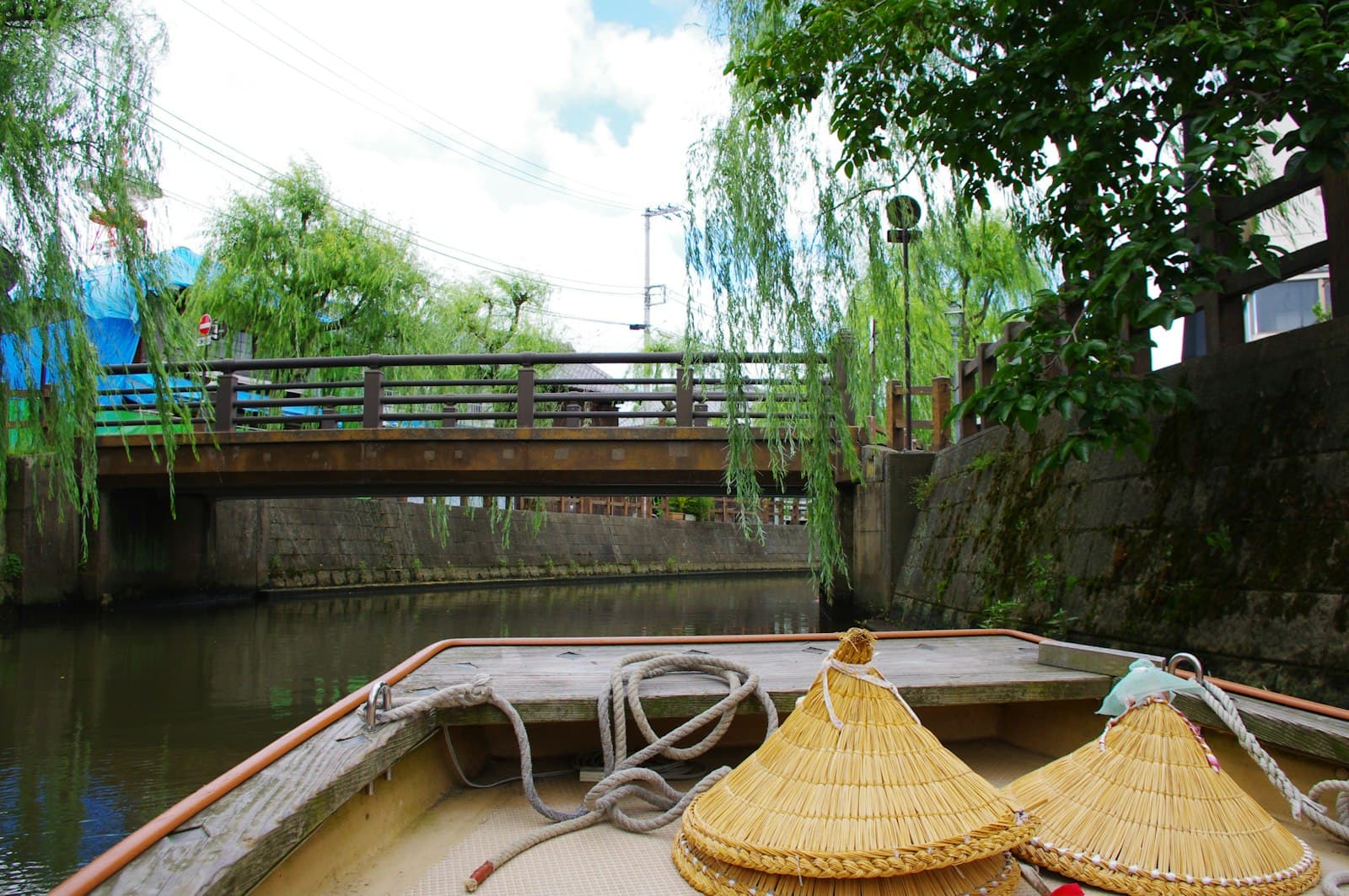
De Ono-rivier
Een rustige boottocht over de Ono-rivier biedt een uniek perspectief op de historische architectuur van Sawara, maar een specifiek detail op de stenen oevers wordt vaak over het hoofd gezien.
Volledig verhaal ontgrendeld in de tour
 Original: Raita Futo from Tokyo, Japan; this edit: User:MPF / cc by 2.0, via Wikimedia Commons
Zelfgeleide audiowandeling door Sawara — GPS-route, offline afspelen, meeslepende vertelling in 32 talen.
“Sawara: Waar de echo's van Edo langs het kanaal drijven.”
Niet de ansichtkaarten. De verhalen die zelfs locals niet kennen — gefluisterd in je oor, precies waar ze gebeurden.
Een rustige boottocht over de Ono-rivier biedt een uniek perspectief op de historische architectuur van Sawara, maar een specifiek detail op de stenen oevers wordt vaak over het hoofd gezien.
Deze schijnbaar gewone brug over de Ono-rivier herbergt een verrassend, bijna speels geheim dat zich met regelmatige tussenpozen onthult.
Ino Tadataka wordt gevierd voor het creëren van de eerste nauwkeurige kaart van Japan, een monumentale prestatie, maar zijn weg naar cartograaf was verre van conventioneel.
Ontdek elk geheim van Sawara
Elk adres, elke onthulling volledig — in je oor, precies waar het gebeurde.
Jij kiest je stops. Jij wandelt. De stem onthult wat de anderen missen.
Lume heeft een ingebouwde augmented-reality-gids. Houd je telefoon omhoog: de camera toont de straat voor je, met een oplichtende pijl over het echte beeld die altijd naar je volgende stop wijst — geen kaart om uit te puzzelen, geen verkeerde afslagen. Zoals alles in Lume werkt het volledig offline.
Sawara, vaak "Klein Edo" (Koedo) genoemd, biedt een serene ontsnapping aan het Japanse verleden, waarbij de sfeer van de Edo-periode (1603-1867) behouden blijft zonder de drukte van bekendere bestemmingen. Gelegen aan de Ono-rivier in de prefectuur Chiba, bloeide dit historische koopmansstadje op als een essentieel distributiecentrum, dat via goed ontwikkelde waterwegen goederen vanuit Noordoost-Japan verbond met Edo (het huidige Tokio). Tegenwoordig nodigen de prachtig bewaard gebleven traditionele koopmanshuizen, pakhuizen en met wilgen omzoomde kanalen uit tot een langzamer tempo van verkenning, wat de welvaart weerspiegelt die ooit leidde tot het gezegde: "Als je Edo wilt zien, ga dan naar Sawara, Sawara is zelfs beter dan Edo."
Sawara, in 1996 aangewezen als een Belangrijk Beschermingsdistrict voor Traditionele Gebouwen, vindt zijn aantrekkingskracht in het zorgvuldig onderhouden historische straatbeeld. Bezoekers kunnen zich onderdompelen in een "levend stadsbeeld", waar vele bedrijven al generaties lang ononderbroken actief zijn, wat een tastbare verbinding biedt met het commerciële erfgoed van de stad. Van ontspannen boottochten op de Ono-rivier tot het verkennen van eeuwenoude winkels, Sawara biedt een unieke kijk in een vervlogen tijdperk, waardoor het een boeiende bestemming is voor wie op zoek is naar een mix van geschiedenis, cultuur en rust.
De geschiedenis van Sawara strekt zich uit tot prehistorische tijden, met archeologisch bewijs van Jōmon-periode schelpenwallen en Kofun-periode grafheuvels. Tegen de Nara-periode (710-794) had het zich al ontwikkeld als een bruisende haven en een monzenmachi, een tempelstad die de vereerde Katori-schrijn bediende. Tijdens de Heian-periode (794-1185) evolueerde Sawara tot een regionaal commercieel centrum dat de omliggende landgoederen ondersteunde.
De ware welvaart van de stad bloeide echter op tijdens de Edo-periode (1603-1867). De ontwikkeling van de Tone-rivier tot een bevaarbare waterweg door het Tokugawa-shogunaat transformeerde Sawara tot een cruciale binnenhaven en commercieel distributiecentrum. Goederen zoals rijst, sake en sojasaus werden via de goed ontwikkelde waterwegen vervoerd, die de Ono- en Tone-rivieren verbonden en de groeiende stad Edo bereikten. Dit tijdperk van immense rijkdom en invloed leverde Sawara de bijnaam "Edo Masari" op, wat "superieur aan Edo" betekent, een bewijs van zijn levendige economie en verfijnde cultuur.
De welvaart van de stad trok bekwame ambachtslieden uit Edo aan, wat leidde tot een onderscheidende lokale cultuur. Tegen 1787 telde Sawara 35 brouwerijen, wat zijn reputatie als "Edo's achterkeuken" verstevigde. De traditionele koopmanshuizen en pakhuizen die vandaag de dag langs de Ono-rivier staan, werden grotendeels tijdens deze welvarende periode gebouwd, en velen staan er nog steeds, waarvan sommige bedrijven huisvesten die generaties lang zijn doorgegeven. In 1996 werd het centrale deel van Sawara officieel erkend als een Belangrijk Beschermingsdistrict voor Groepen Traditionele Gebouwen, het eerste in de Kanto-regio, wat de bescherming van het unieke historische straatbeeld garandeert.
Hoewel het belang van Sawara als handelscentrum afnam met de komst van spoorwegen in de late Meiji-periode, heeft het zich met succes opnieuw uitgevonden als toeristische bestemming, waarbij het zijn aantrekkingskracht uit de Edo-periode behoudt en zijn seizoensgebonden attracties viert. In 2006 fuseerde Sawara met naburige steden om Katori City te vormen, hoewel Sawara het culturele en historische hart van de regio blijft.
Het hart van de aantrekkingskracht van Sawara ligt in het historische district langs de Ono-rivier. Een boottocht op de Ono-rivier biedt een uniek perspectief op de stad, langs traditionele koopmanshuizen en oude pakhuizen, met zachtjes wuivende wilgen langs de oevers. Deze 30 minuten durende tochten bieden een rustige manier om de bewaard gebleven architectuur te bekijken.
Wandelend langs de rivieroevers kunnen bezoekers tal van gevestigde winkels verkennen, waarvan sommige meer dan een eeuw oud zijn en traditionele producten zoals sojasaus, miso en Japanse snoepjes verkopen. De Toyohashi-brug, ook bekend als de Ja-Ja-brug, is een opmerkelijk gezicht, aangezien het water elk half uur van de overspanning in het kanaal eronder stroomt.
De Voormalige Woonplaats van Ino Tadataka, een gevierde cartograaf die de eerste nauwkeurige kaart van Japan maakte, is een nationaal aangewezen historische plek. Zijn nabijgelegen museum beschrijft zijn landmeetkundige technieken en toont originele kaarten. Voor wie geïnteresseerd is in de lokale cultuur, toont het Suigo Sawara Dashi Kaikan (Float Museum) enkele van de uitgebreide praalwagens die worden gebruikt tijdens het Grote Festival van Sawara, wat een kijkje biedt in dit door UNESCO erkende evenement. Verder weg ligt de Katori Jingu-schrijn, een van de oudste Shinto-schrijnen van Japan, omgeven door eeuwenoude ceders en biedt een serene, spirituele ervaring.
De beste tijden om Sawara te bezoeken voor algemene buitenactiviteiten zijn van half juli tot begin oktober, met een piek half augustus, met heldere, regenloze dagen en comfortabele temperaturen. Voor wie op zoek is naar activiteiten bij warm weer, is eind juli tot begin september ideaal.
Sawara komt echt tot leven tijdens zijn tweejaarlijkse Grote Festival, een UNESCO Immaterieel Cultureel Erfgoed. Het zomerfestival, Honjuku Gion Matsuri, vindt plaats in juli, en het herfstfestival, Shinjuku Suwa Matsuri, wordt gehouden in oktober. Deze driedaagse evenementen worden gekenmerkt door parades van uitgebreide praalwagens met reusachtige poppen, traditionele muziek en een levendige sfeer.
Een andere prachtige tijd om te bezoeken is in juni voor het Ayame Matsuri (Iris Festival) in Suigo Sawara Ayame Park, waar meer dan een miljoen irissen bloeien.
Sawara is gemakkelijk bereikbaar vanuit Tokio, Chiba City en Narita. Vanaf Tokyo Station duurt een snelle busrit ongeveer 90 minuten. Met de trein neemt u de JR Sobu-lijn naar Narita Station, stapt u vervolgens over op de lokale JR Narita-lijn voor nog eens 30-40 minuten naar Sawara Station. Het historische stadscentrum ligt op ongeveer 10-15 minuten lopen van Sawara Station. Als u vanuit Narita Airport reist, is het ongeveer 30 minuten met de trein naar Sawara Station met een overstap op Narita Station.
Hoewel wandelen een aangename manier is om het historische district te verkennen, wordt een boottocht op de Ono-rivier sterk aanbevolen voor een ander perspectief; kaartjes kosten doorgaans ongeveer 1.300 yen voor volwassenen. Veel winkels in het historische district van Sawara zijn nog steeds actieve bedrijven. Overweeg het huren van een traditionele kimono voor een meeslepende ervaring tijdens het wandelen door de straten.
Sawara — Koreaans, Chinees, Hebreeuws en nog 29 talen, elke stop verteld door een moedertaalspreker. Het grootste taalaanbod van alle zelfgeleide audiotours.
Beschikbaar in: