Kasbah Ismailia
Beyond its formidable walls, the Kasbah Ismailia holds a distinctive surprise at its very core.
Full story unlocks in the tour
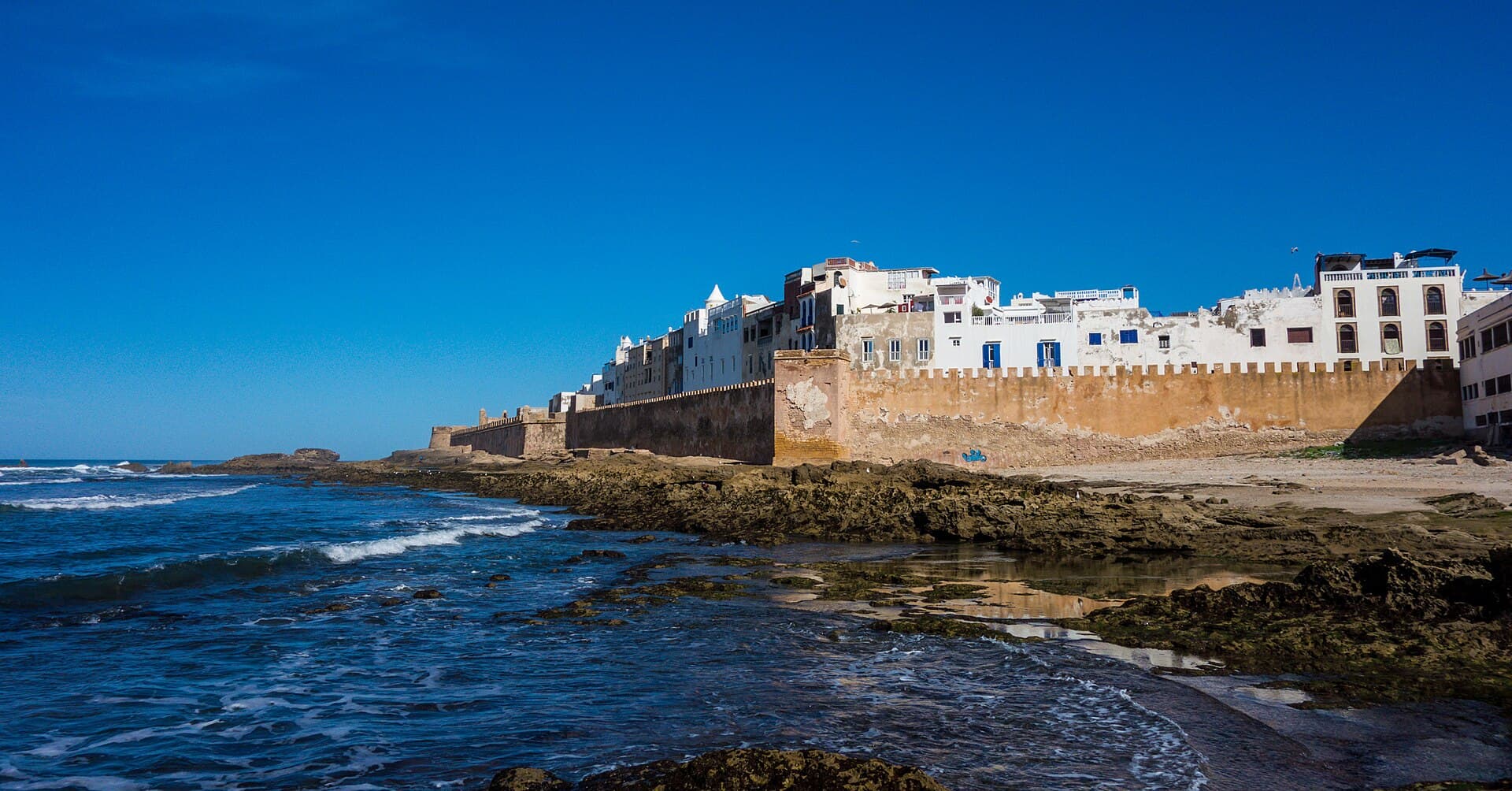 Photo of Essaouira, via Wikimedia Commons
Self-guided audio walking tour of Settat — GPS route, offline playback, story-driven narration in 32 languages.
“Where the Chaouia plains echo with ancient commerce and enduring custom.”
Not the postcards. The stories even locals don't know — whispered in your ear, right where they happened.
Beyond its formidable walls, the Kasbah Ismailia holds a distinctive surprise at its very core.
Settat's expansion in the 18th and 19th centuries drew a particular community, whose enduring mark is still visible in the city's architecture.
The city's very name suggests a profound, inherent connection to the earth.
Discover every secret of Settat
Every address, every reveal in full — in your ear, right where it happened.
You pick your stops. You walk. The voice reveals what the others miss.


Your self-guided audio tour of Settat is ready — pick your landmarks, choose your language, and start the moment you arrive.
BuyLume has a built-in augmented-reality guide. Hold your phone up and its camera shows the street ahead of you, with a glowing arrow laid over the real view that always points to your next stop — no map to puzzle over, no wrong turns. Like everything in Lume, it works fully offline.
Settat, a city within Morocco's Casablanca-Settat region, offers an authentic glimpse into Moroccan life away from the more traveled tourist routes. Situated on a plateau embraced by foothills, it functions as a vital agricultural and commercial hub in the fertile Chaouia plain. With a population exceeding 142,000 people, Settat provides a genuine local experience, characterized by its traditional markets and a welcoming community.
The city's strategic placement, approximately an hour's drive south of Casablanca, makes it an accessible base for exploring the surrounding area. Settat's allure resides in its blend of historical legacy, rural landscapes, and local customs, making it an appealing destination for those seeking a deeper cultural immersion. It is a place where the rhythms of daily life are profoundly connected to the land and its long-standing history as a nexus for trade.
The history of Settat is deeply interwoven with its strategic geographical position and the fertile expanses of the Chaouia plain. The city's name itself, "Settat," is thought to derive from "Ayt Settat," a Senhaja-Berber clan of the Houara tribe, who settled in the region following the Almohad advance north. Another interpretation suggests the name means "the vineyard" in Arabic, reflecting the area's historical agricultural importance.
The process of urbanization in Settat was significantly accelerated in the 18th century when the Moroccan ruler Moulay Ismail selected its hilly site for the construction of the Kasbah Ismailia. This kasbah provided order and security, encouraging nearby settlements and formalizing Settat's status as a regional capital by installing the first Caïd (local governor). Its location rendered it an unavoidable passage between the North and South, solidifying its role as an administrative center.
Throughout the 18th and 19th centuries, Settat thrived as an important trading center for agricultural products, attracting entrepreneurs and a significant Jewish population who established their own quarter, the Mellah, adjacent to the Kasbah. This period of growth was briefly interrupted during the early 20th century with French colonization. However, under the French protectorate, Settat experienced unprecedented urban development and a population surge between 1913 and 1925.
While the mid-20th century saw a period of relative calm as Casablanca developed, Settat re-emerged in the early 1990s with significant urban planning and the establishment of Hassan I University, an international golf course, and a racetrack, transforming it into an important regional hub. Today, Settat continues to be a key agricultural and commercial center, with good road and railway connections to major cities like Casablanca and Marrakech.
Settat offers a blend of historical sites and lively local life. The Kasbah Ismailia is a significant landmark, a late 17th-century fortress erected by Moulay Ismail, showcasing traditional Moroccan architecture and a singular statue of a steed at its core. Wander through the Medina of Settat, where tradition and history intertwine in its picturesque lanes and authentic architecture. Here, the active souks awaken the senses with colors, spices, and local crafts, offering an immersive cultural experience. You can encounter dedicated artisans perpetuating ancestral skills, from leatherwork to traditional pottery.
The Sidi Ahmed Ben Ali Mosque is another iconic structure displaying the richness of traditional Moroccan architecture. For a taste of local culture, explore the traditional markets (souks) where you can purchase local products like spices, carpets, and Moroccan handicrafts. Settat also features a Central Square which serves as a social gathering place for locals and visitors. While in Settat, consider exploring the gardens of Settat and the ecological and educational farm of Settat for a different perspective on the region's connection to nature and agriculture.
Settat experiences a Mediterranean climate, characterized by warm, dry summers and mild winters. The ideal time to visit extends from spring to fall, when temperatures are agreeable and suitable for outdoor activities and exploration. Summers, particularly August, can be quite warm, with average highs around 93°F (34°C). Winters are cooler, with January being the coldest month, averaging a low of 38°F (3°C). Precipitation is highest in November and lowest in July.
The local currency in Settat is the Moroccan Dirham (MAD). It is advisable to carry small bills for everyday purchases, especially in the souks and local markets, as cash is often preferred. While larger supermarkets and hotels may accept cards, it is not always guaranteed. ATMs are readily available near banks and shopping areas.
Light clothing is recommended for summer visits, while warmer attire is suitable for winter. Bargaining is a customary part of Moroccan culture, particularly in the souks, so do not hesitate to negotiate prices with local merchants. Settat is well-connected by road, with easy access from Casablanca via the A7 highway (approximately 50 kilometers or an hour's drive). You can also reach Settat by grand taxi or bus from Casablanca's bus station. Within the city, grand taxis are a common mode of transport. SIM cards can be purchased at telecom stores or kiosks, requiring passport registration.
Settat in Korean, in Chinese or in Hebrew — and 29 more languages, every stop narrated by a native voice. The widest language range of any self-guided audio tour.
Available in: