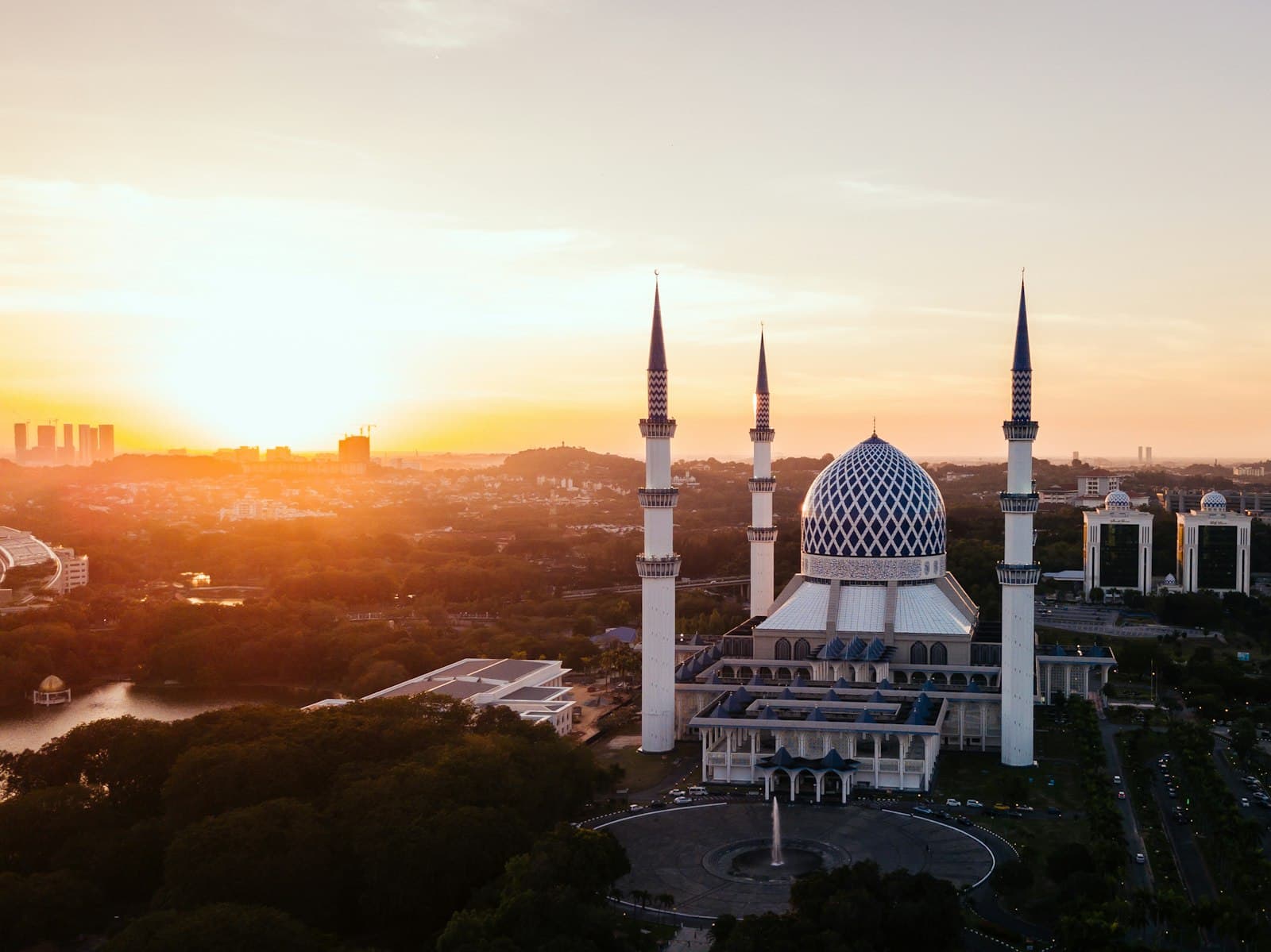
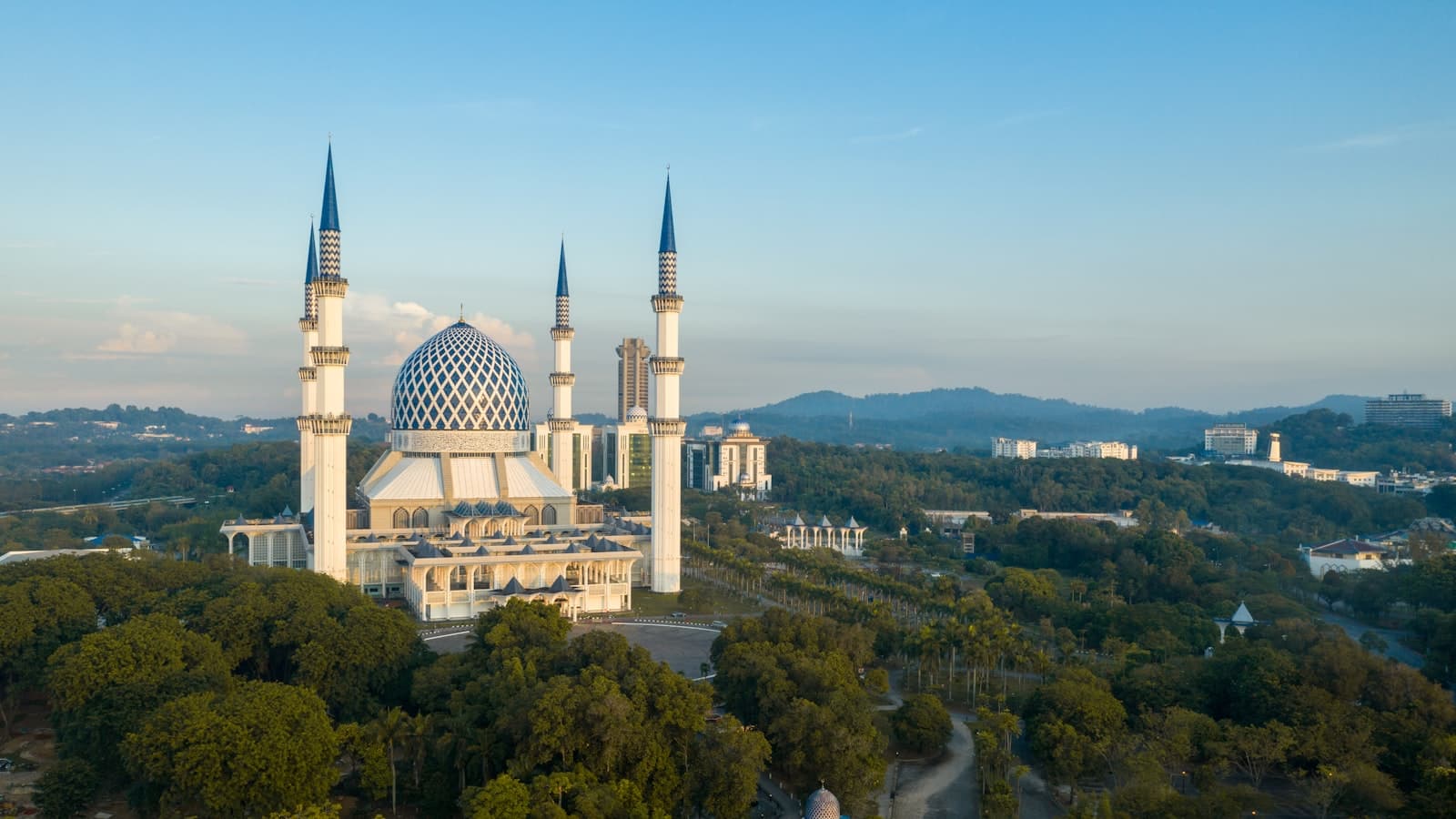
The Blue Mosque stands as a beacon across Shah Alam, yet its striking appearance conceals an ingenious construction method that extends beyond its iconic dome.
Ezry Abdul Rahman from Petaling Jaya, Selangor, Malaysia / CC BY 2.0, via Wikimedia CommonsShah Alam
“A city meticulously crafted, Shah Alam unfolds with grand Islamic architecture and generous green spaces.”
Shah Alam, as no one tells it.
Not the postcards. The stories even locals don't know — whispered in your ear, right where they happened.
These tranquil lake gardens, a favored retreat, were conceived by an international design mind, yet they carry a profound connection to Malaysia's very identity.
This sprawling botanical garden, counted among the world's largest agricultural parks, possesses a history of evolving names, each reflecting its changing purpose.
Discover every secret of Shah Alam
Every address, every reveal in full — in your ear, right where it happened.
You pick your stops. You walk. The voice reveals what the others miss.
How long do you have in Shah Alam?
No tours available yet. Check back soon — we're preparing them.
The story of Shah Alam
Shah Alam, the capital of Selangor, Malaysia, stands as a meticulously conceived urban center, where modern infrastructure gracefully intertwines with a profound cultural heritage and abundant natural splendor. Situated approximately 25 kilometers west of Kuala Lumpur, this city offers a refreshing counterpoint to its bustling neighbors, providing an experience both dynamic and serene.
Formally established in 1963 as a planned city and officially declared the state capital in 1978, Shah Alam holds the distinction of being Malaysia's first planned city following its independence in 1957. Its name, translating to 'King of the World' in Persian, was bestowed by Sultan Salahuddin Abdul Aziz Shah in homage to his late father, Sultan Alam Shah. The city's design philosophy emphasizes a seamless integration of industrial progress and environmental preservation, evident in its generous green spaces and thoughtfully arranged urban blueprint.
From Plantation to Planned Capital
The expanse now recognized as Shah Alam was once Sungai Renggam, a landscape dominated by rubber and oil palm plantations. The trajectory of this region shifted dramatically in 1974 when Kuala Lumpur, then the capital of Selangor, was designated a Federal Territory. This pivotal event necessitated the establishment of a new administrative heart for the state of Selangor.
In 1963, the initial settlement and township development commenced in Sungai Renggam. Following the decision to relocate the state capital, Shah Alam was formally proclaimed the new administrative capital of Selangor on December 7, 1978. This ushered in a period of swift development, with Shah Alam emerging as Malaysia's first planned city in the post-independence era. The city's structure was carefully laid out, featuring distinct residential, commercial, administrative, and industrial zones.
Shah Alam's expansion was further propelled by its role as an industrial locus, drawing electrical, electronic, and automotive enterprises, including the national car manufacturer, Proton. Key architectural markers began to materialize, shaping the city's identity. Construction of the Sultan Salahuddin Abdul Aziz Mosque, known as the Blue Mosque, began in 1982 and concluded in 1988, swiftly becoming a defining emblem of Shah Alam. The Sultan Alam Shah Museum opened its doors in 1989, further cementing the city's cultural and educational infrastructure. On October 10, 2000, Shah Alam officially attained full city status, solidifying its standing as a significant Malaysian metropolis.
Shah Alam presents a varied array of attractions, from magnificent architectural wonders to peaceful green expanses and family-friendly entertainment. The Sultan Salahuddin Abdul Aziz Shah Mosque, or the Blue Mosque, stands as an iconic landmark with its immense blue and silver dome and four soaring minarets. It is the largest mosque in Malaysia and the second largest in Southeast Asia by capacity, accommodating up to 24,000 worshippers. Visitors can embark on guided tours to appreciate its intricate blend of Islamic and Malay architectural styles.
For those who cherish nature, the Shah Alam Lake Gardens (Taman Tasik Shah Alam) offer a tranquil respite. This 43-hectare public park, designed by Japanese landscape architect Fumiaki Takano, features three artificial lakes, jogging paths, picnic spots, and diverse wildlife. Paddle boats are available for rent, and the park affords scenic views, including reflections of the Blue Mosque upon the water. Another expansive green space is Taman Botani Negara Shah Alam, previously known as Malaysia Agriculture Park. This extensive botanical garden, spanning over 800 acres, provides opportunities for cycling, trekking, birdwatching, and even includes themed gardens, an animal park, and a Skytrex Adventure park.
For contemporary entertainment, i-City is a digital theme park renowned for its dazzling LED-lit attractions, particularly luminous after dusk. It encompasses a Snowalk winter house, a wax museum, water rides, and various fairground-style amusements. The Sultan Alam Shah Museum serves as the state museum for Selangor, displaying local history and cultural artifacts. Additionally, Laman Seni 7 offers an immersive street art experience with colorful murals narrating vivid stories.
Shah Alam experiences a tropical climate with consistently high temperatures and humidity throughout the year. The average temperature gently fluctuates between 26.8°C and 28.0°C. The most favorable time to visit for outdoor pursuits and exploration is generally during the drier season, from May to September, when rainfall is at its minimum. While rain can occur year-round, the monsoon season, from approximately October to March, brings heavier rainfall, often in the late afternoon and evening. For activities suited to warm weather, such as those at i-City, mid-June to early September and mid-December to mid-March are suggested.
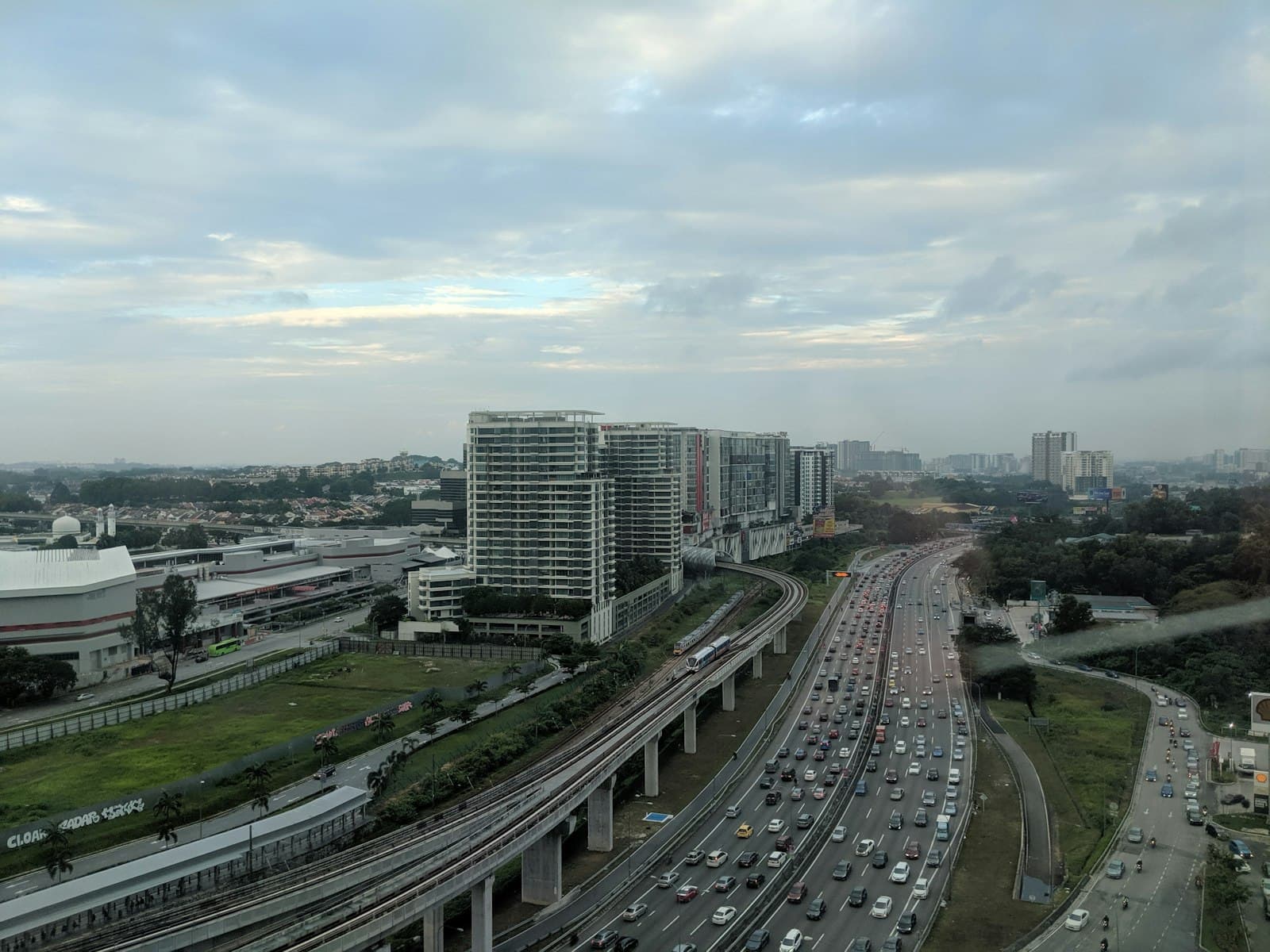
Shah Alam is readily accessible, positioned centrally between Kuala Lumpur and Port Klang. Several highways connect the city to major urban centers, and Kuala Lumpur International Airport lies approximately 30km to the south. Within the city, public transportation options include buses and taxis. The KTM Komuter train service also links Shah Alam to Kuala Lumpur and other areas. For convenient local travel, ride-sharing services like Grab are widely available.
When visiting religious sites such as the Blue Mosque, modest attire is advised. Shah Alam offers various shopping centers, including Setia City Mall and SACC Mall, presenting international and local brands, dining establishments, and entertainment. The city is well-appointed with amenities such as banks, hotels, and medical facilities. For those exploring the botanical gardens, bicycles are often available for rent, and some parks provide complimentary bus services to navigate their extensive grounds.
- What distinguishes Shah Alam?
- Shah Alam is recognized as the state capital of Selangor, Malaysia's inaugural planned city following independence, and home to the majestic Sultan Salahuddin Abdul Aziz Shah Mosque, also known as the Blue Mosque.
- How does one navigate Shah Alam?
- You can move around Shah Alam using public transport like buses and taxis, the KTM Komuter train service, or ride-sharing applications such as Grab. The city features well-designed roads for those who prefer to drive.
- What is the most opportune time of year to experience Shah Alam?
- The most opportune time to visit Shah Alam for outdoor activities and exploration is during the drier season, from May to September, when rainfall is minimal.
- Does Shah Alam offer attractions suitable for families?
- Indeed, Shah Alam provides several family-friendly attractions, including i-City (City of Digital Lights) with its theme park and LED displays, Shah Alam Lake Gardens, Wet World Shah Alam water park, and Taman Botani Negara Shah Alam.
- What is the Blue Mosque, and is it open to visitors?
- The Blue Mosque, officially known as the Sultan Salahuddin Abdul Aziz Shah Mosque, serves as the state mosque of Selangor and is one of the largest mosques in Southeast Asia. Visitors are welcome to tour the mosque, though modest dress is required.
- What kind of climate characterizes Shah Alam?
- Shah Alam experiences a tropical climate, marked by consistently high temperatures and considerable humidity throughout the year, with average monthly temperatures ranging from 26.8°C to 28.0°C.