The grand European-style buildings lining the Bund tell a story of Shanghai's past as a global financial hub. But one prominent building held a secret that was literally concealed for decades.
xiquinhosilva / CC BY 2.0, via Wikimedia CommonsShanghai
“Shanghai: Where Art Deco echoes meet futuristic skylines.”
Shanghai, as no one tells it.
Not the postcards. The stories even locals don't know — whispered in your ear, right where they happened.
This classical Chinese garden, built for a Ming Dynasty official's parents, offers a tranquil escape from the city's activity. Yet, its serene beauty obscures a turbulent past where it served an unexpected role during times of conflict.
Strolling through the tree-lined avenues of the Former French Concession, you'll notice a distinct European charm. But a common sight along these streets has a surprising origin story, directly linked to its French heritage.
Discover every secret of Shanghai
Every address, every reveal in full — in your ear, right where it happened.
You pick your stops. You walk. The voice reveals what the others miss.
How long do you have in Shanghai?
No tours available yet. Check back soon — we're preparing them.
The story of Shanghai
Shanghai, often called the 'Magic City,' is a sprawling metropolis where layers of history, culture, and futuristic ambition converge. Situated on China's central coast at the mouth of the Yangtze River, it has evolved from a small fishing village into one of the world's largest seaports and a global financial center. The city's dynamic identity is a striking blend of its colonial past and its rapid modern development, with towering skyscrapers standing alongside European-era buildings and traditional gardens.
This lively urban landscape is characterized by its distinct architectural styles, from the Art Deco influences of the 1920s and 30s to the contemporary marvels of Pudong. Shanghai's unique cultural tapestry is a result of traditional Chinese culture interwoven with influences from the Wu and Yue Dynasties, and significantly shaped by Western cultures. It's a city that embraces openness, creativity, and diversity, constantly absorbing and innovating.
From Fishing Village to Global Hub
Shanghai's origins can be traced back to settlements around 5000 B.C., though it emerged as a small fishing village between the 5th and 7th centuries A.D. on the banks of the Wusong Jiang (today's Suzhou River). The creek was known as 'Hu' due to the crab traps used in the river, a name still used as a shorthand for the city today. By 1292, Shanghai had developed from a commercial town into a county seat.
The city's trajectory dramatically shifted in the 19th century. Following China's defeat in the First Opium War (1839-1842), the Treaty of Nanking forced China to open Shanghai as a treaty port, granting concessions to Western powers, primarily Britain and France. This marked the beginning of Shanghai's colonial period, which spanned from the mid-19th to mid-20th century. The British established a settlement along the Huangpu River, which, after merging with the American community in 1863, became the International Settlement. The French also carved out their own concession in 1849.
During this era, the Bund, a waterfront promenade, transformed from a muddy lane into a major financial center of East Asia. It became lined with banks, trading houses, and consulates reflecting European architectural styles like Neoclassical, Baroque, and Art Deco. The city prospered, developing infrastructure like roads, hotels, gaslights, electric power, telephones, and trams, while much of the rest of China experienced internal conflict. The 1920s and 1930s were considered Shanghai's 'golden age,' a period of lively nightlife, cosmopolitan culture, and a flourishing economy, earning it the moniker 'Paris of the East.'
However, this prosperity was interrupted by World War II and the subsequent Communist era. The Japanese invaded Shanghai in 1937, and by 1941, they occupied the International Settlement and French Concessions. After the Communist liberation in 1949, the Bund's buildings were repurposed for government use, symbolizing a rejection of Western colonialism. It wasn't until the late 1970s and 1980s, with China's economic liberalization, that the Bund's buildings gradually returned to their original functions, and financial institutions were encouraged to return. In 1990, the Pudong area, then largely rice paddies, was designated a Special Economic Zone, rapidly developing into the futuristic skyline seen today, directly contrasting the historic Bund.
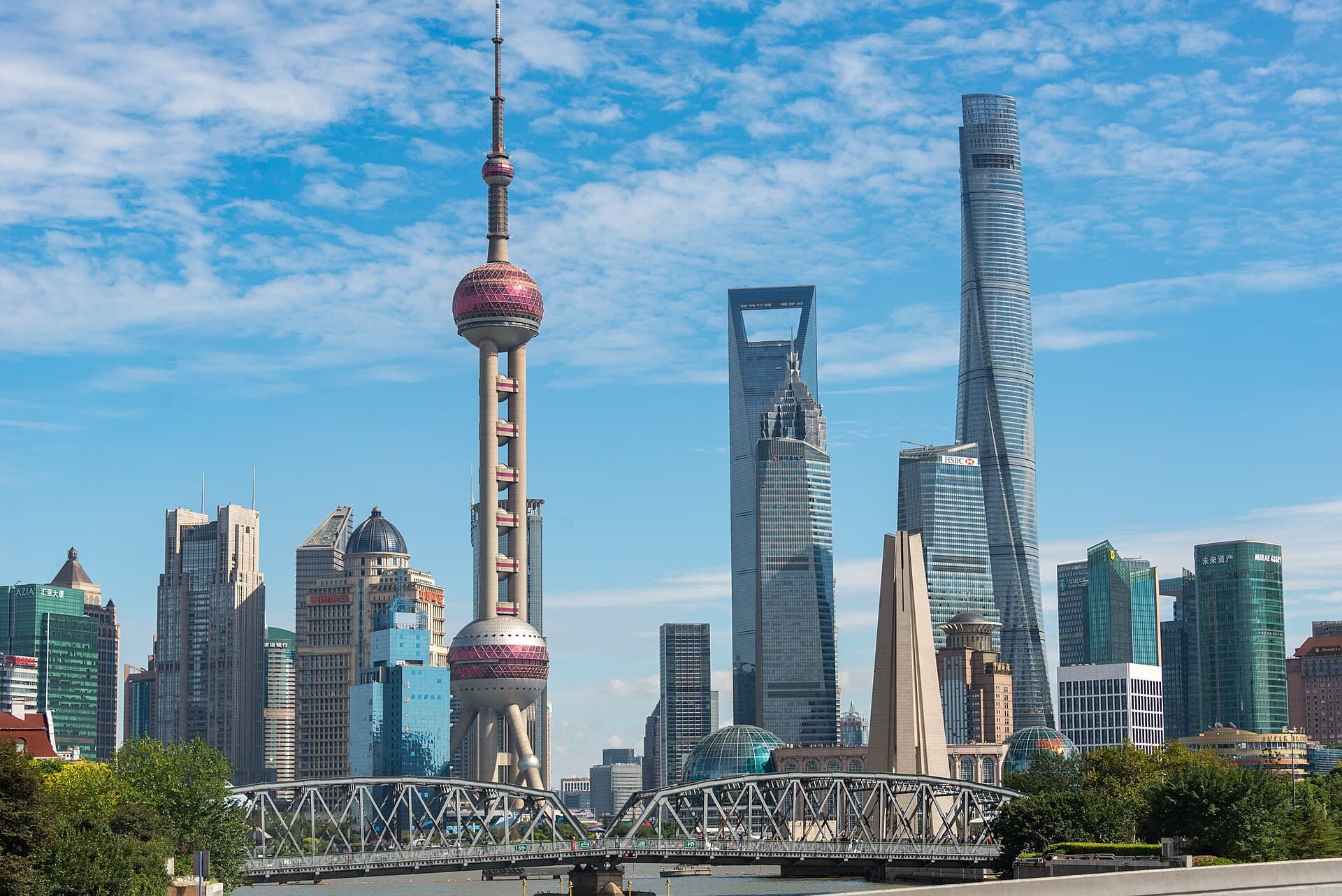
Begin your exploration at The Bund, Shanghai's iconic waterfront promenade. Here, 52 historical buildings showcase a blend of Gothic, Baroque, Neoclassical, Romanesque, and Art Deco architecture, reflecting its past as an international financial hub. Across the Huangpu River, observe the futuristic skyline of Pudong, home to some of the world's tallest skyscrapers, including the Shanghai Tower, the Oriental Pearl Tower, and the Jin Mao Tower. Observation decks in these towers offer expansive city views.
Step back in time at Yu Garden, a classical Chinese garden dating back to the Ming Dynasty. This peaceful retreat features traditional pavilions, intricate rockeries, zigzag bridges, and serene ponds. Adjacent to the garden is the Yu Garden Bazaar, an active area with local restaurants, tea houses, and souvenir shops, where you can sample Shanghai's famous xiaolongbao (soup dumplings).
For a different historical perspective, wander through the Former French Concession. This district retains a distinct European character with its tree-lined streets, historic villas, and unique blend of Chinese and Western architecture. Explore the boutiques, cafes, and restaurants that now occupy these appealing buildings. Consider a visit to Fuxing Park within the concession to observe traditional Chinese tai chi or opera.
Shanghai experiences a humid subtropical climate with four distinct seasons. The most pleasant times to visit are during autumn (September to November) and spring (March to May). Autumn offers mild, sunny, and dry weather with fewer crowds, making it ideal for walking tours. Spring also brings pleasant temperatures and blooming gardens, though with slightly more rainfall. Summer (June to August) is hot and humid, with frequent rain showers and peak crowds. Winters (December to February) are cold and damp, with occasional flurries but rarely snow.
The official currency in Shanghai is the Chinese Yuan (CNY or RMB). While major international credit cards are accepted in larger establishments like hotels and high-end retail, digital payment platforms like Alipay and WeChat Pay dominate transactions for most purchases, including local street food and smaller shops. It's highly recommended to download and set up one of these apps before your trip, linking it to your foreign credit card. Cash is also accepted, but smaller denominations (10, 20, 50 Yuan) are advisable for local markets and taxis.
Most international visitors, including U.S. citizens, require a tourist visa (L Visa) to enter China, with some exceptions for transit passengers. Your passport should be valid for at least six months beyond your stay and have two blank pages. You'll also need a confirmed travel itinerary and hotel reservations. Remember to register your stay with your hotel or local police within 24 hours of arrival and always carry your passport and visa.
Shanghai presents the world's longest metro system, making it very easy to navigate the city. Taxis are also readily available, and ride-hailing apps like DiDi (China's Uber) can be used. When interacting with locals, politeness is highly valued. Avoid sensitive topics, do not point at people, and ask permission before taking photographs. When giving or receiving items, use both hands as a sign of respect. Tipping is not customary and can even be discouraged.
- What is the local currency and how should I pay for things?
- The official currency is the Chinese Yuan (CNY/RMB). While major credit cards are accepted in some places, digital payment apps like Alipay and WeChat Pay are dominant. It's recommended to link your foreign credit card to one of these apps. Carry smaller denominations of cash for local vendors.
- Do I need a visa to visit Shanghai?
- Most international visitors, including U.S. citizens, require a tourist visa (L Visa) to enter China. Exceptions apply for certain transit passengers. Ensure your passport is valid for at least six months beyond your stay and has two blank pages.
- What is the best way to get around Shanghai?
- Shanghai has the world's longest and most efficient metro system, making it very easy to get around. Taxis and ride-hailing apps like DiDi are also widely available and convenient.
- What are some important etiquette tips to know?
- Politeness is highly valued. Avoid sensitive topics like politics, don't point at people, and ask permission before taking photos. Use both hands when giving or receiving items, and note that tipping is not customary.
- When is the best time of year to visit Shanghai?
- The best times to visit Shanghai are during autumn (September to November) and spring (March to May). These seasons offer mild temperatures, clear skies, and fewer crowds, ideal for sightseeing.
- What is Shanghai known for?
- Shanghai is known for its striking blend of historic Bund architecture and futuristic Pudong skyline, its lively food scene (especially *xiaolongbao*), extensive metro system, and its unique cultural fusion of Eastern and Western influences.