Cidade Antiga de Dukezong
A Roda de Oração Dourada no Parque Guishan é uma estrutura notável, mas seu verdadeiro poder vai além de seu tamanho.
História completa desbloqueada no tour
 瑞丽江的河水 / CC BY-SA 4.0, via Wikimedia Commons
Tour de áudio autoguiado por Shangri-La — rota GPS a pé, reprodução offline, narração envolvente em 32 idiomas.
“Onde o planalto elevado encontra o céu, uma terra de mito e realidade vívida.”
Não os postais. As histórias que nem os locais conhecem — sussurradas ao seu ouvido, exatamente onde aconteceram.
A Roda de Oração Dourada no Parque Guishan é uma estrutura notável, mas seu verdadeiro poder vai além de seu tamanho.
O chá de manteiga de iaque é uma parte fundamental da dieta local, continuamente reabastecido pelos anfitriões. No entanto, seu sabor distinto serve mais do que apenas uma preferência cultural.
Antes de sua designação oficial como Shangri-La, esta região carregava outro nome, um que alude a um costume local surpreendentemente amigável.
Descubra cada segredo de Shangri-La
Cada endereço, cada revelação na íntegra — no seu ouvido, exatamente onde aconteceu.
Você escolhe as suas paragens. Você caminha. A voz revela o que os outros perdem.


O seu tour áudio autoguiado de Shangri-La está pronto — escolha os seus pontos de interesse, selecione o seu idioma e comece no momento em que chegar.
ComprarA Lume inclui um guia de realidade aumentada. Levante o telemóvel: a câmara mostra a rua à sua frente, com uma seta luminosa sobreposta à imagem real que aponta sempre para a sua próxima paragem — sem mapa para decifrar, sem voltas erradas. Como tudo na Lume, funciona totalmente offline.
Shangri-La, uma cidade na província de Yunnan, no noroeste da China, evoca visões de um paraíso etéreo. Situada a uma altitude média de aproximadamente 3.280 metros (10.761 pés), serve como capital e maior área urbana da Prefeitura Autônoma Tibetana de Diqing. Este destino elevado, conhecido em tibetano como Gyalthang, que significa "planícies reais", recebeu sua renomeação oficial para Shangri-La em 2001, inspirada na utopia fictícia de James Hilton no romance de 1933 Horizonte Perdido.
A cidade funciona como um ponto crucial ao longo da Antiga Rota do Chá e Cavalo, ligando Yunnan e o Tibete, e situa-se na convergência de Yunnan, Sichuan e Tibete. Shangri-La apresenta uma fusão única de grandiosidade natural e profundo patrimônio cultural, com seus picos cobertos de neve, vastos pastos, desfiladeiros profundos e lagos tranquilos. Oferece um encontro tangível com a cultura tibetana sem os rigorosos requisitos de viagem do Tibete real, tornando-a um "Pequeno Tibete" acessível para muitos viajantes.
A área agora reconhecida como Shangri-La era tradicionalmente conhecida como Gyalthang por seus habitantes tibetanos. Historicamente, era um condado chamado Zhongdian. A região tem sido há muito tempo um local significativo ao longo da Antiga Rota do Chá e Cavalo, uma rota comercial crucial que conecta Yunnan ao Tibete.
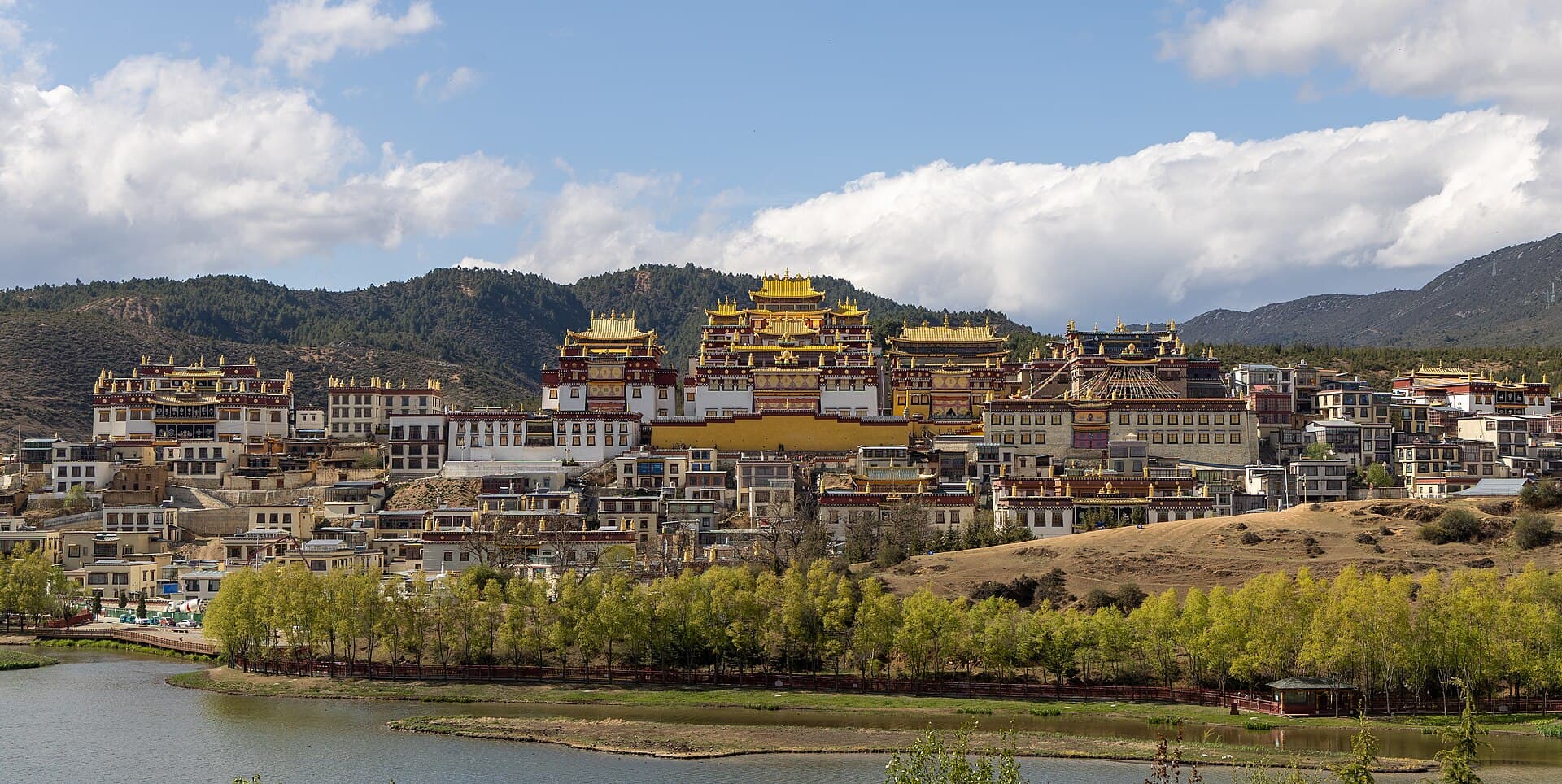
Durante o reinado do Imperador Kangxi na Dinastia Qing, o Mosteiro Ganden Sumtseling, também chamado Mosteiro Songzanlin, passou por uma expansão considerável. Essa transformação o estabeleceu como o maior mosteiro budista tibetano em Yunnan e um centro primário para a Escola Gelug do Budismo Tibetano.
A ideia de Shangri-La entrou na consciência ocidental com o romance de James Hilton de 1933, Horizonte Perdido, retratando um vale místico e harmonioso nas Montanhas Kunlun, onde os habitantes desfrutavam de vidas excepcionalmente longas. No início do século XXI, várias regiões, incluindo Zhongdian, competiram para ser reconhecidas como a "verdadeira" Shangri-La. Em 17 de dezembro de 2001, o Conselho de Estado chinês aprovou oficialmente a renomeação do Condado de Zhongdian para Condado de Shangri-La, uma decisão estratégica para impulsionar o turismo. Essa renomeação, juntamente com sua elevação a cidade de nível de condado em 2014, solidificou sua identidade como o paraíso terrestre.
Desde sua renomeação, Shangri-La experimentou rápido desenvolvimento, com nova infraestrutura, como melhorias em estradas e conexões aéreas. Embora o turismo tenha trazido prosperidade, esforços também foram feitos para salvaguardar seu patrimônio e arquitetura distintos, particularmente os edifícios tibetanos tradicionais de telhado plano e ornamentados. A atmosfera da cidade permanece distintamente tibetana, com bandeiras de oração tremulando e montanhas reverenciadas por nomes sagrados.
Comece sua exploração na Cidade Antiga de Dukezong, um distrito histórico de mil anos, amplamente reconstruído após um incêndio substancial em 2014. Suba ao Parque Guishan para observar a impressionante roda de oração dourada de 21 metros, uma representação da devoção local. O parque também oferece vistas panorâmicas de Dukezong e da cidade circundante.
Logo além da cidade, o Mosteiro Ganden Sumtseling se destaca como uma característica proeminente. Frequentemente referido como o "Pequeno Palácio de Potala", é o maior mosteiro budista tibetano na Província de Yunnan, estabelecido em 1679. Embora tenha se tornado um destino popular, sua arquitetura, uma mistura de estilos tibetano e chinês Han, e sua importância espiritual são inegáveis.
Para o esplendor natural, o Parque Nacional Pudacuo detém a distinção de ser o primeiro parque nacional da China a atender aos padrões da IUCN e faz parte do Patrimônio Mundial das Três Cadeias de Montanhas Paralelas de Yunnan. O parque abrange a Reserva Natural do Lago Bita e a Área Cênica de Duhu, apresentando paisagens de colinas ondulantes, vastos prados e lagos serenos. Os visitantes podem navegar pelo parque por meio de ônibus cênicos que param em vários mirantes, frequentemente encontrando iaques e cavalos pastando. Outro refúgio natural é a Reserva Natural Napahai, um lago sazonal nos arredores da cidade antiga, oferecendo oportunidades para caminhadas ou ciclismo. Para uma aventura mais desafiadora, considere uma caminhada até o Templo Baiji, um pequeno santuário budista acima da Cidade Antiga, que oferece vistas amplas após uma subida íngreme.
A época mais agradável para visitar Shangri-La se estende de maio a final de outubro. Durante este período, as temperaturas são geralmente amenas, permanecendo acima de zero, e o clima é propício para atividades ao ar livre. De maio a agosto é ideal para testemunhar flores silvestres desabrochando nos pastos, enquanto setembro e outubro apresentam impressionantes cores de outono. A estação chuvosa geralmente ocorre de junho a outubro, sendo julho e agosto os meses mais chuvosos, embora a precipitação seja geralmente moderada. Os invernos, de novembro a março, são frios e secos, com possibilidade de neve, mas também oferecem céus limpos e vistas de montanhas cobertas de neve.
Shangri-La está situada a uma elevação superior a 3.000 metros (9.843 pés), portanto, os visitantes devem estar cientes do mal de altitude. Sintomas como dores de cabeça e fadiga são comuns no primeiro dia, especialmente para aqueles que chegam diretamente de altitudes mais baixas. É aconselhável descansar ao chegar, abster-se de álcool, consumir bastante água (3-4 litros por dia), fazer refeições leves e adiar atividades extenuantes. Uma ascensão gradual, talvez passando alguns dias em cidades de menor altitude como Lijiang antes, pode diminuir significativamente a probabilidade de sintomas graves.
O transporte para Shangri-La é principalmente por via aérea ou trem de alta velocidade. O Aeroporto Diqing Shangri-La (DIG) oferece voos domésticos de grandes cidades chinesas. A Estação de Trem de Shangri-La conecta a cidade por trem de alta velocidade dentro da Província de Yunnan, incluindo rotas de Lijiang. Ônibus também fornecem um meio comum de chegar a Shangri-La de cidades próximas como Lijiang e Dali. Uma vez em Shangri-La, ônibus públicos, táxis e até bicicletas alugadas estão disponíveis para navegar pela área.
Shangri-La — coreano, chinês, hebraico e mais 29 idiomas, cada parada narrada por uma voz nativa. A maior variedade de idiomas entre os passeios de áudio autoguiados.
Disponível em: