Monastère de Tashilhunpo
La colossale statue du Bouddha Maitreya au sein du monastère de Tashilhunpo recèle un secret surprenant au-delà de sa façade dorée.
L'histoire complète se débloque dans le tour
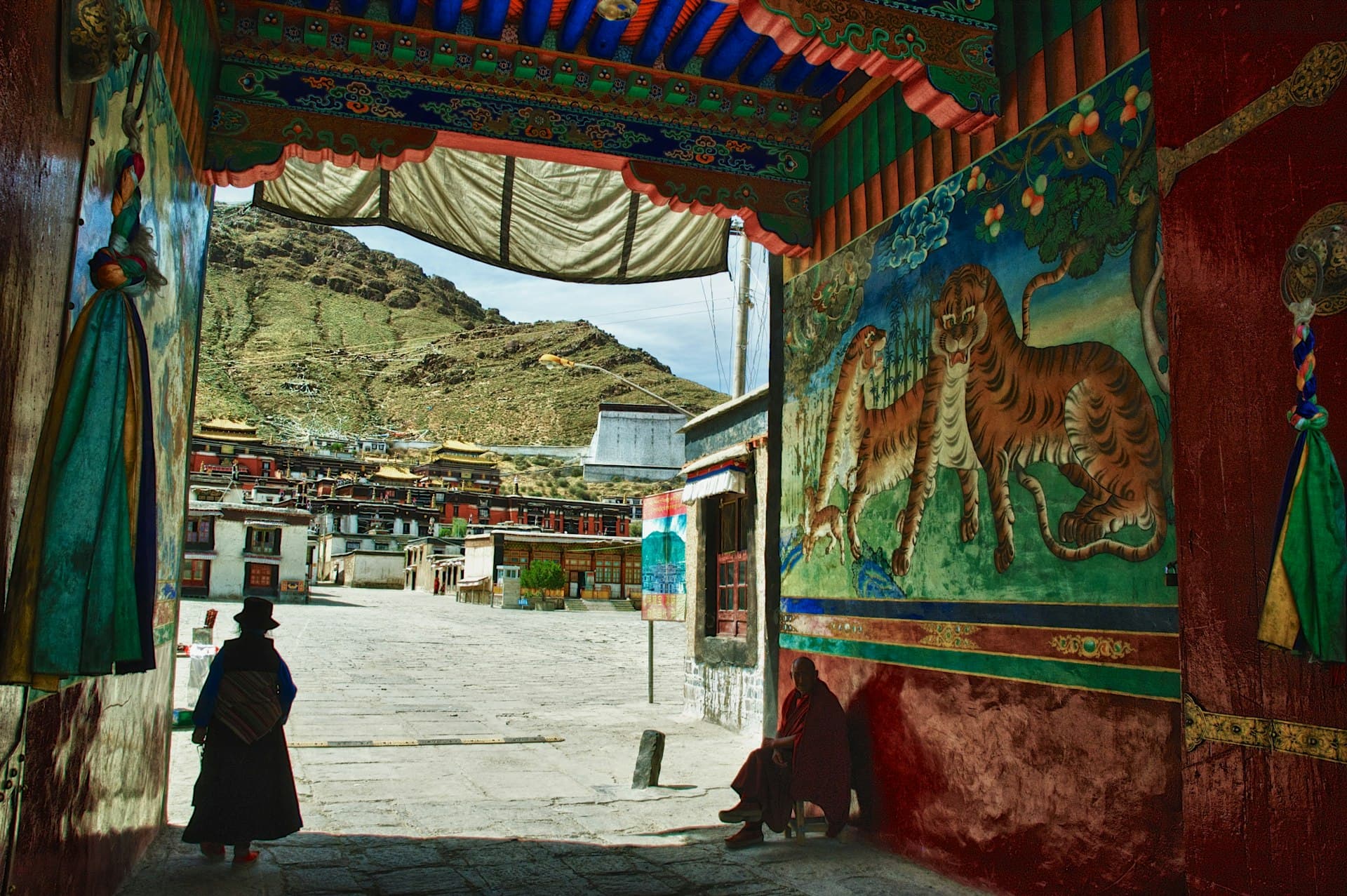 Photo: Anthony Maw / Unsplash
Visite audio autoguidée de Shigatsé — parcours GPS à pied, lecture hors ligne, narration en 32 langues.
“Là où le haut plateau rencontre les cieux, et les traditions ancestrales perdurent.”
Pas les cartes postales. Les histoires que même les habitants ignorent — soufflées à l'oreille, là où elles se sont passées.
La colossale statue du Bouddha Maitreya au sein du monastère de Tashilhunpo recèle un secret surprenant au-delà de sa façade dorée.
Shigatse possédait autrefois une forteresse si magnifique qu'elle a hérité d'un surnom spécial.
Ce monastère, à une courte distance de Shigatse, présente une fusion architecturale unique avec une histoire fascinante.
Découvrez tous les secrets de Shigatsé
Chaque adresse, chaque révélation en entier — dans ton oreille, là où elle s'est passée.
Tu choisis tes lieux. Tu marches. La voix te révèle ce que les autres ignorent.


Votre visite audioguidée de Shigatsé vous attend — choisissez vos lieux, votre langue, et lancez-vous dès votre arrivée.
AcheterLume intègre un guide en réalité augmentée. Levez votre téléphone : sa caméra montre la rue devant vous, avec une flèche lumineuse posée sur l'image réelle qui pointe toujours vers votre prochain arrêt — aucune carte à déchiffrer, aucun mauvais virage. Comme tout dans Lume, ça fonctionne entièrement hors-ligne.
Shigatse, la deuxième plus grande ville du Tibet, est un cœur culturel et spirituel vital dans la partie sud-ouest de la région autonome. Située à une altitude moyenne d'environ 3 840 mètres (12 600 pieds) au confluent des rivières Yarlung Tsangpo et Nyang, le nom de la ville se traduit par « la terre fertile » en tibétain, en référence à ses plaines agricoles. C'est une étape clé pour de nombreux voyageurs se rendant au Camp de Base Nord de l'Everest et un centre important du bouddhisme tibétain.
Au-delà de son rôle de porte d'entrée, Shigatse offre un mélange distinct de paysages himalayens spectaculaires, de traditions spirituelles profondément enracinées et d'une atmosphère plus locale par rapport à Lhassa. La ville est un centre de commerce dans l'ouest du Tibet, avec des marchés proposant de l'artisanat local et des artefacts religieux. Son emplacement stratégique et sa signification culturelle en font une destination essentielle pour ceux qui cherchent à explorer le plateau tibétain.
## Les débuts et le royaume de Tsang Shigatse possède une histoire de plus de 600 ans, ses origines remontant au VIIIe siècle, lorsque la région était connue sous le nom de Tsang. Le royaume de Tsang est devenu une puissance prééminente après l'effondrement de l'Empire tibétain au IXe siècle, avec Shigatse au cœur de son influence politique et militaire. Les premières colonies de Shigatse prospéraient grâce à l'agriculture et au commerce, soutenues par les terres fertiles de la rivière Yarlung, qui facilitaient la culture de l'orge et du blé.
## L'ascension en tant que centre spirituel et politique Au début du XIVe siècle, le centre politique s'est déplacé à Shigatse avec l'établissement de la dynastie Pazhu. La ville, alors connue sous le nom de Samdruptse, est devenue un pôle important pour le commerce, et le dzong (forteresse) de Samdruptse a servi de résidence au gouverneur d'U-Tsang. Shigatse a autrefois rivalisé avec Lhassa en termes de pouvoir spirituel et politique, agissant comme le cœur culturel du royaume d'U-Tsang.
## Le siège des Panchen Lamas Un moment charnière dans l'histoire de Shigatse fut la fondation du monastère de Tashilhunpo en 1447 par Gendun Drup, qui fut reconnu à titre posthume comme le premier Dalaï-Lama. Ce monastère est rapidement devenu le cœur spirituel de la ville et, au XVe siècle, a été établi comme le siège traditionnel du Panchen Lama, le deuxième plus haut chef spirituel du bouddhisme tibétain Gelugpa. Les Panchen Lamas résidaient traditionnellement à Tashilhunpo, et leur processus de sélection était historiquement géré par les lamas du monastère. Les toits dorés et les murs blancs du monastère symbolisent son atmosphère sacrée, abritant d'importants artefacts religieux, y compris une immense statue dorée du Bouddha Maitreya.
## L'ère moderne En 2014, Shigatse est devenue une ville de niveau préfecture, devenant ainsi la deuxième ville de ce type au Tibet après Lhassa. Aujourd'hui, elle reste un carrefour de transport et un centre culturel crucial, reliant Lhassa au camp de base de l'Everest, au mont Kailash et au Népal. Malgré sa modernisation, Shigatse continue de préserver son patrimoine culturel et ses traditions spirituelles, offrant aux visiteurs un aperçu profond de l'identité tibétaine.
Le monument le plus important de Shigatse est le monastère de Tashilhunpo, fondé en 1447 par le 1er Dalaï-Lama. C'est le siège traditionnel du Panchen Lama, le deuxième plus haut chef spirituel du bouddhisme tibétain, et un centre majeur du bouddhisme Gelug (Bonnets jaunes). Le complexe monastique comprend des salles de réunion, des chapelles et des stupas sacrés, son attraction la plus célèbre étant la statue dorée du Bouddha Maitreya de 26 mètres de haut.
Pour une expérience culturelle plus approfondie, envisagez une kora (circuit de pèlerinage) autour du monastère de Tashilhunpo. Cette circumambulation offre l'occasion d'observer la vie monastique quotidienne et de vous immerger dans l'atmosphère spirituelle. Au-delà du monastère, le Shigatse Dzong reconstruit, ou forteresse, offre une vue imprenable sur la ville et le paysage environnant, donnant un aperçu de l'importance administrative et militaire historique du Tibet.
Plus loin, le glacier de Karola est facilement accessible depuis le bord de la route, offrant des vues impressionnantes et des opportunités de photos avec des drapeaux de prière colorés. Le monastère de Pelkor Chode à Gyantse, avec son stupa Kumbum unique, présente une expérience architecturale sacrée visuellement distincte. Pour ceux qui s'intéressent aux manuscrits et aux fresques anciennes, le monastère de Sakya, connu sous le nom de « Dunhuang du Tibet », est un site historique important. Shigatse sert également de porte d'entrée principale au côté nord du mont Everest, à environ 350 kilomètres, offrant de magnifiques vues depuis le col de Gawula et la possibilité de visiter le monastère de Rongbuk, le plus haut monastère du monde.
Shigatse connaît un climat semi-aride tempéré de haute altitude avec des saisons humides et sèches distinctes. La période la plus agréable pour visiter est le printemps (avril à juin) et l'automne (septembre à novembre), offrant des températures stables et un ciel clair idéal pour les visites touristiques et les randonnées, en particulier pour les vues sur le mont Everest. L'été (juillet à août) est la haute saison, avec des températures diurnes plus chaudes (environ 15 à 20 °C) et des paysages plus verts, bien qu'il y ait des averses courtes occasionnelles, principalement la nuit. L'hiver (décembre à février) est plus froid, avec des températures allant de -10 °C à 5 °C, mais offre un temps clair et sec et moins de foules, ce qui en fait une excellente période pour la solitude et des vues dégagées sur l'Everest.
Pour visiter Shigatse, les voyageurs étrangers ont besoin d'un visa chinois valide, d'un permis de voyage pour le Tibet et d'un permis de voyage pour étrangers pour certaines zones comme le mont Everest. Il est conseillé d'organiser ces permis par l'intermédiaire d'un voyagiste. Shigatse se situe à une altitude d'environ 3 840 mètres (12 600 pieds), l'acclimatation est donc cruciale. Passer quelques jours à Lhassa (3 650 m) au préalable peut aider à atténuer le mal d'altitude. Évitez les activités intenses, restez hydraté et ne prenez pas de douche le premier jour d'arrivée.
Pour se rendre à Shigatse depuis Lhassa, on utilise généralement une voiture privée, offrant des arrêts pittoresques comme le lac Yamdrok et le glacier de Karola, prenant 5 à 6 heures. Des trains sont également disponibles, prenant environ 2 heures et 20 minutes, mais ils manquent l'itinéraire terrestre panoramique. À Shigatse, des taxis sont disponibles, les tarifs étant généralement négociés plutôt que mesurés. Des bus publics desservent également la ville, bien qu'il soit généralement conseillé aux touristes étrangers de voyager avec leur guide. L'accès à Internet est disponible dans la plupart des hôtels, mais la couverture peut être inégale dans les zones reculées, et de nombreuses applications occidentales sont bloquées. Une carte SIM chinoise locale, de préférence China Mobile ou China Unicom, offre la meilleure connectivité. Respectez les coutumes locales en marchant dans le sens des aiguilles d'une montre autour des sites sacrés et en gardant la voix basse dans les monastères.
Shigatsé en coréen, en chinois ou en hébreu — et dans 29 autres langues, chaque étape narrée par une voix native. La plus large gamme de langues de tous les audioguides autoguidés.
Disponible en :