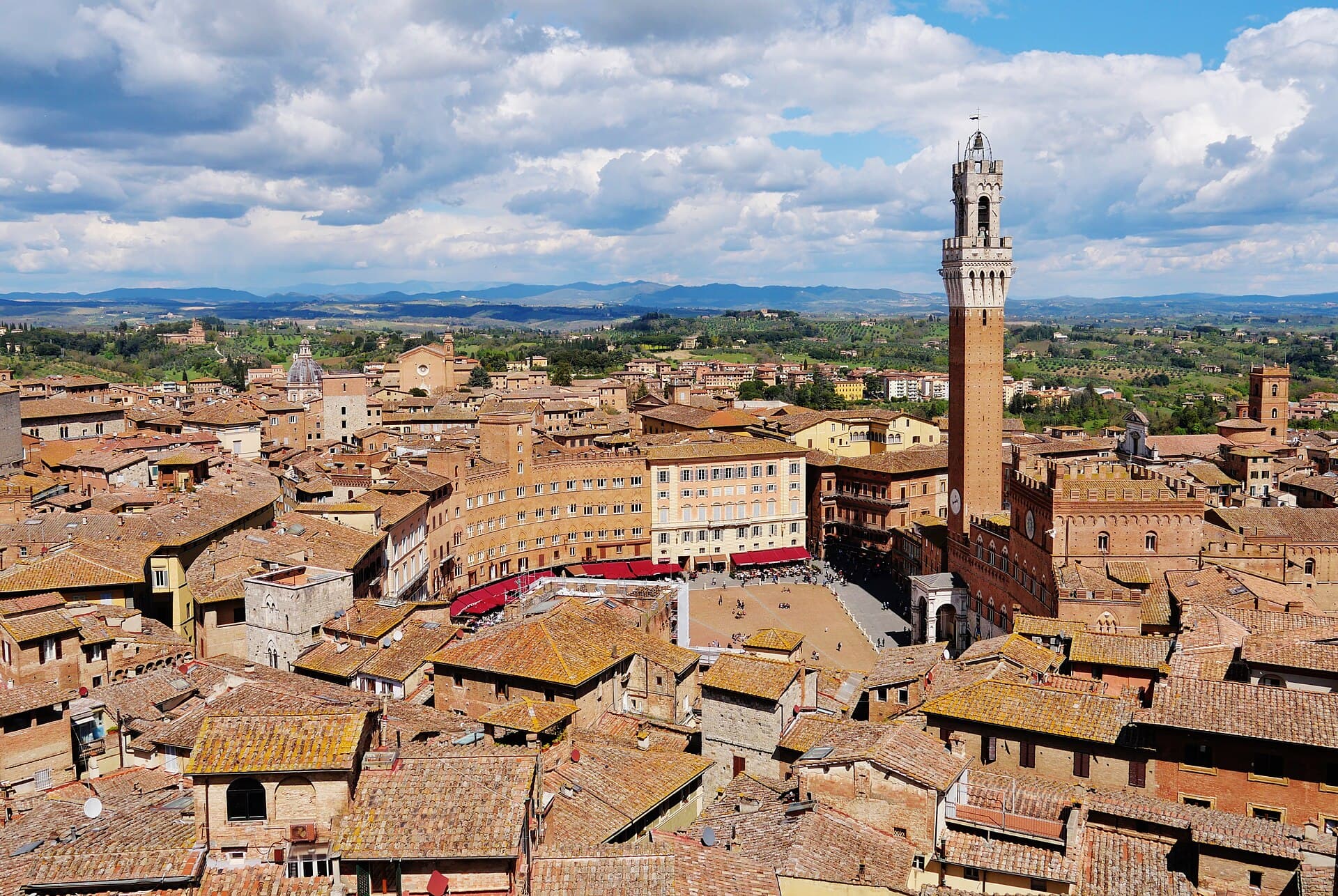
Piazza del Campo
A icônica Piazza del Campo, em forma de concha, esconde uma escolha de design que diz muito sobre a governança medieval de Siena.
História completa desbloqueada no tour
 Zairon / CC BY 4.0, via Wikimedia Commons
Tour de áudio autoguiado por Siena — rota GPS a pé, reprodução offline, narração envolvente em 32 idiomas.
“Onde pedras antigas contam histórias de orgulho cívico e comunidade duradoura.”
Não os postais. As histórias que nem os locais conhecem — sussurradas ao seu ouvido, exatamente onde aconteceram.
A icônica Piazza del Campo, em forma de concha, esconde uma escolha de design que diz muito sobre a governança medieval de Siena.
Examine o intrincado piso de mármore do Duomo de Siena e você descobrirá seu propósito original e mais grandioso.
Além das bandeiras coloridas e das rivalidades acirradas do Palio, as 17 contrade de Siena guardam uma tradição surpreendente sobre seus membros.
Descubra cada segredo de Siena
Cada endereço, cada revelação na íntegra — no seu ouvido, exatamente onde aconteceu.
Você escolhe as suas paragens. Você caminha. A voz revela o que os outros perdem.


A Lume inclui um guia de realidade aumentada. Levante o telemóvel: a câmara mostra a rua à sua frente, com uma seta luminosa sobreposta à imagem real que aponta sempre para a sua próxima paragem — sem mapa para decifrar, sem voltas erradas. Como tudo na Lume, funciona totalmente offline.
Siena, uma cidade no coração da Toscana, convida você a uma jornada por um passado medieval notavelmente preservado. Seu centro histórico, Patrimônio Mundial da UNESCO, incentiva a exploração por ruas estreitas e sinuosas que se abrem para grandiosas praças públicas. A arquitetura gótica distinta da cidade, desde a icônica Piazza del Campo até a imponente Catedral de Siena, exibe séculos de orgulho artístico e cívico.
Além de suas maravilhas arquitetônicas, Siena pulsa com uma cultura local vibrante, profundamente enraizada em suas 17 contrade, ou distritos da cidade. Esses bairros são o coração da vida sienesa, promovendo um forte senso de comunidade e rivalidade que culmina na mundialmente famosa corrida de cavalos Palio. Siena oferece um autêntico sabor da herança italiana, misturando história viva com uma atmosfera contemporânea vibrante.
Frequentemente considerada rival de Florença em termos de arte e beleza, Siena oferece uma escala mais íntima e gerenciável para os visitantes. Seu centro histórico, amigável para pedestres, permite passeios tranquilos, revelando pátios decorados com flores, vistas panorâmicas e um espírito local contagiante.
## Das Raízes Etruscas à Potência Medieval As origens de Siena remontam à era etrusca, por volta do século VII a.C., quando uma tribo chamada Saina se estabeleceu em três colinas estratégicas. Os etruscos escolheram este local por suas defesas naturais, água abundante e terra fértil, estabelecendo o assentamento de Saena Etruriae. Com a expansão do Império Romano, Siena tornou-se a cidade romana de Saena Iulia no século I a.C. No entanto, permaneceu relativamente marginal em comparação com outras cidades da Toscana, como Florença e Pisa, durante este período.
Após a queda do Império Romano do Ocidente, Siena experimentou um período de declínio antes de um renascimento gradual no início da Idade Média, em grande parte devido à sua posição estratégica ao longo das rotas comerciais. Por volta do século X, Siena começou a se desenvolver como uma comuna livre, ganhando independência dos senhores feudais. Os séculos XII e XIII marcaram a era de ouro de Siena, quando se transformou em uma poderosa república governada por uma oligarquia de nobres e ricos mercadores. A cidade prosperou economicamente através do comércio de lã e de um robusto sistema bancário, tornando-se até mesmo sede do banco mais antigo do mundo em operação contínua, o Monte dei Paschi, fundado em 1472. Essa força financeira impulsionou a construção de edifícios grandiosos e comissões artísticas, permitindo que Siena florescesse culturalmente.
Durante este período, a rivalidade de Siena com Florença se intensificou, levando a conflitos como a Batalha de Montaperti em 1260, onde Siena alcançou uma vitória significativa. Essa competição impulsionou o crescimento cultural, com Siena se esforçando para superar Florença em arte e arquitetura. No entanto, uma praga devastadora e a eventual conquista pelos Medici de Florença no século XVI levaram a um período de declínio e dominação florentina, marcando o fim da República de Siena. A subsequente irrelevância política e econômica de Siena, no entanto, preservou inadvertidamente sua identidade da era gótica, deixando-nos com a cidade medieval notavelmente intacta que vemos hoje. Em 1859, Siena foi a primeira cidade da Toscana a votar pela anexação ao Reino da Itália. Em 1966, tornou-se a primeira cidade europeia a proibir carros em sua praça principal.
## A Lenda da Fundação de Siena De acordo com a lenda local, Siena foi fundada por Senius e Aschius, os filhos gêmeos de Remo, que era irmão do fundador de Roma, Rômulo. Após o assassinato de seu pai por Rômulo, os irmãos fugiram de Roma, trazendo consigo uma estátua da loba amamentando os bebês, um símbolo que Siena adotou. Eles foram guiados por dois cavalos, um preto e um branco, que dizem ser a origem das cores preta e branca de Siena. Ao contrário de Rômulo e Remo, Senius e Aschius não brigaram, e construíram um santuário para a loba, oferecendo sacrifícios a Diana e Apolo.
O centro histórico de Siena é um tesouro de maravilhas medievais, melhor explorado a pé. O coração da cidade é a Piazza del Campo, um Patrimônio Mundial da UNESCO conhecido por sua forma única de concha e design de nove seções. Esta grandiosa praça pública é emoldurada por arquitetura medieval, incluindo o Palazzo Pubblico e a Torre del Mangia. O Palazzo Pubblico, ainda servindo como prefeitura, abriga o Museo Civico, onde você pode admirar afrescos como "Alegoria do Bom e Mau Governo" de Ambrogio Lorenzetti. Para vistas panorâmicas da cidade, considere subir a Torre del Mangia.
A uma curta caminhada da Piazza del Campo, encontra-se a magnífica Catedral de Siena (Duomo di Siena), uma obra-prima da arquitetura românica e gótica. Sua fachada apresenta intrincados mármores branco, verde e vermelho, enquanto o interior encanta com pilares de mármore preto e branco, afrescos e uma cúpula estrelada. Um verdadeiro destaque é o piso de mármore elaboradamente incrustado, frequentemente descoberto por períodos limitados a cada ano. Dentro do complexo do Duomo, explore a Biblioteca Piccolomini com seus afrescos vibrantes, o Museo dell'Opera del Duomo, que exibe obras de arte originais da catedral, e a Cripta e Batistério de San Giovanni.
Passeie pelas 17 contrade (distritos) de Siena para descobrir seus emblemas únicos, fontes e igrejas, experimentando o profundo senso de comunidade que define a cidade. Para os entusiastas da arte, a Pinacoteca Nazionale di Siena abriga uma excelente coleção de obras-primas sienesas.
Siena é um destino para o ano todo, mas a primavera (março a maio) e o outono (setembro a novembro) oferecem o clima mais agradável para explorar. A primavera traz temperaturas amenas e flores silvestres desabrochando, ideal para passeios a pé e para desfrutar da cidade sem o calor intenso do verão. O outono oferece temperaturas mais frescas, folhagem de outono e a temporada de colheita de uvas, perfeita para experimentar a gastronomia e os vinhos de Siena. Embora o verão (junho a agosto) seja quente, é também quando acontece a famosa corrida de cavalos Palio di Siena (2 de julho e 16 de agosto), atraindo grandes multidões e criando uma atmosfera elétrica. O inverno (dezembro a fevereiro) é mais frio, mas oferece menos multidões e tarifas de acomodação mais baixas, com um ambiente mais tranquilo.
O centro histórico de Siena é em grande parte para pedestres, tornando a caminhada a melhor maneira de se locomover e absorver seu caráter medieval. A cidade opera dentro de uma Zona de Tráfego Limitado (ZTL), o que significa que a maioria dos veículos é restrita no centro histórico. Se chegar de carro, planeje estacionar fora das muralhas da cidade em estacionamentos designados, como Parcheggio Stazione ou Parcheggio Il Duomo, e depois caminhe ou pegue um ônibus local para o centro. De Florença, trens e ônibus diretos estão disponíveis, com ônibus frequentemente chegando mais perto do centro histórico. A estação de trem de Siena fica a cerca de 2 km do centro da cidade, com táxis e ônibus disponíveis para o transporte.
Considere comprar o OPA SI Pass para acesso conveniente e sem fila ao Complexo da Catedral de Siena, incluindo o Duomo, a Biblioteca Piccolomini, o Museo dell'Opera, a Cripta, o Batistério e o ponto de vista panorâmico Facciatone. Embora o inglês seja falado em muitas áreas turísticas, conhecer algumas frases básicas em italiano pode enriquecer sua experiência. Siena é considerada uma cidade segura, mas como em qualquer destino turístico popular, esteja atento a batedores de carteira.
Siena — coreano, chinês, hebraico e mais 29 idiomas, cada parada narrada por uma voz nativa. A maior variedade de idiomas entre os passeios de áudio autoguiados.
Disponível em: