Lietuvininkų Street
As you stroll along Šilutė's main street, cast your gaze downward; you might just catch a glimpse of a vanished era.
Full story unlocks in the tour
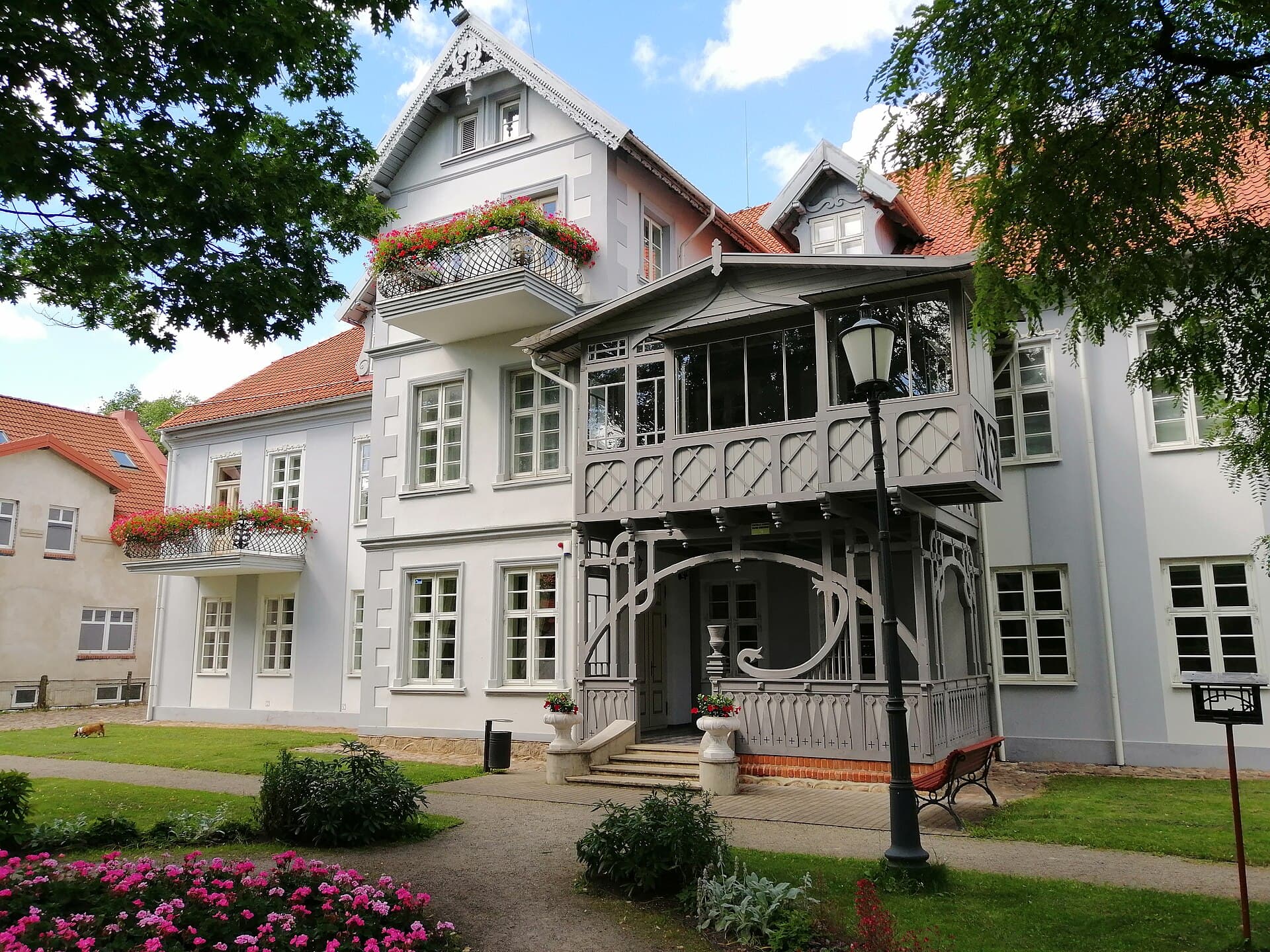 Petriukas / CC BY-SA 4.0, via Wikimedia Commons
Self-guided audio walking tour of Šilutė — GPS route, offline playback, story-driven narration in 32 languages.
“Where the Nemunas Delta murmurs of water, storks, and a past that lingers.”
Not the postcards. The stories even locals don't know — whispered in your ear, right where they happened.
As you stroll along Šilutė's main street, cast your gaze downward; you might just catch a glimpse of a vanished era.
Beyond the rail lines, a cemetery unfolds a silent, poignant narrative of a community that faded.
The town's prominent Lutheran church contains a surprising collection of historical figures within its walls.
Discover every secret of Šilutė
Every address, every reveal in full — in your ear, right where it happened.
You pick your stops. You walk. The voice reveals what the others miss.


Your self-guided audio tour of Šilutė is ready — pick your landmarks, choose your language, and start the moment you arrive.
BuyLume has a built-in augmented-reality guide. Hold your phone up and its camera shows the street ahead of you, with a glowing arrow laid over the real view that always points to your next stop — no map to puzzle over, no wrong turns. Like everything in Lume, it works fully offline.
Šilutė, a town in western Lithuania, offers a distinct combination of Prussian heritage and the calm beauty of the Nemunas Delta. Known as the unofficial capital of Lithuania Minor, it rests near the Curonian Lagoon and the border with the Kaliningrad Oblast. The town's character is defined by its walkable streets, traditional wooden houses, and a gentle pace that encourages unhurried exploration.
Šilutė serves as a peaceful base for discovering the surrounding natural landscapes, particularly the Nemunas Delta Regional Park, a sanctuary for birdwatchers and nature lovers. While it may not be a bustling tourist center, its appeal lies in its authenticity, offering a window into a region shaped by both Lithuanian and German influences.
## From Inn to Town Šilutė's origins trace back to a simple inn, or 'karčema,' established in the 13th century. This inn, known as Šilokarčema (German: Heydekrug), served travelers on the important route between Klaipėda and Tilsit. Over time, four villages—Šilokarčema, Žibai, Verdainė, and Cintijoniškės—grew around this trading post, eventually uniting in 1910 to form the single entity of Šilutė.
## A Shifting Identity Šilutė's history is deeply intertwined with the region of Lithuania Minor, an ethnographic area with strong German and Protestant influences. The town largely retained its East Prussian architecture, a stark contrast to many other areas that experienced widespread demolitions. In 1923, Šilutė gained city rights and became the interwar capital of Šilutė County, playing a significant role in the unification of Lithuania Minor with Lithuania Major.
## War, Occupation, and Resilience The 20th century brought considerable upheaval. The town was reclaimed by Nazi Germany in 1939. During World War II, the Stalag Luft VI prisoner-of-war camp was located near Heydekrug, the northernmost POW camp within the German Reich. Following the war, Soviet forces occupied the city, leading to the dismantling of many Lutheran communities and the use of the Macikai camp for German prisoners and later for the imprisonment and killing of Lithuanians. Despite these adversities, Šilutė has preserved its particular character, with many historic buildings still standing, including an old post office (1905), a fire station (1911), and the Hugo Scheu Manor (1818).
Begin your exploration in the City Center and Old Town, where you will encounter charming wooden houses and local shops. Do not overlook the Šilutė Regional Museum, housed in the restored Hugo Scheu Manor, offering insights into the region's Prussian and Lithuanian heritage. The Old Market Square near the Šyša River is a historical focal point.
A particular feature of Šilutė is its 'Secrets' project along Lietuvininkų Street. Look down to discover 20 miniature dioramas set into the sidewalk, depicting scenes of daily life from the late 19th and early 20th centuries. The Martin Luther Evangelical Lutheran Church, completed in 1926, is notable for its interior murals. For a somber reflection, visit the Lutheran Cemetery beyond the railroad, a poignant echo of the region's past.
Beyond the town, the Nemunas Delta Regional Park is a primary destination for nature lovers, especially birdwatchers. Consider a journey to Rusnė Island, Lithuania's only inhabited island, known for its traditional wooden houses and fishing culture. Ventė Cape, extending into the Curonian Lagoon, is another excellent bird-watching location. For a truly singular experience, explore Mingė Village, where the main thoroughfare is a river.
The ideal time to visit Šilutė is between late spring and early autumn, from May to September. During these months, expect mild to warm temperatures, typically ranging from 15-22°C (59-72°F), perfect for walking, cycling, and boat trips. Summer days are extended, offering up to 17 hours of daylight for discovery. While August is the wettest month, rainfall tends to be moderate. Winters are cold, often dropping below freezing, making outdoor activities more challenging.
The official currency in Šilutė, and throughout Lithuania, is the Euro (EUR). While credit and debit cards are widely accepted, carrying some cash for smaller purchases is advisable. Šilutė is a compact town, easily explored on foot. For longer distances or trips to nearby villages, local buses are available, with tickets typically costing €1-€2. Taxis are less common and more expensive. You can reach Šilutė by bus from Vilnius (approximately 5 hours) or Kaunas (around 3 hours). Direct train services are available from Klaipėda, taking about an hour. Most attractions, like museums, have modest entry fees, usually €1-€3.
Šilutė in Korean, in Chinese or in Hebrew — and 29 more languages, every stop narrated by a native voice. The widest language range of any self-guided audio tour.
Available in: