Gevangenis van het Fort van Sinop
Dit formidabele fort, ooit een strenge gevangenis, herbergt een geheim dat verder reikt dan zijn dikke muren en door de zee geteisterde steen.
Volledig verhaal ontgrendeld in de tour
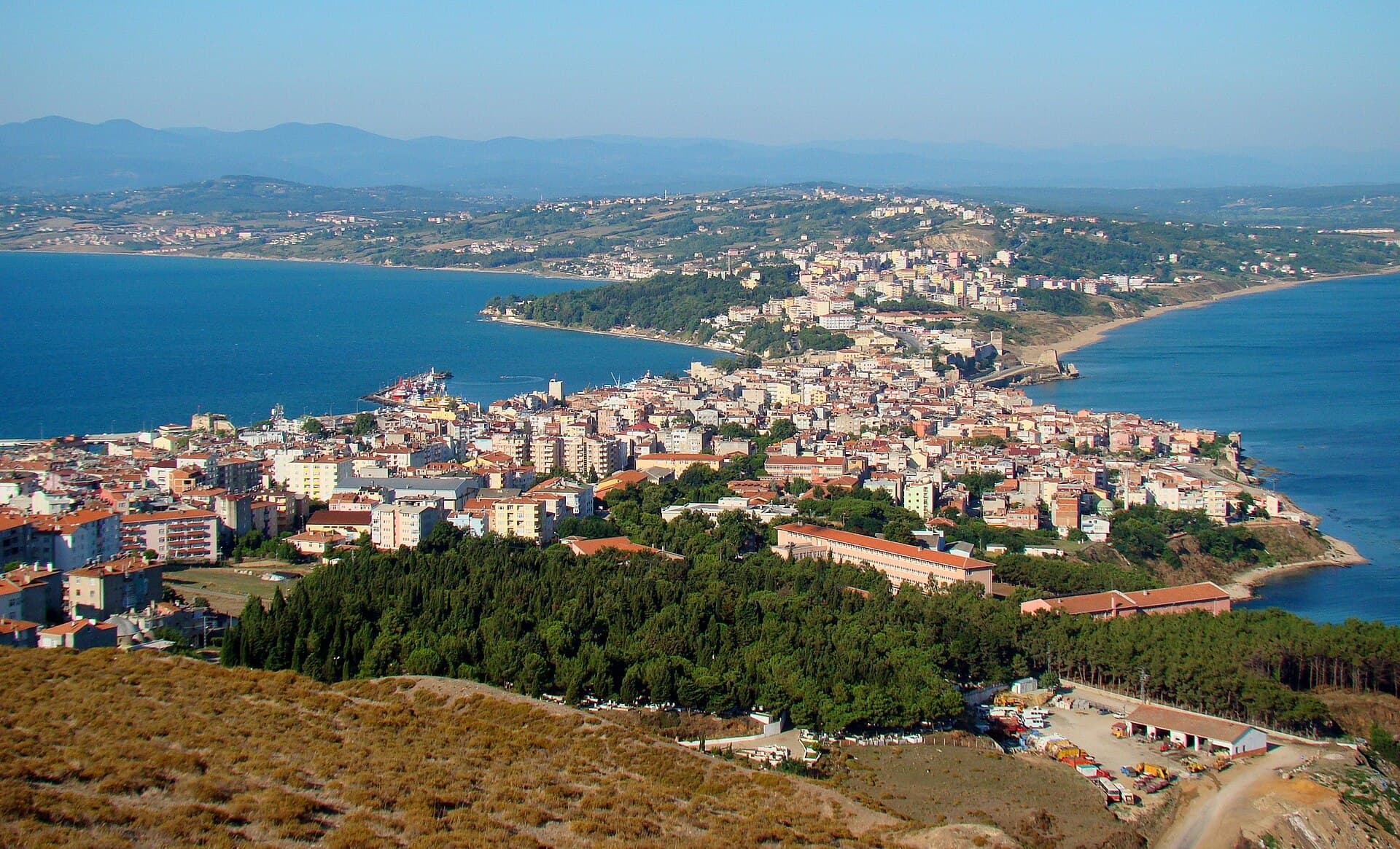 Bjørn Christian Tørrissen / CC BY-SA 3.0, via Wikimedia Commons
Zelfgeleide audiowandeling door Sinop — GPS-route, offline afspelen, meeslepende vertelling in 32 talen.
“Waar oude filosofie de adem van de Zwarte Zee ontmoet.”
Niet de ansichtkaarten. De verhalen die zelfs locals niet kennen — gefluisterd in je oor, precies waar ze gebeurden.
Dit formidabele fort, ooit een strenge gevangenis, herbergt een geheim dat verder reikt dan zijn dikke muren en door de zee geteisterde steen.
In het hart van Sinop staat een standbeeld van zijn meest gevierde zoon, de cynische filosoof Diogenes, met een lantaarn in de hand. Maar wat is de betekenis van de lantaarn?
Het enige fjord van Turkije, Hamsilos Baai, biedt serene natuurlijke schoonheid. Toch fluistert een lokale legende over zijn krachtigere, oude bewoners.
Ontdek elk geheim van Sinop
Elk adres, elke onthulling volledig — in je oor, precies waar het gebeurde.
Jij kiest je stops. Jij wandelt. De stem onthult wat de anderen missen.


Je zelfgeleide audiotour van Sinop is klaar — kies je bezienswaardigheden, kies je taal en start zodra je aankomt.
KopenLume heeft een ingebouwde augmented-reality-gids. Houd je telefoon omhoog: de camera toont de straat voor je, met een oplichtende pijl over het echte beeld die altijd naar je volgende stop wijst — geen kaart om uit te puzzelen, geen verkeerde afslagen. Zoals alles in Lume werkt het volledig offline.
Sinop, een stad aan de noordelijke Zwarte Zeekust van Turkije, presenteert een unieke mix van oude verhalen, natuurlijke pracht en een opmerkelijk rustige sfeer. Het rust op een landengte die het Boztepe-schiereiland met het vasteland verbindt, waardoor twee natuurlijke havens ontstaan. Deze strategische locatie heeft de identiteit van de stad gevormd als een belangrijke haven door de millennia heen, die zelfs eeuwenlang concurreerde met Samsun. Vaak aangeduid als de "stad van vrede", staat Sinop bekend om zijn ongedwongen tempo en gastvrije inwoners.
De aantrekkingskracht van de stad ligt in haar vermogen om bezoekers door de tijd te transporteren, van de overblijfselen van een machtige citadel tot de echo's van filosofisch denken. Sinop markeert het noordelijkste punt van Turkije, en de landschappen kenmerken een opvallende samensmelting van weelderige bossen en het diepe azuur van de Zwarte Zee. Of u nu aangetrokken wordt tot historische bezienswaardigheden, rustige stranden of de onderscheidende lokale keuken, Sinop biedt een unieke Turkse ervaring, vaak beschreven als een van de meest ondergewaardeerde steden van het land.
Het klimaat van Sinop combineert oostelijke en westelijke weerpatronen van de Zwarte Zee, over het algemeen warm en rustig, hoewel regen kan voorkomen, zelfs in warmere seizoenen. Het stadscentrum is bijzonder geschikt om te wandelen, met veel belangrijke attracties binnen handbereik.
De oorsprong van Sinop is ondergedompeld in oude verhalen, waarbij sommige legendes de stichting toeschrijven aan de Amazones, die de stad naar hun koningin Sinova noemden. Een andere theorie suggereert dat de naam van de stad is afgeleid van de nimf Sinope, dochter van de riviergod Asopus, aan wie Zeus eeuwige maagdelijkheid schonk op dit zeer voorgebergte. Archeologisch bewijs geeft echter aan dat Griekse kolonisten uit Milete hier in de 7e eeuw voor Christus een nederzetting stichtten, waardoor het een van de vroegste en belangrijkste kolonies aan de zuidelijke Zwarte Zeekust werd.
De geografische ligging van Sinop, met zijn natuurlijke havens en defensieve schiereiland, maakte het tot een vitaal handelscentrum en een strategische locatie voor verschillende rijken. Het beheerste maritieme handelsroutes vanuit Opper-Mesopotamië en stichtte zelfs zijn eigen kolonies, waaronder Trabzon. De stad werd kort bezet door de satraap Datames rond 375 voor Christus en viel later in 183 voor Christus aan Pharnaces I, en werd de hoofdstad van het Pontische Koninkrijk. Het was ook de geboorteplaats van Mithridates VI Eupator, een prominente Pontische koning, en de gevierde cynische filosoof Diogenes.
De Romeinse generaal Lucullus veroverde Sinop in 70 voor Christus, en Julius Caesar stichtte een Romeinse kolonie, Colonia Julia Felix, in 47 voor Christus. Na de deling van het Romeinse Rijk bleef Sinop deel uitmaken van het Oost-Romeinse (Byzantijnse) Rijk. De Seltsjoekse Turken kregen in 1214 na Christus de controle over Sinop van de Comneni van Trebizonde, een periode waarin de stad aanzienlijke architectonische ontwikkeling kende, waaronder de bouw van een scheepswerf en de Alaaddin Moskee.
Een cruciaal moment in het recentere verleden van Sinop vond plaats op 30 november 1853, tijdens de Krimoorlog. De Keizerlijke Russische Marine viel de Ottomaanse vloot aan en vernietigde deze in de Slag bij Sinop, een gebeurtenis die de betrokkenheid van Groot-Brittannië en Frankrijk bij de oorlog tegen Rusland bespoedigde. Een klein monument bij de haven herdenkt de Ottomaanse zeelieden die omkwamen. Sinop werd uiteindelijk in 1458 opgenomen in het Ottomaanse Rijk.
In de 20e eeuw bleef Sinop zich ontwikkelen. Vanaf 1920 werd het voornamelijk bewoond door Grieken, die in 1923 vertrokken tijdens de Bevolkingsuitwisseling tussen Griekenland en Turkije. Tijdens de Koude Oorlog huisde Sinop een belangrijke Amerikaanse militaire basis en radarnetwerk, dat in 1992 werd gesloten. Tegenwoordig staat Sinop bekend om zijn vredige sfeer en inspanningen om zijn diepgaande erfgoed te beschermen, waarbij de historische gevangenis is omgevormd tot een museum en de natuurlijke wonderen worden gepromoot.
Begin uw verkenning bij het Kasteel van Sinop, met muren die dateren uit de 8e eeuw voor Christus. U kunt langs de oude wallen wandelen, die 25 meter hoog zijn, en genieten van het uitzicht op de binnenhaven. Binnen de kasteelmuren ligt de Historische Gevangenis van Sinop, vaak de "Alcatraz van Anatolië" genoemd. Deze voormalige vesting, omgebouwd tot museum, biedt een inkijkje in het sombere verleden.
In de buurt van het stadscentrum bezoekt u het Sinop Museum, dat artefacten bewaart uit de Hettitische tot de Ottomaanse tijdperken, waaronder amforen die uit de Zwarte Zee zijn geborgen. Naast het museum vindt u de overblijfselen van een oude Tempel van Serapis. Mis de Standbeeld van Diogenes niet, een eerbetoon aan de meest gevierde filosoof van de stad, afgebeeld met zijn lantaarn.
Voor een uitstapje in de natuur reist u naar Hamsilos Natuurpark, het enige fjord van Turkije, met zwemstranden, beboste uitgestrektheid en diverse planten- en vogelsoorten. Vlakbij ligt İnceburun, het noordelijkste punt van Turkije, bekend om zijn vuurtoren en zonsondergangen. In het binnenland bieden de Erfelek Tatlıca Watervallen een reeks kletterende watervallen te midden van een koel bos, perfect voor natuurwandelingen. Voor een weids uitzicht over de stad beklimt u Şahin Hill.
Sinop heeft een warm en rustig klimaat, waardoor het het hele jaar door een aangename bestemming is, hoewel regen zelfs in de zomer kan voorkomen. De ideale tijd voor buitenactiviteiten zoals wandelen en kustverkenning is van mei tot september, tijdens de lente en zomer, wanneer het weer het meest aangenaam is. Vroege herfst (september tot oktober) biedt ook mild weer, minder drukte en kleurrijke herfstbladeren. Juli en augustus zijn de drukste maanden, met gemiddelde temperaturen rond de 30°C. Als u een winterbezoek plant, bereid u dan voor op koelere temperaturen en meer regen.
Overweeg uw reis af te stemmen op een van de festivals van Sinop, zoals het Erfelek Tatlıca Watervallen Festival in juli of het Happiness Festival in september.
Luchthaven Sinop (NOP) biedt directe vluchten vanuit Istanbul, met aansluitende vluchten vanuit andere steden. De luchthaven ligt op ongeveer 8 km van het stadscentrum, bereikbaar met een minibus of taxi. Voor reizen over de weg verbinden bussen Sinop met vele grote Turkse steden, waaronder directe diensten naar Ankara en frequente routes naar Samsun. Rijden vanuit Samsun duurt ongeveer 2,5 uur, en vanuit Kastamonu ongeveer 3 uur. Er is geen directe spoorverbinding met Sinop vanwege het kustlandschap, maar u kunt een trein nemen naar Samsun of Amasya en vervolgens overstappen op een bus.
Openbaar vervoer binnen Sinop maakt voornamelijk gebruik van minibussen, en het stadscentrum is gemakkelijk te voet te verkennen. Sinop is onderscheidend in Turkije omdat het geen verkeerslichten heeft, wat bijdraagt aan de rustige sfeer. De lokale valuta is de Turkse Lira (TRY). Hoewel de Turkse gastvrijheid zeer gewaardeerd wordt, is een simpele "Merhaba" (Hallo) een beleefde groet. Houd bij het verkennen rekening met het dragen van lichte, ademende stoffen in de zomer, maar neem altijd een licht jasje mee vanwege het onvoorspelbare weer aan de Zwarte Zee. Sinop staat bekend om zijn handgesneden modelboten (kotra) en Ayancık linnen, die voor onderscheidende souvenirs zorgen.
Sinop — Koreaans, Chinees, Hebreeuws en nog 29 talen, elke stop verteld door een moedertaalspreker. Het grootste taalaanbod van alle zelfgeleide audiotours.
Beschikbaar in: