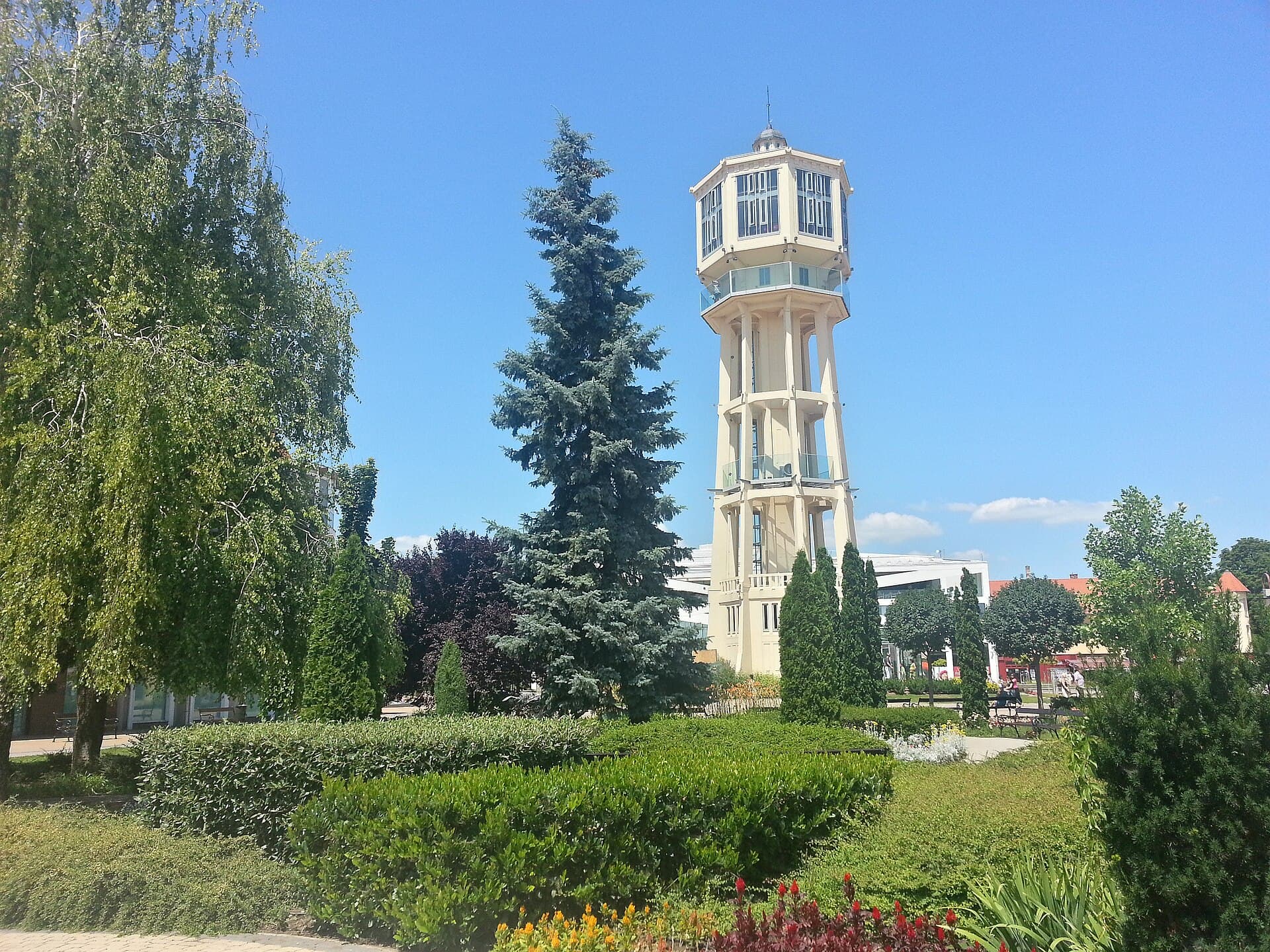
Wasserturm Siófok
Dieses Wahrzeichen im Stadtzentrum dient nicht nur der Aussicht.
Die ganze Geschichte wird in der Tour freigeschaltet
 Kaszás Tibor / CC BY-SA 3.0, via Wikimedia Commons
Selbstgeführte Audio-Walking-Tour durch Siófok — GPS-Route, Offline-Wiedergabe, erzählerische Narration in 32 Sprachen.
“Wo das Ungarische Meer auf lebhafte Abende und unerwartete Vergangenheiten trifft.”
Nicht die Postkarten. Die Geschichten, die selbst Einheimische nicht kennen – dir ins Ohr geflüstert, genau dort, wo sie geschahen.
Dieses Wahrzeichen im Stadtzentrum dient nicht nur der Aussicht.
Über eine Sammlung von Blüten hinaus birgt dieser duftende Park eine überraschende historische Verbindung zur Entwicklung der Stadt.
Der ruhige Sió-Kanal, der den Plattensee mit der Donau verbindet, birgt ein Geheimnis, das bis in die Römerzeit zurückreicht.
Entdecke jedes Geheimnis von Siófok
Jede Adresse, jede Enthüllung vollständig – in deinem Ohr, genau dort, wo es geschah.
Du wählst deine Stationen. Du gehst. Die Stimme enthüllt, was andere übersehen.

Deine selbstgeführte Audio-Tour durch Siófok ist bereit – wähle deine Sehenswürdigkeiten, deine Sprache und starte, sobald du ankommst.
KaufenLume enthält einen integrierten Augmented-Reality-Guide. Halten Sie Ihr Handy hoch: Die Kamera zeigt die Straße vor Ihnen, mit einem leuchtenden Pfeil über dem echten Bild, der immer auf Ihren nächsten Stopp zeigt — keine Karte zum Rätseln, keine falschen Abzweigungen. Wie alles bei Lume funktioniert es komplett offline.
Siófok, oft als "Hauptstadt des Plattensees" oder "Sommerhauptstadt Ungarns" bezeichnet, liegt am Südufer des größten Süßwassersees Mitteleuropas. Mit einer 17 Kilometer langen Küstenlinie verwandelt sich die Stadt in den wärmeren Monaten in ein geschäftiges Zentrum, das Besucher mit seinen Stränden, belebten Promenaden und vielfältigen Unterhaltungsmöglichkeiten anzieht.
Über seinen Ruf als Feierziel hinaus bietet Siófok eine Mischung aus natürlicher Pracht, historischer Faszination und kulturellen Begegnungen. Von den weiten Ausblicken von seiner ikonischen Wasserturm bis zu den ruhigen Wegen seiner Parks bietet die Stadt sowohl für diejenigen, die lebhafte Abende suchen, als auch für diejenigen, die eine entspanntere Auszeit wünschen.
Das Gebiet, das heute als Siófok bekannt ist, hat eine lange und vielschichtige Geschichte, mit Spuren menschlicher Besiedlung, die bis ins Römische Reich zurückreichen. Diese Ländereien gehörten zur römischen Provinz Pannonien, und eine Straße von Pécs nach Győr durchquerte einst diese Region. Historische Berichte deuten darauf hin, dass Kaiser Galerius im Jahr 292 n. Chr. den Bau eines Schleusentors zur Regulierung des Wasserstands des Plattensees, damals bekannt als Lacus Pelso, beaufsichtigte.
Die offizielle dokumentierte Geschichte von Siófok als Siedlung beginnt im Mittelalter. Die erste schriftliche Erwähnung unter dem Namen "Fok" findet sich in der Gründungsurkunde der Abtei von Tihany im Jahr 1055, die sich auf eine Wasserstraße und eine Furt bezieht. Der Name "Siófok", der den Namen des Sió-Kanals mit "fok" (was "Mündung" oder "Promontorium" bedeutet) kombiniert, tauchte 1790 offiziell in Dokumenten auf.
Die strategische Lage von Siófok machte es im Laufe der Geschichte zu einem wichtigen Punkt. Während der osmanischen Besatzung im 16. und 17. Jahrhundert wurden eine Festung und ein Kriegshafen errichtet, was es zu einem wichtigen Verteidigungsposten machte. Das 19. Jahrhundert markierte einen dramatischen Wandel, als die Siedlung begann, sich zu einer Kurstadt zu entwickeln. Der Bau einer Schleuse am Sió-Kanal im 19. Jahrhundert ermöglichte eine bessere Kontrolle des Wasserstands des Plattensees und half bei der Entwässerung umliegender Sümpfe.
Ein entscheidender Moment kam 1861 mit der Eröffnung der Südbahn, die Siófok mit Budapest verband und den Tourismus erheblich ankurbelte. Das erste "Badehaus" wurde 1864 eröffnet, gefolgt vom Gebäude "Ungarisches Meer" im Jahr 1878, was die Stellung von Siófok als Kurzentrum festigte. 1865 erhielt Siófok den Status einer Marktgemeinde und wurde 1968 offiziell eine Stadt, was seinen inoffiziellen Titel als "Hauptstadt des Balaton" zementierte.
Siófok bietet eine Vielzahl von Attraktionen, von denen viele sich um den Plattensee drehen. Der Wasserturm, ein 45 Meter hohes Bauwerk aus dem Jahr 1912, steht im Stadtzentrum und bietet von seiner drehbaren Aussichtsplattform einen weiten Blick über Siófok und den See. Der Rosengarten in der Nähe des Hafens ist ein angenehmer Park mit Tausenden von Rosenbüschen und einem musikalischen, beleuchteten Brunnen. Für Ruhesuchende bietet das Galerius Spa und Wellness Center Thermalbecken.
Die Petőfi-Promenade ist eine lebhafte Fußgängerzone mit Restaurants, Bars und Geschäften, die im Sommer Festivals und Konzerte veranstaltet. Der Sió-Kanal bietet einen malerischen Weg zum Spazierengehen, Radfahren oder Rudern und verbindet den Plattensee mit der Donau. Kunstliebhaber können den Millenniumspark erkunden, der mit Statuen und Denkmälern geschmückt ist, darunter eine Statue des Komponisten Imre Kálmán. Das Umgedrehte Haus bietet ein unverwechselbares architektonisches Erlebnis. Für aktive Besucher sind Nagystrand und Siófok Plázs beliebte Strände mit Wassersportmöglichkeiten, Spielplätzen und Sommerkonzerten.
Die ideale Zeit, um Siófok zu erleben, ist von Juni bis August, wenn die Temperaturen durchschnittlich 25-30°C betragen, perfekt für Strandaktivitäten und Outdoor-Veranstaltungen. Dies ist die geschäftigste Zeit, daher ist mit größeren Menschenmengen und erhöhten Preisen zu rechnen. Für einen ruhigeren Besuch mit angenehmem Wetter und weniger Touristen sollten Sie Ende Mai oder September in Betracht ziehen. Während dieser Übergangsjahreszeiten ist der See noch warm genug zum Schwimmen und viele Einrichtungen sind weiterhin geöffnet. Der Winter (November bis Februar) ist die ruhige Saison und bietet eine friedliche Atmosphäre mit niedrigeren Unterkunftskosten, obwohl die meisten Wasseraktivitäten nicht verfügbar sind.
Die offizielle Währung in Siófok und in ganz Ungarn ist der Ungarische Forint (HUF). Kreditkarten (Visa, Mastercard) werden in den meisten Hotels und Restaurants weitgehend akzeptiert. Obwohl viele Personen in Touristengebieten Englisch oder Deutsch sprechen, wird es geschätzt, wenn Sie einige grundlegende ungarische Sätze lernen.
Die Fortbewegung in Siófok ist bequem. Die Stadt verfügt über ein lokales Bussystem, dessen Tickets bei den Fahrern oder an Kiosken erhältlich sind, sowie ein lokales Zugsystem mit vier Haltestellen entlang der Bahnstrecke Budapest-Nagykanizsa. Fahrräder und Mopeds können ebenfalls gemietet werden und bieten eine angenehme Möglichkeit, die ausgewiesenen Radwege entlang des Sees zu erkunden. Taxis sind eine weitere Option, die in der Regel mit Festpreisen operieren. Autofahrer sollten Wertsachen am Strand nicht unbeaufsichtigt lassen.
Siófok — Koreanisch, Chinesisch, Hebräisch und 29 weitere Sprachen, jede Station von einer muttersprachlichen Stimme erzählt. Die größte Sprachauswahl aller selbstgeführten Audiotouren.
Verfügbar auf: