Mezquita y Hospital Ulu de Divriği
Las intrincadas tallas de piedra en los portales de la Mezquita y Hospital Ulu de Divriği son tan detalladas que han ganado un apodo peculiar.
La historia completa se desbloquea en el tour
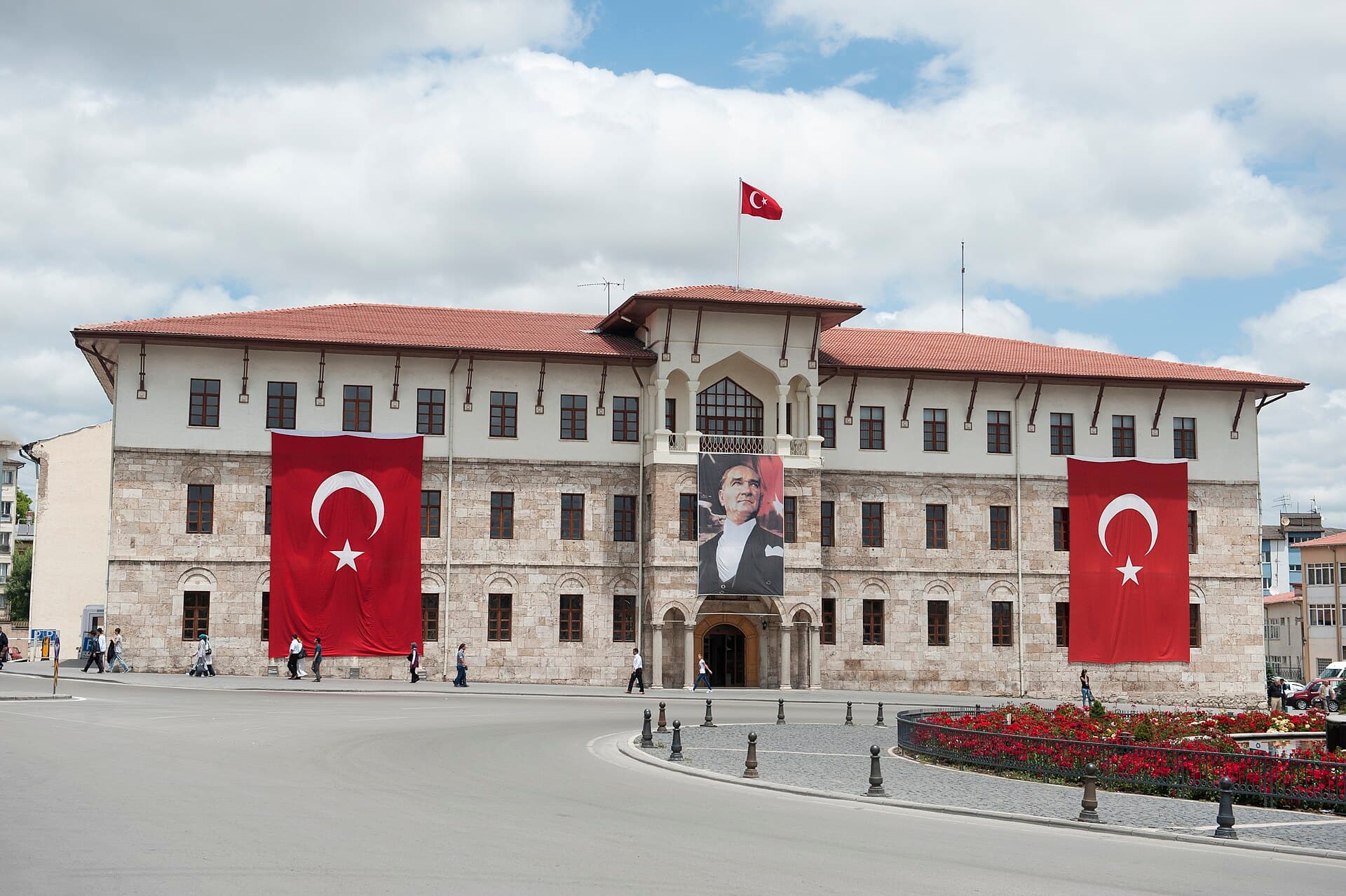 Dosseman / CC BY-SA 4.0, via Wikimedia Commons
Tour de audio autoguiado de Sivas — ruta GPS a pie, reproducción offline, narración en 32 idiomas.
“Donde la antigua piedra selyúcida narra el paso de imperios y se forjó una república moderna.”
No las postales. Las historias que ni los locales conocen — al oído, justo donde ocurrieron.
Las intrincadas tallas de piedra en los portales de la Mezquita y Hospital Ulu de Divriği son tan detalladas que han ganado un apodo peculiar.
Sivas alberga un manantial termal donde los 'médicos' son literalmente peces.
El edificio donde se sentaron las bases de la Turquía moderna tuvo una vida anterior bastante modesta.
Descubre todos los secretos de Sivas
Cada dirección, cada revelación al completo — a tu oído, justo donde ocurrió.
Eliges tus paradas. Caminas. La voz te revela lo que los demás ignoran.


Tu tour de audioguía por Sivas te espera — elige tus lugares, tu idioma y empieza al llegar.
ComprarLume incluye una guía de realidad aumentada. Levanta el móvil y su cámara muestra la calle que tienes delante, con una flecha luminosa sobre la imagen real que siempre apunta a tu próxima parada — sin mapas que descifrar, sin giros equivocados. Como todo en Lume, funciona completamente sin conexión.
Sivas, una ciudad en Anatolia Central, Turquía, se erige como un cautivador cruce de caminos donde la historia antigua y el nacimiento de una nación moderna convergen. Situada a una altitud de 1.278 metros (4.193 pies) en el amplio valle del río Kızılırmak, es una ciudad definida por su pasado profundo y multicapa. Antaño una parada vital en la histórica Ruta de la Seda y la Ruta Real Persa, Sivas fue un bullicioso centro de comercio e intercambio cultural durante siglos.
Hoy, Sivas ofrece una visión singular del alma de Turquía, con una impresionante concentración de arquitectura selyúcida del siglo XIII que le ha valido el apodo de 'museo al aire libre'. Más allá de sus monumentales edificios de piedra, la ciudad desempeñó un papel crucial en la Guerra de Independencia turca, sirviendo como cuartel general del Movimiento Nacional Turco en 1919. Esta mezcla de grandeza histórica, hospitalidad local y patrimonio cultural distintivo hace de Sivas una experiencia esencial para cualquier viajero que busque descubrir la profundidad arquitectónica y espiritual de Turquía.
Aunque Sivas es un centro industrial y comercial de tamaño moderado, su economía se ha basado tradicionalmente en la agricultura. La ciudad es también un importante centro de comunicaciones, que conecta las rutas comerciales norte-sur y este-oeste, y ha adquirido una nueva importancia económica con el desarrollo de ferrocarriles que la unen con las principales ciudades turcas.
Los primeros vestigios de asentamiento en la región de Sivas se remontan a los hititas, alrededor del siglo VIII a.C., con algunas excavaciones que sugieren presencia humana desde el Neolítico (7000-5000 a.C.). La zona quedó bajo control persa en el 550 a.C., seguida de una breve ocupación por los macedonios en el 334 a.C., antes de formar parte del Reino de Capadocia. En el 64 a.C., el general romano Pompeyo el Grande fundó aquí un asentamiento, inicialmente llamado Megalópolis. Este nombre fue cambiado más tarde a Sebasteia en honor al emperador Augusto entre el 1 y el 6 d.C., y se convirtió en la capital de la provincia romana de Armenia Menor bajo el emperador Diocleciano a finales del siglo III d.C. Durante la era bizantina, Sebasteia fue fortificada y creció hasta convertirse en una gran y próspera ciudad anatolia, desempeñando un papel importante en la historia temprana del cristianismo, siendo hogar de santos como San Blas y San Pedro de Sebaste.
En el siglo XI, Sivas quedó bajo el control de los turcos selyúcidas, marcando un nuevo capítulo en su historia. La ciudad floreció durante este período, sirviendo periódicamente como capital junto a Konya. Fue un centro vital de comercio a lo largo de la Ruta de la Seda, lo que llevó a la construcción de numerosas madrasas, mezquitas y hospitales, muchos de los cuales sobreviven hoy. La era selyúcida vio a Sivas alcanzar un pico arquitectónico, particularmente en 1271 con la construcción de tres grandes madrasas: la Gök Medrese, Buruciye y Çifte Minareli. Estas instituciones sirvieron como universidades donde prosperaron la medicina y la filosofía. La ciudad fue brevemente saqueada por los mongoles en 1243 después de la Batalla de Köse Dağ, y más tarde capturada y destruida por Tamerlán en 1400.
Sivas fue reconquistada por los otomanos en 1408 y se convirtió en una importante capital provincial, sirviendo como centro administrativo del Eyalato de Rum durante siglos. Bajo el dominio otomano, la ciudad mantuvo su importancia regional y continuó siendo un centro de artesanías como el tejido de alfombras y la producción textil.
El siglo XX trajo un momento crucial para Sivas y la naciente República Turca. En septiembre de 1919, la ciudad acogió el histórico Congreso de Sivas, liderado por Mustafa Kemal Atatürk. Este congreso fue un punto de inflexión en la Guerra de Independencia turca, donde se tomaron decisiones cruciales con respecto a la lucha por la independencia, sentando las bases del futuro estado independiente. El edificio donde se celebró el congreso se conserva ahora como el Museo Atatürk y del Congreso de Sivas, un símbolo significativo de la identidad histórica de la ciudad. La finalización del ferrocarril en la década de 1930 impulsó aún más la economía y la infraestructura de transporte de la ciudad.
Sivas ofrece un viaje cautivador a través de siglos de historia, mostrando principalmente su herencia selyúcida. Comience su exploración en la plaza de la ciudad, donde varias obras maestras arquitectónicas se encuentran a poca distancia. La Çifte Minareli Medrese (Madrasa de los Minaretes Gemelos), construida entre 1271 y 1272, es un símbolo icónico de Sivas, conocida por su intrincada fachada de piedra y sus imponentes minaretes gemelos. Cerca, la Buruciye Medrese, también de 1271, está bien conservada y a menudo alberga cafés en su entorno histórico. La Gök Medrese (Madrasa Azul), otra obra maestra selyúcida de 1271, es celebrada por sus exquisitos azulejos turquesa y su artístico trabajo en relieve. La Şifaiye Medrese, construida en 1217, sirvió como hospital y escuela de medicina, y contiene la tumba de su fundador, el Sultán Izz al-Din Kayka'us I.
Para una profunda experiencia histórica, una visita a la Gran Mezquita y Hospital de Divriği es esencial. Ubicada al sureste de Sivas, este sitio declarado Patrimonio de la Humanidad por la UNESCO, construido entre 1228 y 1243, presenta algunas de las mejores tallas de piedra del mundo islámico y es considerada una obra maestra de la arquitectura selyúcida. De vuelta en el centro de la ciudad, el Museo Atatürk y del Congreso de Sivas es una parada vital para los entusiastas de la historia. Ubicado en un edificio del siglo XIX, sirvió como cuartel general del Movimiento Nacional Turco en 1919 y conserva la sala donde se celebró el Congreso de Sivas. No se pierda la Mezquita Ulu (Gran Mezquita), que data de 1197, que demuestra el diseño temprano de mezquitas selyúcidas con su patio central y sala de oración. Para un toque de naturaleza y curación, considere Balıklı Thermal, conocido por sus 'peces doctores' que brindan una experiencia de spa única.
Sivas experimenta un clima continental con estaciones distintas. Los veranos son cálidos y secos, con temperaturas diurnas promedio que alcanzan los 25-27°C (77-81°F) en julio y agosto. Estos meses son ideales para hacer turismo, con mínimas precipitaciones y cielos despejados. La primavera (marzo a mayo) y el otoño (septiembre a noviembre) ofrecen temperaturas agradables, aunque la primavera registra el mayor número de días lluviosos. Los inviernos (diciembre a febrero) son fríos y nevados, con temperaturas que a menudo caen por debajo de cero, lo que los hace menos ideales para explorar las atracciones al aire libre de la ciudad. Para apreciar plenamente los sitios históricos y naturales de Sivas, se recomienda asignar 3-4 días para su visita.
El aeropuerto de Sivas Nuri Demirbağ (VAS) se encuentra a 22 km del centro de la ciudad, con servicios de transporte y taxis disponibles. Sivas es también un importante nudo ferroviario, conectado con Ankara por un tren de alta velocidad en aproximadamente 2.5-3 horas, y servicios de tren regulares a otras partes de Turquía. Los autobuses de larga distancia conectan frecuentemente Sivas con las principales ciudades turcas. Una vez en la ciudad, los autobuses públicos, minibuses y taxis proporcionan un transporte conveniente. Se puede comprar una 'Kent Kart' para tarifas de transporte público con descuento.
El turco es el idioma oficial y la moneda es la Lira Turca. Sivas es conocida por sus artesanías, incluyendo la orfebrería de plata, el tejido y la fabricación de cuchillos. Los kilims y alfombras de Sivas son populares recuerdos auténticos, y se pueden encontrar productos artesanales en la calle Atatürk, la plaza de la Mezquita Pasha o el Bazar de los Joyeros. La ciudad ofrece una variedad de delicias culinarias locales, incluyendo las albóndigas de Sivas, el kebab de Sivas con verduras y el pan de carne de Sivas.
Sivas en coreano, en chino o en hebreo — y 29 idiomas más, cada parada narrada por una voz nativa. La mayor variedad de idiomas de cualquier audioguía autoguiada.
Disponible en: