De Cerkvenik Brug
Stel je een brug voor, niet over een rivier, maar *binnen* een berg, die een afgrond overspant zo enorm dat je de bodem nauwelijks kunt zien.
Volledig verhaal ontgrendeld in de tour
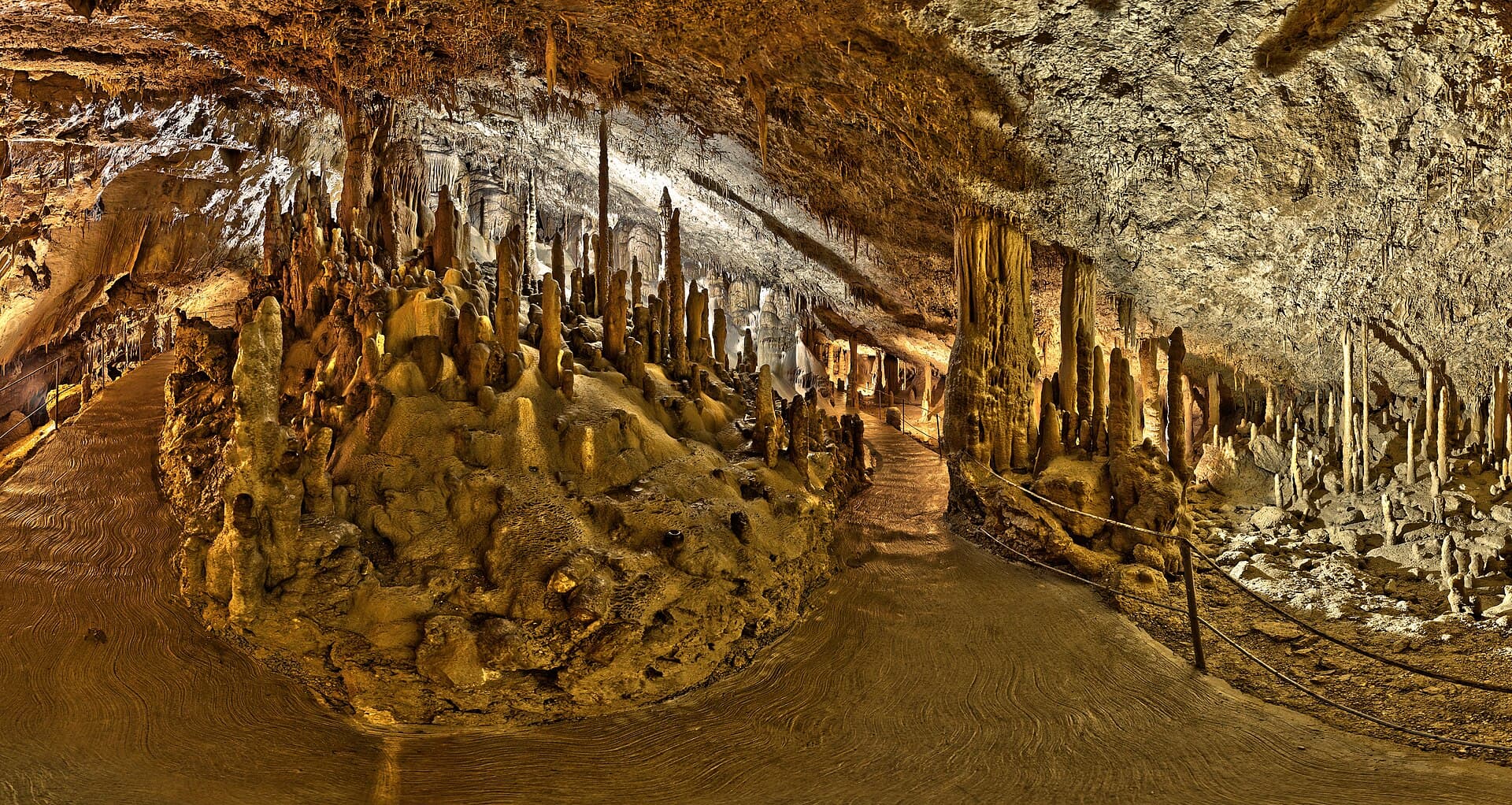 Lander at Slovenian Wikipedia / CC BY-SA 3.0, via Wikimedia Commons
Zelfgeleide audiowandeling door Škocjan — GPS-route, offline afspelen, meeslepende vertelling in 32 talen.
“Waar een ondergrondse rivier canyons van stilte en gebrul uitsnijdt.”
Niet de ansichtkaarten. De verhalen die zelfs locals niet kennen — gefluisterd in je oor, precies waar ze gebeurden.
Stel je een brug voor, niet over een rivier, maar *binnen* een berg, die een afgrond overspant zo enorm dat je de bodem nauwelijks kunt zien.
Deze grot herbergt een geheim dat het oude Slovenië verbindt met de goden van Griekenland.
De rivier hier stroomt niet zomaar een grot in; hij verdwijnt in de aarde, om veel later, ver weg, weer tevoorschijn te komen.
Ontdek elk geheim van Škocjan
Elk adres, elke onthulling volledig — in je oor, precies waar het gebeurde.
Jij kiest je stops. Jij wandelt. De stem onthult wat de anderen missen.


Je zelfgeleide audiotour van Škocjan is klaar — kies je bezienswaardigheden, kies je taal en start zodra je aankomt.
KopenLume heeft een ingebouwde augmented-reality-gids. Houd je telefoon omhoog: de camera toont de straat voor je, met een oplichtende pijl over het echte beeld die altijd naar je volgende stop wijst — geen kaart om uit te puzzelen, geen verkeerde afslagen. Zoals alles in Lume werkt het volledig offline.
Škocjan, Slovenië, herbergt een natuurlijk wonder van wereldwijd belang: de Škocjan grotten. Deze UNESCO Werelderfgoedsite is een uitgestrekt systeem van kalksteengrotten, bekend om zijn immense ondergrondse kloof, uitgesleten door de Reka rivier. In tegenstelling tot veel andere toeristische grotten, benadrukt Škocjan de rauwe kracht van de natuur en biedt het een reis naar een ondergrondse wereld van immense schaal en echoënde stilte.
Het Regionaal Park Škocjan grotten, opgericht na de onafhankelijkheid van Slovenië in 1991, beschermt niet alleen de grotten, maar ook het omliggende Karstplateau, een landschap dat de term "karst" aan de geologie heeft geleend. Het gebied is een levend laboratorium van geomorfologische, geologische en hydrologische formaties, met zinkgaten, natuurlijke bruggen en ingestorte dolines. Bezoekers kunnen het ondergrondse rijk verkennen en ook educatieve paden aan de oppervlakte bewandelen, waarbij ze leren over de diverse flora, fauna en het blijvende culturele erfgoed van de regio.
Een bezoek aan Škocjan is een meeslepende ervaring, een afdaling in een uitgestrekte ondergrondse rivierkloof waar de enorme diepte en de constante koele lucht je tempo natuurlijk vertragen. Het is een plek waar het geluid van de Reka rivier, die door de Murmelende Grot (Šumeča jama) raast, van ver te horen is, vooral tijdens perioden met hogere waterstanden. De grotten zijn een bewijs van miljoenen jaren karst- en grottenevolutie, met sedimenten die een 5 miljoen jaar oud verslag van dit dynamische proces bevatten.
De Škocjan grotten boeien de menselijke verbeelding al millennia lang, met de vroegste geschreven verslagen die dateren uit de 2e eeuw voor Christus door Posidonius van Apamea. Deze oude observaties beschreven de Reka rivier die in een afgrond verdween en weer tevoorschijn kwam bij de zee. De grotten werden zelfs op enkele van de oudste gepubliceerde kaarten van de regio gemarkeerd, waaronder de Lazius-Ortelius kaart uit 1561 en Mercator's Novus Atlas uit 1637.
Systematische verkenning van de Škocjan grotten begon in de 19e eeuw, deels gedreven door de zoektocht naar nieuwe waterbronnen voor de stad Triëst. Deze periode markeerde het begin van het moderne toerisme in de grotten, met een bezoekersboek dat op 1 januari 1819 werd geïntroduceerd. Vroege ontdekkingsreizigers, zoals Jakob Svetina in 1839, waagden zich diep in het grottensysteem en bereikten belangrijke watervallen. De oprichting van een speleologische afdeling in 1884 door de Primorska Sectie van de Duitse en Oostenrijkse Alpenvereniging van Triëst stimuleerde verdere systematische verkenning, met een "grot triomviraat" die de inspanningen leidde om langs de rivier te doordringen en de passages in kaart te brengen.
Belangrijke ontdekkingen gingen door in de 20e eeuw, met de Stille Grot (Tiha jama) die in 1904 werd gevonden. Het eerste deel van de grotten, inclusief de Marinič grot en de Mahorčič grot, werd in 1933 voor toeristen geopend, hoewel het schade opliep bij een overstroming in 1963. In 1986 werden de Škocjan grotten ingeschreven op de UNESCO-lijst van natuurlijk en cultureel Werelderfgoed, wat hun wereldwijde belang erkende. Deze aanwijzing leidde tot de oprichting van het Regionaal Park Škocjan grotten, wat zorgt voor de actieve bescherming en het uitgebreide beheer van dit unieke karstfenomeen. Renovatie in 2011 verbeterde de toegang voor bezoekers, inclusief een nieuwe stalen brug, waardoor de ondergrondse kloof en de Grote Ingestorte Doline konden worden verkend.
De belangrijkste attractie in Škocjan is de rondleiding door het grottensysteem, die meestal 1,5 tot 2 uur duurt en ongeveer 3 kilometer (1,86 mijl) beslaat met 400 tot 1000 treden. De tour leidt bezoekers door de Stille Grot (Tiha jama), een droge fossiele tunnel versierd met diverse stalactietformaties, waaronder de indrukwekkende Reus (Orjak) stalagmiet in de Grote Zaal. Het pad opent zich vervolgens in de Murmelende Grot (Šumeča jama), de thuisbasis van een van de grootste ondergrondse rivierkloven ter wereld.
Een centraal moment van de ondergrondse reis is het oversteken van de Cerkvenik Brug, die 45 meter (148 voet) boven de Reka rivier hangt terwijl deze door de kloof eronder stroomt. De tour eindigt bij de natuurlijke opening van de grot in de Grote Ingestorte Doline (Velika dolina), waar de Reka rivier ondergronds verdwijnt. Naast de hoofdgrottour kunnen bezoekers het Škocjan Educatieve Pad verkennen, een circulaire route rond de Grote en Kleine Ingestorte Dolines en door de dorpen Betajna, Škocjan en Matavun, die inzicht biedt in de karstverschijnselen, hydrologie en het culturele erfgoed van het gebied. Museumtentoonstellingen in het dorp Škocjan maken ook deel uit van dit pad.
De Škocjan grotten zijn het hele jaar door geopend, met dagelijks rondleidingen. De temperatuur in de grotten blijft het hele jaar constant 12°C (54°F), wat het een koele ontsnapping in de zomer en een milde toevluchtsoord in de winter maakt. Lente (april-juni) en vroege herfst (eind september-begin november) worden vaak beschouwd als de beste tijden om te bezoeken voor een balans van comfortabele buitentemperaturen, minder drukte en bloeiende karstlandschappen. Tijdens deze seizoenen kan de stroming van de Reka rivier rustiger zijn, maar nog steeds krachtig. Hoewel de zomer (juni-augustus) langere daglichturen en frequentere tours biedt, brengt het ook de grootste drukte met zich mee. Winterbezoeken bieden een rustigere ervaring, en de hogere waterstanden van de Reka rivier kunnen het gebulder ervan in de kloof versterken.
De Škocjan grotten bevinden zich in het zuidwesten van Slovenië, nabij het dorp Matavun, ongeveer 80 kilometer (50 mijl) van Ljubljana en 25 kilometer (15,5 mijl) van Triëst, Italië. Het bezoekerscentrum en de ingang van de grot zijn gemakkelijk bereikbaar, met parkeergelegenheid ter plaatse. Voor degenen die openbaar vervoer gebruiken, verbinden treinen en bussen Ljubljana met Divača, een stad ongeveer 4 kilometer (2,5 mijl) van de grotten, met pendelbussen of een goed aangegeven wandelpad naar het bezoekerscentrum.
Alle bezoeken aan de Škocjan grotten zijn onder begeleiding. Het wordt aanbevolen om minstens 30 minuten voor uw geboekte tourtijd bij de informatiebalie te zijn, vooral tijdens het hoogseizoen, en online ticketverkoop wordt geadviseerd om uitverkochte tours te voorkomen. De tour omvat een aanzienlijke hoeveelheid wandelen en trappen, dus comfortabel, antislip schoeisel is essentieel. Vanwege de constante koele temperatuur in de grotten, zelfs in de zomer, wordt een warme laag of jas sterk aanbevolen. Fotografie is over het algemeen niet toegestaan in het hoofdgrottensysteem. Kluisjes zijn beschikbaar bij het bezoekerscentrum voor bagage.
Škocjan — Koreaans, Chinees, Hebreeuws en nog 29 talen, elke stop verteld door een moedertaalspreker. Het grootste taalaanbod van alle zelfgeleide audiotours.
Beschikbaar in: