Southwold Pier's 'Under the Pier Show'
Jenseits der bekannten Arcade-Spiele wartet eine Sammlung skurriler Apparate darauf, entdeckt zu werden.
Die ganze Geschichte wird in der Tour freigeschaltet
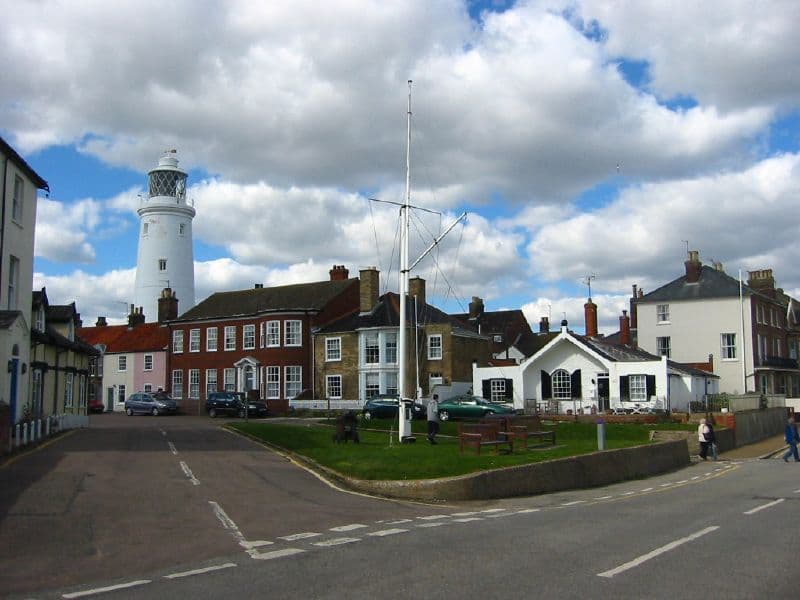 Gill Rickson / CC BY 2.0, via Wikimedia Commons
Selbstgeführte Audio-Walking-Tour durch Southwold — GPS-Route, Offline-Wiedergabe, erzählerische Narration in 32 Sprachen.
“Wo die Nordsee Suffolks Küsten umarmt, bietet Southwold eine zeitlose Küstenruhe.”
Nicht die Postkarten. Die Geschichten, die selbst Einheimische nicht kennen – dir ins Ohr geflüstert, genau dort, wo sie geschahen.
Jenseits der bekannten Arcade-Spiele wartet eine Sammlung skurriler Apparate darauf, entdeckt zu werden.
Dieser markante Leuchtfeuer birgt ein Baugeheimnis.
Die sechs Kanonen, die die Southwold Bay überblicken, haben einen unerwarteten Ursprung.
Entdecke jedes Geheimnis von Southwold
Jede Adresse, jede Enthüllung vollständig – in deinem Ohr, genau dort, wo es geschah.
Du wählst deine Stationen. Du gehst. Die Stimme enthüllt, was andere übersehen.


Deine selbstgeführte Audio-Tour durch Southwold ist bereit – wähle deine Sehenswürdigkeiten, deine Sprache und starte, sobald du ankommst.
KaufenLume enthält einen integrierten Augmented-Reality-Guide. Halten Sie Ihr Handy hoch: Die Kamera zeigt die Straße vor Ihnen, mit einem leuchtenden Pfeil über dem echten Bild, der immer auf Ihren nächsten Stopp zeigt — keine Karte zum Rätseln, keine falschen Abzweigungen. Wie alles bei Lume funktioniert es komplett offline.
Southwold, eine Küstenstadt in Suffolk, England, liegt an der Mündung des River Blyth im Gebiet der Suffolk Coast and Heaths Area of Outstanding Natural Beauty. Bekannt für seine Sandstrände, die markante Seebrücke und den Leuchtturm, bietet es eine Mischung aus traditionellem Küstencharme und unabhängigem Charakter.
Oft als 'fast eine Insel' bezeichnet, da es im Osten von der Nordsee, im Südwesten vom River Blyth und dem Hafen von Southwold sowie im Norden vom Buss Creek begrenzt wird, ist Southwold hauptsächlich über eine einzige Straße durch das Nachbardorf Reydon erreichbar. Seine kompakte Anlage, ergänzt durch zahlreiche offene Grünflächen, macht es zu einem einladenden Ziel für entspannte Erkundungen.
Die Stadt bewahrt eine gepflegte Atmosphäre und zieht Besucher an, die ein klassisches britisches Seebad-Erlebnis suchen, komplett mit bunten Strandhäuschen und einem funktionierenden Leuchtturm.
Die Geschichte Southwolds reicht bis in die Vorgeschichte zurück, mit Funden von frühen menschlichen Vorfahren und ihren Werkzeugen in den nahegelegenen Klippen. Im Jahr 1086 wurde es im Domesday Book als Fischerhafen verzeichnet. Die Stadt erhielt 1220 ihre Marktrechte und 1489 eine königliche Charta von Heinrich VII., ein Ereignis, das jährlich auf der Trinity Fair gefeiert wird. Diese Charta verlieh Southwold das Recht zur Selbstverwaltung durch einen gewählten Rat.
Ein verheerendes Feuer im Jahr 1659 zerstörte große Teile der Stadt. Ihr Wiederaufbau führte jedoch zur Schaffung der heute sichtbaren offenen Grünflächen, die als wichtige Brandschutzschneisen dienen. In den 1750er Jahren wurde Southwold zum Hauptsitz der 'Free British Fisheries', einer staatlichen Initiative zur Bekämpfung des niederländischen Hering-Monopols. Dies brachte eine kurze Periode des Wohlstands mit sich, neue Kais, Lagerhäuser und ein Netzhaus wurden gebaut und die Hafeneinfahrt verbessert. Anhaltende Probleme mit der Versandung des Hafens und schlechte Fischsaisons führten jedoch bis 1772 zum Niedergang des Unternehmens.
Die Verwandlung Southwolds in ein Urlaubsziel begann 1889, als die East Coast Development Company in die Infrastruktur investierte, einschließlich Straßen, Kanalisation und Hotels. Die bemerkenswerte Southwold Pier wurde 1900 erbaut und diente zunächst als Anlegestelle für Belle-Dampfer, die Tagesausflügler entlang der Küste transportierten. Obwohl sie im Zweiten Weltkrieg und durch heftige Stürme beschädigt wurde, wurde die Pier 2001 wieder aufgebaut und restauriert und beherbergt heute einzigartige Vergnügungen. Heute behält Southwold seine Anziehungskraft als traditionelles Seebad und verbindet seine historischen Grundlagen mit seinem modernen Charakter.
Southwold hat eine Reihe von angesehenen Einwohnern und Besuchern angezogen. Der Schriftsteller George Orwell lebte mehrere Jahre in Southwold, nachdem er Eton College verlassen hatte, und ließ sich dort für Teile seines Romans A Clergyman's Daughter inspirieren. Die Krimiautorin P.D. James hatte ein zweites Zuhause in Southwold, und einige ihrer Romane spielen in Suffolk. Das Model Twiggy und ihr Ehemann Leigh Lawson haben ebenfalls ein Zuhause in Southwold. Michael Palin traf seine Frau 1959 in Southwold und eröffnete 2002 das Kino Electric Picture Palace.
Southwold bietet eine Vielzahl von Attraktionen, die sein maritimes Erbe mit klassischer Seebad-Unterhaltung verbinden. Der Sandstrand der Stadt, bekannt für seine Qualität und Sauberkeit, bildet einen zentralen Punkt, gesäumt von bunten Strandhäuschen. Ein Spaziergang entlang der Promenade führt zur Southwold Pier, einem restaurierten Edwardianischen Bauwerk mit unabhängigen Geschäften, Cafés und der einzigartigen 'Under the Pier Show' mit ihren exzentrischen, münzbetriebenen Automaten des Ingenieurs Tim Hunkin.
Die Skyline der Stadt dominiert der Southwold Lighthouse, ein denkmalgeschütztes Gebäude (Grade II), das seit 1890 Schiffe leitet. Besucher können an geführten Touren zur Spitze teilnehmen und die weite Aussicht über die Stadt und die Küste genießen. Für Geschichtsinteressierte bietet das Southwold Museum Ausstellungen zur Vergangenheit der Stadt und ihrer natürlichen Umgebung. Das Alfred Corry Lifeboat Museum gibt Einblicke in das maritime Rettungserbe Southwolds und beherbergt das historische Rettungsboot Alfred Corry.
Die Adnams Brewery, seit 1872 ein bedeutender lokaler Arbeitgeber, bietet Führungen und Verkostungen ihrer Biere und Spirituosen an. Für Outdoor-Enthusiasten bietet die Umgebung zahlreiche Wanderwege, darunter Routen entlang des River Blyth nach Walberswick, die in den wärmeren Monaten mit einer traditionellen Ruderbootfähre erreichbar sind. Auf Gun Hill erinnern sechs Kanonen aus dem 18. Jahrhundert an die Schlacht in der Sole Bay.
Southwold ist ein Reiseziel für alle Jahreszeiten, jede bietet ein besonderes Erlebnis. Für Aktivitäten bei warmem Wetter und Strandurlaub sind die Monate von Ende Juni bis Anfang September ideal, mit durchschnittlichen Tageshöchstemperaturen im August über 18°C. Frühling und Herbst bieten eine ruhigere Atmosphäre für Küstenwanderungen und Erkundungen mit weniger Andrang. Der Winter reizt diejenigen, die gemütliche Pubs, unabhängige Geschäfte und dramatische Küstenlandschaften schätzen. Die Stadt kann im Sommer sehr voll werden, daher wird eine frühe Anreise für Parkplätze empfohlen.
Southwold ist eine kompakte und fußgängerfreundliche Stadt, die leicht zu Fuß erkundet werden kann. Obwohl sie keinen eigenen Flughafen hat, liegt der Flughafen Norwich (NWI) etwa 47 km entfernt. Parkplätze im Stadtzentrum können, besonders im Sommer, belegt sein, daher ist eine frühe Anreise ratsam. Gut erzogene Hunde an der Leine sind auf der Southwold Pier und am Strand zwischen Oktober und März willkommen. Während der Sommermonate (April bis September) sind Hunde vom unmittelbaren Strandbereich ausgeschlossen, mit Ausnahme von Assistenzhunden. Strandrollstühle und Mobilitätsroller können von lokalen Apotheken oder dem Southwold Boating Lake im Sommer gemietet werden.
Southwold — Koreanisch, Chinesisch, Hebräisch und 29 weitere Sprachen, jede Station von einer muttersprachlichen Stimme erzählt. Die größte Sprachauswahl aller selbstgeführten Audiotouren.
Verfügbar auf: