Daria Daulat Bagh
The vivid murals within Tipu Sultan's Summer Palace tell tales of battles and courtly life, yet one detail frequently goes unobserved.
Full story unlocks in the tour
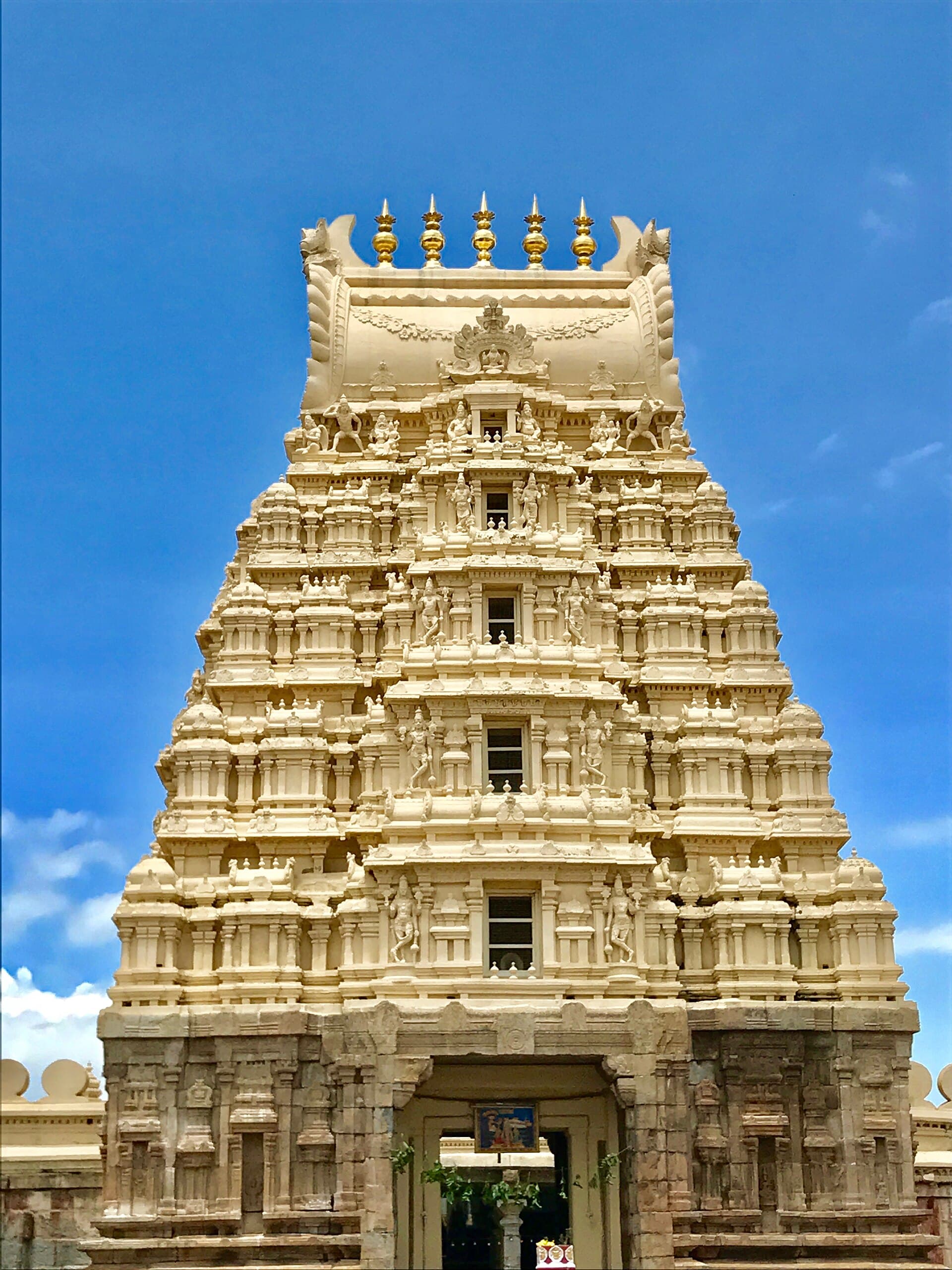 Ms Sarah Welch / CC BY-SA 4.0, via Wikimedia Commons
Self-guided audio walking tour of Srirangapatna — GPS route, offline playback, story-driven narration in 32 languages.
“Where ancient reverence meets the echoes of a fierce sultan's reign.”
Not the postcards. The stories even locals don't know — whispered in your ear, right where they happened.
The vivid murals within Tipu Sultan's Summer Palace tell tales of battles and courtly life, yet one detail frequently goes unobserved.
The tranquil mausoleum where Tipu Sultan rests alongside his parents holds an unexpected revelation about its original doors.
This chilling underground prison, bearing the name of a British officer, contains a peculiar artifact hinting at its dramatic past.
Discover every secret of Srirangapatna
Every address, every reveal in full — in your ear, right where it happened.
You pick your stops. You walk. The voice reveals what the others miss.
Your self-guided audio tour of Srirangapatna is ready — pick your landmarks, choose your language, and start the moment you arrive.
BuyLume has a built-in augmented-reality guide. Hold your phone up and its camera shows the street ahead of you, with a glowing arrow laid over the real view that always points to your next stop — no map to puzzle over, no wrong turns. Like everything in Lume, it works fully offline.
Srirangapatna, an island town embraced by the Cauvery River in Karnataka, India, is a place where layers of history, religion, and military strategy converge. Once the formidable capital of the Kingdom of Mysore under Hyder Ali and his son, Tipu Sultan, this town served as a pivotal center of power in South India. Its strategic location, naturally fortified by the river, made it a coveted stronghold through centuries of shifting rule.
Walking through Srirangapatna offers a tangible connection to its past, with massive fortifications, royal palaces, sacred temples, and battlefields narrating stories of ambition and conflict. Unlike larger, bustling tourist hubs, Srirangapatna maintains a tranquil atmosphere, inviting visitors to explore its diverse attractions at a leisurely pace. It's a destination that appeals to those interested in intricate architecture, significant historical events, natural landscapes, and spiritual journeys, all within a relatively compact area.
The town's name itself is derived from the revered Sri Ranganathaswamy Temple, a spiritual heart that has drawn pilgrims for centuries. From its ancient origins under the Ganga dynasty to its dramatic role in the Anglo-Mysore Wars, Srirangapatna offers a profound glimpse into the forces that shaped southern India's heritage.
Srirangapatna's history stretches back to the 9th century when it was established as an urban and pilgrimage center. The town gets its name from the Sri Ranganathaswamy Temple, consecrated around 894 CE by the Ganga dynasty rulers. This temple, dedicated to Lord Ranganatha, an incarnation of Vishnu, quickly made Srirangapatna a significant Vaishnavite pilgrimage site in South India.
By the Vijayanagar Empire era, Srirangapatna had become a major viceroyalty, overseeing several smaller vassal states. As the Vijayanagar Empire declined, the rulers of Mysore sought independence, with Srirangapatna becoming their primary target. Raja Wodeyar I captured the town in 1610, marking a new chapter in its history.
The 18th century brought Srirangapatna its greatest historical prominence under Hyder Ali and his son, Tipu Sultan. Its strategic island location, surrounded by the Cauvery River, made it an ideal military and administrative hub. Tipu Sultan, often referred to as the "Tiger of Mysore," made Srirangapatna his capital, transforming it into one of the wealthiest and most influential political centers in South India. The town's natural defenses were further enhanced by formidable fortifications, designed with the help of French engineers, featuring bastions, gateways, and moats.
Srirangapatna became the stage for critical confrontations during the Anglo-Mysore Wars. The Treaty of Seringapatam, signed in 1792, concluded the Third Anglo-Mysore War, forcing Tipu Sultan to cede nearly half of his kingdom to the allied forces of the East India Company. The town witnessed the final and decisive battle of the Fourth Anglo-Mysore War in 1799, where Tipu Sultan was killed within the fort, leading to the fall of Srirangapatna to the British.
Following Tipu Sultan's defeat, the British renamed the city Seringapatam. The town's architectural landscape reflects this complex history, with a blend of Hindu and Islamic styles evident in its structures. Today, Srirangapatna stands as a testament to its tumultuous past, a "museum city" preserving the remnants of its royal, military, and spiritual heritage.
Srirangapatna offers a concentrated exploration of history and devotion. The Sri Ranganathaswamy Temple is central to the town, a sprawling complex dedicated to Lord Vishnu in a reclining posture on the serpent Adishesha. This ancient temple, dating back to the 9th century, showcases a blend of Hoysala and Vijayanagara architectural styles, with intricate carvings and a striking gopuram (gateway).
Daria Daulat Bagh, or Tipu Sultan's Summer Palace, is a teakwood structure built in 1784. Surrounded by flourishing gardens, the palace is renowned for its vivid frescoes depicting battle scenes, royal processions, and courtly life, offering a glimpse into Tipu Sultan's world. A museum inside houses Tipu's personal artifacts, European paintings, and Persian manuscripts.
The Gumbaz, a grand mausoleum constructed by Tipu Sultan between 1782 and 1784, holds the tombs of Tipu Sultan, his father Hyder Ali, and his mother Fakhr-un-Nisa. This Persian-style edifice is set within a cypress garden and features black granite pillars and walls adorned with tiger stripes.
For a sobering historical experience, visit Colonel Bailey's Dungeon, an underground prison where Tipu Sultan confined British officers during the Anglo-Mysore Wars. The dungeon, built of brick and lime mortar, features stone slabs with holes where prisoners were chained.
Other notable sites include the Srirangapatna Fort, with its massive walls and strategic viewpoints, and the Wellesley Bridge, an ancient stone bridge built in 1804 across the Cauvery River, a testament to early 19th-century engineering.
The most pleasant time to visit Srirangapatna is during the winter months, from October to March. Temperatures during this period are mild and comfortable, ranging from approximately 15°C to 32°C, making it ideal for exploring outdoor historical sites and temples.
The monsoon season, from July to September, brings moderate to heavy rainfall. While the Cauvery River swells, offering a dramatic spectacle, heavy rains might disrupt sightseeing plans. Summers, from April to June, are generally hot and dry, with temperatures often exceeding 30°C, making it the least advisable time for a visit due to the heat.
Srirangapatna is conveniently located about 15-20 kilometers from Mysore and approximately 125-130 kilometers from Bengaluru. It is easily accessible by road, situated on the Bengaluru-Mysuru Expressway (NH-275), with regular KSRTC buses operating between the two major cities stopping at Srirangapatna. The Srirangapatna Railway Station offers seamless connectivity to daily passenger and express trains on the Bengaluru-Mysuru rail corridor. The nearest domestic airport is Mysuru Airport (MYQ), about 25 km away, while Kempegowda International Airport in Bengaluru (BLR) serves international travelers.
While Srirangapatna has limited accommodation options, numerous hotels are available in nearby Mysore. Many visitors opt for a day trip from Mysore or Bengaluru. Most historical monuments, such as Daria Daulat Bagh and the Gumbaz, require a nominal entry ticket managed by the Archaeological Survey of India (ASI), while the Sri Ranganathaswamy Temple is free to enter. Comfortable walking shoes, water, and snacks are recommended, especially when exploring the fort and temple complexes.
Srirangapatna in Korean, in Chinese or in Hebrew — and 29 more languages, every stop narrated by a native voice. The widest language range of any self-guided audio tour.
Available in: