Mozart-Haus (Mozarthaus)
Hoewel Wolfgang Amadeus Mozart zelf nooit St. Gilgen bezocht, is het verhaal van zijn familie diep verweven met het dorp.
Volledig verhaal ontgrendeld in de tour
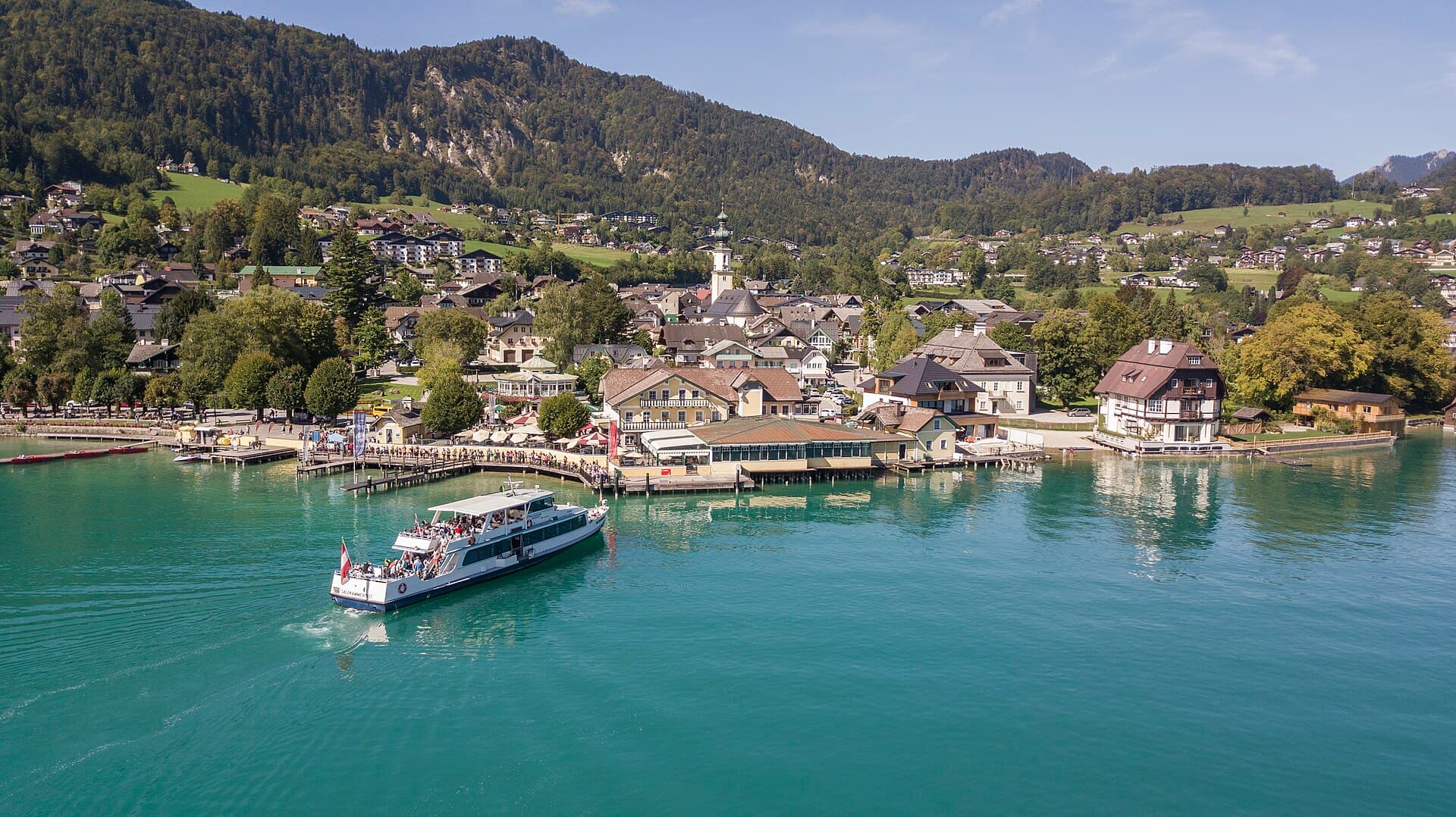 Arne Müseler / CC BY-SA 3.0 de, via Wikimedia Commons
Zelfgeleide audiowandeling door St. Gilgen — GPS-route, offline afspelen, meeslepende vertelling in 32 talen.
“Waar alpiene grandeur samensmelt met serene rust aan het meer en Mozarts echo's blijven hangen.”
Niet de ansichtkaarten. De verhalen die zelfs locals niet kennen — gefluisterd in je oor, precies waar ze gebeurden.
Hoewel Wolfgang Amadeus Mozart zelf nooit St. Gilgen bezocht, is het verhaal van zijn familie diep verweven met het dorp.
De tocht naar de top van de Zwölferhorn-berg biedt meer dan alleen panoramische uitzichten; het onthult een verrassende connectie met een wereldwijd fenomeen.
Achter de pittoreske façade van St. Gilgen schuilt een duisterder, minder bekend hoofdstuk uit de Tweede Wereldoorlog.
Ontdek elk geheim van St. Gilgen
Elk adres, elke onthulling volledig — in je oor, precies waar het gebeurde.
Jij kiest je stops. Jij wandelt. De stem onthult wat de anderen missen.
Je zelfgeleide audiotour van St. Gilgen is klaar — kies je bezienswaardigheden, kies je taal en start zodra je aankomt.
KopenLume heeft een ingebouwde augmented-reality-gids. Houd je telefoon omhoog: de camera toont de straat voor je, met een oplichtende pijl over het echte beeld die altijd naar je volgende stop wijst — geen kaart om uit te puzzelen, geen verkeerde afslagen. Zoals alles in Lume werkt het volledig offline.
St. Gilgen, een dorp in de Oostenrijkse deelstaat Salzburg, ligt aan de noordwestelijke oever van de Wolfgangsee in de regio Salzkammergut. Deze idyllische omgeving, met zijn helderblauwe wateren die de omliggende bergen weerspiegelen, biedt een mix van natuurlijke schoonheid en cultureel erfgoed. Het dorp wordt vaak 'Mozartdorp' genoemd vanwege de aanzienlijke banden met de familie van de beroemde componist, hoewel hij er nooit is geweest.
St. Gilgen dient als toegangspoort tot het Salzkammergut, een regio die bekend staat om zijn vele meren en alpenlandschappen. Het is een plek waar het tempo vertraagt, waardoor bezoekers worden uitgenodigd om langs de promenade aan het meer te wandelen, aantrekkelijke straatjes te verkennen en zich onder te dompelen in buitenactiviteiten. Het dorp behoudt een schilderachtige sfeer, met traditionele Oostenrijkse architectuur en levendige bloemendecoraties die veel gebouwen sieren.
Hoewel St. Gilgen een populaire bestemming is, vooral in de zomer, behoudt het een rustigere sfeer in vergelijking met sommige drukkere stadjes in de regio, waardoor het een aantrekkelijke uitvalsbasis is om het bredere merengebied te verkennen.
## Vroege vermeldingen en groei St. Gilgen, vernoemd naar Sint-Egidius, werd voor het eerst gedocumenteerd in 1376. Eeuwenlang bleef het een rustig dorp, waarvan het bestaan verbonden was met de ritmes van het meer en de omliggende bergen. De 18e eeuw bracht een opmerkelijke connectie met de familie Mozart, die later een belangrijk deel van de identiteit van St. Gilgen zou worden. Wolfgang Nikolaus Pertl, de grootvader van moederskant van Mozart, diende als lokale griffier en overzag de bouw van het gerechtsgebouw van St. Gilgen tussen 1718 en 1720. Dit gebouw werd de geboorteplaats van Mozarts moeder, Anna Maria Pertl, op 25 december 1720. Decennia later, in 1784, verhuisde Mozarts zus, Maria Anna, bekend als Nannerl, naar St. Gilgen na haar huwelijk met de lokale gerechtsrechter en woonde 17 jaar in het geboortehuis van haar moeder.
## De opkomst van toerisme Halverwege de 19e eeuw markeerde een keerpunt voor St. Gilgen met de komst van stoomboten op de Wolfgangsee in 1863, wat meer aandacht trok naar het dorp. Dit werd verder versterkt door de aanleg van de Salzkammergut-Lokalbahn in 1893, wat leidde tot een aanzienlijke toename van het toerisme. Rijke Weense burgers, waaronder chirurg Theodor Billroth, begonnen zomerresidenties in het gebied te bouwen, wat bijdroeg aan de groeiende reputatie als een gewilde retraite.
## Moderne identiteit In 2005 promootte de Wolfgangsee Toeristenraad St. Gilgen officieel als het 'Mozartdorp', waarmee de associatie met de familie van de beroemde componist werd verstevigd. Tegenwoordig omarmt het dorp nog steeds zijn historische wortels en biedt het moderne voorzieningen en een reeks activiteiten die bezoekers het hele jaar door trekken. Het voormalige districtsgerecht, waar Mozarts moeder werd geboren, fungeert nu als het Mozart-Haus, een cultureel en evenementencentrum, hoewel het momenteel alleen van buitenaf te bezichtigen is. Het dorp, met zijn bevolking van ongeveer 4.000 inwoners per januari 2025, blijft een bekende reisbestemming, gevierd om zijn alpenlandschap, cultureel erfgoed en recreatieve mogelijkheden.
Begin uw verkenning op Mozartplatz, het centrale plein van St. Gilgen, dat het sociale hart van het dorp vormt. Hier vindt u de bronzen Mozartfontein en een verzameling lokale cafés, perfect om mensen te kijken. Op korte loopafstand van het plein ligt het Mozarthaus, de geboorteplaats van Mozarts moeder, Anna Maria Pertl. Hoewel het interieur momenteel op afspraak toegankelijk is, is de historische betekenis duidelijk. De parochiekerk van Sint-Egidius, daterend uit de 14e eeuw met barokke aanpassingen, torent boven Mozartplatz uit en is een bezoek waard vanwege de fresco's en altaarstukken.
Voor een weids uitzicht neemt u de Zwölferhorn-kabelbaan naar de top van de Zwölferhorn. De rit zelf biedt een adembenemend uitzicht op de Wolfgangsee en de omliggende Salzkammergut-regio, tot aan Opper-Oostenrijk en het Dachsteinmassief. Boven kunt u de Panorama Circuit maken, een gemakkelijke cirkelvormige route die memorabele vergezichten biedt. Vanaf de pier kunt u een boottocht over de Wolfgangsee maken naar St. Wolfgang, waar u de Schafbergbahn kunt ervaren, een van 's werelds steilste en oudste stoomtreinen, die verdere panoramische uitzichten biedt. Terug in St. Gilgen biedt het openbare Lido een gratis zwemgedeelte met een restaurant, kleedkamers en een speeltuin, wat zorgt voor een verfrissende duik in het meer.
St. Gilgen biedt het hele jaar door unieke charmes. De zomer, van juni tot augustus, is ideaal voor watersporten op de Wolfgangsee, wandelen en buitenfestivals, hoewel het erg druk kan zijn met toeristen. De lente (april-mei) brengt bloeiende bloemen, milde temperaturen en rustigere straten, perfect voor natuurwandelingen en lokale festiviteiten. De herfst transformeert het landschap met gouden herfstkleuren en frisse lucht, wat de weg vrijmaakt voor rustige wandelingen en culturele evenementen. De winter, vooral in december voor Kerstmis, is magisch met zijn beroemde kerstmarkten en mogelijkheden voor wintersporten zoals skiën op de Zwölferhorn en schaatsen.
St. Gilgen is gemakkelijk bereikbaar, ongeveer 29 kilometer ten oosten van Salzburg. De meest handige openbaarvervoersoptie vanuit Salzburg is bus nummer 150, die frequent vertrekt vanaf Salzburg Hauptbahnhof (centraal station) en er ongeveer 40-50 minuten over doet. Kaartjes kunnen rechtstreeks bij de buschauffeur worden gekocht. Als u met de auto komt, is er parkeergelegenheid beschikbaar en sommige accommodaties bieden dit mogelijk aan.
Het dorpscentrum is compact en zeer goed beloopbaar, waardoor de meeste bezienswaardigheden gemakkelijk te bereiken zijn. Voor het verkennen van gebieden buiten St. Gilgen verbindt de bootdienst op de Wolfgangsee met andere plaatsen zoals St. Wolfgang en Strobl. Overweeg een kaartje voor de heen- en terugreis voor de Zwölferhorn-kabelbaan om te genieten van het berglandschap. Hoewel St. Gilgen een reeks hotels en pensions biedt, kunnen de prijzen tijdens het hoogseizoen in de zomer hoger zijn. Voor dineren vindt u traditionele Oostenrijkse restaurants en cafés.
St. Gilgen — Koreaans, Chinees, Hebreeuws en nog 29 talen, elke stop verteld door een moedertaalspreker. Het grootste taalaanbod van alle zelfgeleide audiotours.
Beschikbaar in: