This UNESCO World Heritage site appears as a typical agricultural expanse, yet its precise rows of grapevines and olive trees conceal a profound insight into ancient urban design.
Rplevak / CC BY-SA 4.0, via Wikimedia CommonsStari Grad
“Where ancient Greek foundations meet Adriatic serenity.”
Stari Grad, as no one tells it.
Not the postcards. The stories even locals don't know — whispered in your ear, right where they happened.
The summer dwelling of a 16th-century Croatian poet, Petar Hektorović, is more than a fortified castle; it embodies a singular philosophical ideal.
The commanding bell tower of St. Stephen's Church, a prominent Baroque edifice, incorporates an unexpected element from the town's much earlier genesis.
Discover every secret of Stari Grad
Every address, every reveal in full — in your ear, right where it happened.
You pick your stops. You walk. The voice reveals what the others miss.
How long do you have in Stari Grad?
No tours available yet. Check back soon — we're preparing them.
The story of Stari Grad
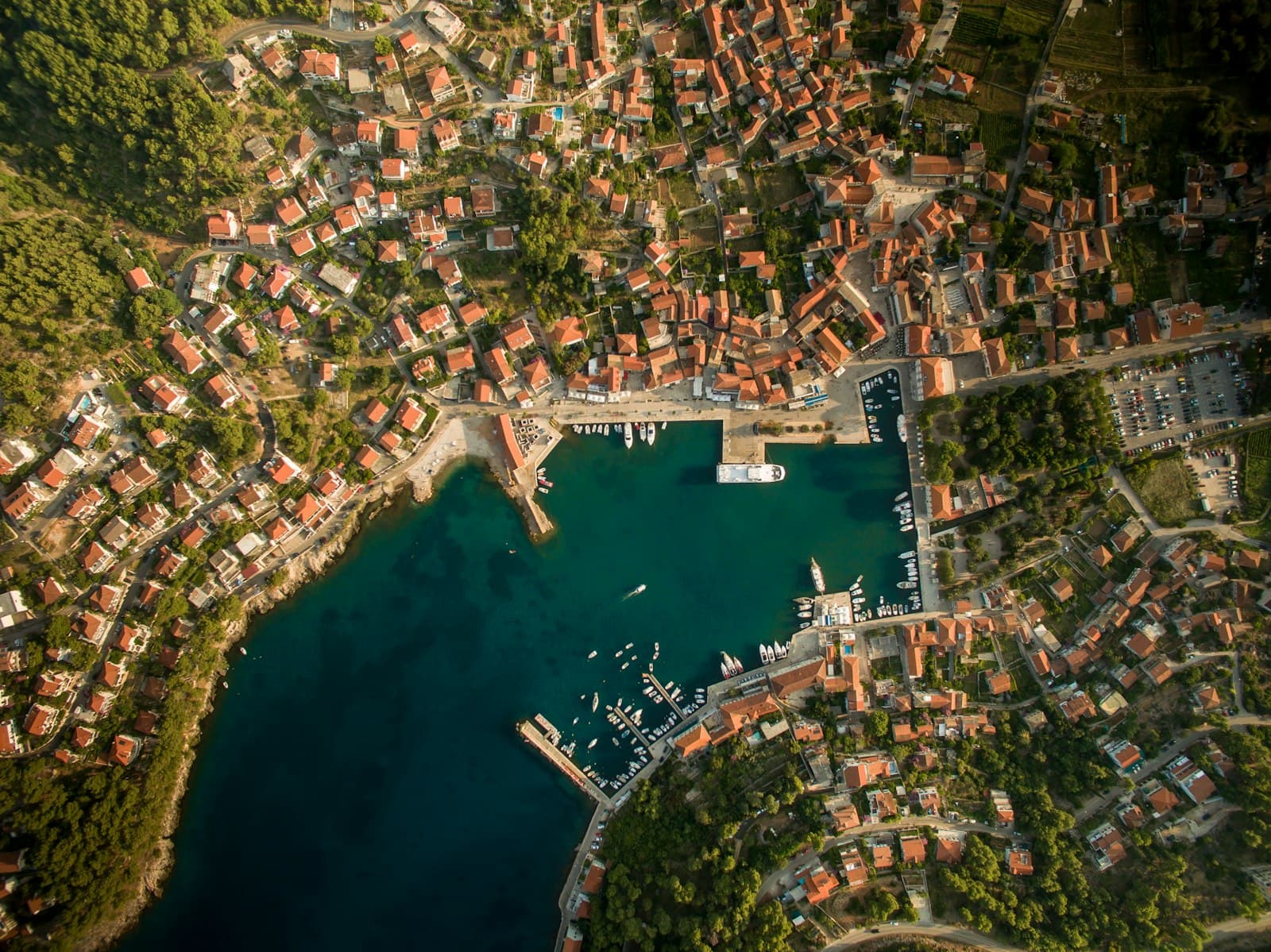
Stari Grad, meaning 'Old Town' in Croatian, is a tranquil coastal settlement on the island of Hvar, distinguished as one of Europe's most ancient towns. Its origins trace back to 384 BC when Greek settlers from the island of Paros established the colony of Pharos, the namesake for the entire island of Hvar. The town is positioned at the end of a long, sheltered bay, a natural harbor that has drawn inhabitants for millennia and continues to offer refuge to boats and sailors today.
Unlike its more animated counterpart, Hvar Town, Stari Grad maintains a quieter, more authentic rhythm, even during peak season. Its appeal lies in its unhurried atmosphere, where ancient limestone lanes, bougainvillea-covered staircases, and historic archways invite relaxed exploration. The fragrance of lavender often drifts through the air, a reminder of the island's agricultural heritage. Stari Grad offers a blend of profound history, natural splendor, and a relaxed, genuinely Croatian way of life.
From Greek Colony to Venetian Outpost
Stari Grad's narrative commences in 384 BC when Ionian Greek settlers from the island of Paros arrived and founded the colony of Pharos. This was the same year the Greek philosopher Aristotle was born. Before the Greeks, Neolithic tribes of the Hvar culture inhabited the area between 3500 and 2500 BC, followed by Illyrian tribes. The Greek settlement was strategically situated at the lower end of Stari Grad Bay, protected by strongholds on the surrounding hills. The Greeks meticulously divided the fertile plain, known today as the Stari Grad Plain, into a geometric network of plots, a system that remains remarkably preserved and in use today.
In 218 BC, the Romans defeated the Illyrian army at Pharos during the Second Illyrian War, devastating the town, though it remained under Illyrian control for a time. The Romans later left their imprint, renaming it Faria, which eventually evolved into 'Hvar' with the arrival of Slavic populations. During the 12th century, the first island noble families emerged, and the Hvar Diocese of St. Stephen was founded in 1147. The plain was then known as St. Stephen's Plain.
Under Venetian Rule and Ottoman Raids
In 1278, Hvar became part of the Venetian Republic, and the administrative capital moved to what is now Hvar Town, with the older settlement becoming 'Stari Hvar' and then 'Stari Grad.' The 16th century was a turbulent period, marked by a people's uprising in 1510 and destructive Ottoman invasions in 1539 and 1571, which saw much of the town consumed by fire. Despite the destruction, the town rebuilt, constructing its distinctive stone buildings and paved streets during the 17th and 18th centuries. This era also saw Stari Grad's focus shift more towards the sea, with captains, shipowners, and shipbuilders becoming an influential class.
Modern Era and UNESCO Recognition
In 1813, Hvar became part of the Dalmatian Kingdom within the Austro-Hungarian Monarchy, ushering in a period of prosperity for Stari Grad. The town's fleet grew to over 50 sailing ships, trading across the Mediterranean. The 20th century brought challenges, including emigration due to vineyard decline and wars, but also saw the development of tourism. In 2008, the Stari Grad Plain and the historic center of Stari Grad were inscribed on the UNESCO World Heritage List, recognizing their exceptional universal value and the enduring legacy of ancient Greek land use.
Begin your journey along the Stari Grad Riva, a waterfront promenade adorned with Venetian Renaissance buildings, fishing boats, and outdoor restaurants. From here, delve into the old Venetian passageways, a labyrinth of narrow, limestone-paved streets, bougainvillea-draped staircases, and historic archways that invite unhurried exploration.
Consider visiting Tvrdalj Palace, the 16th-century fortified summer residence of poet Petar Hektorović. This singular architectural complex includes a seawater fish pond, a dovecot, and a garden, reflecting Hektorović's philosophical vision. Explore St. Stephen's Church, a Baroque three-nave basilica constructed in 1605 on the site of a 9th-century church, with its bell tower completed in 1753. The Stari Grad Museum, housed in the Biankini Palace, offers insights into the town's extensive past.
Beyond the town, the Stari Grad Plain, a UNESCO World Heritage site, is a remarkable agricultural landscape with a 2,400-year-old Greek land division system. It is ideal for cycling, with flat trails winding through vineyards and olive groves. For sweeping views of Stari Grad and neighboring towns, ascend Glavica Hill, particularly at sunset. Stari Grad also provides access to a variety of beaches, from small pebble coves near the harbor to more secluded spots like Maslinica Bay, a 15-minute walk west of the ferry port.
The optimal time to experience Stari Grad is during the shoulder seasons: May through early June, and September into October. During these months, the weather is pleasant, the sea is inviting, and the crowds are considerably smaller than in peak summer. Prices for accommodation and dining are also more favorable. July and August are the busiest months, with higher temperatures and more visitors, though Stari Grad generally manages the influx more gracefully than Hvar Town. For those seeking a calmer experience and better value, spring and autumn offer the finest of Stari Grad.
Stari Grad is readily accessible by ferry from Split, with car ferries arriving at Stari Grad Port, situated approximately 1.5 to 2.3 kilometers from the town center. Foot passengers can walk into town in about 20-25 minutes, or opt for a brief taxi or bus ride. Booking ferries in advance is highly recommended, especially during summer, particularly if traveling with a car. The town itself is walkable, but for exploring the wider island, a car or bike rental can be advantageous. Local bus lines connect Stari Grad with other towns on Hvar, including Hvar Town, Jelsa, and Vrboska, with schedules often coordinated with ferry arrivals. While Stari Grad offers a relaxed atmosphere, it is not known for a bustling nightlife, making it suitable for those seeking a tranquil holiday.
- How do I get to Stari Grad?
- Stari Grad is primarily reached by ferry from Split, Croatia. Car ferries arrive at Stari Grad Port, which is a short distance from the town center. Catamarans also connect Hvar to other islands and the mainland.
- Is Stari Grad suitable for a family vacation?
- Yes, Stari Grad is recognized for its relaxed pace and family-friendly atmosphere. It offers quiet beaches, historical sites, and opportunities for outdoor activities like cycling, making it a good choice for families.
- Are there good beaches in Stari Grad?
- Stari Grad offers a variety of beaches, from small pebble coves and concrete bathing platforms within a short walk of the historic center to more secluded bays. Maslinica Bay and Bonj Beach are popular options.
- Can I explore the Stari Grad Plain by bike?
- Yes, cycling is an excellent way to explore the Stari Grad Plain. The area features a network of flat, accessible trails that wind through the ancient agricultural landscape, past olive groves and vineyards.
- What is the difference between Stari Grad and Hvar Town?
- Stari Grad is known for its deep history, calmer atmosphere, and focus on cultural heritage, particularly the Stari Grad Plain. Hvar Town, while also historic, is generally more animated, with a more prominent nightlife and a reputation for glamour.
- Is it necessary to rent a car in Stari Grad?
- While the town of Stari Grad is walkable, a car can be beneficial for exploring other parts of Hvar Island, such as the south coast beaches, wineries, and Hvar Town. Buses also connect Stari Grad to other island settlements.