Svolvær's wartime past
During World War II, a seemingly ordinary fishing town played a pivotal role in a top-secret Allied operation.
Full story unlocks in the tour
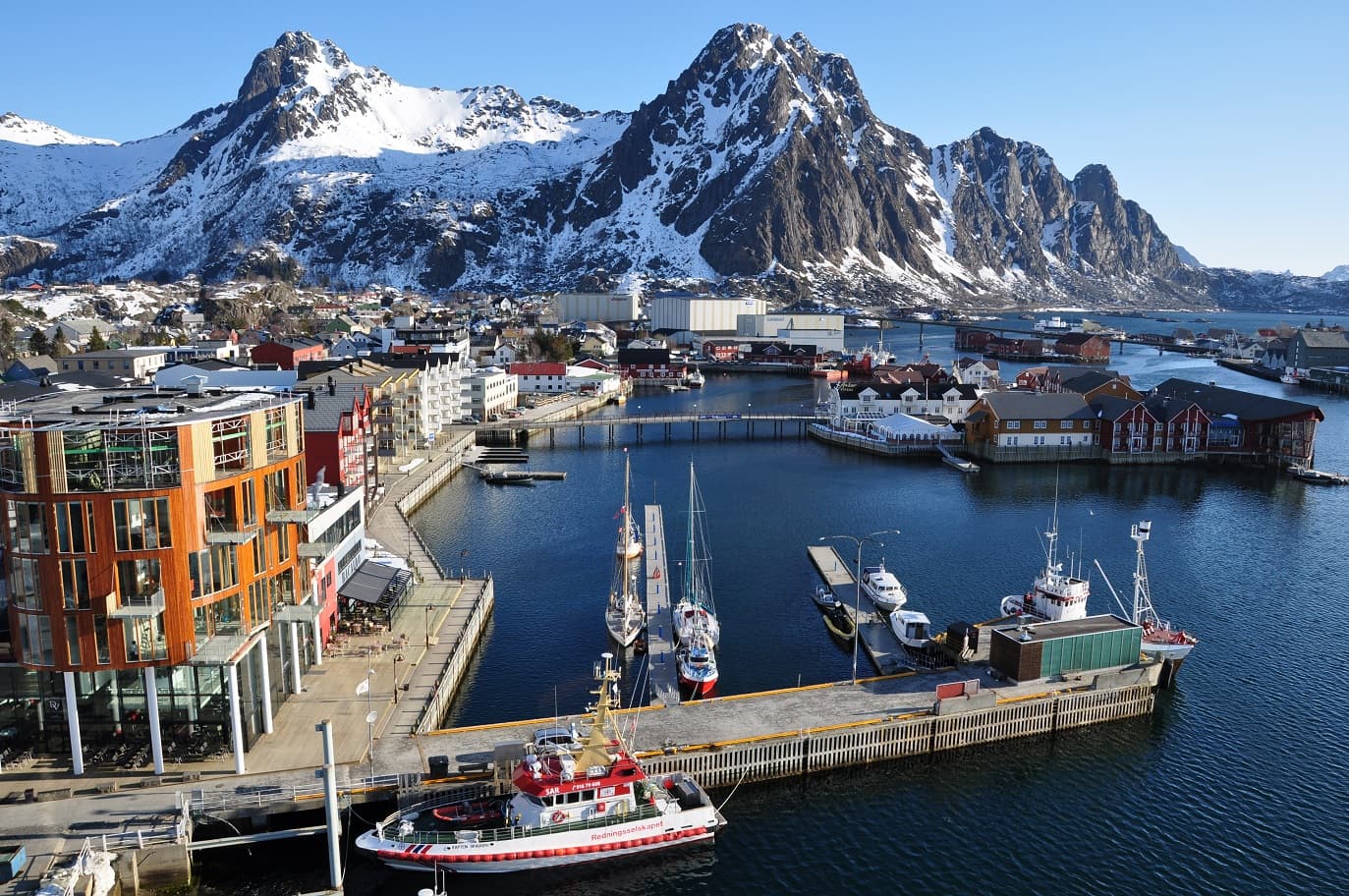 Vincent van Zeijst / CC BY 3.0, via Wikimedia Commons
“Where Arctic peaks meet the sea, Svolvær is a lively center shaped by cod, culture, and dramatic northern light.”
Not the postcards. The stories even locals don't know — whispered in your ear, right where they happened.
During World War II, a seemingly ordinary fishing town played a pivotal role in a top-secret Allied operation.
Before Svolvær was a recognized town, a dramatic confrontation on its waters captured national attention.
High above the town, a unique rock formation offers a challenge that literally involves a leap of faith.
Discover every secret of Svolvær
Every address, every reveal in full — in your ear, right where it happened.
You pick your stops. You walk. The voice reveals what the others miss.
No tours available yet. Check back soon — we're preparing them.
Svolvær, the administrative center of Vågan Municipality, stands as the largest town in Norway's Lofoten Islands. With a population of approximately 4,700, it serves as an active gateway to the archipelago's towering peaks, deep fjords, and charming fishing villages. Situated on Austvågøya island, along the Vestfjorden, Svolvær blends traditional Arctic character with modern conveniences, offering a mix of outdoor adventures and cultural experiences.
Despite its location above the Arctic Circle, Svolvær experiences a remarkably mild subpolar oceanic climate, thanks to the warming influence of the Gulf Stream. This allows for a diverse range of activities year-round, from witnessing the ethereal Northern Lights in winter to experiencing the hazy Midnight Sun in summer. The town's lively harbor is a center for tourism, fisheries, and local life, with many attractions, restaurants, and accommodations within walking distance of the center.
The story of Svolvær is deeply intertwined with the fishing traditions of the Lofoten Islands, reaching back to the Viking Age. While the nearby village of Vågar (present-day Kabelvåg) was Northern Norway's first major town, established around 800 AD, Svolvær itself entered historical records in the 16th century. Its name, derived from the Old Norse words 'svalr' (chilly) and 'vær' (fishing village), accurately reflects its origins as a cold fishing settlement.
For centuries, Svolvær's economy revolved around the seasonal cod migration from the Barents Sea to the Lofoten banks, a phenomenon that still draws fishermen today. The town became known for producing stockfish—unsalted cod dried by the Arctic air—a valuable commodity exported across Europe since medieval times. Influential merchant families, known as 'væreier,' controlled the local economy, establishing the first wharves, warehouses, and trading shops that formed the foundation of Svolvær's urban infrastructure.
Svolvær gained official 'ladested' (port town) status in 1918, becoming an independent administrative unit. The early 20th century saw the industrialization of fishing, with the introduction of motorized boats and fish processing technologies. During World War II, Svolvær played a covert role when British and Norwegian commandos conducted Operation Claymore in 1941, destroying fish oil facilities and, crucially, seizing components of the German Enigma cipher machine. The town was re-declared a city in 1996 and continues to flourish as the administrative and cultural center of the Lofoten Islands, balancing its fishing heritage with a growing tourism industry.
Begin your exploration at Svolvær's harbor, an active area with restaurants and shops. From here, you can admire the 'Fiskerkona' (Fisherman's Wife) statue. A short walk takes you to Svinøya, a historic island where traditional red rorbuer (fishermen's cabins) have been converted into appealing accommodations, and large wooden racks display drying cod. For art enthusiasts, the North Norwegian Art Centre on the main square showcases contemporary art from the region and beyond, and hosts the Lofoten International Art Festival (LIAF) biennially. Another distinctive cultural experience is Magic Ice Lofoten, an ice gallery featuring sculptures inspired by Arctic life and folklore, complete with an ice bar.
Nature's drama is ever-present. Consider a sea eagle safari to the narrow Trollfjord, where steep mountains rise dramatically from the water and sea eagles are often observed. For a challenging hike, the iconic Svolværgeita (Svolvær Goat) mountain offers a rewarding climb with expansive views. If you prefer a less strenuous walk, Tjeldbergtinden provides an easier ascent with excellent vistas. The Lofoten War Memorial Museum offers a poignant look into the region's World War II history through a collection of rare photos and artifacts.
Svolvær offers distinct experiences throughout the year. For the mildest weather, extended daylight hours, and a wide array of operational tours and activities, the summer months of July and August are ideal. This is when you can experience the Midnight Sun, with continuous daylight from late May to mid-July. If your primary goal is to witness the Northern Lights and enjoy snowy landscapes, visit between late August and early April, with mid-January to late March offering optimal conditions for photographing the aurora against a winter backdrop. While winter brings shorter days and colder temperatures, the Gulf Stream ensures it is often milder than other northern Norwegian regions.
Svolvær is well-connected and serves as a primary transport hub for the Lofoten Islands. Svolvær Airport, Helle (SVJ) offers regional flights, primarily connecting to Bodø. Many travelers also fly into Harstad/Narvik Airport (Evenes, EVE) and continue by bus (Route 300, a four-hour journey) or rental car (approximately 2.5-3 hours drive). Express boat services link Svolvær to Bodø and other islands like Skrova. The Hurtigruten coastal express also makes Svolvær a port of call.
Within Svolvær, the town center is compact and easily navigable on foot. For exploring the wider Lofoten region, renting a car is highly recommended for flexibility, though public buses and ferries are available. The official currency is the Norwegian Krone (NOK), and card payments are widely accepted, making cash largely unnecessary. Most supermarkets are closed on Sundays, so plan grocery purchases accordingly. Svolvær is considered a safe destination, and tap water is potable. The tourist information office on Torget 18 can provide local maps, brochures, and assistance with activity bookings.